

South Korea’s early trade data show export momentum still strong
The Asian nation’s import prices have jumped about 16% in March
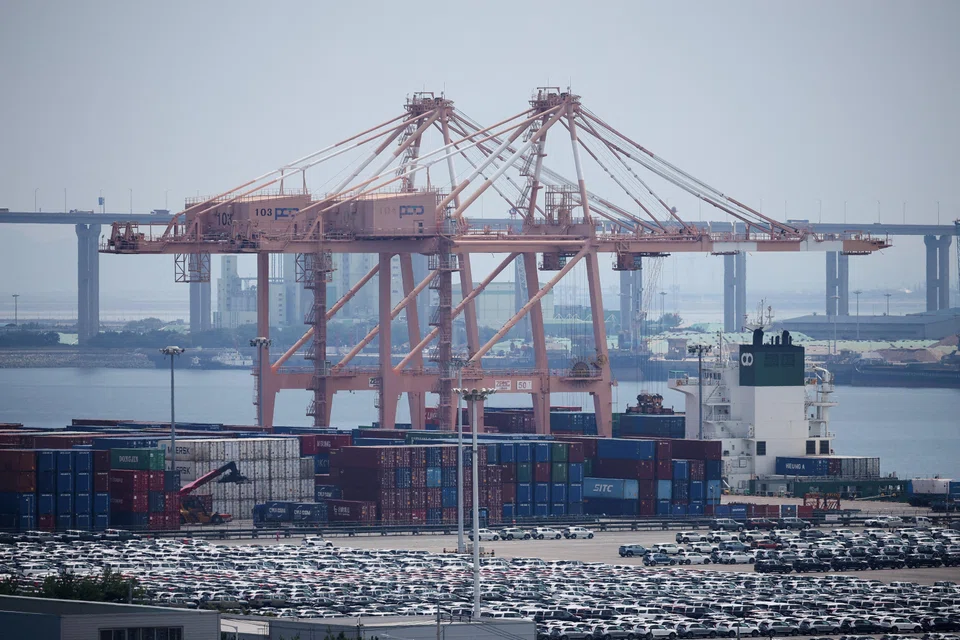
[SEOUL] South Korea’s export growth remained robust in early April, signalling resilient external demand even as surging oil prices and a weaker currency raise risks for inflation and growth.
Exports adjusted for working-day differences rose 49.4 per cent from a year earlier in the first 20 days of April, according to customs office data released on Tuesday (Apr 21). That compares with a 40.4 per cent increase in the same 20-day period of March.
On an unadjusted basis, shipments also increased 49.4 per cent, while imports gained 17.7 per cent, resulting in a trade surplus of US$10.4 billion.
Semiconductor exports surged 182.5 per cent, driving overall shipments amid strong investment in artificial intelligence and data centres. Exports of computer peripherals surged 399 per cent.
Oil products also contributed to gains, rising 48.4 per cent, with energy exports partly lifted by higher crude prices. Meanwhile, autos and auto parts both declined.
The data suggest South Korea’s export engine remains intact for now, even as external risks intensify. Uncertainties surrounding the Iran conflict have pushed oil prices higher, driving up import costs and adding to inflationary pressure in an economy heavily reliant on imported energy.
The Bank of Korea’s (BOK) newly appointed governor Shin Hyun-song highlighted the policy challenge ahead last week as higher oil prices and a weaker won are expected to push inflation higher, while weighing on the country’s growth. He downplayed the likelihood of stagflation, but warned against excessive volatility in the currency.
The Asian nation’s import prices jumped about 16 per cent in March, the biggest surge in nearly three decades, underscoring how quickly external shocks are feeding into the domestic economy. Export prices also climbed more than 16 per cent from a month earlier.
For policymakers, the key question will be whether the shock proves temporary. Earlier this month, the BOK’s outgoing governor Rhee Chang-yong, whose four-year term ended on Monday, said the central bank would refrain from adjusting rates if the impact is short-lived, but may respond if inflationary pressures become persistent.



After his farewell speech on Monday, Rhee said that Asia is likely to be hardest hit by the Middle East fallout, and a prolonged energy shortage could trigger major supply disruptions in its manufacturing sector, which relies heavily on Middle Eastern energy.
By destination, exports to China jumped 70.9 per cent, while shipments to the US increased 51.7 per cent, reflecting continued strength in key markets. Shipments to the European Union and Taiwan rose 10.5 per cent and 77.1 per cent, respectively. BLOOMBERG
Decoding Asia newsletter: your guide to navigating Asia in a new global order. Sign up here to get Decoding Asia newsletter. Delivered to your inbox. Free.
Share with us your feedback on BT's products and services
TRENDING NOW

Once staunchly pro-China, Malaysian Chinese businesses are now distancing themselves from Beijing
Stocks to watch: HPL, Aims Apac Reit, Zico, Advanced Systems Automation, ComfortDelGro

‘How many will survive?’: Bubble fears arise as China’s humanoid robotics face reality check
Smaller board lots can’t fix a market run by three banks

