
As Starmer settles in, new UK government seeks confidence boost to grow slow-moving economy
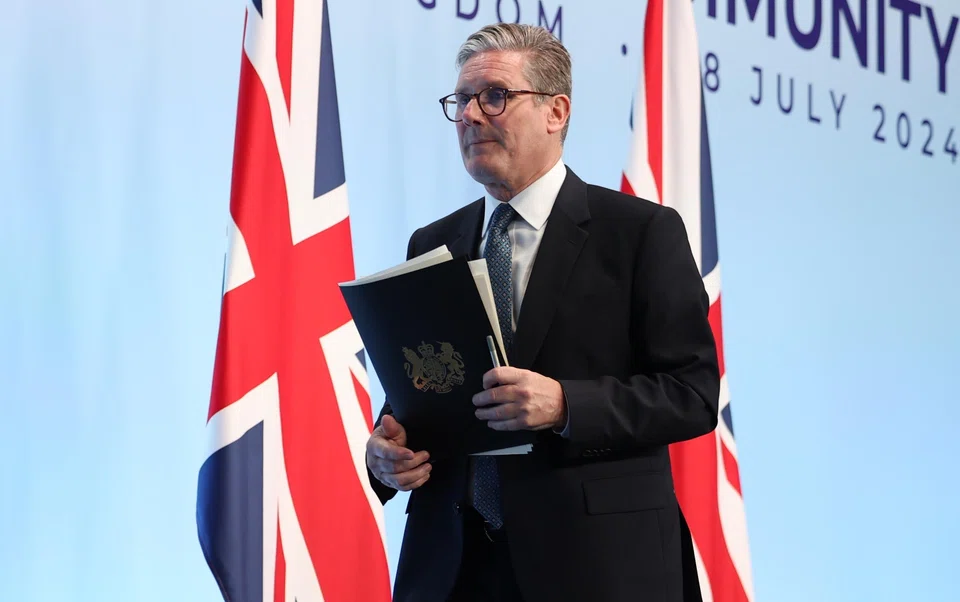
[LONDON] Just over a fortnight has passed since Keir Starmer and his Labour party swept to power after the Jul 4 general election, and all eyes are on whether the new government will be able to deliver on its promises to grow the economy.
Observers said the key to Labour’s success is whether the people and businesses have a high level of confidence in Starmer and his team to get the job done.
“The upcoming legislation on planning reforms, pension reforms, employment rights, and the creation of (national wealth fund) GB Energy are laudable,” said Mike Brewer, the interim chief executive of the Resolution Foundation, an independent British think tank.
“But the details of how they will be implemented will be crucial, and how they will be supported by workers, businesses and the wider public.”
A key index by GfK published on Friday (Jul 19) found that Labour’s landslide election victory had a muted impact on sentiment in July, with confidence inching up just one percentage point, although it is now at its highest level since 2021.
GfK client strategy director Joe Staton said the latest consumer confidence poll “suggests a note of caution” as people wait to see “exactly how the UK’s new government will affect the wider economy and their personal finances”.
Emerging from recession
Economists said they expect economic growth of about 0.5 per cent in the second quarter, which would continue the recovery from last year’s shallow recession.
The pound has risen by about 2 per cent since the election. Overall, the currency has gained for the last four weeks versus the US dollar and currently trades at around US$1.30.
The FTSE 250 index – which concentrates on local companies – is up by 5 per cent since the start of July, but the FTSE 100 index of multi-national companies has traded sideways. Economists and analysts said the stronger pound and China’s slower economic growth are among the chief reasons.
The King’s Speech that was delivered by King Charles on Jul 17 mapped out the Starmer administration’s wide-ranging plans to prioritise economic growth.
Its growth plan centres on expenditure on major infrastructure and housebuilding. There are plans to boost investment in clean energy that will create jobs and help businesses. The government has also pledged to boost the UK’s trade relations with the European Union.
The Labour party hopes that these policies will boost the economy and generate sufficient taxes to meet its election promises to improve the areas of health, education, security and others. The hope, said analysts, is that fiscal trends would then be stable, inflation would be lower and interest rates would eventually fall.
Both Starmer and his new finance minister Rachel Reeves have already said there will be no increases in the rates of income tax, corporation tax and value-added tax.
They have said they will grow the economy and generate more tax revenue via pro-growth reforms and a return to political stability that will reinstate confidence and attract more investment.
Paul Johnson, director of the Institute For Fiscal Studies, said that while tax reform would be good for growth, he noted that Labour is unlikely to put this high on its list of priorities during its time in power.
Rain Newton-Smith, the chief executive of the Confederation of British Industry, said that planning reforms, major infrastructure projects and economic partnerships between the local and national government “can give businesses the confidence they need to unlock investment”.
The King’s Speech had its fair share of critics too. Tina McKenzie, policy chair of the Federation of Small Businesses, felt that many key issues were overlooked.
“The lack of promised legislation to tackle late payments from bigger businesses to their small business suppliers is the most serious omission. This scourge hampers cashflow and stifles investment,” she said.
“Small businesses are increasingly worried about employment rights. Nine out of ten small employers say they are concerned about the prospect of increased costs and risks,” she added.



