

Stocks and bonds jump as oil’s plunge lifts mood
For the cross-asset relief rally to hold, traders will need confirmation that the ceasefire will last, analysts say
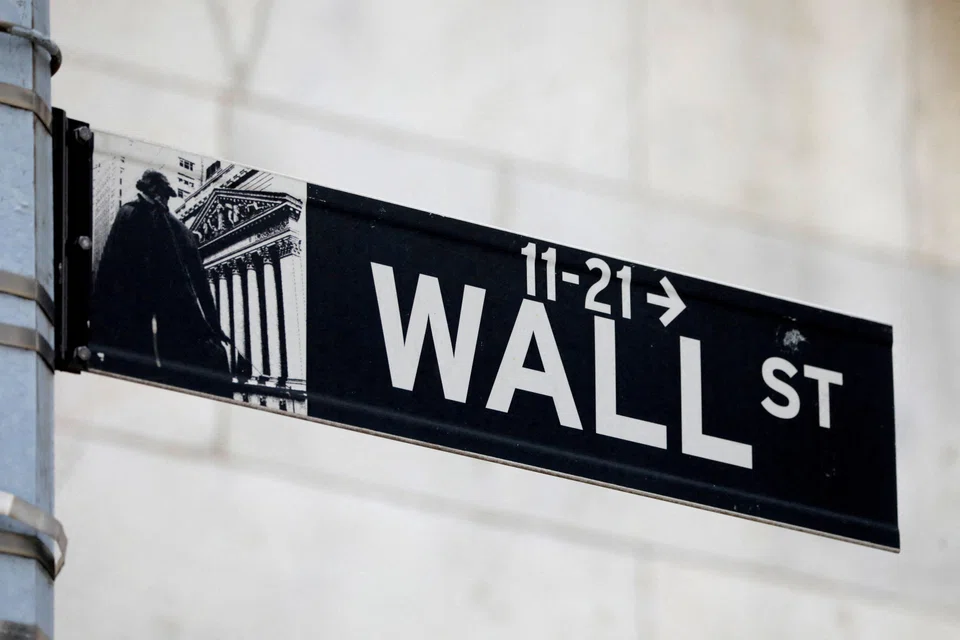
[WASHINGTON] Oil fell the most in almost six years and stocks surged after the US and Iran agreed to a two-week ceasefire, giving markets a respite from the turbulence driven by the Middle East conflict.
West Texas Intermediate tumbled as much as 19 per cent after US President Donald Trump agreed to suspend the bombing of Iran – in a move that will help restore oil flows through the Strait of Hormuz.
Iran said safe passage in the waterway will be possible during that period. Global benchmark Brent crude slid 13 per cent to US$94.50 a barrel.
MSCI’s Asia-Pacific equity index jumped 5 per cent to the highest in five weeks, as traders bet lower oil prices will help contain inflation and revive economic growth.
Stock-index futures for Wall Street gauges rose more than 2.5 per cent, and European contracts surged 5.3 per cent.
Treasuries rallied, as easing price pressures encouraged traders to revive bets on Federal Reserve interest-rate cuts.
A gauge of the US dollar, which emerged as the haven of choice during the conflict, fell 0.8 per cent, while gold rose.
The ceasefire proposal – announced just hours before a Trump deadline to escalate the bombing of Iran – is reviving risk sentiment after a prolonged period of turmoil, which drove stocks lower and pushed several gauges into correction territory since the Middle East war began six weeks ago.
For the cross-asset relief rally to hold, traders will need confirmation that the ceasefire will last and energy flows through the Strait of Hormuz will normalise, analysts said.
SEE ALSO



Hiroyuki Ueno, chief strategist at Sumitomo Mitsui Trust Asset Management in Tokyo, said: “For the time being, this is a relief for markets – things have calmed down. But things are not guaranteed to go smoothly from here, and investors shouldn’t get ahead of themselves.”
Ceasefire agreed hours before deadline
Trump announced the agreement hours after Pakistan, a mediator in talks, implored the US leader to back off his deadline and threats of unleashing massive devastation on Iran.
The deal buys time for the two sides to reach a longer agreement to end the war, which has killed thousands of people and sparked a global energy crisis.
Trump’s decision represents a dramatic climb-down from a bellicose social media post earlier on Tuesday (Apr 8), in which he warned “a whole civilisation will die tonight, never to be brought back again” if Iran did not give in.
Matthew Haupt, a fund manager at Wilson Asset Management in Sydney, said: “It’s a good result considering the alternatives, as it shows a willingness to get something done. This is also showing promising signs that we’ve dodged the worst-case scenario.”
Some investors remained sceptical.
Neil Newman, head of strategy at Astris Advisory Japan, said: “The outlook depends on whether the ceasefire holds, and at the moment I have little confidence that it will.
“So I view this as very fragile relief. I would recommend using the volatility to exit underperforming stocks and strategically build positions.”
A key test for investors will be whether the oil and petrol flows through the Strait of Hormuz remain uninterrupted.
Safe passage through the waterway will be possible via coordination with Iran’s armed forces and with “due consideration of technical limitations”, Iranian Foreign Minister Abbas Araghchi said in a post on X.
Shipowners are scrambling to understand the fine print in the ceasefire, hoping to take advantage of a potential window to extract more than 800 vessels trapped in the Persian Gulf.
Garfield Reynolds, Bloomberg’s Markets Live team leader, said: “The capacity for these initial knee-jerk gains to extend is going to depend on whether the attacks will indeed fade away and on the course of the talks, assuming they go ahead from Friday in Islamabad.”
Surges in assets
Elsewhere, gold jumped 2 per cent to about US$4,800 for each 28.3 g as the bullion – a non-yielding asset – typically benefits in a lower interest-rate scenario.
Silver surged 4.5 per cent to more than US$76 for each 28.3 g.
The cost of insuring Asian investment-grade debt against the default fell by at least six basis points, traders said, while China’s renminbi advanced to a three-year high.
The Treasury yield curve bull-steepened, as a slump in oil prices fuelled bets that slower inflation will pave the way for the Fed to cut rates.
Policy sensitive two-year yields dropped seven basis points to 3.72 per cent, while their 10-year counterparts fell five basis points to 4.24 per cent.
Overnight-indexed swaps signalled a 60 per cent likelihood of a Fed rate cut by the year-end, compared with almost no chance seen at the start of the second week of April.
They had priced in more than two rate reductions before the US and Israel attacked Iran in late February.
“There’s room for more bull-steepening” in the near term, said Ken Crompton, head of rates strategy at National Australia Bank.
“The market could readjust towards a slightly greater chance of Federal Open Market Committee cuts than currently priced.”
Stock markets likely have found a floor as the latest US-Iran ceasefire suggests uncertainties regarding the war have peaked, JPMorgan Chase & Co’s equity sales desk said.
Wall Street traders have been on edge, hanging on every development in the Middle East and the often unpredictable missives of Trump.
One technical metric, the daily turnover in the State Street SPDR S&P 500 ETF Trust, has breached US$60 billion – a reading seen as a “freak out” indicator by Bloomberg Intelligence (BI) strategists – 29 times in 2026.
BI’s Athanasios Psarofagis said that new record is higher than in 2025, when it breached US$60 billion 28 times.
Nick Twidale, chief market analyst at AT Global Markets, said: “Be aware that we can still see more volatility on any fresh headline. These are big moves in markets, which should promote further volatility today.”
Main moves in markets
Some of the main moves in markets involved S&P 500 futures rising 2.6 per cent as at 2.32 pm Tokyo time, Japan’s Topix going up 3.3 per cent, Australia’s S&P/ASX 200 increasing 2.7 per cent, Hong Kong’s Hang Seng rising 3 per cent, the Shanghai Composite gaining 2.3 per cent and Euro Stoxx 50 futures increasing 5.2 per cent.
For currencies, the Bloomberg Dollar Spot Index fell 0.9 per cent, the euro rose 0.8 per cent to US$1.1687, the Japanese yen gained 0.8 per cent to 158.33 yen per US dollar and the offshore renminbi increased 0.4 per cent to 6.8264 yuan per US dollar.
Meanwhile, Bitcoin increased 3.5 per cent to US$71,714.29 and Ether rose 6 per cent to US$2,242.78.
For bonds, the yield on 10-year Treasuries declined six basis points to 4.24 per cent, while Japan’s 10-year yield fell four basis points to 2.365 per cent and Australia’s 10-year yield dropped 10 basis points to 4.88 per cent.
As for commodities, West Texas Intermediate crude fell 15 per cent to US$95.53 a barrel and spot gold rose 2.4 per cent to US$4,818.52 for each 28.3g. BLOOMBERG
Decoding Asia newsletter: your guide to navigating Asia in a new global order. Sign up here to get Decoding Asia newsletter. Delivered to your inbox. Free.
Share with us your feedback on BT's products and services
TRENDING NOW

Prima to move out of historic Keppel Road flour mill building in 2028

Grab CEO’s wife Chloe Tong on life with Anthony Tan and finding her purpose

OCBC sheds S$8 billion in value as shares close nearly 6% down; analysts cautious on banks

As Asia’s food delivery giants rejig the pie, who will win the market?

