

With tax hikes and spending cuts, UK’s Conservative Party out to regain support from disenchanted voters
 Add BT as a preferred source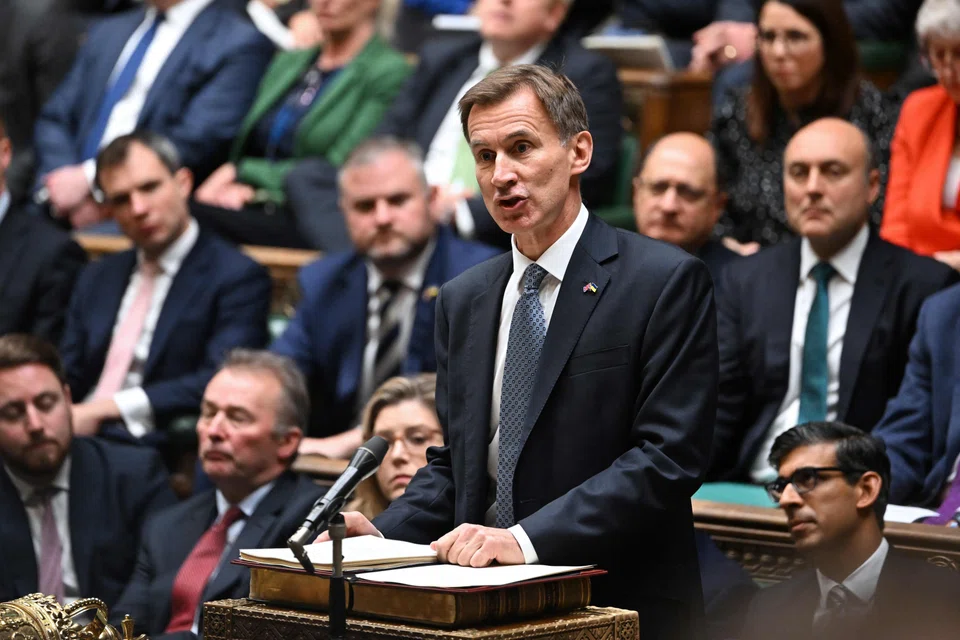
[LONDON] The UK’s Chancellor of the Exchequer Jeremy Hunt has imposed the highest level of taxation since World War II on Britons who are already suffering from a sharp decline in their living standards.
To placate the financial markets, his Autumn Statement on Thursday (Nov 17) – an austerity budget – included £25 billion (S$40.9 billion) in tax increases.
In an unexpected decision, however, the promised £30 billion in spending cuts have been delayed until after the 2024 general election. Despite this, the pound, government bonds and the UK stock market hardly fluctuated. Shortly after the announcement, the pound fell against the US dollar, euro and yen before recovering.
With the UK economy already in recession, Prime Minister Rishi Sunak and Hunt are hoping to win back support for the Conservative Party from disenchanted voters. Hunt said that the aim of the budget was to protect the poorest people in society from the impact of rising prices and energy bills.
But the plan may backfire and danger signs for the government remain. Since Sunak became PM last month, the polls have only narrowed slightly and the opposition Labour Party are still well ahead with a 22-point lead.
Tory critics such as former cabinet minister Jacob Rees-Mogg complained that potential Conservative supporters with middle and higher incomes have been hammered by tax increases.
Tax thresholds have been frozen until 2028. This means that as salaries and wages rise with productivity, promotions and inflation, managers and workers are drawn into higher tax brackets.
People will pay no tax for income up to £12,500, with the rate at 20 per cent for incomes from £12,501 to £50,000. Those earning £125,140 or more must now pay 45 per cent in tax, compared to £150,000 currently. Hunt said those earning £150,000 or more will now pay just over £1,200 more in taxes each year.
This “stealth tax grab” will double the number of higher-rate taxpayers to eight million within six years, the Telegraph noted in a report. It added that a mean total of 11 million earners will be paying a greater rate of income tax than they do today.

“Those in their 30s and 40s have been dealt the worst hand. Those trying to raise a family and build up a savings war chest now face punishing taxes for earning more and accumulating wealth,” the report said.
Observers also noted that company tax, which will rise from 19 per cent currently to 25 per cent next April, may discourage foreign investment. Hunt has also permitted municipalities to raise local tax by 5 per cent. The government also raised the windfall tax from 25 to 35 per cent on oil giants such as Shell and BP that have drilling activities in the North Sea.
Hunt insisted that the government “cannot do everything”, even as he argued that the package would make the recession “shallower and shorter”.
Fresh data released on Thursday by the Office of Budget Responsibility (OBR), which the government and global markets follow closely, painted a bleak landscape.
The office estimates that UK inflation will peak at a 40-year high of 11 per cent in the current fourth quarter, and would have been higher at 13.5 per cent if the government had not imposed a ceiling on energy prices.
“The squeeze on real incomes, a rise in interest rates, and a fall in house prices all weigh on consumption and investment, tipping the economy into a recession lasting just over a year from the third quarter of 2022,” said the OBR.
Public sector net debt will rise from 84.3 per cent of GDP to a 63-year high of 97.6 per cent in the 2025-26 financial year, the office said.
Labour’s Shadow Chancellor Rachel Reeves were among the many critics that had some strong words for Sunak and Hunt.
“This government has forced our economy into a ‘doom loop’, where low growth leads to higher taxes, lower investment and squeezed wages with the running down of public services,” she said. “We need to break free from this vicious cycle of stagnation, with fairer choices and a proper plan for growth.”
Paul Dale, the chief UK economist at Capital Economics, said that Hunt “appears to have pulled off the tricky task” of reassuring the financial markets of the government’s fiscal discipline while also managing not to deepen the recession.
“He may be able to reverse some of the tax hikes and spending cuts before the next general election,” Dale added.
Decoding Asia newsletter: your guide to navigating Asia in a new global order. Sign up here to get Decoding Asia newsletter. Delivered to your inbox. Free.
Share with us your feedback on BT's products and services
TRENDING NOW
DBS, OCBC and UOB shares hit all-time highs as sentiment improves

E-commerce job cuts signal S-E Asia’s shift from scaling to deeper user engagement

Targeted credit relief: Vietnam steers funding to Vingroup, Sun Group, Masterise megaprojects

With AI, it’s not about coding better; workers need to think better: Koh Boon Hwee

