Thai PM asserts economy is in ‘crisis’, pledges more stimulus
 Add BT as a preferred source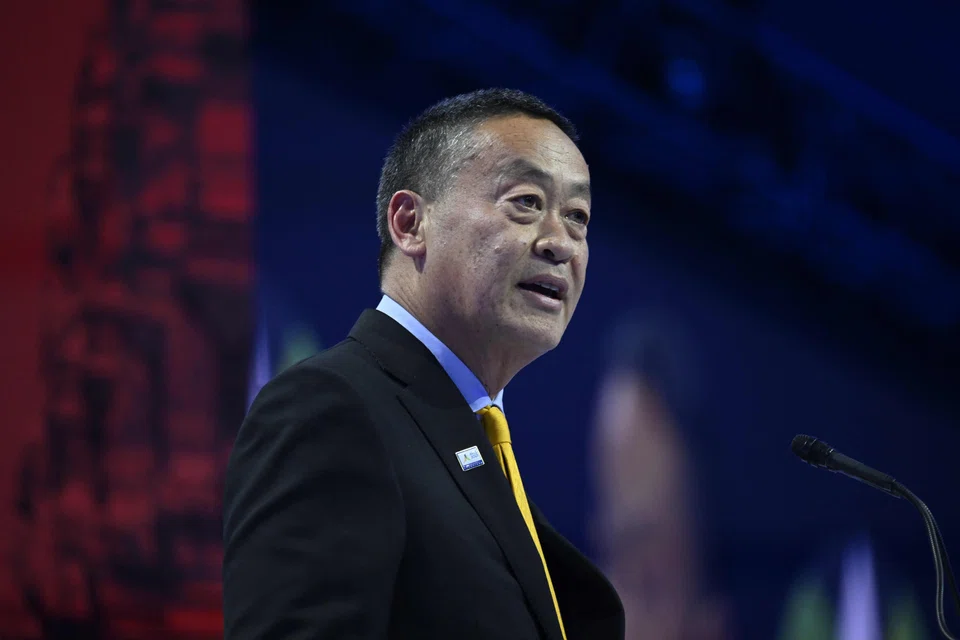
THAI Prime Minister Srettha Thavisin on Wednesday (Jan 24) stuck to his belief that the country’s economy is in “crisis”, and said he would roll out stimulus measures on top of handouts, despite the central bank governor’s disagreement with his approach.
The comments come after Sethaput Suthiwartnarueput, governor of the Bank of Thailand (BOT), told Reuters the previous day that the government’s quick stimulus measures would not fix structural issues plaguing South-east Asia’s second-biggest economy.
“I confirm that the economy is not doing well and is in crisis,” Srettha told reporters, adding that it was fine if the central bank chief disagreed with him.
This week, the Thai government slashed 2024 growth projections to 2.8 per cent from an earlier forecast of 3.2 per cent on weaker exports and lower foreign tourist numbers. It also lowered the 2023 growth estimate to 1.8 per cent from 2.7 per cent. Growth in 2022 was 2.6 per cent.
In the interview, Sethaput said growth had been slower than expected, but the economy was not in crisis as the government portrayed. The BOT chief has drawn fire from the premier for not cutting interest rates, despite low inflation.
A political newcomer who is also finance minister, Srettha has told Sethaput that high rates are hurting businesses; he has urged the BOT to lower rates, which are at a decade-high of 2.5 per cent.
His government has promised a slew of stimulus measures to revive the economy, including a US$14 billion handout programme targeting 50 million Thais, to be spent within six months.
“Reducing interest rates is a central bank matter… but there will be more policies in addition to the digital wallet,” Srettha said.
Separately on Wednesday, a Ministry of Finance official said Thailand’s baht was expected to average 34.4 per US dollar this year, driven by weakness in the greenback. The baht traded at about 35.8 per US dollar on Wednesday.

The baht is expected to strengthen in line with currencies of other countries seeing an economic recovery, while higher foreign tourist numbers are also supporting it, said Warotai Kosolpisitkul, an adviser to the ministry’s Fiscal Policy Office.
Thailand’s economy is expected to continue growing, while the country should record a bigger current account surplus, he added.
Decoding Asia newsletter: your guide to navigating Asia in a new global order. Sign up here to get Decoding Asia newsletter. Delivered to your inbox. Free.
Share with us your feedback on BT's products and services