Trump faces Maga backlash as online influencers shape the Iran war narrative
The lack of a narrative from the administration has left public opinion to coalesce unguided
 Add BT as a preferred source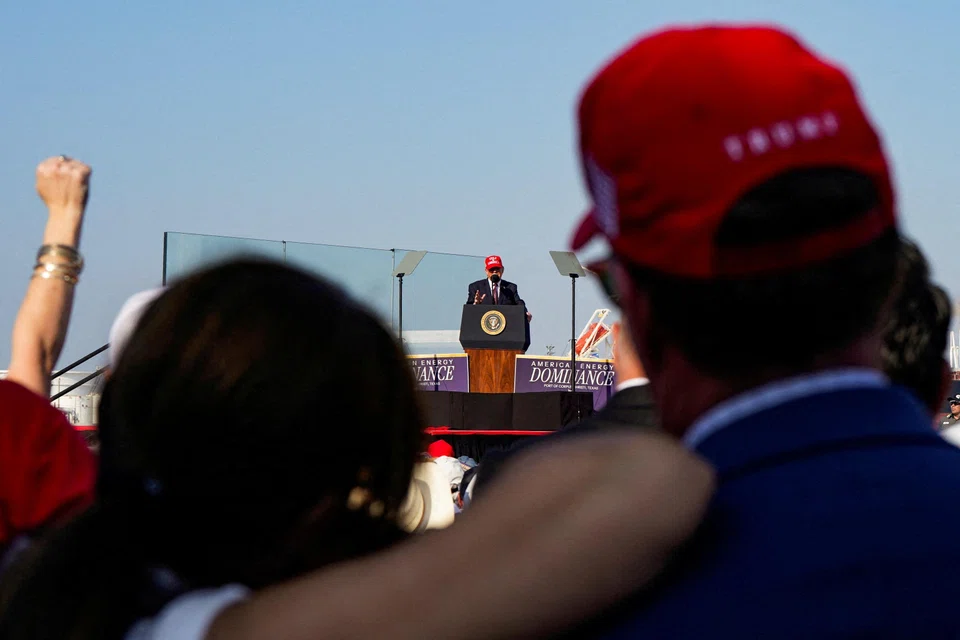
DeeperDive is a beta AI feature. Refer to full articles for the facts.
[HOUSTON] War is a hard sell in the best of times but US President Donald Trump has not even tried to sell his war on Iran.
Instead, as the fighting extends into the third week, Trump has kept faith in his favoured communication style: randomly capped exclamations on social media coupled with sweeping, off-the-cuff remarks to the media.
At all times, he emphasises American invincibility, but offers little clarity on why he launched the war at this time. Or when and how he plans to end it.
This abrupt and little-discussed offensive has set him up for heated battles with the largely liberal mainstream American media, which has reacted to the war with suspicion and caustic disapproval.
“We lament that Trump is not treating war as the grave matter that it is,” The New York Times, the nation’s leading daily, said in an editorial on Feb 28, the first day of the joint US-Israeli military operation.
The conservative media is fractured, but only at the seams. The pro-establishment Fox News television channel, which has the largest cable TV audience, has largely stuck with the President. As has The Wall Street Journal, America’s second-largest read daily, which has 4.7 million subscribers compared with The New York Times’ 12.4 million.
Navigate Asia in
a new global order
Get the insights delivered to your inbox.
“The first two days of the US-Israeli attack on Iran have been a striking success,” said the Journal in its editorial on Mar 1. “The biggest mistake President Trump could make now would be to end the war too soon, before Iran’s military and its domestic terror forces have been more thoroughly destroyed.”
Online influencers shaping what Americans make of the war
But farther into the conservative universe, the dedicated tribe of online influencers who helped build Trump’s 2024 Maga (Make America Great Again) coalition are now loudly attacking the war with a mix of isolationist and anti-Israel themes.
These shifting, inconsistent narratives are rapidly shaping what millions of Americans are coming to believe about the war.
SEE ALSO
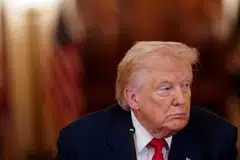
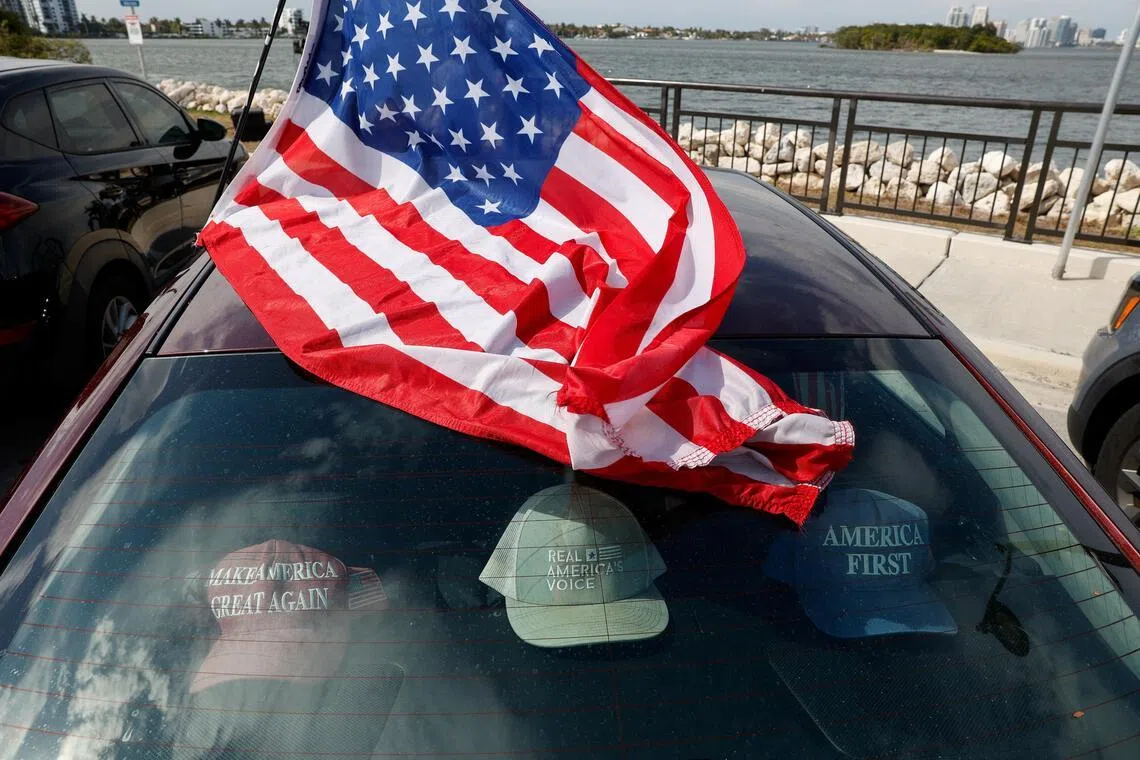
To Trump’s Maga supporters, who were drawn by his 2024 campaign message of keeping America away from “forever wars” that have cost trillions of dollars and thousands of lives, the Iran war felt like a deep betrayal.
The biggest of these online influencers is Joe Rogan, a 59-year-old Texas resident whose casual, unfiltered podcasts are one of the world’s most popular. A shaven-headed muscular man with an interest in martial arts, Rogan has more than 20 million followers on YouTube alone. While Trump was the presidential candidate, he owed much of his support among young voters to Rogan.
On the war, the podcaster is not holding back. “He ran on no more wars: End these stupid, senseless wars. And then we have one that we can’t even really clearly define why we did it,” he said in a Mar 10 episode.
Then there is Tucker Carlson, former Fox News host and tireless Trump crusader, who has more than 17 million followers on X. In a huge break with the President, he called the attacks on Iran “absolutely disgusting and evil”.
Carlson said the war would “shatter” the Maga coalition of the President. “This is going to shuffle the deck in a profound way,” he added.
Trump brushed off the criticism, saying during an interview on Mar 6 that “Tucker has lost his way”.
‘Trump, Vance and Rubio sold us out’
Nick Fuentes, a controversial far-right influencer with 1.3 million followers on X, also came out against the war, though he attributed it to a conspiracy hatched by Israel.
“This is a war of aggression for Israel,” he said on Mar 2. “Americans will die in terrorist attacks and in missile strikes so that Israel can expand its borders in every direction. Trump, Vance and Rubio sold us out.” He was also referring to Vice-President JD Vance and Secretary of State Marco Rubio.
A few days into the war on Mar 4, Fuentes went further, promising to vote for the Democrats in the 2026 midterm elections on Nov 3.
“The GOP broke every single promise: Epstein file cover-up, regime change, war in Iran, and no mass deportations. The GOP must be purged and burned to the ground in 26. Hostile takeover in 28,” he declared in a post on X. The next US presidential election is scheduled to be held in 2028.
Fuentes’ post was viewed more than four million times.
“Don’t care if we lose all our followers over this war; we won’t stay quiet about Americans getting sent to die for Israel,” said identical twin brother podcasters Hodgetwins, who have 3.5 million followers on X.
Rich Baris, a pro-Trump pollster, was equally caustic as he pointed to signs of a Republican loss in the midterm congressional elections. In a post on X, he wrote: “No, sorry, I don’t think regime change suddenly became good policy or politics just because Donald Trump did it.”
Professor emeritus Michael Traugott at the University of Michigan, who specialises in the study of politics, public opinion and elections, said it all depended on how long the war lasted.
“Members of the Republican public are staying with him, although the inflationary effects of the war will decrease that support over time and depending on how long the military action lasts, how many lives are lost, and how steep the inflationary impact is,” he told The Straits Times.
Traugott said online influencers would not overtake the narrative by the administration, “but they might be able over time to reduce his level of support among the Maga base”.
Previous presidents made a case for war
Trump not only did not make a case for war, but he also neglected to explain why he overturned his aversion to what he called America’s “forever wars” during his campaign.
This reticence is in stark contrast to previous presidents who gave stirring Oval Office addresses, made speeches at the United Nations and carefully couched their military interventions around moral imperatives as they strove hard to build alliances to sustain domestic and international support.
Before the first Iraq war, then President George H W Bush drew analogies to World War II – which had over 90 per cent public support – and cast Saddam Hussein as a Hitler-like aggressor invading Kuwait to justify UN-backed coalition action. His war enjoyed over 80 per cent approval at the start in 1991.
After the Sep 11, 2001, attacks on the US, his son, then President George W Bush, framed the 2003 Iraq invasion as essential to the “global war on terror”, linking Saddam to Al-Qaeda, terrorism and weapons of mass destruction (WMD) despite thin evidence.
He spoke of an “axis of evil” while his Secretary of State Colin Powell addressed the UN. The war enjoyed public support of over 75 per cent initially, but quickly unravelled when no WMDs were found in Iraq.
His successor, Barack Obama, justified the “surge” of troops in Afghanistan as fulfilling campaign promises against terrorism. He framed the strikes on Libya in 2011 as the US “leading from behind” through Nato.
In strikes against Syria, he emphasised terror group ISIS’ threats to US allies. His narratives stressed multilateralism and limited US roles, and thus maintained majority support, even for Libya despite later chaos.
President Trump has not sought or received broad international support for Operation Epic Fury. The Feb 28 strikes – targeting Iran’s leadership, missiles, and navy – were announced in a Truth Social post without prior UN Security Council consultation or multilateral coalition-building.
Americans were not “rallying round the flag” at the onset of this war, Traugott said, “because different segments have different concerns about different parts of the messaging”.
“The reaction is also complicated because Congress has not formally endorsed the military action,” he added.
The lack of a narrative from the administration has left public opinion to coalesce unguided.
A Fox News poll conducted between Feb 28 and Mar 2 found respondents evenly split (50-50) in their support for or opposition to the war. An Ipsos poll, conducted on Mar 6 to 9, measured support for the war at 29 per cent, with 43 per cent disapproving.
Two back-to-back Washington Post polls found support for the strikes growing. Its survey of Mar 6 to 9 found 34 per cent of Americans saying the US should continue strikes, up from 25 per cent in a Mar 1 poll.
CNN, NYT blasted for coverage
With media coverage contributing to unfavourable poll numbers, the administration has been pushing back against what it has termed inaccurate reporting.
CNN caught Trump’s ire for reporting that the administration had acknowledged in classified briefings that it did not prepare for the Strait of Hormuz to close because officials assumed that such a move would hurt Iran more than the US.
“Fake News CNN is at it again. While US forces deliver crushing blows to obliterate Iran’s terrorist regime, CNN’s hack ‘journalists’ are peddling Democrat-sourced fiction to undermine our decisive victories in Operation Epic Fury,” he posted on Truth Social on Mar 13.
The NYT was also a target, as was one of its star writers, Maggie Haberman, whose name Trump twisted into an insult. “Maggot Hagerman, just another SLEAZEBAG writer for The Failing New York Times, insists on writing false stories about me, even though she fully knows and understands that the exact opposite of anything she says is usually the truth,” he wrote.
Defence Secretary Pete Hegseth also slammed press coverage for not being positive enough and said he hoped a Trump ally’s takeover of CNN would change it.
“The sooner David Ellison takes over that network, the better,” Hegseth said, referring to the Trump ally who heads Paramount Skydance and will soon acquire Warner Bros, which owns CNN.
In another twist, photographers have been reportedly barred from Pentagon press briefings for running “unflattering” Hegseth pictures.
As the bombs fall and petrol prices climb, the Trump administration’s bravado on the war may be tested.
But a lot will depend on how long the war lasts. If it doesn’t stretch or result in more casualties, Trump can spin his military “excursion” as a victory.
War is a hard sell, but victory is not. THE STRAITS TIMES
Decoding Asia newsletter: your guide to navigating Asia in a new global order. Sign up here to get Decoding Asia newsletter. Delivered to your inbox. Free.
Copyright SPH Media. All rights reserved.