

US to ban Canadian motorcycle, dairy, alcohol imports as trade war sizzles
Talks between the US and Canada collapsed in August
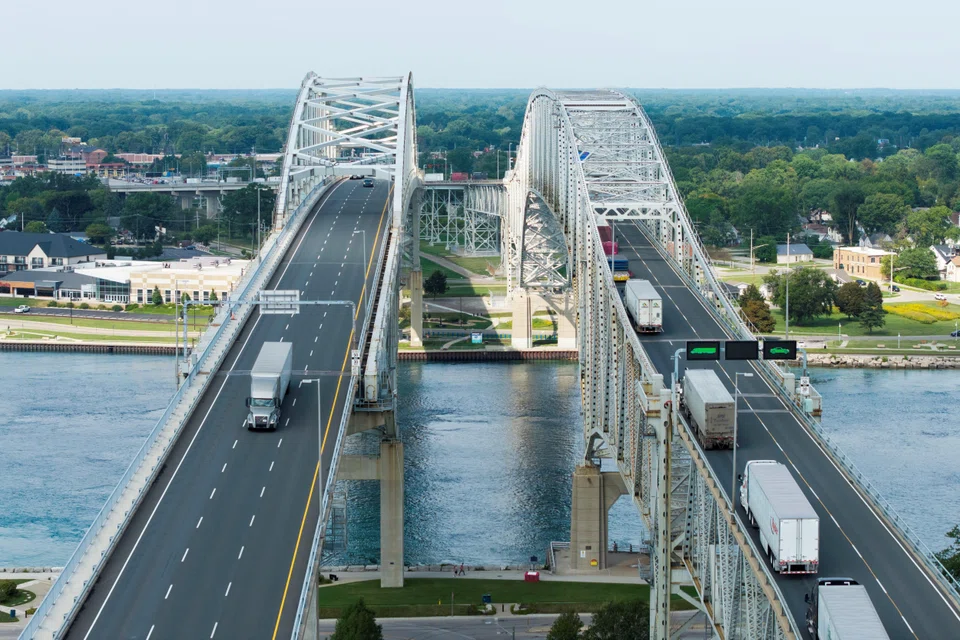
[WASHINGTON] The United States banned a broad swath of Canadian alcoholic beverages, motorcycles and dairy products from import on Tuesday (Sep 8), sharply escalating an already acrimonious trade spat. The import bans, which go into effect on Sep 29 and were published on the White House's website, came after Canada's own retaliatory tariffs on US goods took effect after midnight on Tuesday. Those Canadian levies themselves followed 50 per cent tariffs that the United States imposed on some US$20 billion of Canadian goods last month, after several rounds of negotiations collapsed. The breakdown has widened a rift between the longtime allies, who have blamed each other for the failed talks, spurred Canadian Prime Minister Mark Carney to urge a further shift away from Canada's biggest trading partner, and cast doubt on the viability of the US-Mexico-Canada Agreement. "We have everything we need to pivot and prosper," Carney said on Tuesday in a video posted on YouTube. "That pivot will come at a cost. There's always a cost to action. But it doesn't come close to the cost of standing still," he said. The US bans appeared to cover most alcohol products, including beer and various types of wine, whisky, bourbon, rum, vodka, vermouth, tequila, mezcal, and brandy. The dairy ban covers whey protein, invert molasses, cane molasses and non-alcoholic beer, per notices on the White House's website. In addition to the import bans, various cheese products were added to a list of products subject to a 50 per cent tariff, but not banned outright. Some paper, aluminum, wood, furniture, lighting and other products were also added to the list. A US official said President Donald Trump's pre-existing threat to increase tariffs on Canadian autos from 25 per cent to 50 per cent on Jan 1 remained in effect.
The official added that US Trade Representative Jamieson Greer had spoken with Dominic LeBlanc, Canada's minister responsible for bilateral US trade, over the past couple of days, and the pair were expected to speak again in the coming days to see if there was an alternative path for the two countries. In a social media post on Tuesday night, LeBlanc criticised the latest US measures and said he was in contact with Greer regarding a path forward. "As has been the case for the last 18 months, our first priority remains on protecting and supporting Canadian workers, farmers, families, and businesses from these unjustified actions," he wrote. Ottawa strikes back Ottawa's retaliatory measures, which in turn provoked Washington's move on Tuesday night, were designed to put economic and political pressure on Washington, Canadian government officials said. Those counter-tariffs cover some US$20 billion of US goods, with duties ranging from 15 to 50 per cent across products from steel and furniture to clothing and electronics, and are expected to hit sectors in some competitive states such as Michigan and Ohio, ahead of US midterm elections in November. While the tariffs affect a small amount of exports compared with total trade between the US and Canada, some analysts worry the standoff could destabilise the US-Mexico-Canada Agreement, the free-trade pact that succeeded Nafta. Together they have underpinned commerce across North America for decades. "What we are worried about is an escalatory spiral," said Michael Harvey, executive director of the Canadian Agri-Food Trade Alliance and a member of Carney's advisory committee on bilateral U.S. economic relations. "But at the same time, we totally understand that the prime minister needs to find areas of leverage." Trump has been lobbing various attacks at Canada on Truth Social in recent days. On Monday, he said Canadian private jet maker Bombardier would no longer be allowed to sell its planes in the United States unless it started manufacturing in the country. He also shared a map of North America draped in the US flag, including Canada and Mexico, and an AI-generated image reviving a running jab at Carney, calling him "Governor," a reference to his repeated taunt that Canada should become the 51st US state. On Tuesday, hours before the latest import bans, Trump directed the General Services Administration, a US government body responsible for providing services for the federal government, to coordinate with the US Trade Representative and "REMOVE Canadian-origin products from GSA’s Multiple Award Schedules unless Canada restores full and fair reciprocity for American Farmers and Companies." Various sectors hit Trump's tariffs implemented last month hit sectors including wine, furniture, dairy products, cement, clothing, fishing rods and hockey equipment, covering US$20 billion, or 5 per cent, of Canadian exports to the US. A Sapporo spokesperson said the brewer is considering moving a limited amount of production of non-alcoholic drinks from Canada to the US due to tariff risks, but no final decision has been made. Sapporo owns Ontario-based Sleeman Breweries. Canada accounts for more than half of the Japanese firm's overseas beer sales. According to Canadian and US government data, Canada has shipped almost 68 per cent of total exports to the U.S. this year, out of which roughly 80 per cent moved duty-free due to exemptions under the USMCA pact. Protections under the agreement have provided the domestic economy some resilience. Last month's tariffs, imposed under a Depression-era US law, do not allow Ottawa to exercise USMCA exemptions. Concerns about the USMCA's future have fueled uncertainty about investment and growth, as Canada wages a trade war against an economy 13 times its size. Polls also show Carney has broad support from Canadians, but that could disappear within months as the consequences of the trade war sink in, according to political analysts. A new poll from Angus Reid on Tuesday showed that approval of Carney's performance jumped 11 points to 62 per cent from an August poll. Meanwhile, just 20 per cent of Americans approved of Trump's tariffs on Canadian goods, a Reuters/Ipsos poll found. Trump threatened last month to raise US tariffs on all cars, trucks and automotive parts from Canada to 50 per cent starting Jan 1, and signed an executive order renaming Lake Ontario as Lake America. REUTERS
Decoding Asia newsletter: your guide to navigating Asia in a new global order. Sign up here to get Decoding Asia newsletter. Delivered to your inbox. Free.
Share with us your feedback on BT's products and services
TRENDING NOW
GCash parent Mynt rises in market debut after South-east Asia’s top 2026 IPO

In the age of AI, what is a university education for?

Singapore to use ‘every legal and regulatory lever’ against companies linked to haze: Shanmugam

‘IPOs are not the only vehicle’: KKR heads for record exits even as firms stay private for longer

