

Trump pledges to escalate attacks until Iran relents on Hormuz
The US president seems increasingly frustrated with Teheran and its persistent maritime strikes
 Add BT as a preferred source
[DUBAI] US President Donald Trump said that he would intensify the US’ bombardment against Iran until it stops attacking ships in the Strait of Hormuz and agrees to open the waterway.
American forces hit Iranian military targets overnight for a fourth straight day, again prompting counterstrikes from Teheran on US bases in Gulf Arab states, including Kuwait and Bahrain.
A US-Iran interim peace deal signed on Jun 17 has all but collapsed over the past week as the two sides feud over control of the vital strait, through which the likes of Saudi Arabia, Qatar and the United Arab Emirates (UAE) send most of their energy exports.
Oil rose for a third day on Wednesday (Jul 15), with Brent jumping to almost US$86 a barrel, taking its gain this week to 13 per cent.
With Iran attacking vessels that it says are crossing the chokepoint without its permission, Trump decided to end a waiver on Iranian oil sanctions and reimpose a naval blockade, before also striking the country again.
So far, the US president has mostly kept to military targets in the south of the Islamic Republic such as radar, missile and drone sites.
The bombing campaign remains far less intense than during the height of the war in March and early April, when Teheran and other major cities were under constant fire.
Trump pledged to bomb again on Wednesday night and continue until Iran relents.
“We’re going to hit them very hard tomorrow night,” he told Fox News on Tuesday. “We’re going to hit them very hard the night after. And then next week it gets really bad for them because next week comes the power plants. We’re going to knock out all of their bridges unless they get to the table and negotiate.”
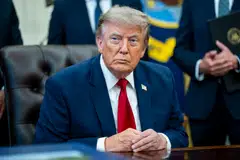
Energy targets in Iran will be left “for last”, he added.
The president, whose polling numbers in the US have been hit by growing discontent over the war, seems increasingly frustrated with Iran and its persistent maritime attacks.
Each side blames the other for breaching the terms of the so-called memorandum of understanding (MOU), which was worded ambiguously with regards to how quickly vessels would have free passage through Hormuz.
As well as reopening the strait, the preliminary deal was meant to lead to extensive talks about curbing Iran’s nuclear programme and a permanent peace. But those negotiations are stalled as the warring sides focus on Hormuz.
Iran shows little sign of backing down.
On Wednesday, the Islamic Revolutionary Guard Corps (IRGC) – whose navy is behind many of the threats against commercial vessels – said that the strait will remain closed until the US ends its strikes and the blockade of Iranian ports.
“The region’s oil and gas exports are either available to all or available to none,” the IRGC said, according to a report from Iran’s Press TV.
US strikes have killed more than 30 civilians in recent days, the Iranian government said. Teheran’s military, on Wednesday, said that seven people were killed by a missile attack on barracks in the town of Iranshahr in the south east.
Trump backed away from a plan to charge a 20 per cent fee on cargo shipments through the strait after the US’ Gulf Arab allies urged him to drop it. He announced the change on Tuesday, just a day after floating the fee, which would have forced the biggest oil tankers to pay around US$35 million.
He said that he would replace the “reimbursement fee” – meant to compensate Washington for helping ships get through the chokepoint unharmed – with trade and investment deals that Gulf states would make with the US.
The likes of the UAE, Saudi Arabia and Qatar said in 2025 that they would invest trillions of dollars between them in the US over the next decade or so. There is no indication that they will boost those pledges in light of Trump’s U-turn.
The US, however, stuck with the decision to resume the naval blockade, a move that has antagonised the Islamic Republic and may further weaken its beleaguered economy. The blockade was first imposed in April and lifted in June after the MOU was agreed.
Trump’s reversal on Hormuz fees underscored the volatility of the US’ policy toward the strait, which carried roughly one-fifth of global oil and liquefied natural gas flows before the war.
US officials have alternated between insisting passage should remain free and debating who, if anyone, should charge for transit.
The move also illustrates the bind Trump is in as he tries to end a conflict that the US and Israel began on Feb 28, saying it was necessary to stop the country building a nuclear weapon.
Teheran has always denied wanting to do that, though it has enriched uranium almost to weapons-grade levels. BLOOMBERG
Decoding Asia newsletter: your guide to navigating Asia in a new global order. Sign up here to get Decoding Asia newsletter. Delivered to your inbox. Free.
Share with us your feedback on BT's products and services
TRENDING NOW

HDB lapses saw flats allocated, housing grants given to ineligible applicants: AGO report

What makes a good job? Feeling that you matter
A new kind of ‘ceasefire’ between US and Iran where talks, strikes are part of the same process

DeepSeek founder Liang Wenfeng becomes the world’s richest AI model creator

