Trump’s full blockade of Hormuz threatens the already fragile ceasefire. Will the war resume?
The US wants the strait opened as quickly as possible, to avert another spike in oil prices
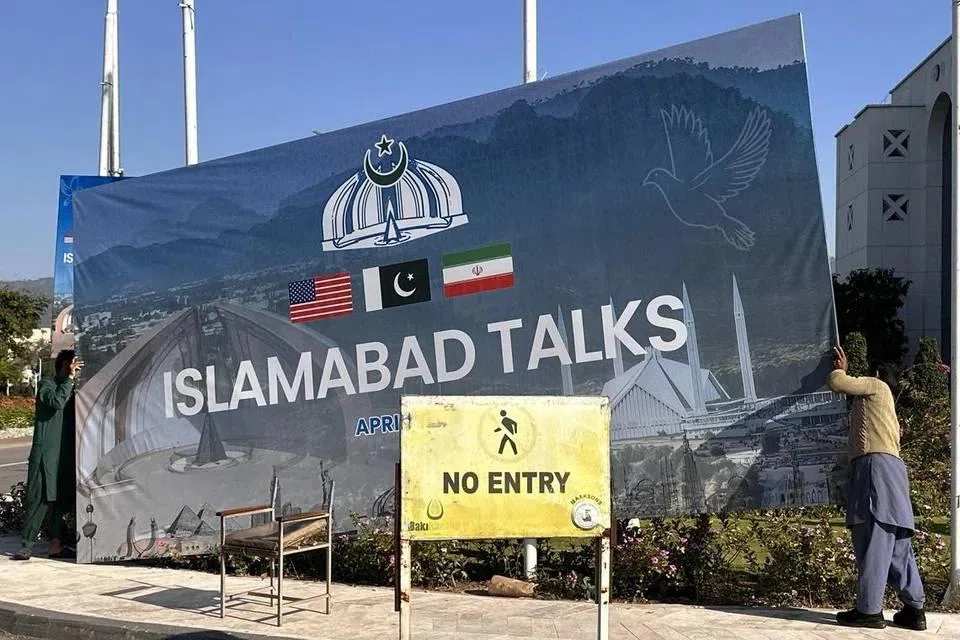
[LONDON] US President Donald Trump’s decision to impose a full naval blockade on Iran threatens to derail an already fragile two-week ceasefire and may well unleash a new and far more dangerous warfare in the Gulf.
Responding to the failure of talks held over the weekend between the United States and Iran in the Pakistani capital of Islamabad, Trump said on Truth Social that “effective immediately, the United States Navy, the finest in the world, will begin the process of BLOCKADING any and all ships trying to enter, or leave, the Strait of Hormuz”.
He added that the US Navy was instructed to “seek and interdict every vessel in international waters that has paid a toll to Iran”, accusing the Iranians of extortion.
In his postings, Trump also repeated the threat that “any Iranian who fires at us, or at peaceful vessels, will be BLOWN TO HELL!”
If carried out, the US President’s order effectively turns the tables on Iran by responding to Iran’s own blockage of the Strait of Hormuz, through which a fifth of all the oil and gas trade passes, with a US-led wider blockade that will prevent Iran from trading in any commodity.
However, this does nothing to alleviate global energy shortages and is almost guaranteed to lock the US into a bigger and more intensive military campaign.
Given half a century of animosity between the US and Iran and the six weeks of the current war, it is unsurprising that both US and Iranian diplomats engaged in a great deal of bluff and brinkmanship before their Islamabad talks.
Hours before the negotiations started, Mohammad Bagher Ghalibaf, the Speaker of the Iranian Parliament who headed his country’s delegation, vowed that he would not even travel to Islamabad unless the US forced Israel to stop its offensive in Lebanon and the Americans started to release Iran’s financial assets, which have been frozen in banks around the world for decades.
And after both delegations arrived safely at the luxury Serena Hotel in the Pakistani capital, the Iranians announced that they would not sit down to face-to-face talks with the US; Pakistani negotiators were asked to act as go-betweens.
SEE ALSO

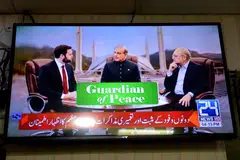
In reality, however, Ghalibaf and his delegation not only sat down with the Americans for long hours of negotiations, but also shook hands with US Vice-President JD Vance, and avoided making any public statements derogatory of the Americans, as Iranian negotiators used to do in the past.
And despite their prior denials, the Americans also accepted that Israel’s current military offensive in Lebanon and the question of Iran’s frozen assets are part of any potential deal. Both sides used bluff to harden perceptions about their stances, yet both discarded their hardline claims.
So, although the Islamabad talks yielded no concrete results, they remain an important achievement. They were the highest level of diplomatic contacts between the US and Iran since the Iranian revolution and the establishment of the Islamic republic in 1979.
And although they come from very different political systems, both the Iranian and US top negotiators knew that their future careers may be affected by their handling of the talks.
For Vance, the Islamabad trip was his most important diplomatic assignment to date, a potential booster to his anticipated presidential bid at the 2028 US elections.
Meanwhile, Ghalibaf is widely regarded as Iran’s real leader, given that Mojtaba Khamenei, Iran’s new supreme leader, has yet to be seen and is rumoured to have been gravely wounded in US or Israeli air strikes.
In short, the leaders of both delegations were incentivised to handle themselves with calm and appropriate decorum.
Still, the gap between them remains huge.
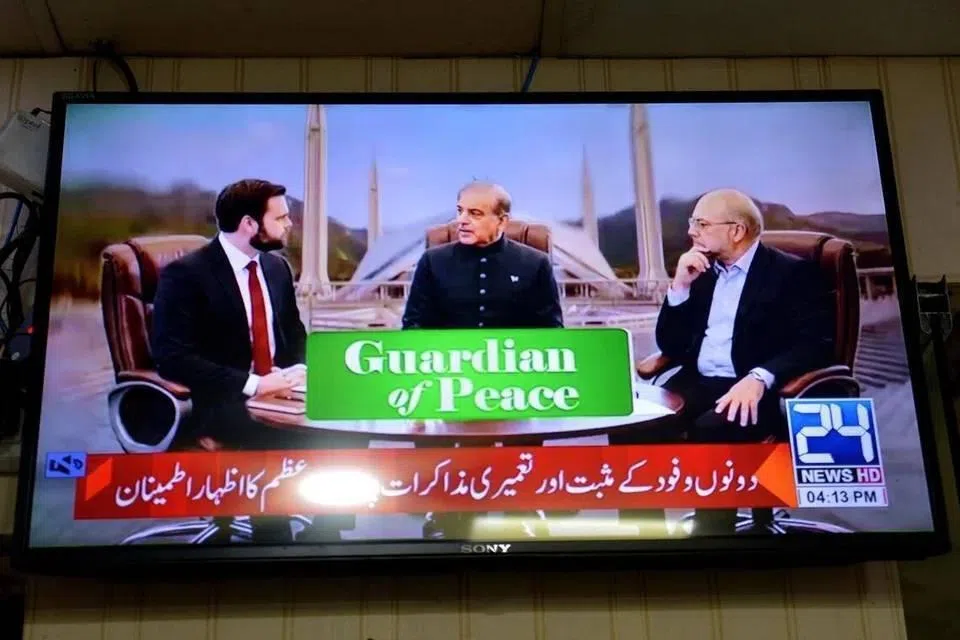
The US demands that Iran agree to hand over its estimated 440kg of highly enriched uranium, accept restrictions on the number of ballistic missiles it will have in the future, and immediately open up the Strait of Hormuz to all shipping without any restrictions on navigation, and without charging transit fees.
For their part, the Iranians are expecting an immediate release of their frozen assets, which they estimate to be worth at least US$100 billion (S$127 billion) but reject demands to either hand over their nuclear material or accept any limitations on their missile stocks. Furthermore, Iran is prepared to lift its stranglehold over Hormuz only as part of a peace treaty with the US, something which will take years to negotiate.
Notwithstanding this huge gap, there are plenty of possible compromises to allow both sides to claim victory without the resumption of war.
Iran’s nuclear disarmament – a “red line” for the US, as Vance put it in Islamabad – will always take a long time, if only because all of Iran’s nuclear installations have been hit by the US and Israel and are now inaccessible.
So, Iran and the US could reach a compromise that allows international inspectors to tour the sites, leaving a final decision on the fate of the enriched uranium to a later date.
Restrictions on the number of missiles that Iran can hold have always been fungible, so they should hardly be a deal-stopper. And Iran has already backpedalled on its insistence that any deal with the US must include a halt to Israel’s offensive in Lebanon.
Even on the thorny subject of unfreezing Iranian assets, a compromise is available, in the shape of US$6 billion worth of Iranian funds frozen in 2018 in banks in Qatar. These have been promised to Iran in 2023 as part of a prisoner swop, and could be released now as a first financial inducement to Iran’s battered economy.
Strait of Hormuz remains largest sticking point
The biggest sticking point remains the Strait of Hormuz, where no fudge is possible. The US wants the strait opened as quickly as possible, to avert another spike in oil prices and even bigger turmoil in the global economy. But for Iran, the strait is now the country’s most powerful weapon, much more significant and practical than Iran’s nuclear aspirations.
The time calculations of both sides also do not align.
The US needs a deal on Hormuz now; the Iranians have every incentive to drag the discussions as long as possible in the hope that the political and economic pressure on Trump will force him to abandon his Gulf military adventure.
Trump’s decision to impose a naval blockade on Iran is designed to signal to the Iranians that they cannot afford to dither and that, if they continue levying a fee from any passing ship or discriminate between the nationalities of various vessels, Iran will not be able to sell any of its own oil or engage in any other trade.
And, since the US and Israel also dominate Iran’s airspace, they retain the ability to prevent Iran from airlifting any essential supplies.
The snag with this blockade is that it may take weeks or even months before the Iranians may even begin to feel the need for capitulation, yet meanwhile, it immediately condemns oil and gas consumers around the world, and particularly those in Asia, to far greater shortages.
Yet as seen from Washington, this move is preferable to accepting Iranian demands to exercise dominance over the international waterway.
The threat of a naval blockade also renders irrelevant Trump’s initial plan, which was to destroy Iran’s oil industry by bombing the country’s export facilities on Kharg Island, further north in the Gulf.
Technically, the current ceasefire remains in place, allowing some time for both sides to resume diplomatic discussions.
But at least for the moment, everything points to further brinkmanship and bloodshed. THE STRAITS TIMES
- Jonathan Eyal is based in London and Brussels and writes on global political and security matters.
Decoding Asia newsletter: your guide to navigating Asia in a new global order. Sign up here to get Decoding Asia newsletter. Delivered to your inbox. Free.
Share with us your feedback on BT's products and services