

Trump’s Maduro capture is about drugs, immigrants and China
The US military operation neatly unifies three aims of the Trump administration
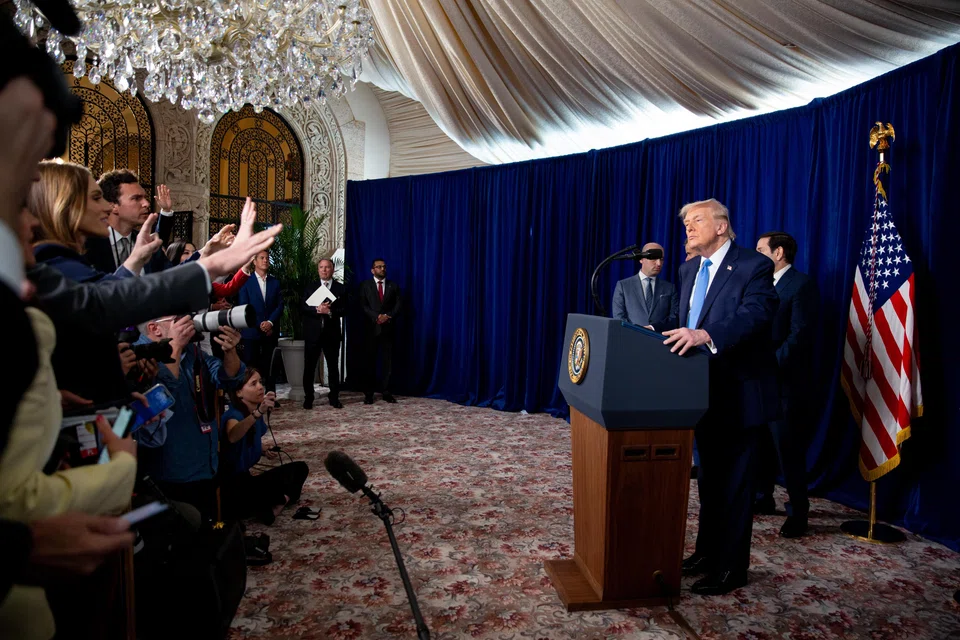
[AUSTIN, Texas] No muddy boots marching on distant soil and, certainly, no high-minded ideas of nation-building.
The US military operation that whisked away Venezuela’s sitting president from a fortified compound in the heart of capital Caracas neatly unified three aims of the Trump administration – stopping the flow of illicit drugs across the southern border, snuffing out illegal immigration and countering China’s lengthening shadow over Latin America.
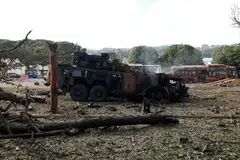
In the extraordinary early morning operation on Jan 3, 150 US military aircraft first disabled Venezuela’s air defences.
Then, helicopters dispatched an “extraction” team to snatch Nicolas Maduro and his wife of more than 30 years, Cilia Flores.
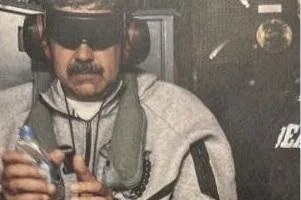
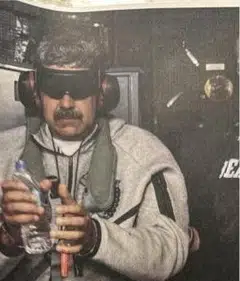
Handcuffed, blindfolded and wearing noise-cancelling headphones, Maduro was captured on TV cameras as he landed in New York to face “American justice on American soil”.
The two are set to face drug trafficking and narco-terrorism charges emerging from a 2020 indictment, in a trial that could begin as early as Jan 5 in the Southern District Court of New York.
Few doubt that Maduro oversaw a brutal regime that repressed political freedoms and human rights and enabled drug trafficking. But the US strikes were illegal under international law: The United Nations charter forbids such actions unless they are for self-defence against an imminent threat.
Even then, the use of force must be necessary and proportional.
And as head of state, Maduro was entitled to full personal immunity from prosecution in US courts. The catch here is that he was not recognised as a legitimately elected leader by the US and many other nations, even though he enjoyed close relations with US geopolitical rivals China and Russia.
The timing of Maduro’s capture, just hours after he had reportedly met a Chinese envoy to reaffirm strategic ties, sent a message to China that the Western Hemisphere remains a US sphere of influence where Beijing’s presence will be challenged.
The operation comes after China in December 2025 war-gamed combat operations in the Western Hemisphere and released an official strategy for Latin America, notable in refusing to see the region as having special significance for the US.
While Americans are likely to approve a show of force tinged with an avowedly moral objective executed flawlessly, any bump in Trump’s popularity is likely to be short-lived. Much will depend on what comes next.
The US President has promised to “run” Venezuela in the aftermath of Maduro’s removal, opening the possibility of a messy, protracted US involvement. He has also committed to investment by American oil companies in Venezuela, with the aim to build up oil infrastructure in the country.
That will take time. And a significant commitment of resources and political capital, apart from running counter to Trump’s political objectives by taking him further away from his America First mantra, which unites his Make America Great Again (Maga) base.
Already, he has cut ties with Georgia congresswoman and America First evangelist Marjorie Taylor Greene over his foreign preoccupations. Greene, who is resigning from her seat over differences with Trump, took to social media to protest.
“This is what many in Maga thought they voted to end,” she posted. “Boy were we wrong.”
Owning the backyard and sending a message to China
Resolving the Maduro problem will help the US address Trump’s priorities: migration, drugs and China, said one analyst.
Dr Joseph Ledford, a US foreign policy historian at the Hoover Institution, said the Trump administration had “identified the Maduro regime as the nexus for all the major threats facing the hemisphere, from allying with hostile extra-hemispheric powers and supporting transnational criminal organisations to weaponised mass migration”.
Tackling the Maduro problem also marked America’s definitive return to hemispheric defence, which the recent National Security Strategy articulated, he said.
The strategy, announced on Dec 4, said the US’ highest priority is securing the Western Hemisphere
Critics said it means a more insular America, tending to its own backyard.
But Dr Ledford said capturing Maduro was not about retrenchment of US power.
“The Trump administration acknowledges in both word and deed that the US cannot persist as a global superpower without securing its own hemisphere. Indeed, America cannot deter enemies and support allies without it.
“What would be the point of great power competition with China if the US couldn’t counter China in its own hemisphere?
“Foreign policy starts in your own neighbourhood. But this doesn’t mean the US won’t project power to protect its interests elsewhere, especially in Asia,” he said.
China, which condemned the action as “blatant use of force against a sovereign state”, has already displaced the US as the top trading partner for nearly all of Latin America’s 33 nations.
Its investments in the region, which span energy, mining, manufacturing and infrastructure, stand at around US$240 billion. It is also aggressively acquiring stakes in fintech and artificial intelligence-driven start-ups.
Critics said China can draw lessons from the US action in Venezuela for a potential invasion of Taiwan, a self-ruled island claimed by Beijing.
Gregory Poling, who directs the South-east Asia Programme and Asia Maritime Transparency Initiative at the Center for Strategic and International Studies, said the US action was yet another blow to international law and “normalised military adventurism” for China or Russia.
“This model of an unchecked American presidency makes foreign policy more unpredictable because decisions are based on the president’s personal whims more than any coherent vision of the national interest,” he added.
Poling was dismissive of the suggestion that the actions in Venezuela sent a message of US resolve to act to protect its interests.
“Some may say that because a degree of sycophancy is necessary from US allies these days,” he said.
“But even those who recognise that Maduro was illegitimate will view the operation as legally dubious and destabilising. Especially with President Trump suggesting that the US will now administer the country to extract its oil rather than support the opposition leader.”
Was Maduro a drug trafficker?
Maduro was narrowly elected president in 2013 after his predecessor Hugo Chavez’s death.
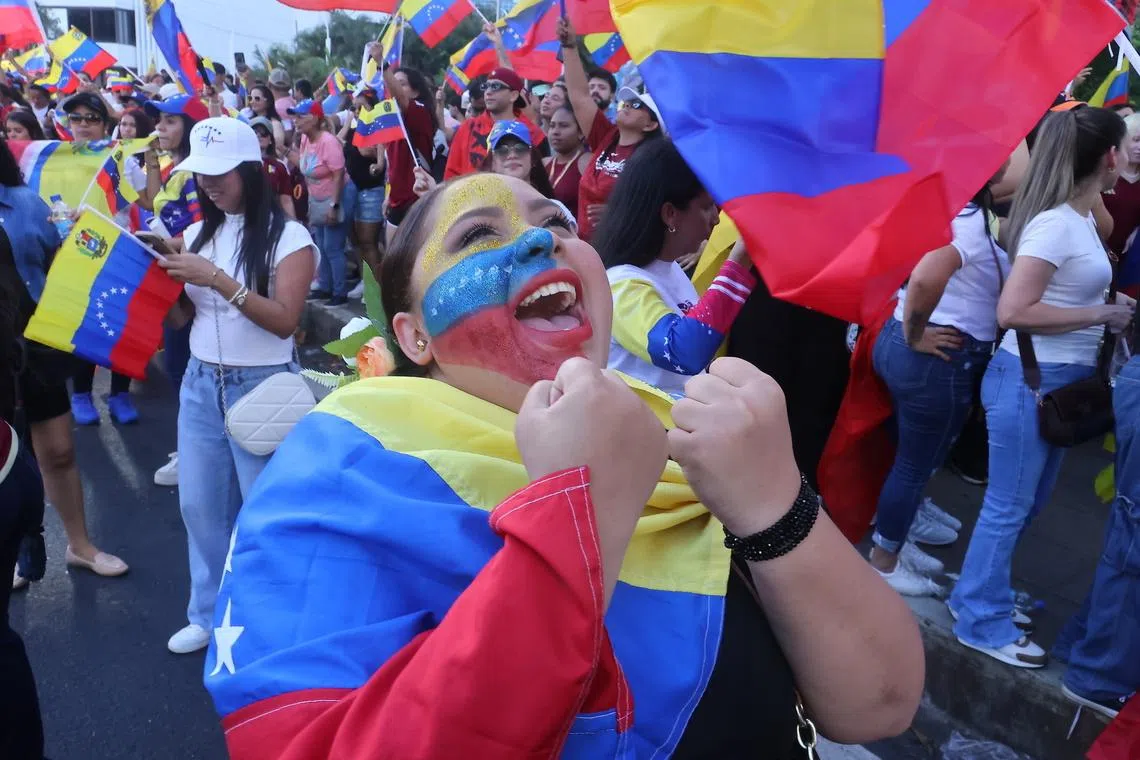
A severe economic collapse that began early in his tenure, including dire shortages of food and medicine, triggered Latin America’s largest displacement crisis, with up to eight million Venezuelans fleeing the country.
The first Trump administration imposed economic sanctions against Maduro in 2017 and then indicted him for narco-terrorism in 2020. He began a third term in January 2025 after an election widely seen as fraudulent.
Dr Vanda Felbab-Brown, senior fellow in the Strobe Talbott Center for Security, Strategy and Technology in the Foreign Policy programme at Brookings Institution, said it is unclear if Maduro had direct involvement in the drug trade.
The Trump administration has accused Maduro of being the head of the Cartel of Suns, a drug trafficking entity that operates from the country.
“It is not really obvious at all what role Maduro specifically had,” Dr Felbab-Brown said, adding that it is safe to say that he knew of drug trafficking taking place through Venezuela and was turning a blind eye to it.
“But that’s different from directly ordering, structuring and managing the drug trafficking, which is what the Trump administration has been alleging,” she said.
“The indictment has just been unsealed, so we will see whether the prosecution has sufficient evidence,” she said, adding that the drug trade would not end with Maduro’s removal.
“It involves insurgent groups and dissident groups from Colombia as well as gangs such as Tren de Aragua. Many of these will remain intact or flee temporarily to Colombia with the capacity to return,” she said.
Will Americans stick with Trump?
At first glance, the prospects are not encouraging for Trump. Opinion polls say only one in five Americans favoured US-backed regime change in Venezuela.
That said, Americans have shown approval for successful surgical strikes – like the one that killed Isis caliph Abu Bakr al-Baghdadi during Trump’s first term – where US lives are not risked and success is clear.
But such support may not last, especially as Maduro’s trial gets under way and catalyses public debate on what amounts to an act of war and regime change.
“Given the current polarisation in American politics, if the successful apprehension of Maduro does provide a noticeable boost to the president’s job approval, it’ll be momentary,” said Dr Ledford.
In a comparable military operation, when then US president George HW Bush sent forces into Panama to capture then president Manuel Noriega in 1989, he received a 10 per cent boost in approval ratings.
“That dropped in a month’s time,” said Dr Ledford. THE STRAITS TIMES
.
Decoding Asia newsletter: your guide to navigating Asia in a new global order. Sign up here to get Decoding Asia newsletter. Delivered to your inbox. Free.
Share with us your feedback on BT's products and services






