

Trump’s midterm loss signals short-term gain, long-term pain for China
Beijing has space to fortify itself, but the next US administration may be less China-friendly
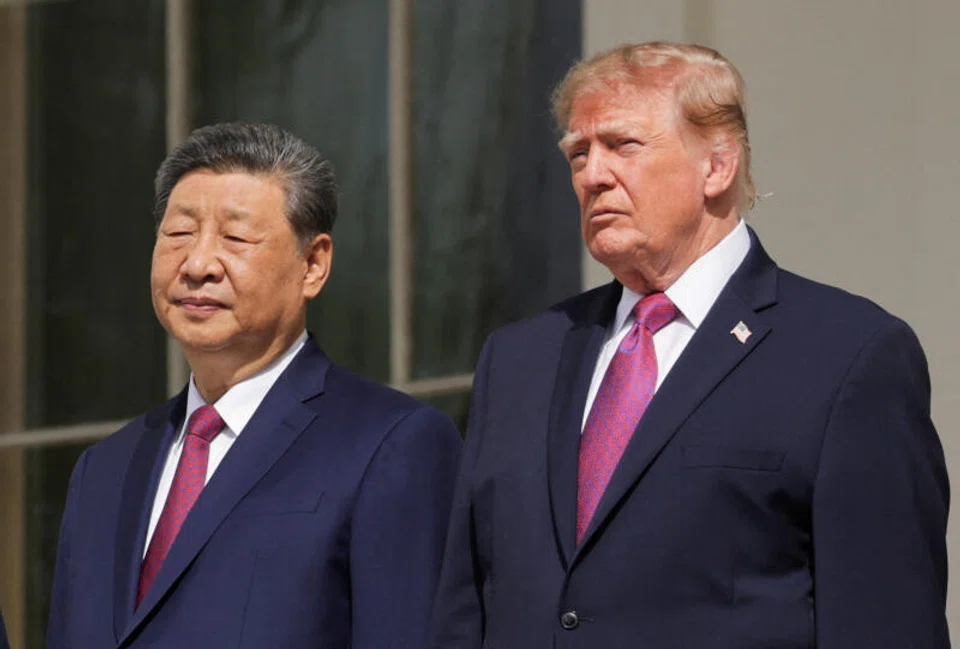
[BEIJING] The midterm drubbing of US President Donald Trump’s Republicans may strengthen China’s hand in trade talks with Washington, but Beijing is unlikely to revel in the misfortunes of a US president whose successor could prove less accommodating.
US voters angered by rising living costs, exacerbated by Trump’s trade wars with China and other countries, turned on his party in the vote on Tuesday (Nov 3), handing Democrats control of Congress.
That political humbling should make Trump more wary of unsettling a fragile trade truce with Beijing, some political analysts said, giving China a potential advantage in negotiations set to resume later in November.
Washington’s divided political landscape also gives Beijing space to fortify itself and diversify its trade ties before a potentially less China-friendly US administration takes power, some Chinese and Western analysts added.
“The Chinese are very realistic that a new president might be very different (from Trump),” said Shen Weizhong, a former Chinese Foreign Ministry official.
“But if we can have two more years of stability, that’s already a good thing for China ... The more time we have, the better prepared we might be towards a final showdown on Taiwan or maybe another trade war,” added Shen, who now works for Beijing-based think tank Global Governance Institution.

Risks for Beijing
The next two years, however, may not be smooth sailing for Beijing, other analysts said.
The risk is that Trump, constrained at home, becomes more aggressive in seeking foreign policy wins, while a Democratic-controlled Congress may push him harder to unfreeze arms sales to Taiwan, a red line for Beijing.
“There are more foreign policy actions that Trump can take that are unconventional and untold,” said senior China analyst Chim Lee at the Economist Intelligence Unit.

“The broad direction of US-China policy isn’t necessarily going to change, but I think that the concern is around less conventional foreign policy issues that would have unexpected ramifications for China,” he said.
Top among the concerns is an escalation of the Iran war into a wider regional conflict. That could trigger a sustained spike in global oil prices, threaten China’s energy security and disrupt Beijing’s ties in the Middle East.
Sensing weakness
In the short term, attention turns to imminent trade talks, with Trump set to meet Chinese President Xi Jinping on the sidelines of the APEC summit in Shenzhen later in November and then in Miami in December for the G20.
At stake is a truce in a trade war – expiring in January – that averted a major shock to the global economy in 2025.
Beijing could conclude that Trump’s political problems mean he needs a deal more than China, encouraging Chinese negotiators to press harder for tariff reductions and other US concessions, said Craig Singleton, senior fellow at the Foundation for Defense of Democracies, a US think tank.
However, that also risks a “miscalculation that unsettles the very stability Xi is trying to preserve”, he added.
Trump has repeatedly railed against what he sees as China’s unfair trade with Washington, slapping triple-digit tariffs on Chinese goods shortly after he returned to office in 2025 to address a trade imbalance he said was “killing” the US.
However, he has since significantly softened his tone, feting Xi at two grand summits in Beijing and Washington that delivered few tangible economic wins.
Trump’s bonhomie with Xi stands in contrast to his Democratic predecessor, Joe Biden, who repeatedly angered China with comments over human rights issues and a pledge that the US would defend Taiwan if Beijing attacked.
Some of Trump’s potential Republican successors, such as Secretary of State Marco Rubio, are also seen by analysts as more hawkish on China.
After the midterms, Trump could be even less willing to upset the stable relationship he has developed with China, said Wu Xinbo, a professor at Shanghai’s Fudan University who advises China’s Foreign Ministry.
Beyond trade, Trump may also seek to enlist Beijing’s help to secure other foreign policy wins as the clock ticks on his presidency – such as ending the war between Russia and Ukraine or arranging another summit with North Korea’s Kim Jong Un.
Beijing, which maintains deep trade ties with Russia and North Korea, could use that leverage in exchange for concessions from Trump, analysts said.
But after years of dealing primarily with Trump, Beijing now faces a Congress far more intent on pressing human rights issues, scrutinising Chinese investments and delivering a US$14 billion package of arms to Taiwan that Trump has said he is withholding as a “negotiating chip” with Xi.
China claims democratically governed Taiwan and has asked for the arms sales to stop.
“The Chinese will definitely react strongly against that,” said Shen, the former Chinese Foreign Ministry official, calling it “risk number one” after the midterms. REUTERS
Decoding Asia newsletter: your guide to navigating Asia in a new global order. Sign up here to get Decoding Asia newsletter. Delivered to your inbox. Free.
Share with us your feedback on BT's products and services
TRENDING NOW
Things to know about DBS’ incoming chairman Anthony Lim

DBS eyes prime brokerage business as Q3 profit falls 5% on weaker trading income

Royal Group and Sunset Hospitality abandon plans to open Casa Mett hotel off Orchard Road

George Yeo adds 100,000 Wilmar shares at S$2.97 apiece, taking stake to over 1 million shares

