

UK borrowing jumps as Reeves faces up to Iran war challenge
It is 25% higher than in April 2025 at £24.3 billion, the second-highest borrowing for the month on record
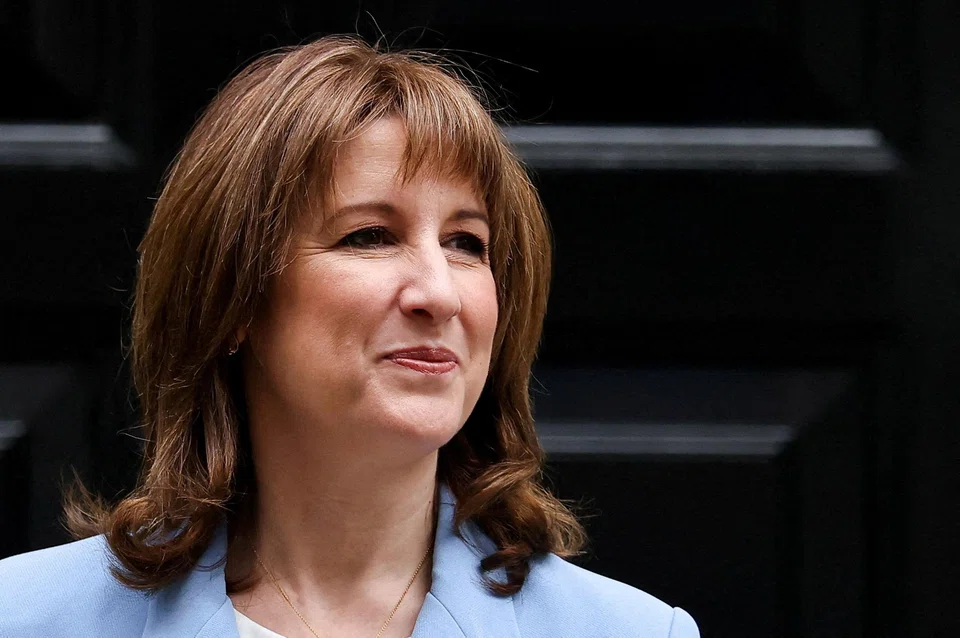
[LONDON] Britain’s public finances showed the biggest shortfall since the Covid-19 pandemic in April.
It could be an early taste of the Budget hit – caused by the Iran war – facing Finance Minister Rachel Reeves.
Borrowing during the month was 25 per cent higher than in April 2025 at £24.3 billion (S$41.8 billion), the second-highest borrowing for April on record, official figures showed on Friday (May 22).
A Reuters poll of economists had indicated a £20.9 billion deficit in April, the first month of the financial year.
Ruth Gregory, deputy chief UK economist at Capital Economics, said: “This provides an early sign of the deterioration in the public finances that is inevitable over the coming quarters.”
Reeves, who has a target of balancing daily spending with tax revenues by the end of the decade, is under pressure to help turn around Prime Minister Keir Starmer’s low standing in opinion polls, which could force him out of his job.
The Iran war has made the challenge she faces all the harder by raising the risk of an economic slowdown, which could hurt tax revenues – data released separately on Friday showed that retail sales fell by the most in nearly a year in April.
Furthermore, the conflict has already pushed up borrowing costs and is adding to demands for more public spending to protect households and businesses facing an energy-price shock.
Reeves plans support measures
Reeves said on Thursday that she would raise more tax from oil and petrol companies to fund some support measures.


Friday’s data from the Office for National Statistics (ONS) showed government receipts rose by 2.9 per cent in April from the same month in 2025, while spending was up 6.5 per cent.
Projections drawn up by Britain’s Budget forecasters before the Iran war showed public-sector borrowing was expected to shrink to 3.6 per cent of gross domestic product in the current tax year.
That would be the smallest deficit since before the Covid-19 pandemic.
However, Gregory said the combination of energy-price support measures, higher government borrowing costs and weaker economic growth was likely to swell the deficit to 4.6 per cent of GDP in the 12 months ended March 2027.
“Overall, the big picture is that the UK’s public finances are fragile. That won’t change (regardless of) whoever is prime minister,” she said.
Investors are nervous about the possibility of a change in political leadership in Britain, with many Labour lawmakers demanding that Starmer stand down.
His most likely successor, Manchester mayor Andy Burnham, has said he would stick with the fiscal rules being pursued by Reeves.
Rob Wood, chief UK economist at Pantheon Macroeconomics, said if Burnham moves into Downing Street, he would have to take unpopular measures to remain on track to meet those rules.
“Tax hikes to fund spending plans could undermine growth and worsen the fiscal arithmetic,” he added.
Borrowing in the financial year, which ended in March, was £3 billion lower than initially estimated at £129 billion, or 4.2 per cent of GDP.
It is also lower than 5.2 per cent in the 2024/25 tax year, the ONS said. REUTERS
Decoding Asia newsletter: your guide to navigating Asia in a new global order. Sign up here to get Decoding Asia newsletter. Delivered to your inbox. Free.
Share with us your feedback on BT's products and services
TRENDING NOW

Could stablecoins be the future of money?

Vietnam’s northern provinces, not Hanoi or Ho Chi Minh City, are powering near 10% GDP growth

The Assembly Place expands beyond co-living as it targets 10,000 keys by 2030

Once staunchly pro-China, Malaysian Chinese businesses are now distancing themselves from Beijing

