

UK facing long winter of soaring inflation and prospect of lengthy recession
 Add BT as a preferred source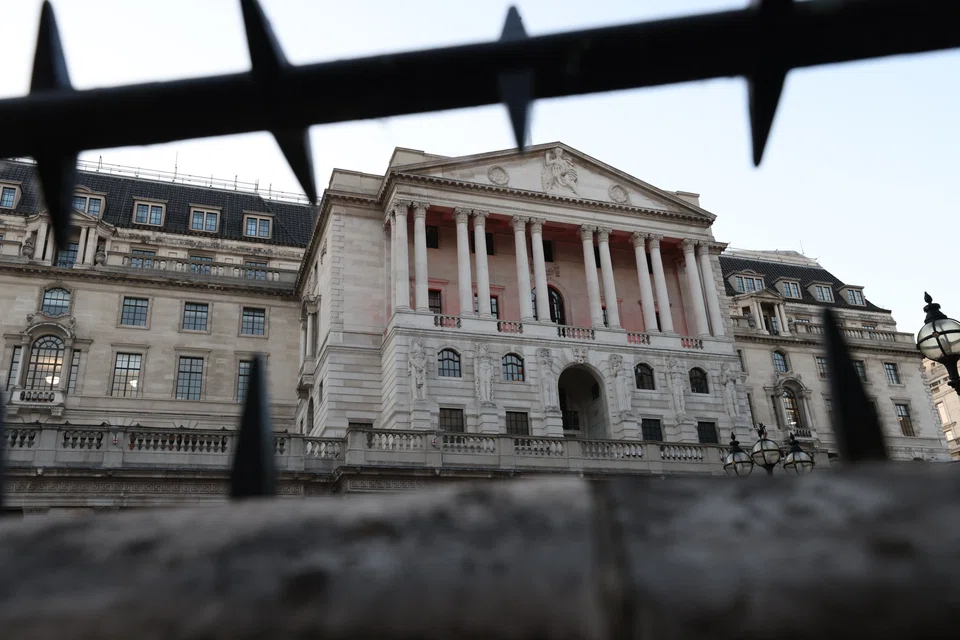
Britain is facing a long and hard winter of rampant inflation, rising interest rates and recession. Andrew Bailey, the governor of the Bank of England (BoE), gave this bleak outlook during a press conference on Thursday (Aug 4) in which he forecast that inflation would jump to 13.3 per cent in October, the highest level since 1980 and way above the central bank’s earlier target of 2 per cent.
In tandem with higher cost-of-living facing Britons, the BoE forecasts a protracted recession that will last as long as 15 months, causing the UK economy to shrink by 2.1 per cent during that time.
Despite the economic contraction, Bailey said that to control inflation, the central bank will raise interest rates by a punitive 50 basis points to 1.75 per cent. He blamed the surge in prices on the “consequences of Russia’s restrictions of gas supplies to Europe”.
His reasoning didn’t go down well with the UK public and Bailey faced a ferocious backlash from sceptical economists. They accept that energy, food and other imported commodities played a part in boosting inflation, but they claimed that Bailey had been “asleep at the wheel”. Many economists feel that the root cause of inflation is that the BOE had, over the last few years, allowed the supply of money and credit to go out of control.
Andrew Sentence, a former member of the BOE’s monetary policy committee, said that interest rates should have been raised last year and should be at the 3 to 4 per cent level already.
Brendan Brown, the director of Macro Economic Advisors, said that “reckless monetary easing” by the US, the European Union, the UK and Japan was the true cause of inflation.
He expects further weakness of the pound as foreign investors will be wary of an economy blighted by the combination of inflation and recession. The pound, which rallied slightly on Friday from a recent low of US$1.176 because of a minor US dollar downturn, is hovering at around US$1.216. In just over a year, it has depreciated by 14.5 per cent against the greenback, by 11.7 per cent against the Singapore dollar, and by 1.5 per cent against the euro.
In line with global markets, the FTSE100 index of UK multinational companies has rallied by 7 per cent since June, while the local FTSE250 index is up by 9.5 per cent. The question now is whether the rallies will last, as economists are predicting that the BoE will hike interest rates to 3 per cent next year.
Meanwhile, the 2 contenders to be Britain’s next prime minister locked horns during their latest TV debate on Thursday, with Conservative Party members making up the studio audience. And once again, both Liz Truss and Rishi Sunak demonstrated that their economic policies were far apart.

Truss, the Foreign Secretary who is slightly ahead in the polls and backed by British bookmakers to win the race, believes strongly that UK corporate and individual tax should be slashed to get the economy moving. She also wants to see long-term tax reforms and is prepared to borrow to maintain essential services.
Sunak, the former Chancellor of the Exchequer, is far more cautious. He maintains that Truss’ policies are inflationary, and he wants taxes to remain at current levels and spending to be better controlled to counter rising inflation. On the assumption that tighter fiscal and monetary policy will curb inflation, he promises to then cut taxes ahead of the UK’s next general election in 2024.
Despite the claims of both candidates, economists in the UK warned that a lengthy recession would cost the government at least £40 billion (S$66.6 billion) in lost revenue. This indicates that neither candidate’s promises to slash taxes could be carried out without resorting to further borrowing.
While the race seemed to be in favour of Truss for the last few weeks, a straw poll of the studio audience at the debate venue showed a larger number of hands raised for Sunak rather than for Truss. Even the debate host said later on that she did not expect such an overwhelming support for Sunak. This indicates that he is certainly not out of the running by a long shot.
Decoding Asia newsletter: your guide to navigating Asia in a new global order. Sign up here to get Decoding Asia newsletter. Delivered to your inbox. Free.
Share with us your feedback on BT's products and services
TRENDING NOW
Canada’s fight with the US has far bigger stakes than trade

Singapore’s new data centres must use renewables. Can they overcome the hurdles?

Record remittances fail to shield Philippine peso’s slide from mounting pressures

Air India investment has ‘not adversely affected’ SIA’s ability to serve Singaporeans for now: Jeffrey Siow

