



US 30-year Treasury yield rises to highest since 2002
The leg higher comes as inflationary angst and hefty corporate debt supply weigh on the market
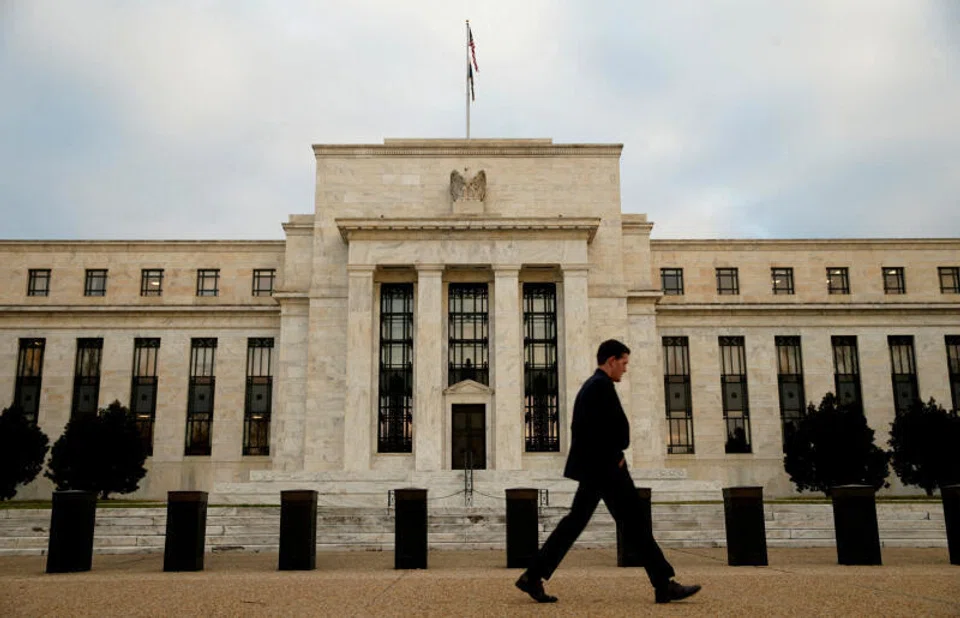
[NEW YORK] Yields on the US Treasury’s longest-dated bond rose for a sixth straight day, crossing another key threshold amid a deepening sell-off across global debt markets.
The 30-year rate surpassed 5.61 per cent on Tuesday (Sep 29) to touch a level last seen in 2002, returning deeper into territory that had long been the norm before the low-rate era spanning the global financial crisis and pandemic.
The leg higher came as inflationary angst and hefty corporate debt supply weighed on the market.
“The long end does seem cheap by historical standards, and we have yet to see the big value buyer up here,” Michael Cloherty, head of US interest rate strategy at CIBC Capital Markets, said.
“We’ve been waiting for more than a month and they’re absent.”
It is the latest in a series of milestones for the US$32 trillion Treasuries market, which is in the throes of a months-long slide.
Government debt has been flailing around the world as elevated oil prices – tied to the war in the Middle East – ripple through the global economy, pushing investors to bet central banks including the US Federal Reserve will further raise interest rates.
Those expectations moderated on Tuesday in response to comments by John Williams, president of the Federal Reserve Bank of New York.
Williams said “one further upward adjustment” to the central bank’s target range for a US overnight lending rate “may be appropriate late (in 2026)” to contain inflation.

Market-implied expectations have been for at least one quarter-point rate increase by end-2026 – as soon as at the next meeting in October – and close to three more by mid-2027.
The US two-year yield, more sensitive than longer maturities to changes in the Fed outlook, declined as much as five basis points before settling around 4.89 per cent after Williams’ comment.
Dan Carter, senior portfolio manager at Fort Washington Investment Advisors, called it “a pretty stark contrast with a lot of the other Fed speakers”, who have expressed urgency to raise rates further.
Jobs data ahead
Wagers on an October rate hike are likely to remain mostly in place at least until Friday, when the monthly US employment report for September is set to be released, Carter said.
In the US, surging business activity and concern about government debt levels have provided additional momentum to what has become the biggest Treasury sell-off since US President Donald Trump’s April 2025 tariff rollout sent markets into a tailspin.
The growth narrative remained intact on Tuesday even as data showed a deterioration in consumer confidence and a decline in job openings.
Also pressuring the market, Paramount Skydance kicked off its long-awaited investment-grade bond sale, the largest portion of a syndicated US$52 billion debt package for its acquisition of Warner Bros Discovery.
The firm is looking to raise about US$32 billion from the sale.
“We have the fifth-largest investment-grade deal on record,” said Monty Gandhi, a rates strategist at SMBC. “Some of this move in the long end is likely related to that.”
Strategists at Citigroup say the Treasury market is going through a “light buyer’s strike”.
Meanwhile, Yardeni Research says an unwind of the yen-funded carry trade – a strategy that involves borrowing in the Japanese currency and investing in assets that offer higher returns – is helping fuel the sell-off.
But some, like Wall Street veteran Jim Bianco, see an opportunity in the chaos. He is turning bullish on Treasuries for the first time in six years, while long-time bond investor Chris Iggo said bonds are set for a rebound after four difficult years.
RBC BlueBay Asset Management chief investment officer Mark Dowding said the sell-off in the global bond market has been overdone.
Treasuries have lost 2.6 per cent so far in 2026, a Bloomberg gauge shows, compared with a 6.3 per cent gain in 2025.
The sell-off has hit debt across maturities, with the 10-year yield, at 5.25 per cent, trading near its highest since 2007. Two-year yields are the last major maturity to linger below 5 per cent.
Seasonal pressure
This time of year also tends to be difficult for bonds.
Over the past decade, Treasuries have posted a median loss of 0.9 per cent in September, followed by 0.7 per cent in October, data compiled by Bloomberg show.
And while this month is already shaping up to be the worst September since 2023, the ongoing US-Iran war, fiscal concerns and a hawkish Fed are raising the risk that losses will extend into October.
“It’s been a train wreck in rates over September, and the pain trade may continue,” said Prashant Newnaha, strategist at TD Securities.
“As long as there is no Middle East resolution, there is a risk that we see ongoing de-risking in fixed income and it could spread to equities as well.”
The “seasonal test” for Treasuries typically comes in October, as bond supply ramps up and investors return from the summer lull, said Masahiko Loo, senior fixed-income strategist at State Street Investment Management.
“Going into Thanksgiving, the combination of renewed Treasury supply, heavy credit issuance and relentless AI capex demand suggests competition for capital remains intense, keeping the risk of further Treasury volatility elevated,” said Loo. BLOOMBERG
Decoding Asia newsletter: your guide to navigating Asia in a new global order. Sign up here to get Decoding Asia newsletter. Delivered to your inbox. Free.
Share with us your feedback on BT's products and services






