

US dollar eases as Middle East hopes outweigh prospects of higher US rates
Fed funds futures traders see a 70% chance of a hike by December, says financial dashboard CME FedWatch
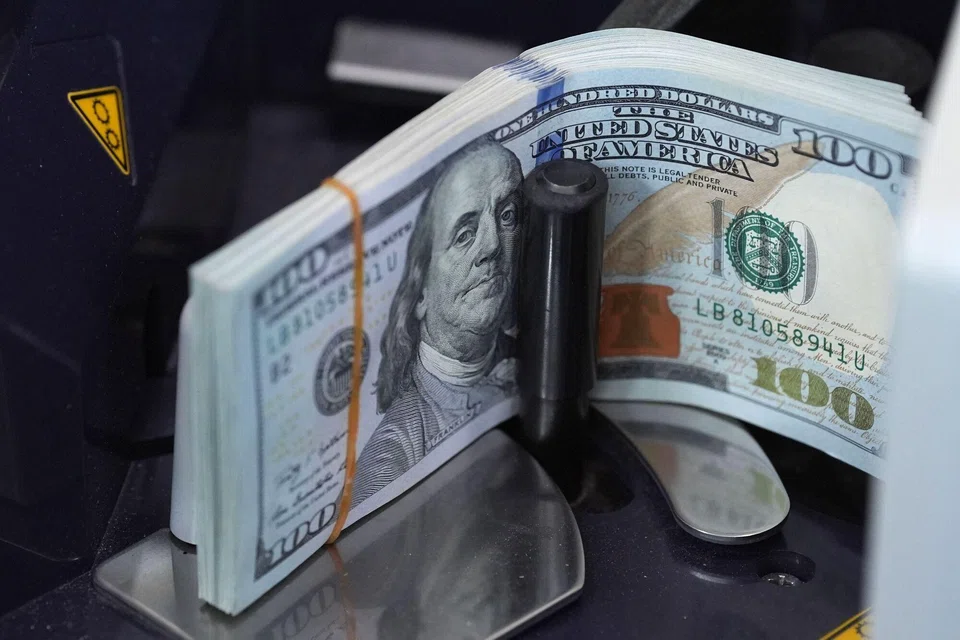
THE US dollar fell on Tuesday (Jun 9), as hopes for a deal to reopen the Strait of Hormuz outweighed expectations of higher US interest rates ahead of fresh data later this week.
The US economy is relatively insulated from energy shocks compared to other countries, which is one of the reasons why investors have flocked to the safe-haven US dollar during the Iran conflict, while selling the euro and the Japanese yen.
Conversely, investors tend to sell the greenback against the euro and yen when developments in the Middle East point to a possible peace deal, which could ease oil prices.
US Treasury yields surged on Friday after data showed that US employers added far more jobs than expected in May, bolstering bets that the US Federal Reserve will raise rates later this year.
“After Friday, the market’s growth-driven narrative may have given way to a real rates-driven narrative,” said Thierry Wizman, global forex and rates strategist at Macquarie Group.
Investors are now keenly eyeing US inflation data on Wednesday for further clues to the Fed’s next moves. Fed funds futures traders now see a 70 per cent chance of a hike by December, according to financial dashboard CME FedWatch.
Iran and Israel said on Monday they had halted attacks on each other after an appeal from US President Donald Trump, though Teheran warned it would resume hostilities if Israel continued to hit Hezbollah in Lebanon.
“A situation of ‘no deal, no war’ between the US and Iran may not be able to last indefinitely,” Macquarie Group’s Wizman argued.
“The US administration would want to reopen the Strait of Hormuz by force at some point, presumably as the global visible inventory of crude oil depletes below viable threshold levels.”



The US dollar index, which measures the greenback against a basket of currencies including the yen and the euro, was down 0.24 per cent at 99.77, after reaching 100.21 on Monday, its highest since Apr 6. It hit 100.64 at the end of March, its highest since May 2025.
Concerns over hawkish ECB
The euro was up after a pause in direct strikes in the Middle East, with investors turning their attention to the upcoming European Central Bank (ECB) policy meeting, where a 25 basis-point rate hike is widely expected.
The single currency was 0.1 per cent stronger at US$1.1545 after hitting a two-month low in the previous session.
The markets will be closely watching the ECB’s policy announcement on Thursday for any signals on the rate outlook, with some analysts noting that the central bank is unlikely to push back against current rate expectations.
Traders have factored in two additional rate hikes beyond the expected move this week.
Laura Cooper, global investment strategist at Nuveen, said: “The risk this week is that (ECB) policymakers paint an even more hawkish picture, with projections showing a larger inflation overshoot, and language suggesting the risk of a need for a sustained tightening process rather than a one-time adjustment.”
Resilient growth and persistent inflationary pressures are likely to keep market expectations tilted towards further US rate hikes, even as a potential US-Iran deal could provide some relief.
The Japanese yen weakened to as low as 160.22, continuing to hover around the 160 level widely seen as a line in the sand for potential official intervention.
A Bank of Japan (BOJ) rate hike at the Jun 16 policy meeting is now almost fully priced in, meaning it is unlikely on its own to trigger a significant reversal in yen weakness if delivered.
“Failure to follow through and hike rates again would trigger a much bigger negative market reaction for the yen, adding to investor concerns that the BOJ is behind the curve in fighting inflation risks in Japan,” said Lee Hardman, senior currency economist at MUFG.
The risk-sensitive Australian dollar was up 0.14 per cent at US$0.7054. REUTERS
Decoding Asia newsletter: your guide to navigating Asia in a new global order. Sign up here to get Decoding Asia newsletter. Delivered to your inbox. Free.
Share with us your feedback on BT's products and services
TRENDING NOW
DBS remains analysts’ pick ahead of Q3 earnings after Singapore banks’ share slump

Singapore identifies 7 firms responsible for haze fires, notices issued urging action: Grace Fu

Good Class Bungalow market activity picks up pace on ‘realistic’ pricing

High Court rules against Julius Baer’s Singapore trust arm in US$50 million family trust dispute

