

US losing top tech talent to India in the wake of Trump’s H-1B chaos
TWO decades ago, Kunal Bahl almost achieved the American dream.
The India-born engineer earned an MBA at the University of Pennsylvania’s Wharton School, then an internship at Microsoft. That position led to an invitation to have dinner with Bill Gates at his house, and later to a full-time job at the tech giant.
But the dream unraveled in 2007, when Bahl’s H-1B visa application was rejected. At 23, he packed his bags and returned to his home country. “My heart sank when I got word,” he said. “Such decisions are one-sided and irreversible.”
At the time, US companies were hungry for talented workers like Bahl, and policymakers were largely inclined to help keep them in the country. A highly qualified, US-educated engineer returning to India was unusual.
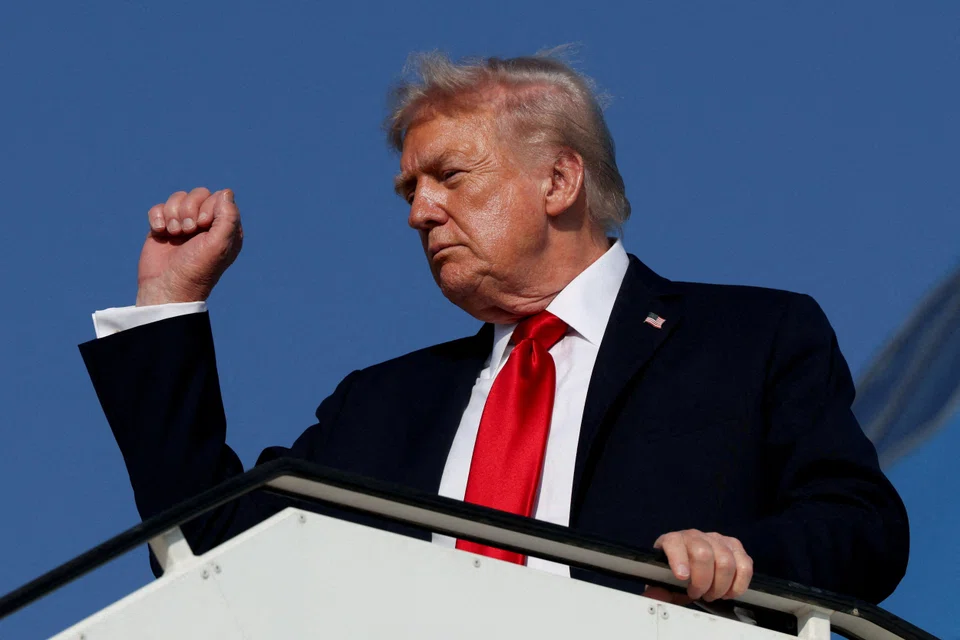
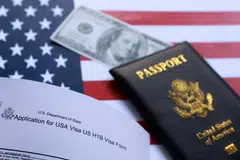
But times have changed. The Trump administration has pushed a sweeping policy agenda intended to hinder immigration. This has included a move in September 2025 to increase the fees on H-1B visa applications to US$100,000 apiece, a staggering tenfold hike, along with other changes that have made the programme less desirable to employers.
Foreign-born residents are facing increasing hostility from Washington, regardless of their legal status. For many, the long-term viability of a career in Silicon Valley seems less certain than ever.
Golden tickets running out
For decades, Indian engineers in particular have seen the H-1B programme as a golden ticket, offering a gateway to Silicon Valley, Wall Street and the uppermost echelons of corporate America.
Indian nationals receive nearly three-quarters of the yearly quota of visas, which is capped at 65,000, and about the same proportion of a separate pool of 20,000 visas set aside for those with advanced degrees.
Past H-1B visa holders include Alphabet’s Sundar Pichai and Microsoft’s Satya Nadella, now the heads of their companies.
SEE ALSO


One criticism of the H-1B programme is that many companies use it to hire foreigners at a discount, even if their skills are on par with those of many American job seekers.
Critics point to the heavy reliance on the programme by Indian outsourcing giants such as Tata Consultancy Services and Infosys, which consistently rank among the companies with the most employees in the US on H-1B visas, as evidence that the visas are used to source low-cost labour rather than hard-to-find experts.
Turning the tide
Thinking about the situation young Indian tech workers hoping to land an H-1B are facing, Bahl saw echoes of his own story. He also saw an opening. After returning to India in 2007, Bahl co-founded Snapdeal, now one of the country’s pioneering e-commerce platforms, whose investors include prominent names such as SoftBank Group and which was once valued at US$6.5 billion.
Bahl has watched the local tech industry mature to the point that it’s pulling people back home.
Days after US President Donald Trump’s announcement about the H-1B programme, Bahl pledged support for students and professionals facing visa uncertainty.
Through his venture fund, Titan Capital, he offered financial backing, mentorship and a bridge to India’s thriving tech ecosystem. His inbox was immediately flooded with more than 60 startup proposals from US-based founders.
“High-potential students and professionals are reaching out,” he said. “It’s now a trickle, but will soon turn into a gush.”
If the Trump administration’s policies inspire foreign-born tech workers to leave the US – or not to come at all – India is well positioned to benefit.
Quantifying any reverse migration is difficult; the Indian tech industry trade body Nasscom said it has no estimate of returnee numbers. But there are signs of a shift. LinkedIn, for instance, saw a 40 per cent increase in tech professionals changing their location to India in the third quarter of 2025, the latest data the platform has made available showed.
India is trying to bolster its US$4.3 trillion economy – the world’s fourth-largest – at a time when many see artificial intelligence (AI) as a rare opportunity to capitaliSe on a potential sea change in the global economy.
The government has introduced policies intended to spark a brain gain, including recent government programmes called Bharat-Talent and Bharat-Return, enticing skilled professionals to return home with fast-track visas and tax benefits.
“Much harder to hire H-1Bs”
Arnav Mehta, 29, earned his MBA from Stanford University this summer alongside nearly 20 other Indians, just under 5 per cent of the overall class.
Members of the class who were either US citizens or had permanent work authorisation earned an average base salary of US$197,000 after graduation; foreign-born graduates without permanent work authorisation earned an average of US$176,000.
“International students face more scrutiny, get fewer job offers and have limited career flexibility,” said Mehta. “Unless you’re a BlackRock or Facebook, it’s much harder to hire H-1Bs,” he added, noting that the complexities of handling visas for new hires often deter startups.
Some of Mehta’s peers are pivoting to academic research to qualify for alternative visa pathways. For those with student loans, a US salary can feel like a necessity.
Mehta, though, returned to India in September to launch Navarc, a quant fund, which is building algorithms for fundamental financial analysis.
Others, such as Sruiram Varun Vobilisetty, are still weighing their options. Vobilisetty, who will finish his MBA at Stanford’s Graduate School of Business this year, finds himself at a crossroads.
“For foreigners wanting to become entrepreneurs, visa restrictions add another layer of risk,” he said. A graduate of the India-based IIT Kanpur, the 26-year-old worked as a machine learning engineer at Samsung in South Korea, and then an India-based education-tech startup before arriving in California for his MBA. He must soon decide whether to remain in the US or return to India.
Kanika Rajput, 29, who will graduate from MIT Sloan School of Management this year, wants to stay in the US, but is already building an AI startup with a co-founder and engineering team operating out of India while she waits for the immigration process to play out.
India is much more prepared to take advantage of an influx in talent than it was when Bahl returned home. Its infrastructure is more robust and capital more abundant; tech and AI-fuelled startups are making striking public-market debuts, and entrepreneurs are bolder in ambition and global in their outlook.
Yet, questions about its business climate remain. Bureaucratic inertia is substantial. It can be slow and complicated for a startup to even incorporate.
Uncertainties abound
The final shape of the H-1B programme remains in flux.
Florida Governor Ron DeSantis ordered state universities to stop using H-1Bs, urging institutions to prioritise American graduates over what he termed “cheap foreign labour”. But Silicon Valley executives, many of whom have backed the president, generally oppose new restrictions on the programme, arguing the visas are a key tool for them to land much-needed talent.
Major employers, including Walmart and Cognizant, have scaled back sponsorships for foreign workers, while the US Chamber of Commerce filed a lawsuit in October challenging the visa fee hike, warning it could stifle business growth and competitiveness.
In December, a judge upheld the fee, and the plaintiffs have appealed. That same month, a coalition of about 20 US states filed a separate suit challenging the fee; the government argues that its actions protect American workers and help curb abuse.
The administration, for its part, is sending mixed signals, with the Department of Homeland Security saying some H-1B applicants will be exempt from the US$100,000 filing fee, without specifying which ones.
Rules going into effect in February shift priority to more experienced, higher-paid workers, and the government is expected to toughen background checks; both moves could make it harder for early career applicants to secure a visa.
Hundreds of workers who already have an H-1B and recently travelled to India, meanwhile, are stuck in their home country, unable to get authorisation to return to the US. The administration has also intensified scrutiny on student work permits in science, technology, engineering and mathematics. Delayed extension approvals and fear of denials are spreading anxiety among students and recent grads.
To bypass the US immigration system, some global corporations that once relied on visas to hire Indian engineers in the US are hiring them in India instead.
Vikram Ahuja, co-founder of ANSR in Dallas, specialises in helping global corporations set up in-house tech centres in India. He said he has seen a 35 per cent surge in applications from H-1B holders living in the US since the announced changes to the programme. His company has established 38 such centres in India in the past 12 months, all hiring for AI roles.
For India, there’s a feeling that the time is coming for its domestic industry to take a step forward.
Tony Klor, a 32-year-old Arizona State University graduate, moved to Bengaluru last year to start Badchain, an AI-driven product discovery startup that has raised US$1 million in pre-seed funding.
“There’s a depth of developer talent and an openness to innovation here,” he said. “India is a sleeping giant. The word is getting out.” BLOOMBERG
Decoding Asia newsletter: your guide to navigating Asia in a new global order. Sign up here to get Decoding Asia newsletter. Delivered to your inbox. Free.
Share with us your feedback on BT's products and services
TRENDING NOW

Once staunchly pro-China, Malaysian Chinese businesses are now distancing themselves from Beijing

Looking beyond looming CEO succession, should UOB potentially pursue a transformative merger?

Could stablecoins be the future of money?

Grab CEO’s wife Chloe Tong on life with Anthony Tan and finding her purpose

