

US sanctions target Iran’s auto, rail sectors as blockade chokes ship lanes
A Russian firm said to have helped the Islamic Republic buy goods is also targeted
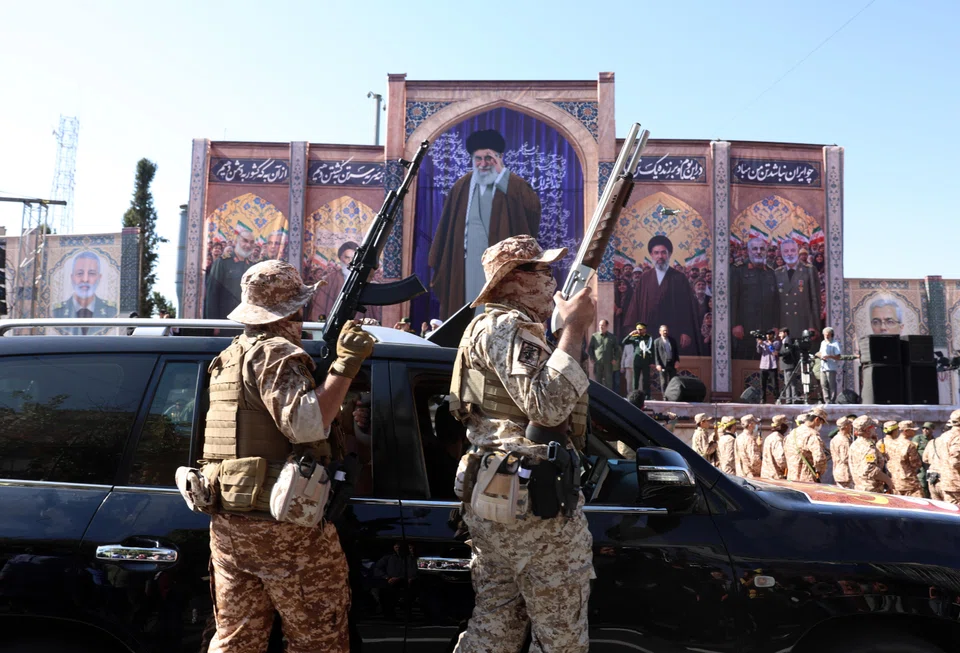
[WASHINGTON] The Trump administration imposed sanctions on Iran‘s rail and auto sectors and their foreign suppliers, the Treasury Department said on Thursday, widening its wartime economic campaign to isolate Teheran.
The sanctions are part of the department’s “Operation Economic Outcast,” announced on Aug 24, which aims to cut Teheran’s funding for the war, missile construction, cyberattacks and the Islamic Revolutionary Guard Corps or IRGC.
The move extends US economic pressure on Iran from sea to land, targeting sectors Teheran has leaned on since a naval blockade cut off its oil shipments through the Strait of Hormuz. But the expanding sanctions risk inflicting severe costs on ordinary Iranians, one analyst said.
The US blockade of Iranian ports has forced Teheran to rely more on autos and rail for transporting petroleum, fertiliser, chemicals and other goods. Thursday’s sanctions target those alternatives, according to the Treasury Department.
The sanctions designate Iran Khodro Company, or IKCO, and SAIPA Iranian Automobile Manufacturing Company, or SAIPA. Treasury said the two companies represent more than 90 per cent of Iran’s domestic auto market.
Treasury also designated the state-owned Islamic Republic of Iran Railway Company, which provides passenger and freight services, the Raja Passenger Trains Company and Sherkat-E Rah Ahan-E Khamle-O-Naghle, also known as the Railway Transportation Company, which it said is a top private freight line.
Treasury Secretary Scott Bessent said the action “directly targets Iran’s enablers and lays the groundwork for the United States and our partners to drain the regime’s revenue once and for all.”
Thursday’s sanctions also target foreign companies in Indonesia, the UAE and Turkey that supply Iran’s auto industry.
“The blockade squeezed Iran at sea, sanctions increasingly isolate it by air, and now Washington is constricting its economic arteries on land,” said Brett Erickson, a sanctions expert and managing principal at Obsidian Risk Advisors. “You cannot choke an economy like this without choking the livelihoods of the people who depend on it.”
Russian firm targeted
The US Department of the Treasury on Thursday also issued economic restrictions against A7, a Russian company that has helped to circumvent Western sanctions imposed after Moscow’s invasion of Ukraine.
In a statement, the Treasury Department described how A7 developed a web of companies to help businesses, people and governments, including Iran, buy goods from around the world – for both domestic and military purposes – despite being under American sanctions.
The action on Thursday followed reports by The New York Times that detailed how A7 used more than 70 shell companies around the world to move funds on behalf of restricted Russian businesses.
A recent investigation by the Financial Times found similar illicit activity.
A7 built a custom app, using artificial intelligence to create fraudulent trade records, The New York Times found.
And it has relied on cryptocurrencies to help launder money on behalf of Russian clients, allowing some to buy sensitive components used in weapons and drones.
The Office of Foreign Assets Control, a division of the Treasury that enforces economic and trade sanctions, designated A7 a significant transnational criminal organization.
Elements of the network were previously penalised with sanctions in August 2025.
In a news release, Bessent said: “Today’s action targeting A7 continues Treasury’s unprecedented efforts to isolate Iran and its financial enablers and sends a clear message that if you facilitate illicit finance for America’s adversaries, you will lose access to the US financial system.” REUTERS, NYTIMES
Decoding Asia newsletter: your guide to navigating Asia in a new global order. Sign up here to get Decoding Asia newsletter. Delivered to your inbox. Free.
Share with us your feedback on BT's products and services






