US trade deficit narrows slightly in September; imports hit record high
Exports advance 1.9% to US$321.5 billion
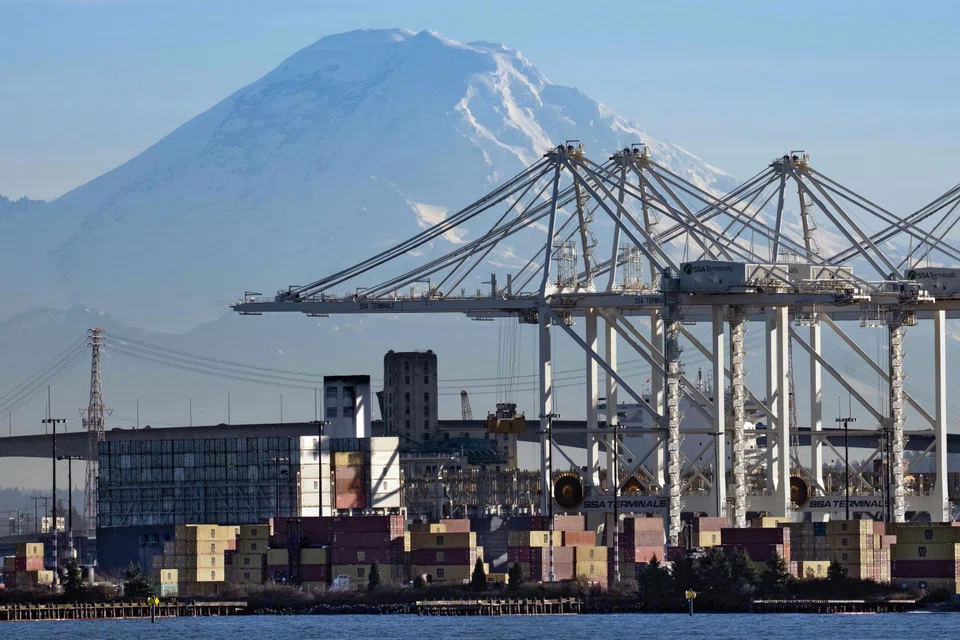
[WASHINGTON] The US trade deficit narrowed slightly in September, though imports increased to a record high amid robust domestic demand.
The report from the Commerce Department on Wednesday (Nov 4) also showed the US logged record goods trade deficits with several countries, including Mexico, Vietnam, Taiwan and South Korea, despite President Donald Trump’s aggressive tariffs.
Discontent over Trump’s policies, including tariffs, led to his Republican Party losing control of Congress to Democrats in the midterm elections on Tuesday.
Domestic demand is being fuelled by resilient consumer spending and an artificial intelligence spending spree by businesses. Resistance to data centre construction also contributed to the electoral losses for Republicans.
“The massive imports of these goods to support the AI build-out have been a key factor behind the widening of the trade deficit to current near-record levels,” said Thomas Ryan, senior North America economist at Capital Economics. “But there is a question mark over whether this pace will continue following a string of victories for AI skeptics in gubernatorial races across the country last night.”
The trade shortfall contracted 0.7 per cent to US$105 billion, the Commerce Department’s Bureau of Economic Analysis and Census Bureau said. Economists polled by Reuters had forecast the deficit would be US$108 billion.

Capital goods imports hit an all-time high
Imports increased 1.2 per cent to US$426.6 billion in September, a record high. Goods imports rose 1.3 per cent to US$346.9 billion, also a record high.
Capital goods imports shot up by US$11.6 billion to a record high of US$158 billion as the AI build-out drew in imports of computers and computer accessories. Imports of semiconductors dropped by US$1.2 billion.
Imports of consumer goods rose by US$2.4 billion, lifted by a US$2.9 billion increase in pharmaceutical preparations. Imports of industrial supplies and materials fell US$3.7 billion, reflecting declines in non-monetary gold and crude oil. Non-monetary gold is excluded from the calculation of gross domestic product.



Non-petroleum imports were the highest on record.
Exports advanced 1.9 per cent to US$321.5 billion. Goods exports increased 2.5 per cent to US$211 billion. Exports of capital goods rose by US$3.8 billion to an all-time high of US$73.3 billion, driven by computers, computer accessories and civilian aircraft.
Exports of food and beverages rose US$1.9 billion to US$16 billion, the highest level since June 2022, boosted by soybean shipments. But industrial supplies and materials exports fell amid a decline in non-monetary gold. Crude oil exports, however, rose US$1.2 billion. The US is a net exporter of oil.
The goods trade deficit tightened 0.5 per cent to US$135.9 billion in September. But when adjusted for inflation, the goods trade deficit widened US$3.5 billion or 3 per cent to US$119.5 billion.
The government estimated last week that imports cut 2.64 percentage points from GDP growth in the third quarter, the most since Q1 2025, when businesses were front-loading orders because of Trump’s tariffs.
The economy grew at a 3.4 per cent annualised rate in the July-to-September quarter, the government said in its advance estimate of GDP last week. Trade has not contributed to GDP growth for four straight quarters.
Imports of services increased about US$800 million to a record high of US$79.7 billion amid rises in travel and transport services. Exports of services advanced US$0.7 billion to US$110.5 billion, also an all-time high. They were lifted by gains in travel services and the use of intellectual property.
“Looking ahead, net exports are still likely to be a drag on Q4 GDP growth, even as robust business investment continues to support broader economic activity,” said Priscilla Thiagamoorthy, a senior economist at BMO Capital Markets. REUTERS
Decoding Asia newsletter: your guide to navigating Asia in a new global order. Sign up here to get Decoding Asia newsletter. Delivered to your inbox. Free.
Share with us your feedback on BT's products and services