

What does Trump want with Greenland as US moves to expand its military presence?
Agreement would enable the US to expand its current military presence in Greenland
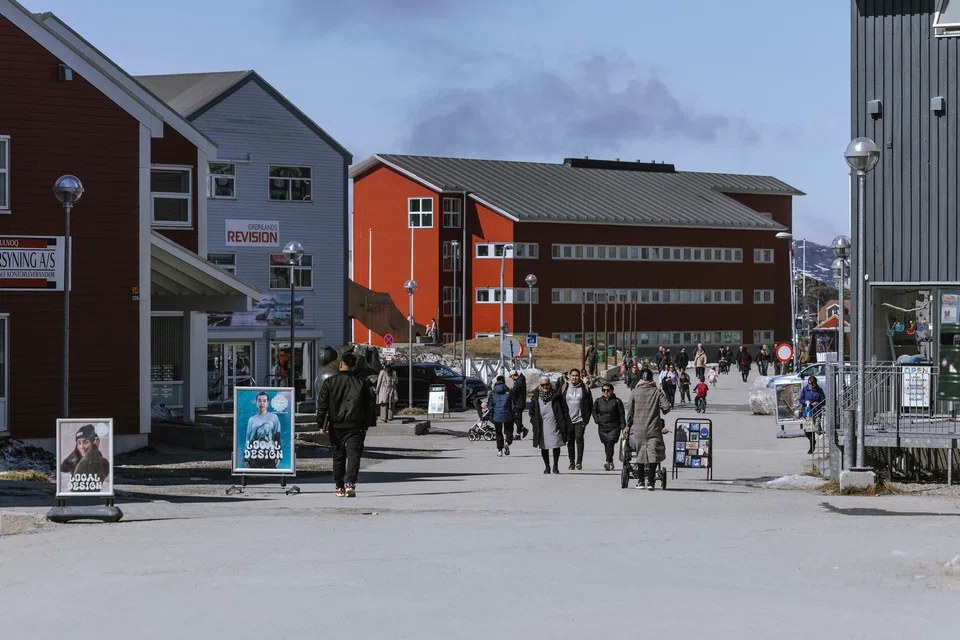
[COPENHAGEN] After months of threats, retorts and closed-door negotiations, the US has reached a deal to expand its security presence in Greenland, the semi-autonomous Danish territory, according to US President Donald Trump.
The specifics of the agreement, announced on Friday (Sep 18), were not immediately made public. But it clearly falls short of the outright US takeover that Trump had demanded, a threat that roiled the Nato alliance, of which Denmark is a member.
In a social media post, Trump said the deal gave the US “permanent control over security, and all other needs” in Greenland. But Danish Prime Minister Mette Frederiksen stressed that the agreement “recognises the sovereignty and territorial integrity” of Denmark.
Trump had said since his first term that the US wanted to acquire Greenland, and he became more insistent about it after returning to office in 2025. One of his aides said that Trump wanted to buy the island and another suggested that the US could simply take it by force.
The leaders of Greenland and Denmark rejected such ideas, and European leaders grappled with how to respond to the threat to seize territory from a Nato ally. In the end, negotiators from the US, Greenland and Denmark met in Washington for high-stakes talks.
What’s in the deal?
Trump said the agreement would enable the US to expand its current military presence in Greenland. Under its terms, he said on social media, “no US adversary can EVER have a base in Greenland, have a military presence in Greenland, or make sensitive investments in Greenland, without our express written approval.”
US negotiators had insisted on veto power over any major investment deals in Greenland to box out competitors such as Russia and China. Greenlanders and Danes strongly objected to that, and it was not clear how the agreement would address the issue.
Trump also said the deal ensured that the US would “FOREVER have the complete ability to do what is necessary in Greenland in order to secure and defend the security of Greenland,” calling it “an ‘Infinite Life’ Agreement,” even though the current pact authorising the US military presence on the island has no time limit.
Frederiksen said the new deal would strengthen “our common security in the Arctic and the North Atlantic area and is therefore also good for Nato and Europe.”
Why does Trump say he wants Greenland?
Trump initially said that US ownership of the island was vital to national security. He later pitched it as a matter of global importance.
“Greenland is a big problem for us,” he said during a Nato summit in July. “We need it for protection of the world, not just the United States, and it’s very important. It doesn’t help Denmark.”
Most of Greenland is inside the Arctic Circle, where superpowers are vying for military and commercial dominance. Controlling the island would give Washington an outpost in an important naval corridor connecting the Atlantic Ocean and the Arctic, where climate change is melting the ice and making once unnavigable territory a theater of competition.
“If we don’t do it, Russia or China will take over Greenland,” Trump told reporters on Jan 9.
The Chinese and Russian navies are active in the Arctic, and critical undersea communications cables have made the region a site of renewed superpower conflict.
Greenland also has huge stores of the rare earth minerals used for making batteries, electric vehicles and other high-tech items. Currently, China dominates the global market for such minerals.
Trump said in a January interview with The New York Times that nothing short of US ownership of Greenland was acceptable.
“Because that’s what I feel is psychologically needed for success,” he said. “I think that ownership gives you a thing that you can’t do, whether you’re talking about a lease or a treaty.”
Asked whether it was psychologically important to him personally or to the US, he responded, “psychologically important for me.”
Who controls Greenland?
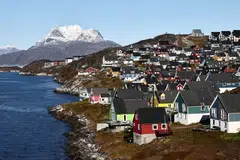
Greenland is a semi-autonomous territory of Denmark, which colonised it more than 300 years ago. Greenland achieved home rule in 1979, taking control over most of its internal affairs.
Since 2009, Greenlanders have had the right to hold a referendum on independence. But Denmark manages Greenland’s foreign policy, defence and other matters. And the island is largely economically dependent on Denmark: Greenland receives an annual subsidy that pays for its schools, cheap gas and strong social services.
While Greenlanders are happy to do business with the US, polls have indicated that a vast majority of the population does not want to become part of the US.
The US has had troops in Greenland since World War II and operates a small missile defence base there.
Under a 1951 treaty, the US already has the right to “construct, install, maintain and operate” military bases across Greenland, “house personnel” and “control landings, take-offs, anchorages, moorings, movements and operation of ships, aircraft and waterborne craft.” NYTIMES
Decoding Asia newsletter: your guide to navigating Asia in a new global order. Sign up here to get Decoding Asia newsletter. Delivered to your inbox. Free.
Share with us your feedback on BT's products and services
TRENDING NOW

Malaysian king buys stake in Singapore-listed mining firm expanding into rare earths

Grab CEO’s wife Chloe Tong on life with Anthony Tan and finding her purpose

Once staunchly pro-China, Malaysian Chinese businesses are now distancing themselves from Beijing

Longer wait times expected as S’pore healthcare institutions report system disruptions

