

While spotlight is on Biden-Trump, independents out to affect outcome of US presidential election
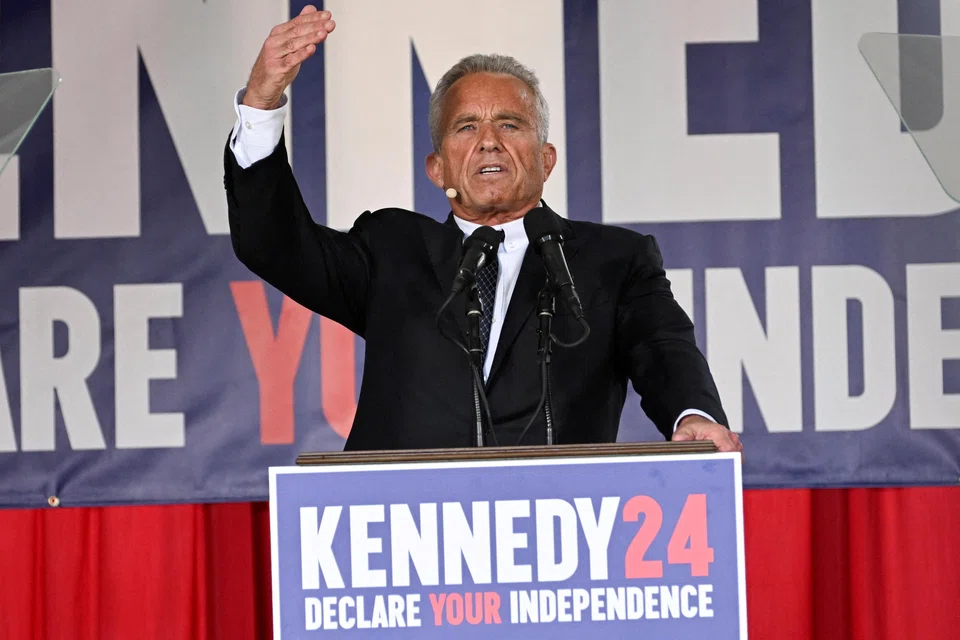
IT IS highly unlikely that an independent can win the keys to the White House at next year’s presidential elections, but the signs are there that such a third-party candidate will claim a substantial number of votes that could affect the final outcome of the contest.
Back in 1992, Republican George H W Bush suffered a shock defeat to fresh-faced Democrat Bill Clinton, arguably because billionaire Ross Perot – who ran as an independent – lured millions of conservative business-minded voters from Bush, taking almost 20 per cent of the popular vote.
According to the latest poll by the FiveThirtyEight website, Robert F Kennedy Jr is drawing anywhere between 9 per cent and 13 per cent of the popular vote in a theoretical matchup against the incumbent Joe Biden and former president Donald Trump.
A recent survey by Quinnipiac University shows Kennedy faring much better, with a 22 per cent support level among registered voters.
It is unclear at this stage whether Kennedy is luring voters away from Republicans or Democrats, because all the polls show Trump edging Biden whether Kennedy is included or not.
Meanwhile, there is an even higher profile independent candidate waiting in the wings. West Virginia Senator Joe Manchin would more unambiguously divert votes from Biden, likely becoming the kind of “spoiler candidate” that Perot was in 1992 and, as some Democrats argue, Green Party leader Ralph Nader was in 2000.
Here is a look at the three main independents who are eyeing a successful run in the election:
Robert F Kennedy Jr
This 69-year-old – a son of former attorney-general and senator Robert F Kennedy and nephew of the late president John F Kennedy – speaks in the soaring tongue of some of America’s greatest politicians. Many say he has the magnetic language of Abraham Lincoln and Barack Obama, as well as of his own father and uncle.
Kennedy has previously said that 80 per cent of his causes would fit on the platforms of both presidential candidates of the previous Kennedy generation. Unfortunately, some say the remaining 20 per cent is highly toxic.
Kennedy has squandered much of his rhetorical power and political pedigree by stooping to that 21st-century political tongue: the conspiratorial rant.
It is hard to blame him – a man who lost several members of his family to sudden death and whose family was the subject of much conspiracy – for his susceptibility to these ideas.
It still feels somewhat tragic that such a talented politician fell for something as foolish as the anti-vaccine movement that he has helped lead.
There are several contrasts between father and son. One of them is how the senior Kennedy was a moral warrior with an unerring sense of rectitude.
When then-secretary of state Dean Rusk made a forceful argument for a land invasion of Cuba, Kennedy refused, counter-arguing that it was immoral for a large nation to invade a smaller one. The younger Kennedy, however, has called for peace talks that would give equal footing to Ukraine and Russia.
Kennedy Jr understands – perhaps better than anyone in the succeeding generations of his illustrious family – his uncle’s and father’s moral crusades.
For decades, he has fought good fights that almost everyone from his generation pilloried and almost everyone in Gen Z would applaud. He once sued the city of New York to keep green spaces open for minority neighbourhoods in the Bronx. He defended indigenous people from oil companies before that was even a thing. To a certain extent, he is still fighting those battles.
“I sit at a lot of kitchen tables with people, and see the disintegration (of the US),” said Kennedy in a recent speech. “I’ve sat with elderly people cutting up prescription pills to make them last, people having to choose between gas and food. Our country was always an example, our country was the template for how to produce a middle class.”
Close your eyes, and it could well have been his father speaking. But until he renounces the specifics of his anti-vaccine conspiracies, all reasonable voters should be wary of his power of rhetoric.
Joe Manchin
There is a big question mark for now, as the 76-year-old Manchin has not yet officially declared his candidacy. His decision not to run for re-election to the Senate in West Virginia sounded to many Washington watchers like a tacit lob of his hat into the ring for the race to the White House.
Deliberately or otherwise, Manchin has staked a claim to the independent middle ground in an otherwise staunchly partisan congress. He fought the White House tooth and nail during the debate over the post-Covid economic stimulus bills.
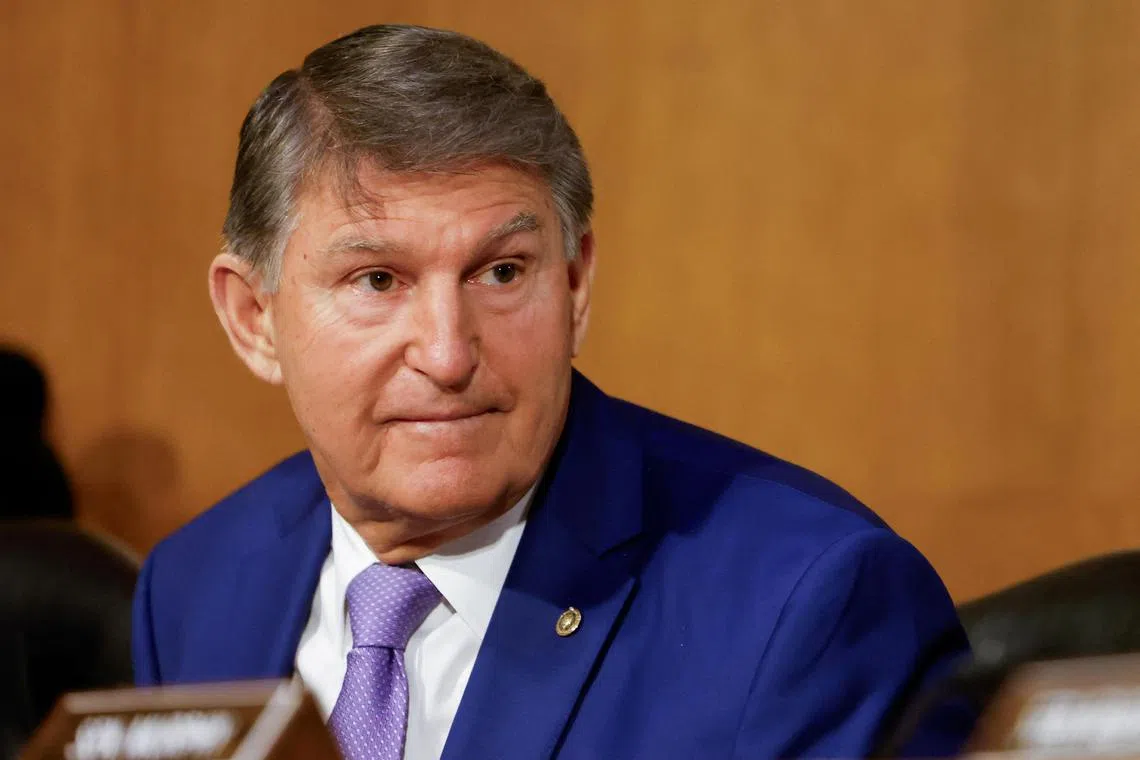
In this capacity, he single-handedly blocked efforts to expand the child tax credit, and repeatedly changed the course of climate policy in the Senate.
He has positioned himself as the pragmatic, balanced-budget alternative to the “woke” left wing of the Democratic party, and the quasi-fascist, populist right wing of the Republican party.
For months, a group called No Labels, which has millions of dollars in funding and counts several prominent former senators among its supporters, has sketched out the image of the ideal third-party candidate, an image that sounds very much like Manchin.
“Manchin is a tireless voice for America’s common-sense majority and a long-time ally of the No Labels movement,” said representatives of the group in a statement released after he withdrew from the Senate race.
Manchin is the Democrats’ worst nightmare because he is so close in political profile to Biden himself.
Both men appeal to the kind of pragmatic blue-collar, white Democratic voters who Trump managed to wrest from the Democratic column in 2016, only to alienate them with his espousal of racist and anti-immigrant ideas.
If Biden has to split the votes of Detroit union workers and Florida retirees with Manchin, he is likely to lose key swing states like Michigan and Florida.
Cornel West
The former Princeton University philosophy professor is the de facto Black Lives Matter candidate for the election. The 70-year-old was one of the first prominent intellectuals to realise the profound significance of police brutality to race relations and American political life.
In 2014, West appeared at the barricades in Missouri after teenager Michael Brown was shot dead by police following a petty crime. During one protest, West was arrested after being knocked over by an officer.
West became a natural leader of the Black Lives Matter movement that arose following the killing of George Floyd in Minneapolis in 2020.
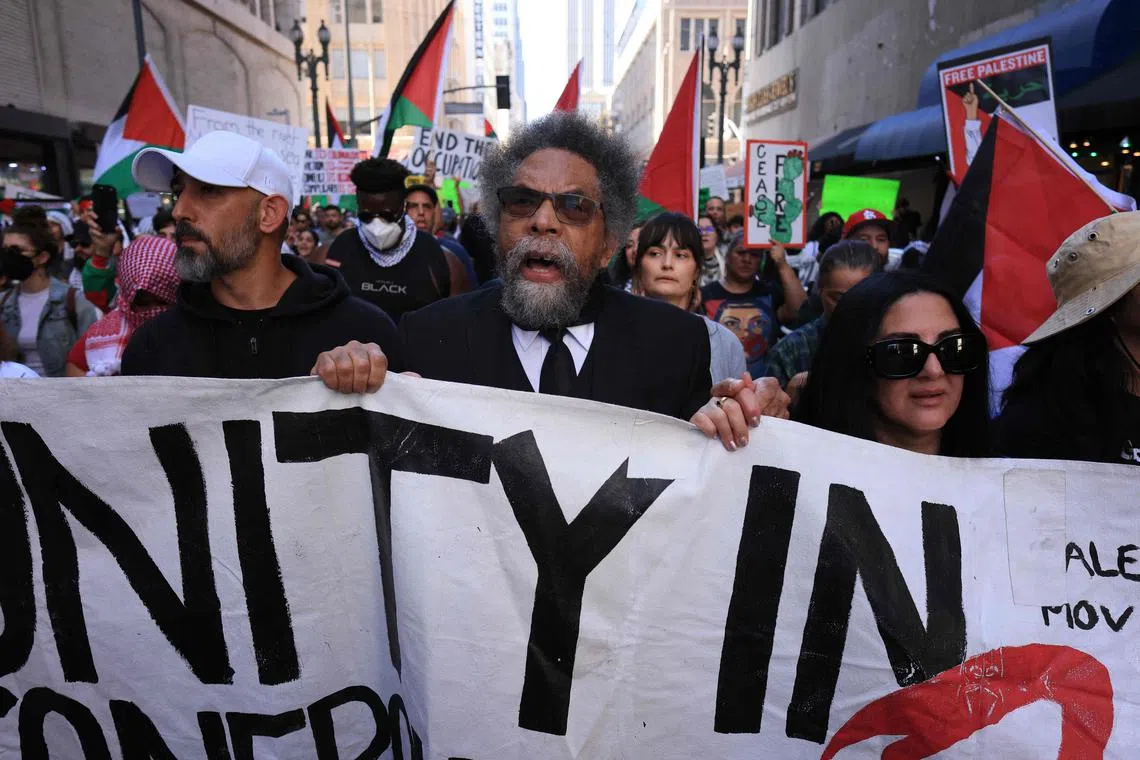
West is unlikely to garner a significant number of votes, and is polling at only about 2 per cent. Still, his candidacy follows an important line of Black American candidates whose campaigns continue the intellectual and protest tradition of the civil-rights movement, a torch carried by Martin Luther King Jr’s lieutenant Jesse Jackson Jr in 1984 when he briefly led the Democratic primary; and, to some extent, by Obama in 2008.
West may not garner as much of the Black vote as either Jackson or Obama. Biden, who has courted the Black community as one of his most important constituencies, will likely fear West’s challenge more than Trump would.
TRENDING NOW
First Resources blames El Nino, outside fires for Kalimantan hotspots amid haze scrutiny
High Court rules against Julius Baer’s Singapore trust arm in US$50 million family trust dispute
Singapore key exports jump by higher-than-expected 68.4% in September, led by non-electronics

MSCI proposes downgrading Indonesia to standalone market status

