

Why Trump is targeting green card path used by Microsoft, other tech firms
The administration has been sharply critical of Silicon Valley’s reliance on foreign workers
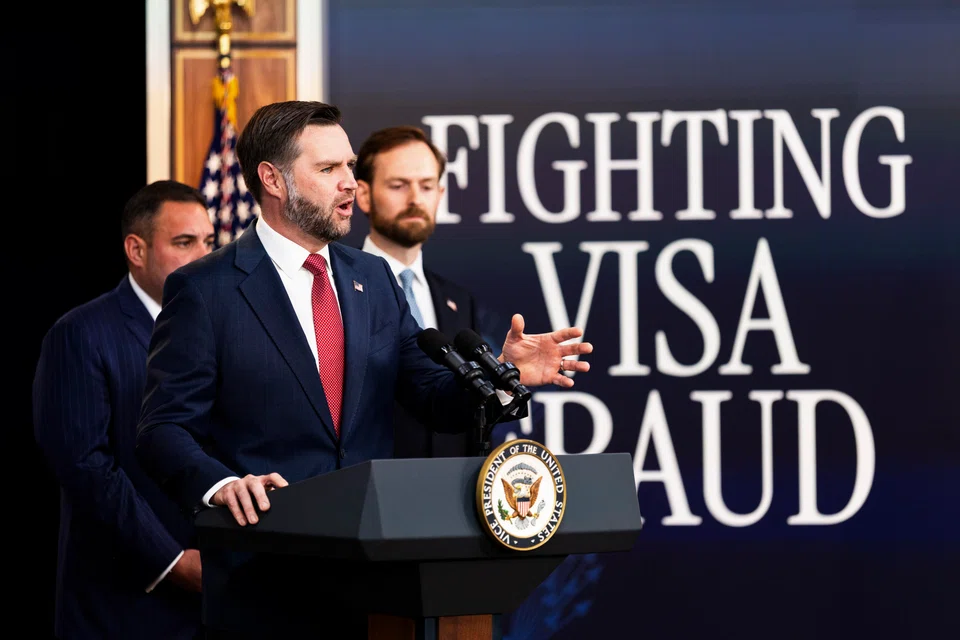
FROM the start of his second term, President Donald Trump has made it a top priority to restrict opportunities for non-Americans to gain entry or remain in the US.
In the latest action on that front, his administration said on Oct 8 that it would indefinitely suspend the ability of a number of technology companies, including Microsoft, to sponsor foreign employees for permanent residency in the US.
Such companies have been relatively heavy users of the government’s Permanent Labor Certification process, a step in the path toward a green card, which confers permanent residency. The administration alleges there have been widespread abuses of the programme. Earlier this year, the administration took steps to overhaul the H-1B visa programme, arguing it also has been exploited by employers.
What’s the Permanent Labor Certification process?
The process, known as PERM, is a government system for vetting applications by employers who want to secure green cards for foreign workers. Typically, employers file applications on behalf of foreign employees who are already working for them in the US on a temporary basis.
First, an employer is required to have the Department of Labor determine a minimum wage for the relevant position based on the job duties and geographic market.
After that, the employer must advertise the job for 60 days to test whether there are qualified American workers interested in applying. When the recruitment period concludes, the employer can submit an application for permanent labour certification, which can take well over a year to clear because of large processing backlogs.
The Labor Department is required to consider whether there are Americans “willing, qualified and available” to do the same work and whether the employment of the foreigner will negatively affect the wages and working conditions of comparable US workers.
In fiscal 2025, it approved some 138,000 applications. Another 3,400 were denied and 6,700 withdrawn.
The approvals cover a wide range of occupations. The top eight are software developers; computer systems analysts; meat, poultry and fish cutters and trimmers; data scientists; fast food and counter workers; project management specialists; software analysts; and landscapers and groundskeepers.
How is PERM different from the H-1B programme?
H-1Bs, which are temporary work visas, are the primary pathway to hire foreign workers with at least a college degree for specialied occupations.
The maximum time a worker can stay in the US on an H-1B visa is generally six years. If an employer wants to retain the worker long term in the US, it can apply for a permanent labour certification. In that case, the H-1B can be extended continuously if at least a year has passed since the employer filed for the certification. The biggest PERM filers have historically been the largest employers of H-1B workers.
Arguing that employers have used the H-1B programme to displace American workers, the Trump administration earlier this year revamped an annual lottery for 85,000 visa slots to favour the most highly paid workers. It has also announced a US$100,000 fee for new H-1B workers hired from outside the US, but courts have blocked the imposition of it.
How important is PERM to the tech industry?
A large proportion of PERM applications are for positions in the tech industry. In 2025, almost a third of all approved applications were for software and computer systems analysis roles. Microsoft was the top PERM filer in fiscal 2025. Green card sponsorship, which begins with a PERM filing, is an important recruitment and retention tool of employers competing for high-skilled foreign talent.
Why is the programme under scrutiny from the Trump administration?
The Trump administration has been sharply critical of Silicon Valley’s reliance on foreign workers and has pressured tech giants to do more to train and hire US workers. In announcing the suspension, Vice President JD Vance did not specify alleged abuses but accused Microsoft and other companies of “importing an indentured servant to do a job that an American worker would happily do.”
In addition to Microsoft, the administration has suspended use of the PERM process for staffing firms Cognizant Technology Solutions, Infosys, Tata, Wipro, HCL Technologies and Capgemini SE.
This is not the first time the administration has brought enforcement actions against US companies on the basis of alleged abuse of PERM.
A unit of OpenAI reached a US$3.2 million settlement in August with the Justice Department to resolve allegations of discrimination against US workers. And the Labor Department took the rare step earlier this year of suspending PERM applications by software firm Cloudera Inc. over recruitment violations.
Justice Department investigations launched during Trump’s first term into alleged PERM recruitment violations by Apple and Meta led to large settlements.
What changes are planned for PERM?
The Trump administration plans to overhaul the regulations governing the PERM process, which were last updated more than two decades ago.
A Labor Department rule currently under review at the White House would modernise how the agency reviews applications and bring a new emphasis to protecting American workers, the administration has said. BLOOMBERG
Decoding Asia newsletter: your guide to navigating Asia in a new global order. Sign up here to get Decoding Asia newsletter. Delivered to your inbox. Free.
Share with us your feedback on BT's products and services
TRENDING NOW

Once staunchly pro-China, Malaysian Chinese businesses are now distancing themselves from Beijing

Cliff Tan has 7 million followers and a 4-month waitlist. Why won’t he expand his business?

Grab CEO’s wife Chloe Tong on life with Anthony Tan and finding her purpose

Singapore F1 to proceed despite haze; no changes planned to outdoor entertainment

