

World Bank could provide up to US$100 billion for countries hit by war
This would eclipse the US$70 billion it supplied during the Covid-19 pandemic
 Add BT as a preferred source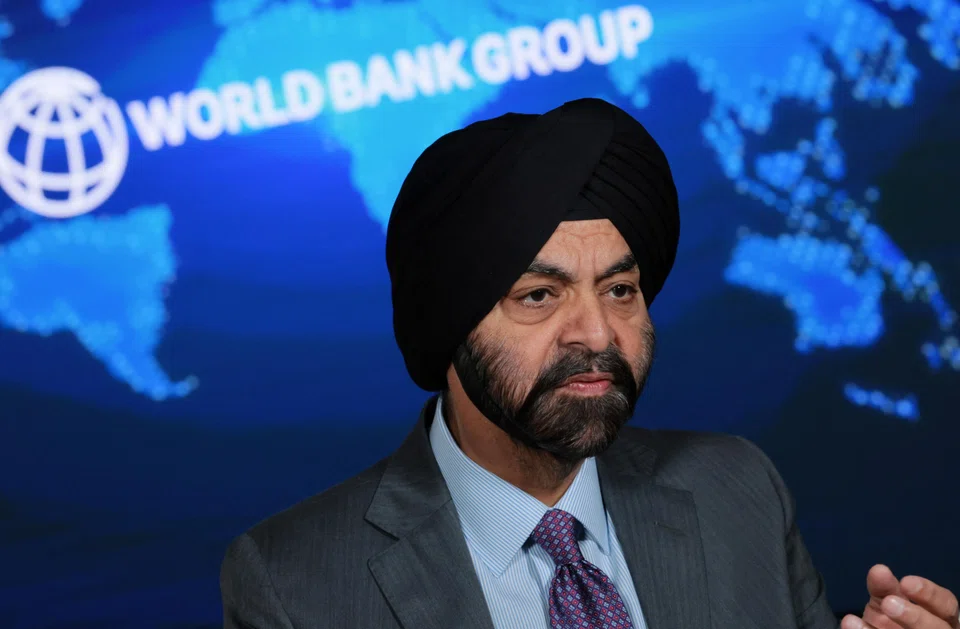
DeeperDive is a beta AI feature. Refer to full articles for the facts.
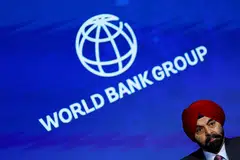
[WASHINGTON] The World Bank could mobilise US$80 billion to US$100 billion in funding over the next 15 months for countries hit hard by the war in the Middle East, the bank’s president, Ajay Banga, said on Tuesday (Apr 14).
This would eclipse the US$70 billion it supplied during the Covid-19 pandemic.
It would include providing US$20 billion to US$25 billion in the coming months through a crisis-response window that allows countries to withdraw up to 10 per cent of funds earlier than planned from previously approved programmes, Banga said.
Another US$30 billion to US$40 billion could come from repurposing existing programmes in about six months, he added.
Banga’s comments, which came on the sidelines of the spring meetings of the International Monetary Fund (IMF) and World Bank, reflect growing recognition of the huge impact the war is already having on global growth and inflation.
Developing countries are likely to be hit the hardest.
Navigate Asia in
a new global order
Get the insights delivered to your inbox.
On Tuesday, the IMF cut its global growth outlook due to war-driven energy price spikes, offering a range of scenarios that all include lower growth and higher inflation.
It said that, in the absence of the conflict, it would have upgraded its growth outlook by 0.1 percentage point to 3.4 per cent.
If the war lasted longer and greater needs emerged, the bank would have to turn to its balance sheet and headroom to find additional funding to reach US$80 billion to US$100 billion, Banga said at an event hosted by the Bretton Woods Committee.
SEE ALSO
That would come on top of the bank’s normal lending.
“I’m trying to create a toolkit that has a tiered response capacity – depending on how this continues – to at least be able to bring adequate firepower to do something about it,” he said.
Having met with the head of the International Energy Agency and IMF chief Kristalina Georgieva on Monday, he stressed that it would take time for the energy market to settle down.
This would remain the case even if the war ended and the energy infrastructure did not sustain any additional structural damage.
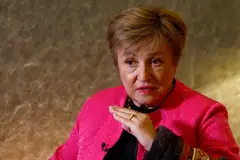
The global economy can still recover rapidly from the shock of the Middle East war if the conflict ends in the next weeks, but the situation will be worse if it drags on until the middle of the year, Georgieva said in separate remarks at the same event.
She added that the IMF was in talks on financial needs with countries hit hard by higher energy prices and supply chain disruptions.
Both Banga and Georgieva urged countries to focus on narrowly targeted and temporary measures to ease the pain of higher energy prices and avoid broader energy subsidies that could wind up further stoking inflation. REUTERS
Decoding Asia newsletter: your guide to navigating Asia in a new global order. Sign up here to get Decoding Asia newsletter. Delivered to your inbox. Free.
Share with us your feedback on BT's products and services
TRENDING NOW
‘Boring’ is the new black: The stars are aligning for a Singapore stock market revival
Near sell-out launches in March boost developer sales to 1,300 units after four slow months

China pips the US if Asean is forced to choose, but analysts warn against reading it like a sports result
Genting Singapore’s Lim Kok Thay receives S$7.5 million pay package for FY2025

