

Xi lands in Kazakhstan in first trip abroad since pandemic
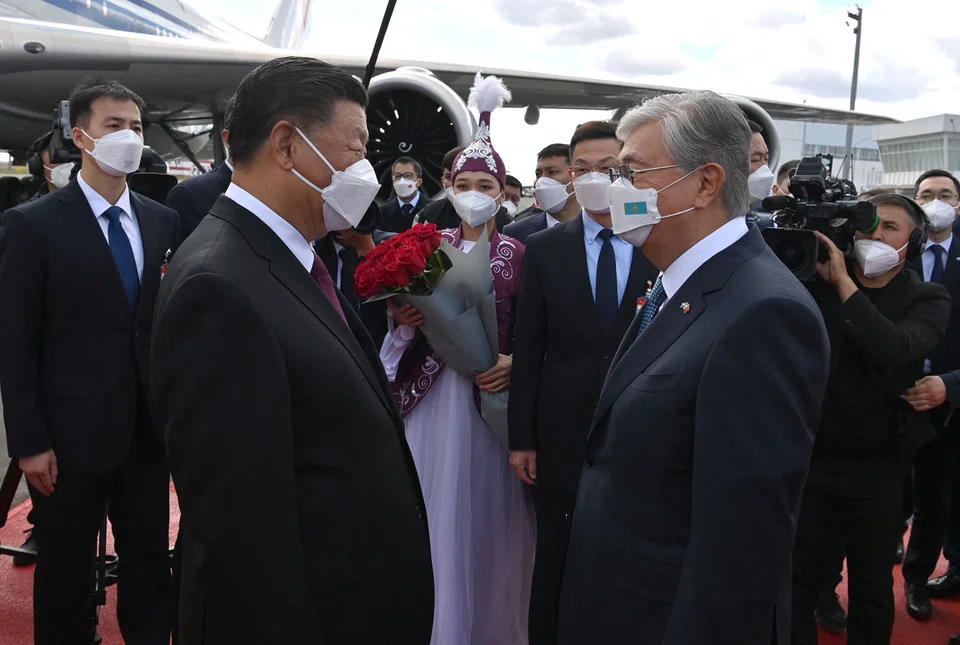
CHINA’S President Xi Jinping landed in ex-Soviet Kazakhstan on Wednesday (Sep 14), AFP journalists in the capital Nur-Sultan said, in the Chinese leader’s first trip abroad since the early days of the coronavirus pandemic.
During Xi’s 3-day visit to Central Asia, he is scheduled to attend a leaders’ summit of the Shanghai Cooperation Organisation (SCO) in Uzbekistan, where he is expected to meet with Russian leader Vladimir Putin.
Xi, whose plane touched down around 0830 GMT, was greeted on the red-carpeted runway by Kazakh leader President Kassym-Jomart Tokayev.
Both leaders and their respective delegations – as well as the guard of honour that met Xi on arrival – were wearing masks.
“China is willing to work with Kazakhstan to deepen cooperation in law enforcement, security and defence,” Xi wrote in an article for Kazakh media that was republished by Chinese state broadcaster CCTV.
He added that Beijing also wanted to work with Kazakhstan to combat drug trafficking and transnational organised crime as well as what China calls the “three evils”.
China’s government has previously used the term “three evils” – defined as terrorism, separatism and religious extremism – to refer to its crackdown in its far western region of Xinjiang, which borders Kazakhstan.
Beijing stands accused of detaining over one million Uyghurs and other Muslim minorities in Xinjiang – including some Kazakhs – under a years-long security campaign that the United States and some lawmakers in other Western countries have labelled a “genocide”. AFP
Decoding Asia newsletter: your guide to navigating Asia in a new global order. Sign up here to get Decoding Asia newsletter. Delivered to your inbox. Free.
Share with us your feedback on BT's products and services
TRENDING NOW

Once staunchly pro-China, Malaysian Chinese businesses are now distancing themselves from Beijing

Looking beyond looming CEO succession, should UOB potentially pursue a transformative merger?

Could stablecoins be the future of money?

Grab CEO’s wife Chloe Tong on life with Anthony Tan and finding her purpose

