

20 affordable and joyous wines
These are not necessarily lesser wines
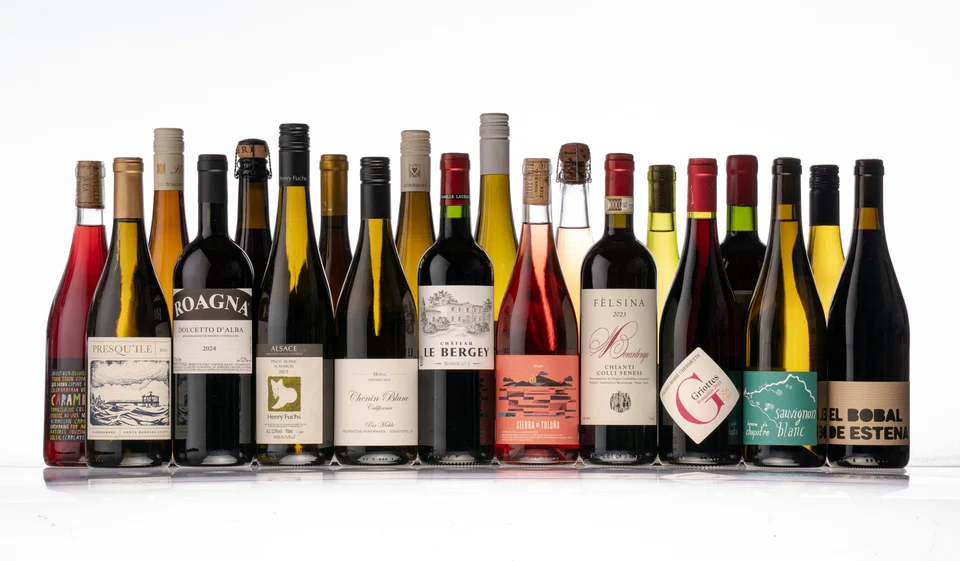
TWENTY dollars doesn’t buy as much petrol as it did last year nor as many tomatoes. Why should wine be different?
When the price of almost everything rises, so will the price of wine. It doesn’t all happen at the same rate. Wine has faced specific pressures, whether supply chain issues or tariffs, that haven’t affected eggs and bread in the same way. Still, prices have all gone up.
With that in mind, I wondered what wines were available for less than US$20 these days, as I have long believed that US$15 to US$20 offers the greatest values among moderately priced wines. Regardless of inflation, I still found 20 bottles worth recommending.
It’s clear that US$20 does not buy the same wines as it did four years ago, not to mention a decade ago.
While the wines differ, it remains true that spending US$15 to US$20 for a bottle rather than US$10 to US$15 increases your chances exponentially that a wine will be distinctive, exciting and delicious. You still must be selective, but the odds are more in your favour.
What’s different? You may no longer find a good cru Beaujolais, for example, for US$20. But you can buy a good, straightforward Beaujolais, made with grapes grown in vineyards thought to have less potential for distinctiveness than those in the cru regions like Fleurie and Morgon.
That straightforward Beaujolais will perhaps offer less depth and dimension than a good Fleurie, but it will nonetheless be a delicious, satisfying bottle that could only come from Beaujolais.
These are not necessarily lesser wines. They are just different, more often than not made with less familiar grapes grown in lesser known places.
Still, beyond the Beaujolais, I also found a Bordeaux, a Dolcetto d’Alba from an excellent producer and two rieslings from equally good producers. I also zeroed in on some terrific California wines.


These are far from the only worthwhile bottles in this price range. Many more are out there. You could ask a good wine merchant about bottles similar to these.
Here are the 20 bottles, from least to most expensive:
Chateau le Bergey Bordeaux 2024, 13 per cent, US$14.99
People forget how good Bordeaux can be. Not grand Bordeaux from the high-status appellations, but the basic wine, without any of the accouterments that create luxury products.
This bottle is just plain Bordeaux, from a part of the region where farmers are barely scraping by. But it’s made from biodynamically farmed grapes, mostly cabernet sauvignon, with a good dose of merlot. Le Bergey is the entry-level bottle from Chateau l’Escart. It’s honestly produced, without frills, and it’s not complex, just delicious and a great value. (A Maximilien Selection/ZRS Wines, New York City)
Vera de Estenas Utiel-Requena El Bobal de Estenas 2023, 13 per cent, US$15
Bobal is one of the most widely grown grapes in Spain, but unlike tempranillo and garnacha, it is largely unknown. For decades, the grape, grown in eastern Spain, would go into cheap cooperative wines.
But in recent years, enterprising producers have paid attention to the great old bobal vineyards, improving the farming and winemaking, and doing wonderful things. This bottle is rich yet juicy, the wine pitch dark but not heavy, with a pleasing tannic grip that makes it just right for grilled meats. (Jose Pastor Selections/Llaurador Wines, Fairfax, California)
Quinta de Santiago Vinho Verde Assinatura de Família 2024, 10.5 per cent, US$16.99
The Vinho Verde region in the north-western tip of Portugal is the source of lively, sea-sprayed white wines. This bottle, from Quinta de Santiago, is rock dry and laced with saline, stony flavours. It’s light and super refreshing, perfect for a sunny picnic. (JD Selections, St Helena, California)
Les Vignerons d’Estezargues Vin de France Carambouille 2024, 12.5 per cent, US$17.99
This wine is rapidly achieving favourite status with me. It’s like an old-school Cotes du Rhones – a straightforward, honestly made bistro red with lively, spicy flavours. Les Vignerons d’Estezargues is a quality-minded cooperative and a source for good values like this one. (Stork Wine/Wilson Daniels Wholesale, New York)
Troupis Peloponnese Fteri Moschofilero 2024, 12.5 per cent, US$17.99
Greece has evolved enormously as a source of good wines, from daily thirst quenchers to age-worthy reds and whites. This entry-level bottle from Troupis, a reliable producer, is a bone-dry, thoroughly refreshing white with plenty of character, just right for light shellfish and seafood preparations. (DNS Selections/T Elenteny Imports, New York)
Azimut Cava Brut Nature Rosat 2023, 11.5 per cent, US$18.99
The sparkling wines of the Penedes, in the Catalonia region of Spain, have gotten better and better in the last few decades. They are almost always good values, particularly a bottle like Azimut, a label used by Cellers de Can Suriol for easy-going wines made from organic grapes either grown on its estate or purchased. This rose is light and berry-scented, with a touch of sweetness yet refreshing. (Jenny & Francois Selections, New York)
Roagna Dolcetto d’Alba 2024, 12.5 per cent, US$19.57
One of the great things about historic wine regions is finding an inexpensive wine from a leading Barbaresco and Barolo producer like Roagna. Apparently Roagna is not yet held in high enough esteem that its everyday wines like this Dolcetto d’Alba have shot up in price. So, grab a bottle while you can. This Dolcetto is bright and floral, with just a touch of refreshing bitterness, a lovely wine. (Polaner Selections, Mount Kisco, New York)
Pax California Helios Chenin Blanc 2025, 12.5 per cent, US$19.95
Pax Mahle is one of the premier winemakers of western Sonoma County, California. His classically styled wines are made from organically farmed grapes shepherded with minimal intervention.
This chenin blanc is part of a new group of wines intended to be moderately priced and easy to drink, and it’s a great success. It’s fresh, dry and chalky, with lovely floral and honeyed flavours and a rich texture that’s not heavy. We need more American wines like this.
Pierre-Marie Chermette Beaujolais Griottes 2024, 13 per cent, US$19.96
Almost concealed by the attention focused on cru Beaujolais is the vast improvement in ordinary Beaujolais. Conscientious producers like Pierre-Marie Chermette never succumbed to the chemical farming shortcuts dictated by the region’s long thrall to cheap Beaujolais Nouveau.
Now, more producers are following the lead of vignerons like the Chermettes. This bottle is juicy, spicy and floral, easy to drink and absolutely delicious. (Weygandt-Metzler, Unionville, Pennsylvania)
Presqu’ile Santa Barbara County Chardonnay 2023, 13 per cent, US$19.97
Presqu’ile makes very good wines, primarily from its estate vineyard in the Santa Maria Valley but also, as with this bottle, from purchased fruit from various sites in Santa Barbara County, California. This chardonnay is reticent, with subtle floral and herbal aromas. It’s more about its rich texture than exuberance, and it’s well balanced.
Dr Burklin-Wolf Pfalz Riesling 2024, 12 per cent, US$19.99
I love riesling, dry, lightly sweet, rich and syrupy – so long as it’s properly farmed and well made, riesling is one of the world’s great grapes. Dr Burklin-Wolf is one of the old guard of the Pfalz and a modern pioneer of dry rieslings. This entry-level bottle is always a great value, bone dry with citrus and stony mineral flavours. (Skurnik Wines, New York)
Sierra de Tolono Rosado 2025, 13 per cent, US$19.99
Sandra Bravo of Sierra de Tolono is one of a new wave of Rioja producers making fresh, lively wines that are both easy to drink but express the character of their origins. This rose is a blend of tempranillo and garnacha from old vines. It’s fresh and saline, with licorice flavours, just right for the opening act of a backyard barbecue. (Bowler Wines, New York)
Domaine du Chapitre Touraine Sauvignon Blanc 2024, 12.5 per cent, US$19.99
I don’t drink a lot of sauvignon blanc, but sometimes in the warmer weather nothing is better than a sharp, incisive Loire sauvignon blanc to cut through the muggy fog of life.
Domaine du Chapitre, currently run by siblings Maryline and François Desloges, is now in its sixth generation in the Touraine region. This bottle, made with organically farmed grapes, is grassy and angular, but with depth and richness. (Avant Garde Wine and Spirits, Austin, Texas)
Henry Fuchs Alsace Pinot Blanc Auxerrois 2023, 12.5 per cent, US$19.99
This estate, run by Paul Fuchs, farms organically and makes wine scrupulously. Its wines are almost always good values, like this bottle, made primarily of auxerrois with about 20 per cent pinot blanc. It’s creamy and herbal, with pleasing weight and will go with just about anything. (Peter Weygandt Selection/Weygandt-Metzler)
Paltrinieri Lambrusco di Modena Solco 2024, 10.5 per cent, US$19.99
Sparkling red Lambrusco remains one of the more underrated thirst quenchers in wine. Good Lambrusco today is dry and earthy, varying primarily depending on the grape used and the production method.
For this price, chances are the Lambrusco will be fermented in tanks rather than in bottles, a less expensive method. This bottle, made from the Lambrusco Salomino grape, is softly sparkling with the flavours of dark fruit and licorice. It would be great for pizza or burgers. (Polaner Selections)
Felsina Chianti Colli Senesi 2023, 13 per cent, US$19.99
Felsina is best known for its superb Chianti Classicos from the Castelnuovo Berardenga region. But this bottle is from the satellite region of Chianti Colli Senesi, and it’s instructive to compare the wines.
The Colli Senesi is a little more rustically tannic, the wine not quite as refined as the Chianti Classico would be. But the organically grown sangiovese is pure and delicious, and the wine hearkens back pleasantly to the days of red-checked tablecloths and red sauce cooking. (Polaner Selections)
Lola Sonoma County Chardonnay 2024, 13.5 per cent, US$19.99
Lola is a quirky producer that makes an array of fascinating wines from grapes like charbono, muscat and semillon as well as the usual varieties. I love the novelties, but the more straightforward wines are delightful as well, like this chardonnay: pure, herbal, lively and fresh.
Rogue Vine Itata Valley Grand Itata Blanco 2024, 12.5 per cent, US$19.99
This white blend comes from the Itata Valley of Chile, a source for exceptional wines that come from the old vineyards that have long been a hidden resource in the area. This white is a blend of muscatel, riesling and semillon, all farmed organically. It’s gentle yet persistent, a lovely, light summer white with just a touch of grip to the texture. (Brazos Wine Imports, New York City)
Ungrafted Maipo Valley Carmenere 2023, 13 per cent, US$19.99
Brothers Marco and Sebastian De Martino are the current generation in charge of De Martino, an excellent Chilean producer. In their spare time, they run Ungrafted, which prospects for old, ungrafted vineyards in the Maipo and Itata Valleys.
This carmenere from the gravelly soils of the Maipo Valley is fresh and floral, restrained and well balanced. It would go well with grilled sausages or a roast chicken. (Polaner Selections)
Donnhoff Nahe Riesling Trocken 2024, 11 per cent, US$19.99
Donnhoff is one of the giants of the Nahe, helping over the decades to set a high standard for the region’s wines. Today, under Helmut and Cornelius Donnhoff, father and son, the estate produces an enormous number of cuvees, including this dry riesling, the equivalent of a regional wine. It’s lively, saline and stony, with a joyous note of peaches. (Skurnik Wines) NYTIMES
Decoding Asia newsletter: your guide to navigating Asia in a new global order. Sign up here to get Decoding Asia newsletter. Delivered to your inbox. Free.
Share with us your feedback on BT's products and services
TRENDING NOW

Mooted COE changes will solve category issues, but higher premiums likely: observers

Grab CEO’s wife Chloe Tong on life with Anthony Tan and finding her purpose

Once staunchly pro-China, Malaysian Chinese businesses are now distancing themselves from Beijing

Cliff Tan has 7 million followers and a 4-month waitlist. Why won’t he expand his business?

