

3 great shows in Tanjong Pagar Distripark
From traditional paintings to digital marvels, here are 3 shows to check out at the arts cluster


CAN EVERYBODY SEE MY SCREEN?
Singapore Art Museum (SAM)
SAM’S new art show at Tanjong Pagar Distripark is ageist in the best way possible. Young visitors to the show will take to technologically-inspired artworks like ducks to water. Older visitors might struggle at first with the participatory element of the works – such as manoeuvring an avatar online, drawing meaning from artificial intelligence-generated poetry, hacking a claw machine – but will ultimately revel in the new and vibrant world of digital art-making sans non-fungible tokens (NFTs).
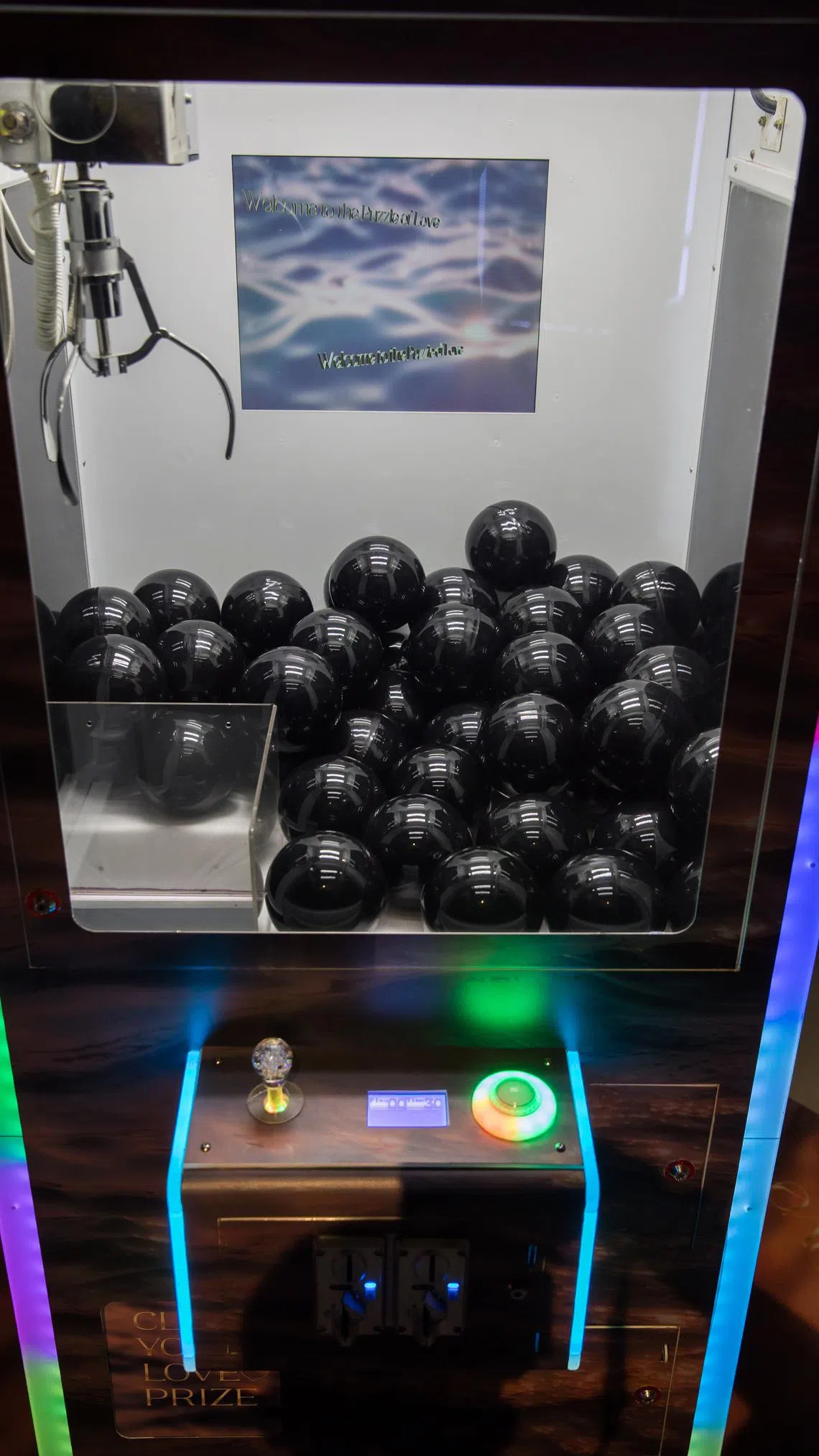
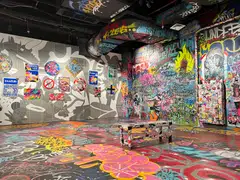
In what feels like catnip for the Instagram and TikTok crowd, Can Everybody See My Screen? features 12 good and great artworks reflecting on the intricate digital realities of our lives today: Liana Yang has created a claw machine that one plays in order to find “true love” – an apt and wickedly funny metaphor of popular dating apps that rely on algorithms and GPS to matchmake its users. Urich Lau deliberately corrupts the digital code files of photographs showing Singapore’s biggest art institutions to critique state control and censorship in the arts. And Cao Fei chronicles in a film her virtual romance with a fellow avatar on the Second Life platform.
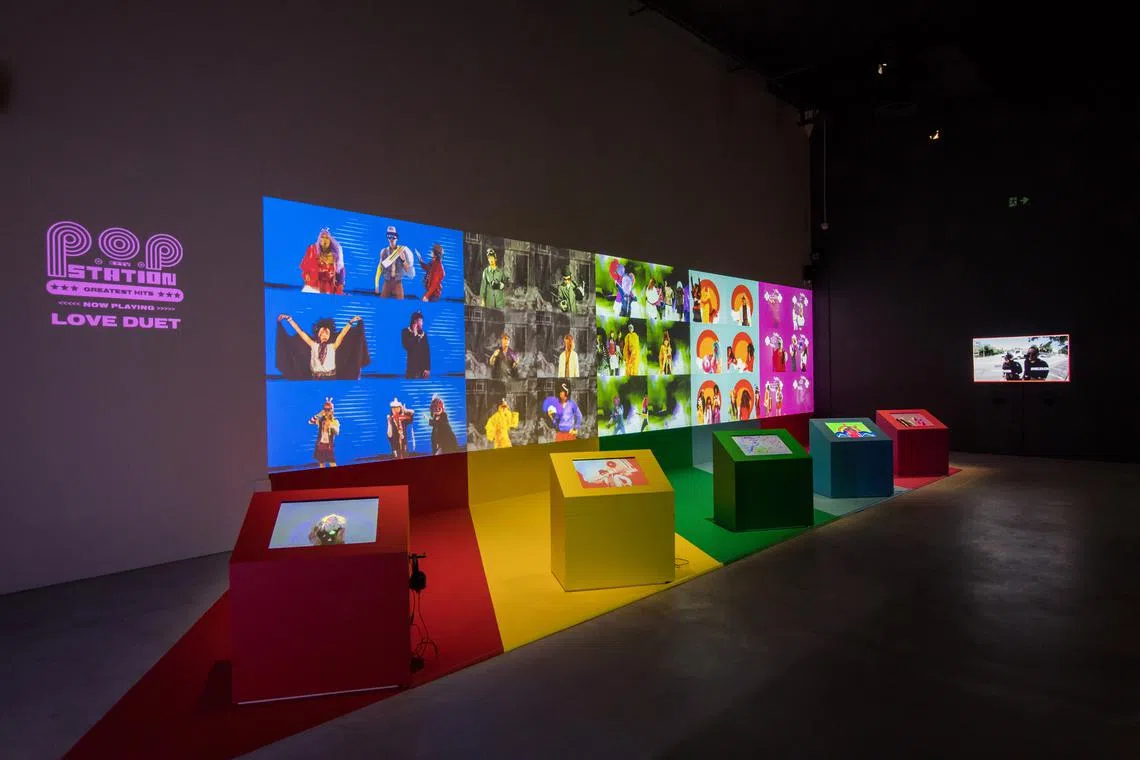
Astonishingly, some older works show an almost prescient understanding of how we would be interacting with technology today. For instance, from 2004 to 2009, the Singapore artist collective KYTV created an interactive work that travelled across the world, in which ordinary folk were invited to dress up flamboyantly and create impromptu music videos against colourful psychedelic backgrounds. Although the work predates Instagram and TikTok, these jellybean-coloured music videos of participants singing and dancing with abandon would not look out of place in the self-centred, brightly tinted posts that populate social media today.
Meanwhile the more recent works speak of our rapidly changing social politics. Xafier Yap, for instance, is an openly queer artist who created a 2D video game called 2nd Puberty, in which the players have to negotiate the growing pains of an avatar living in a complex heteronormative society not built for LGBTQ individuals.

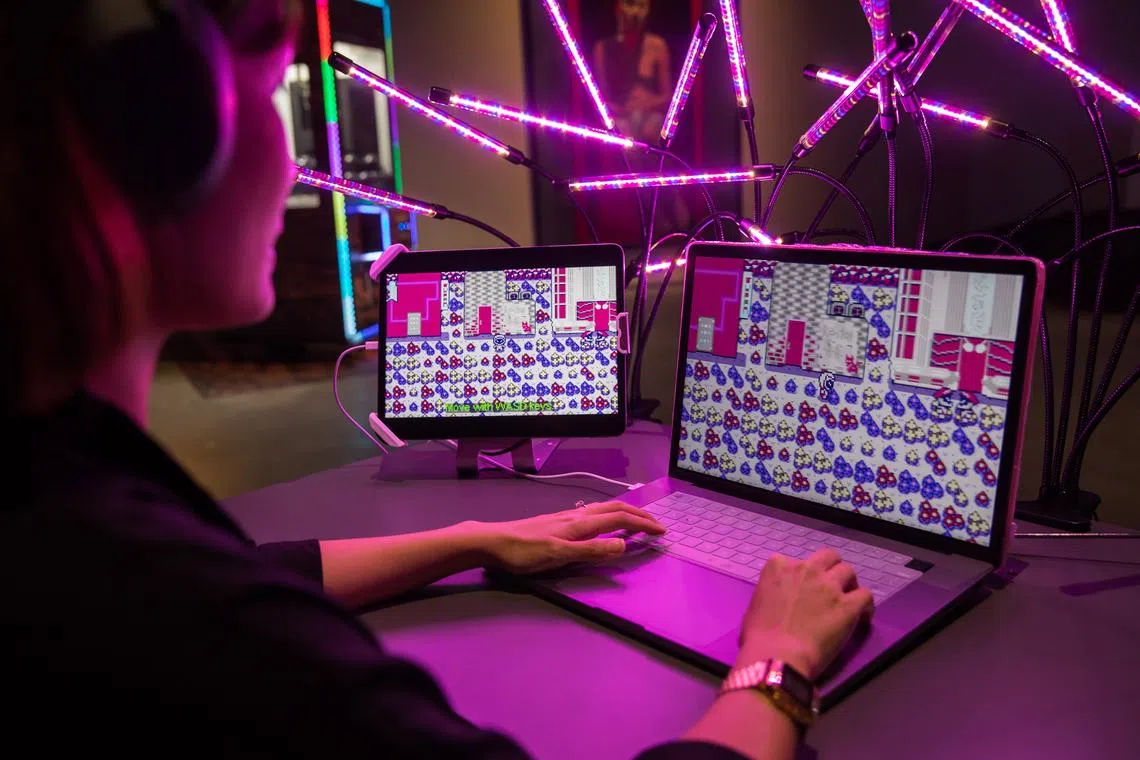
Curated by Ong Puay Khim and Teng Yen Hui, Can Everybody See My Screen? is one of the most relevant museum exhibitions in recent memory, as it parses the extent to which technology has disrupted our lives and altered our sense of reality.
LANDSCAPE: REINVENTION
39+ Art Space
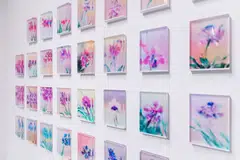
On the third floor of the same building, 39+ Art Space has a terrific duo show by Indonesian artist Kemalezedine and Laotian artist Savanhdary Vongpoothorn. Titled Landscape Reinvention, the show has both artists paying homage to the long-standing genre of landscape paintings.
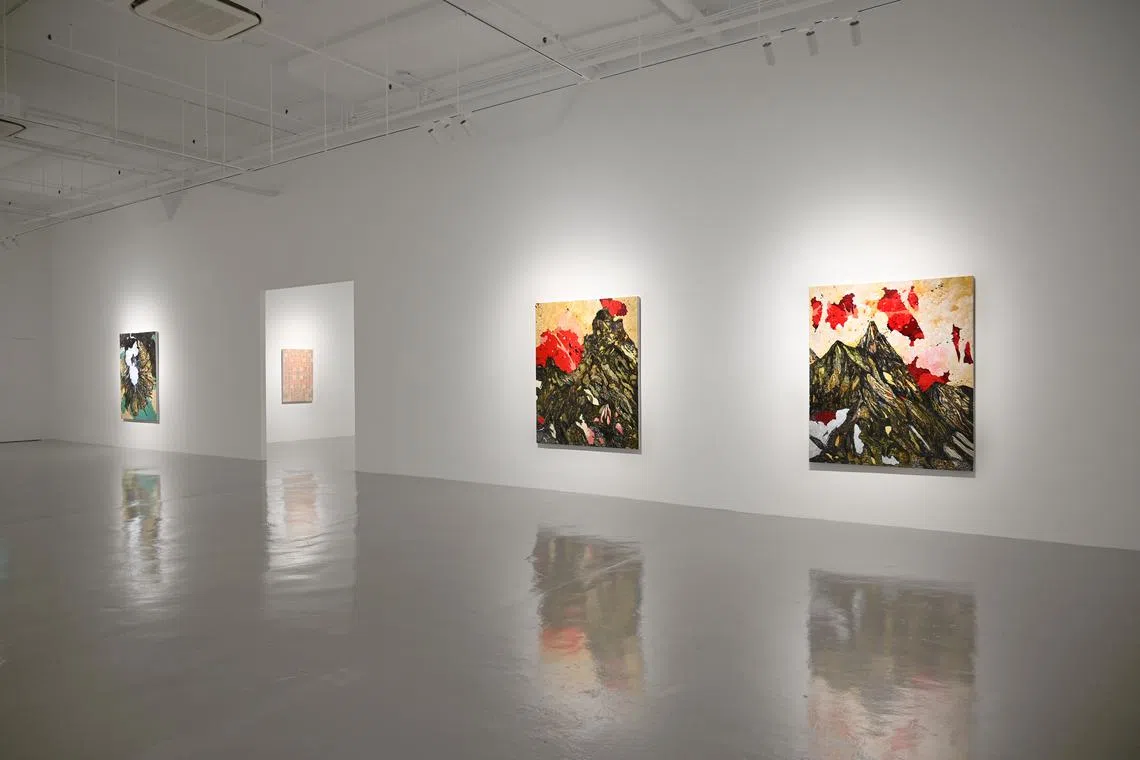
Kemalezedine draws from his Balinese heritage to depict the majestic mountains, clouds and oceans which frequently appear in paintings of the island. But in some works, there are also fire and smoke, serving as a reference to traditional Balinese pictorial symbolism as well as an ominous reminder of the climate crisis the world faces. The artist works with oil paint and liquitex ink – an unusual combination – to create his gorgeously vivid effects.
Meanwhile, Vongpoothorn turns to Buddhist ideas of cosmology to create almost ethereal images of landscapes. Having fled the communist regime of Laos to live in Australia, Vongpoothorn is influenced simultaneously by the 2 countries’ environments. But her paintings – soft, airy compositions accented by the rhythmic lines of sacred Lao Pali texts and punctuated by regularly staggered holes – also feel like profound meditations on the state of being.
FOLDS AND CREASES
Gajah Gallery
On the same floor at 39+ Art Space is Gajah Gallery, which is showing several beautiful oil paintings by Malaysia’s Fadilah Karim. Besides being a rising figurative star in her country, Fadilah is also a mother to a young child, Aira, from whom she draws much artistic inspiration.
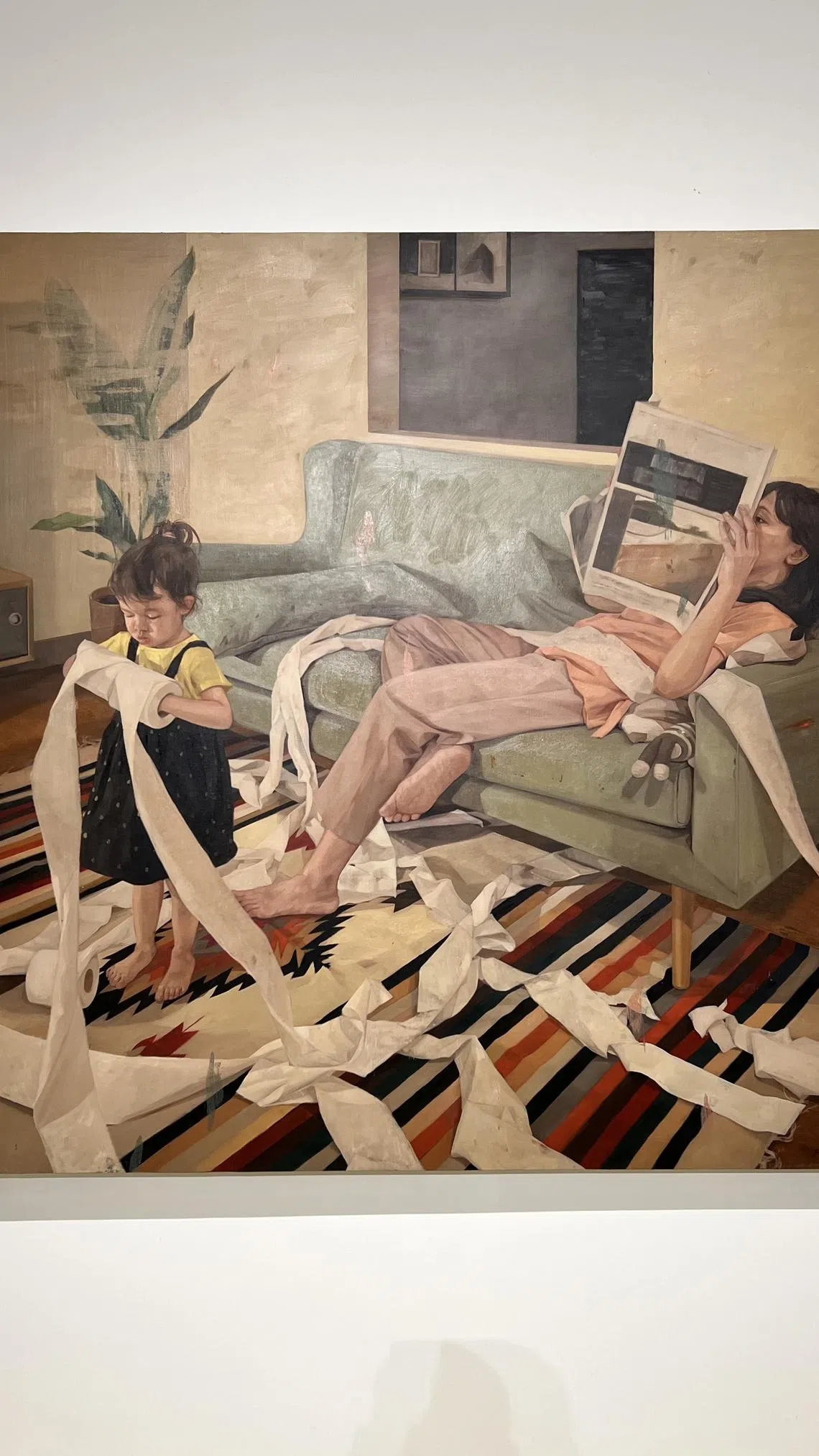
Some paintings depict mother and daughter in scenes of play, with rooms in their house turned topsy-turvy to accommodate the child’s unfettered imagination. Other paintings depict the daughter trying out her mother’s clothes or the mother covered in stickers pasted by the mischievous daughter. Fadilah eloquently captures the small and tender moments that parenthood offers; one leaves the show with a full heart.
Decoding Asia newsletter: your guide to navigating Asia in a new global order. Sign up here to get Decoding Asia newsletter. Delivered to your inbox. Free.
Copyright SPH Media. All rights reserved.
TRENDING NOW

Who is Leo KoGuan, the Singapore-based billionaire backing Nvidia’s Jensen Huang?

Demand, tech capabilities position Apac and AI as Skyscanner’s next growth frontiers: CEO Bryan Batista

Higher rates, weaker spending: Is the Philippines entering stagflation?

South-east Asia has lost Nvidia’s best salesman

