

AC vests and UV parasols: East Asia deploys heat-fighting gadgets
‘Personal cooling’ has become a ubiquitous part of daily life as summers get hotter and longer
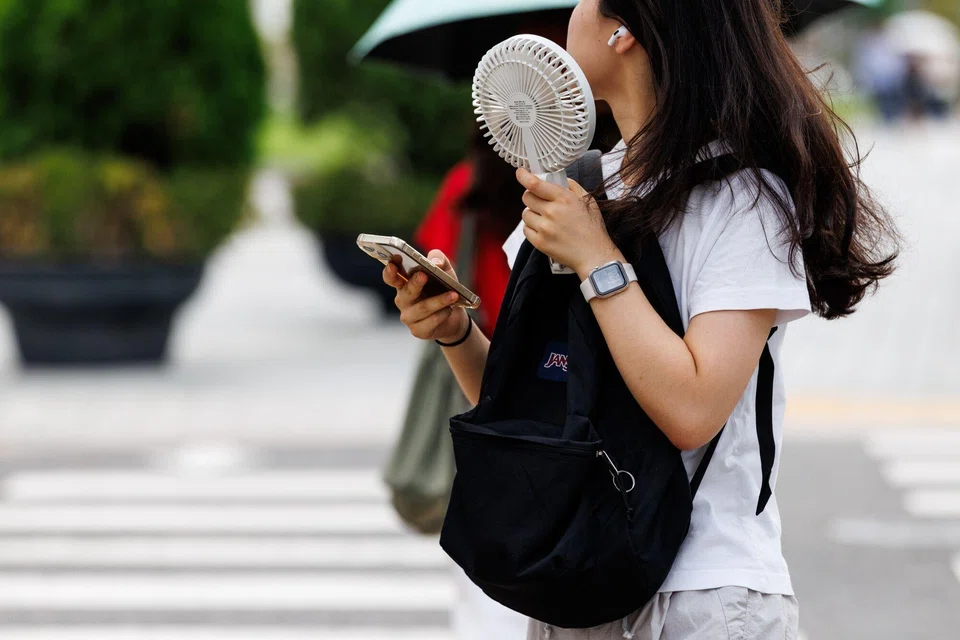
STROLL through Tokyo on a summer day and you’ll see handheld fans everywhere. But the light-blue one that Eimi Nakayama was holding on a recent afternoon was a more high-tech variety.
Outfitted with a small metal plate that runs on the same science behind semiconductors, it uses electrical currents to generate a chill.
The sensation is “kind of like holding a cold drink against your neck”, said Nakayama, 20, a university student. “Maybe because of the plate, the air flow feels a bit cooler, too.”
The product has lately been sweeping through cities in East Asia, where a deadly heatwave this month has led to cancelled baseball games in South Korea and a new meteorological term in Japan: kokushobi, or “cruel heat day”.
East Asia’s summers are becoming hotter and longer, and such “personal cooling” has become a ubiquitous part of daily life.
A market once dominated by inexpensive handheld fans now includes a growing array of more sophisticated products, from air-conditioned apparel to cooling sprays that claim to lower your body temperature within seconds.
Sales of cooling products are soaring, and employers and governments increasingly see them as a necessity rather than a luxury.
As in Japan, the market for such products in South Korea has grown dramatically over the past two years, said Lee Joo-young, an expert in the relationship between clothing and thermal environments at Seoul National University.
A major factor, she said, is that motors and batteries have become cheaper and more effective, making powerful new cooling products accessible.

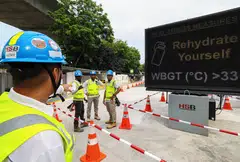

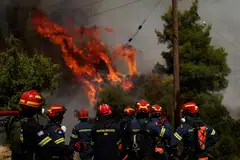
In Japan, the birthplace of the fan-cooled jacket – invented by Hiroshi Ichigaya, a former Sony electrical engineer, in 2004 – the online market for “heat countermeasure” products has expanded more than sixfold since 2020, according to Rakuten, one of the country’s biggest e-commerce platforms.
It now lists roughly 800,000 products in that category.
Ichigaya’s invention has since evolved considerably. One apparel company recently introduced a vest studded with the same metal plates now appearing on handheld fans.
But these gadgets are no longer just aimed at consumers looking for quick relief during their commutes. Increasingly, they are becoming part of how governments and employers are adapting to extreme heat.
Chinese delivery platform Meituan is piloting “air-con jackets” – another spin on Ichigaya’s invention – for its delivery workers in Chongqing, a city in the country’s south-west. In Hubei province in central China, the state-owned power company has equipped some of its workers with waist-mounted mini fans.
In Japan, the Ministry of the Environment and Tokyo’s metropolitan government have promoted parasols as an effective way to reduce heat stress, while some South Korean municipalities have been outfitting their street cleaners with neon cooling vests.
In South Korea, the need for such technologies is especially great on farms, said Kim In-soo, a researcher at the country’s National Institute of Agricultural Sciences.
He recently designed his own cooling vest for greenhouse workers that is being piloted at 350 farms around the country.
“Greenhouses are one of the worst places to be during a heatwave,” he said. “It’s hot and humid and a lot of the work is time-sensitive harvesting that can’t be stopped at will.”
The vest, which relies on a technology known as a “vortex tube”, is hooked up to a compressor that shoots cold, dry air into thin tubes, which then distribute it across the skin through tiny perforations running throughout the vest.
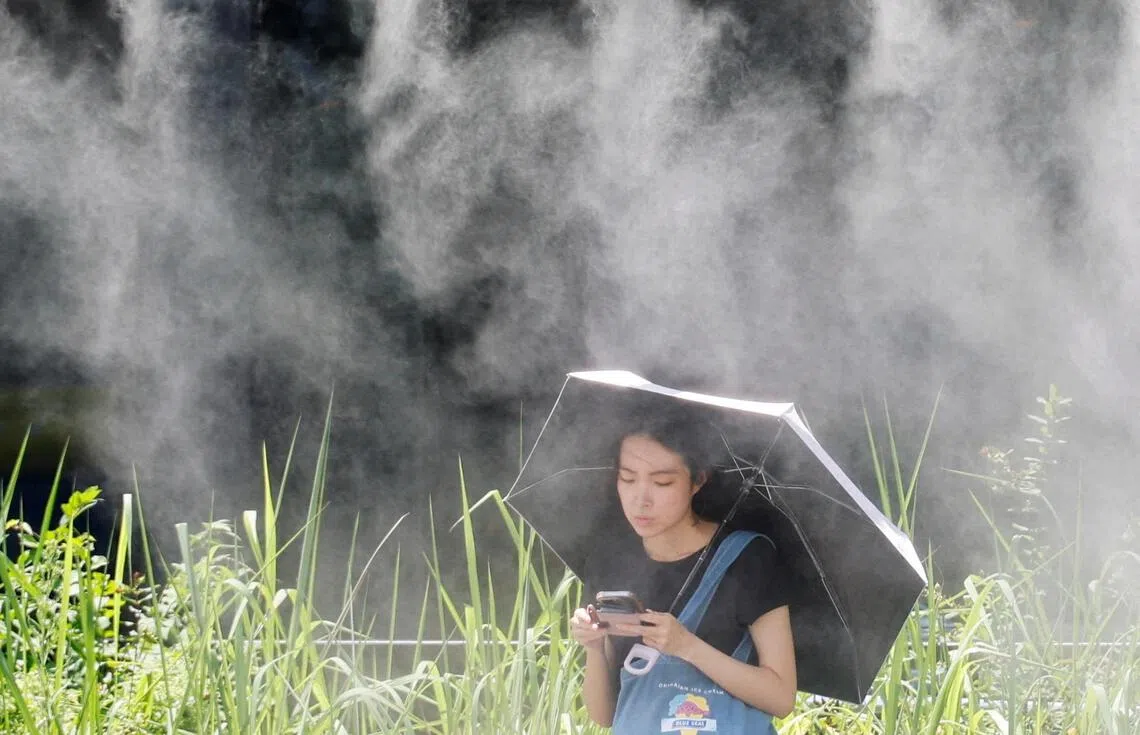
Seo Hye-young, 35, the founder of a South Korean startup that sells cooling neck bands online, has built a business around the growing appetite for cooling products, a trend she first noticed a few years ago.
At around US$35 apiece, Seo’s product – a thick, squishy collar filled with coolant – is among the pricier options, but promises shorter freezing times and “explosive” cooling effects. She is on track to sell around 60,000 units this year.
“But it got so hot so quickly this year that we’re struggling to keep up with the sudden demand,” she said.
The race to beat the heat has spawned more unusual inventions. In Japan, one company has developed a human-sized refrigerated booth that offers quick relief at construction sites, universities and evacuation shelters for natural disasters.
Across East Asia, manufacturers are serving up solar-powered fan hats, hands-free parasols and air-conditioned pet houses, among other specialised devices.
But Lee said cooling gadgets should not be treated as a cure-all.
“When the temperature is above 33 degrees Celsius or so, fans just blow hot air onto your skin,” she said. And the cooling neck bands? They lose their chill too quickly to make a big difference, she added.
For most people, she said, the low-tech options are often most effective: drinking cold beverages; keeping your feet – among the body’s most notorious heat-trappers – uncovered and cool; and shielding yourself from the sun with parasols, many of which now have black undersides that block UV rays.
Among the recent converts to parasols is Lee Se-jin, 36, a consultant in Seoul. Though they were primarily seen as a feminine item just a few years ago, he said, in heat like this, such notions of gender have largely gone out the window.
“These days it really doesn’t feel strange to use a parasol as a man,” Lee said. “It’s been the biggest difference-maker in terms of actual cooling benefits.” NYTIMES
Decoding Asia newsletter: your guide to navigating Asia in a new global order. Sign up here to get Decoding Asia newsletter. Delivered to your inbox. Free.
Share with us your feedback on BT's products and services
TRENDING NOW

Grab CEO’s wife Chloe Tong on life with Anthony Tan and finding her purpose

Income Insurance appoints former Manulife Singapore top man as new CEO
Incidence of civil servants buying property near unannounced MRT stations ‘a concern’, but may not establish misconduct: PSD
Three ex-employees of Envy group join Ng Yu Zhi in bankruptcy

