

Aid in navigation of digital space, continued monetary support in non-profits’ Budget wish list
Some companies are looking for direction on how the country can further build on its reinforced status as a philanthropic hub


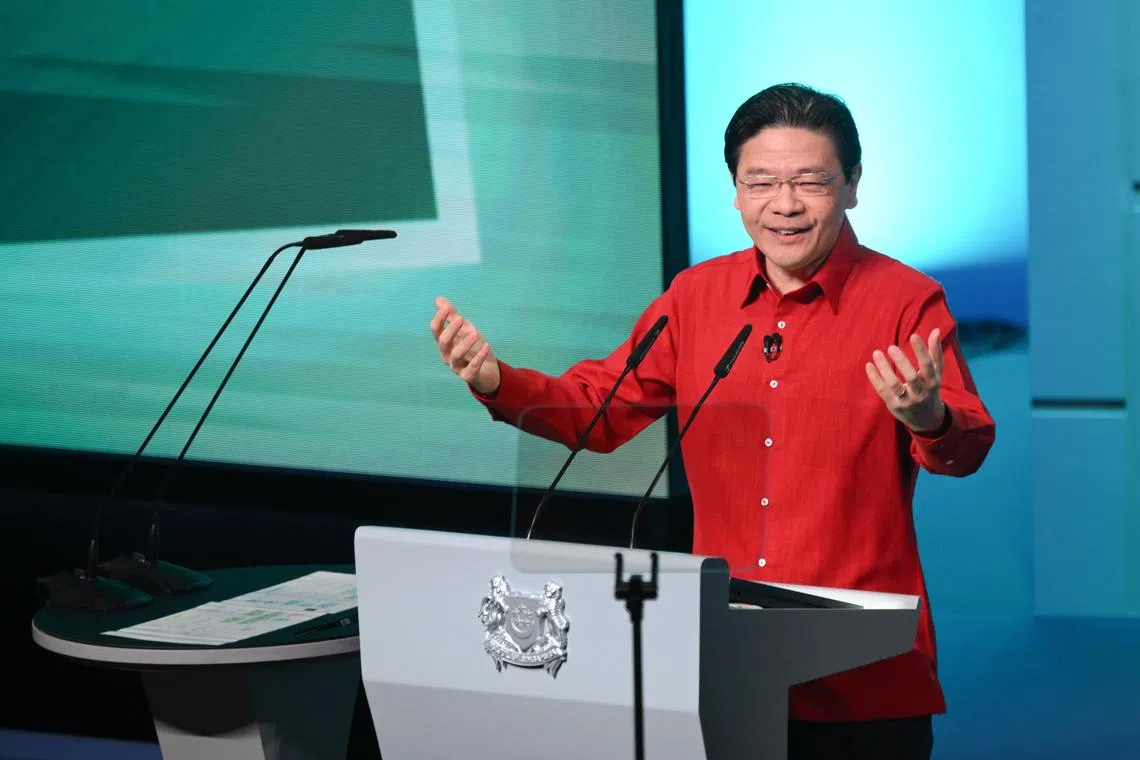
[SINGAPORE] Prime Minister Lawrence Wong called on Singaporeans to build a “we first” society at the National Day Rally speech in August last year.
This year, some companies are looking to the upcoming Budget on Feb 12 for some direction on how the country can further build on its reinforced status as a philanthropic hub in the region.
Tony Soh, CEO of the National Volunteer and Philanthropy Centre, said in an earlier interview that technology is now integral to how Singaporeans give.
“Digital platforms have made giving more accessible and convenient… This trust in digital channels is important as online giving becomes the norm,” he added.
In that same vein, local charity SPD hopes that this year’s Budget will have sustained support for social service agencies’ capabilities – which include cybersecurity and digital transformation.
Help with AI
SPD CEO Abhimanyau Pal said: “As agencies increasingly rely on digital systems and data to deliver services, safeguard beneficiaries, and operate efficiently, we hope for more sustained support for digital, cybersecurity, and workforce capability development...

“To put this in perspective, SPD’s annual costs for software licences, systems infrastructure and maintenance, as well as cybersecurity measures had doubled in FY24/25 from the year before, and is expected to increase further. Without continued assistance, these critical and necessary investments can place significant pressure on operating budgets, and become unsustainable in the long run.”
He added that unlike traditional IT systems, artificial intelligence’s (AI) costs are not limited to development.
“Rather, they are charged per use, and costs can escalate significantly as adoption grows. Sustained support will allow SSAs (social service agencies) to leverage AI responsibly and effectively, improving efficiency and outcomes without compromising financial stability,” Pal said.

Continued monetary support
Martin Tan, CEO of philanthropic organisation The Majurity Trust, said that another worry is the impact that geopolitical uncertainties will have on donors and their giving habits.
“Smaller charities with limited and no reserves are often the most affected if donors should hold back their giving or reduce their giving for the foreseeable future,” he noted.
He added that the Tote Board Enhanced Fundraising scheme has been a lifeline for many charities to carry on with the work on the ground during the post-Covid years.
“It would be ideal if the government would consider extending the scheme for smaller non-IPC (institutions of a public character) charities to tide them over an uncertain year ahead,” Tan said.
There were also other government initiatives that boosted activity in Singapore’s giving landscape, such as the National Council of Social Service’s introduction of SGShare to make giving more accessible and sustainable.
A previous article also stated that the government supplemented this with the SG Gives Matching Grant, a S$250 million initiative to match donations on a dollar-for-dollar basis.
Pal from SPD added that while these initiatives help, fundraising has become increasingly challenging amid economic uncertainties and a growing number of causes competing for attention.
There were 2,398 registered charities – including social service agencies – in 2023, based on an annual report for that year by the Commissioner of Charities. That was up from 2,217 in 2015.
“To sustain and grow giving from both corporates and individuals, we hope to see the continuation of the 250 per cent tax deduction on donations, as well as the continuation of matching grants for charities,” said Pal.

He noted that these measures have proven effective in mobilising resources and encouraging participation in giving, and added that research is critical for shaping policies and programmes that are effective and sustainable.
“Therefore, a dedicated funding or grant for disability research can help more SSAs to better understand evolving needs and develop evidence-based interventions.”
On retrenched workers and re-employment
PPIS, a non-profit organisation focused on women empowerment, has expressed its hopes for enhanced job-matching and re-employment support in the upcoming Budget that goes beyond placement into any available role.
This includes skills assessment, career coaching and thoughtful use of AI to improve matching outcomes, among other things.
PPIS president, Assoc Prof Razwana Begum Abdul Rahim, said: “More importantly, such efforts should recognise women, caregivers and stay-at-home mothers – repositioning caregiving skills such as coordination, resilience and emotional intelligence as workplace-relevant competencies, aligned with future-ready skills...
“This will support women in re-entering or progressing in the workforce in sustainable and meaningful ways.”
On the service delivery front, Prof Razwana proposes the expansion of integrated community hubs that co-locate social, health and employment services.
“A single-entry point approach reduces fragmentation, makes support easier to navigate, and enables earlier intervention for individuals and families in need,” she added.
SPD’s Pal said: “With a strong multi-stakeholder and ‘we first’ approach, we believe the social sector can remain resilient and... (ensure) that vulnerable communities receive the support they need.”
For more of BT’s Budget 2026 coverage, go to bt.sg/budget26
Decoding Asia newsletter: your guide to navigating Asia in a new global order. Sign up here to get Decoding Asia newsletter. Delivered to your inbox. Free.
Copyright SPH Media. All rights reserved.
TRENDING NOW

Once staunchly pro-China, Malaysian Chinese businesses are now distancing themselves from Beijing

Looking beyond looming CEO succession, should UOB potentially pursue a transformative merger?

Could stablecoins be the future of money?

Grab CEO’s wife Chloe Tong on life with Anthony Tan and finding her purpose

