

All excited about Foshan – furniture lovers’ latest bargain-hunting ground
Enterprising Singaporeans are offering services to help consumers and businesses source or custom-make their furniture in the Chinese city
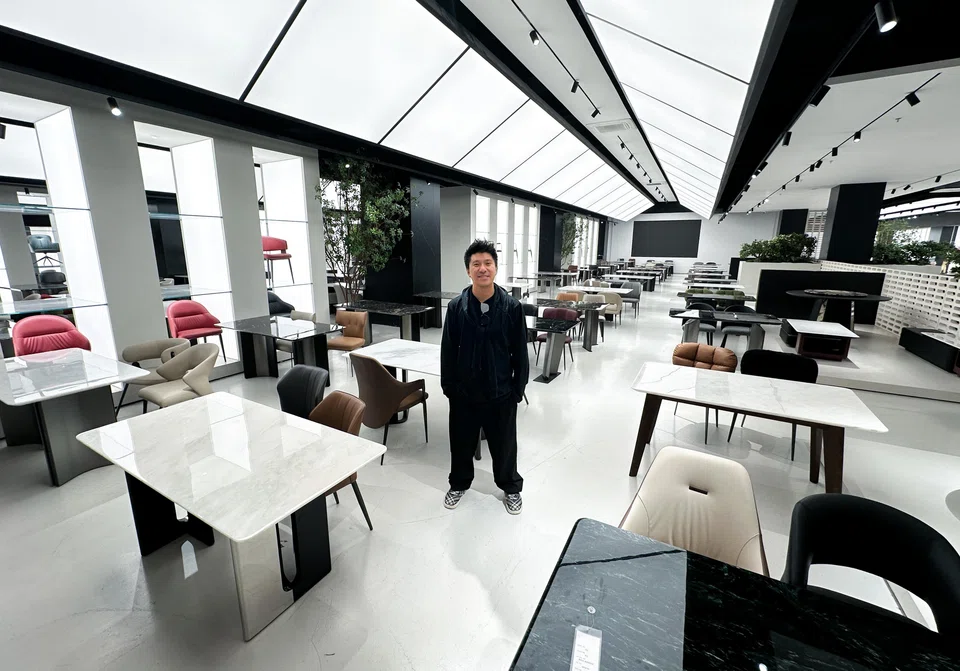
[SINGAPORE] If you’re scrolling through social media looking for renovation ideas, you’ll notice it’s awash with content featuring awe-struck foreigners waxing lyrical about shopping for furniture and furnishings in Foshan, China.
Cheaper than buying from local furniture stores and better quality than those from online shopping platform Taobao – that’s the draw of purchasing from the Chinese city in Guangdong province.
Known as the furniture capital of China, Foshan boasts a comprehensive supply chain covering everything from components to construction materials.
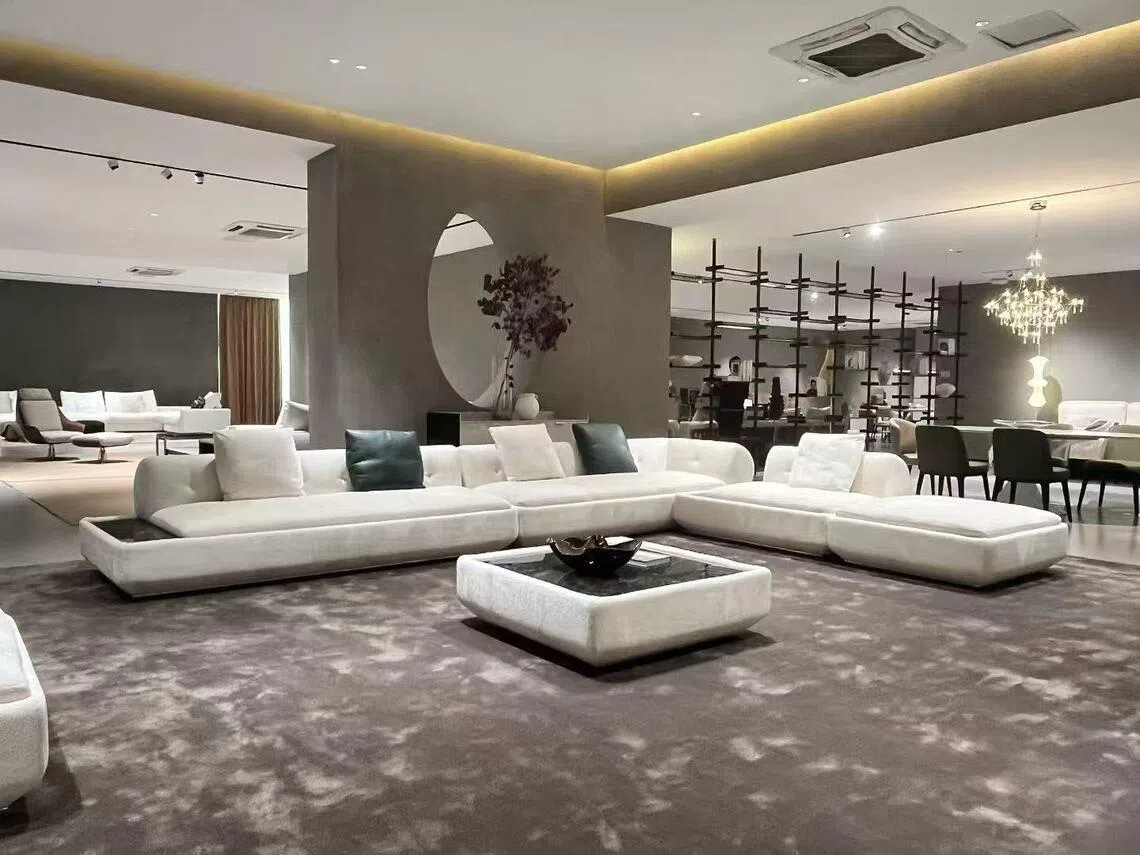
There are massive wholesale malls and hubs catering to different budgets, packed with hundreds – if not thousands – of vendors in sprawling showrooms categorised according to furniture type. In many cases, buyers can also customise their orders to match the dimensions, materials or colours of their choice.
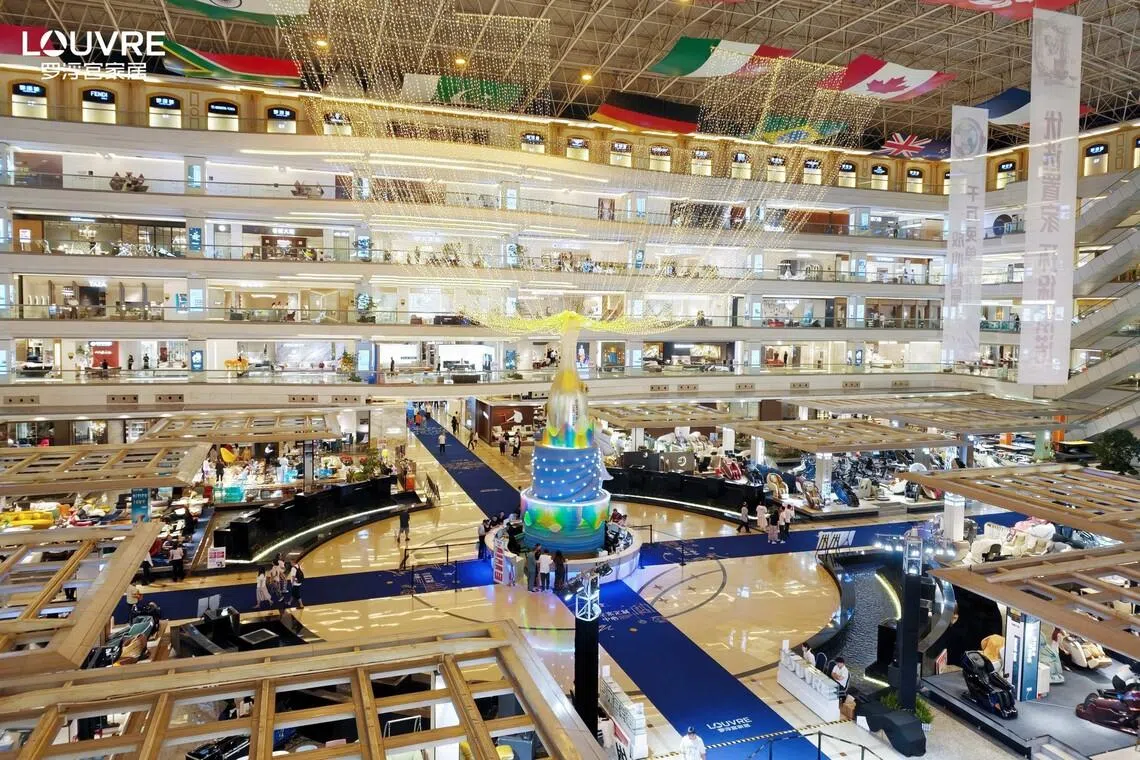
Anecdotally, interest among Singaporeans in buying furniture directly from Foshan is rising, due not only to the lower prices, but also to the enticingly diverse designs catering to every possible furnishing need. Homeowners – ranging from bargain-hunters to bungalow-owners seeking bespoke dining tables with integrated induction cooktops and automatic lazy Susans – have made purchases.
“The showrooms there are three to five times bigger than the ones in Singapore, and the factories are 10 times (the size) of what we see here,” says John Goh, founder of interior design firm Ruuts Studio.
He first visited Foshan two years ago to explore furniture and materials for home renovations. There, he marvelled at how a manufacturer can have an entire building dedicated to the whole supply chain – from workspace and manufacturing to quality control and showroom.
Goh estimates savings of at least 20 to 30 per cent when purchasing furniture in Foshan, compared with buying from local retailers offering the same quality.
More than meets the eye
For all its advantages, however, furniture-hunting in Foshan is not without its drawbacks. There are copycat designs aplenty and, apart from travelling expenses, you’ll need to spend at least a few exhausting days trawling through malls and markets. And the options can be overwhelming.


“They offer you at least four or five catalogues worth of designs for just a double-decker children’s bed,” says Tang Yao Zhi, who has personally checked out the furniture scene in Foshan. “And they’re all customisable.”
Even though vendors provide freight-forwarding services, the logistics are not as simple as expected and installation is a pain without a contractor’s help.
“They will ship to Singapore, but you’ll have to get your own logistics people to pull the items from the port here and have them delivered to your site,” notes Tang, who is the group operations director at Sevens Atelier, a design-and-build specialist focused on luxury landed properties.
“And you’ll still need installers.”
Language can also be a concern as most of the furniture sellers communicate in Mandarin.
“It can be challenging trying to understand technical terms when customising your items,” says the owner of a landed home who ordered a dining table and even floor tiles and window glass panels directly from Foshan.
“Reliability is also an issue, as you’re depending on photos or videos to check on quality; so getting a supplier with a good reputation is crucial.”
In addition, the cost of top-quality furniture may not be as low as you’d expect. Some factories are said to be targeting foreigners, aided by middlemen who charge commissions based on where buyers come from.
And because consumers believe factory-owned showrooms offer lower prices, vendors often claim they own factories when they don’t. “They’ll take you to their supplier’s factory instead,” says Tang. “There are a lot of such things going on in Foshan.”
This is why some enterprising Singaporeans have begun acting as service providers to help consumers and businesses source for or custom-make their furniture.
Time to fill a gap
Kelvin Chua started The Kurater in October last year after about seven years working with “thousands, if not tens of thousands” of factories in Foshan to supply his own design-and-build construction company in Cambodia.
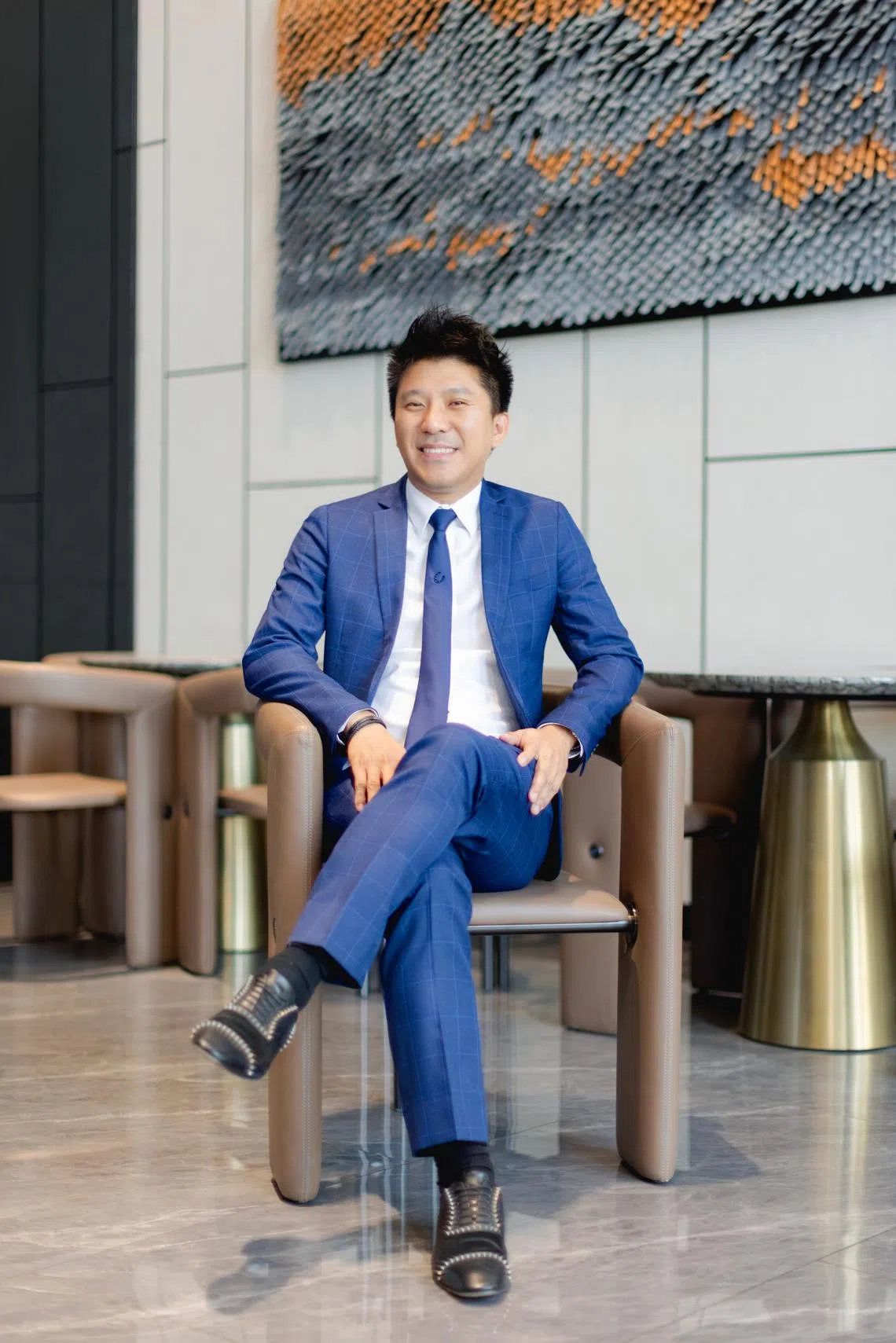
“Those early days were tough because we were paying too much and purchasing from people who were not reliable,” says the banker-turned-entrepreneur. He then realised that he could tap into a steady pool of a few hundred Chinese suppliers that he had shortlisted, and fill the gap in Singapore for more affordable furniture and construction materials.
“We’ve also worked out the logistical kinks including the nitty-gritty of quality control, packaging and clearing customs.”
So he bumped up his Foshan procurement office headcount from two to 40, hired 10 staff in Singapore and started fronting videos on social media about the Chinese city’s value-for-money furniture.
His pitch? Provide your budget, style preference and home’s layout and 3D design, and The Kurater will shortlist appropriate options for your selection. The final price for the furniture includes everything from design consultation and quality inspection to delivery and installation, including a two-year product warranty and resolution guarantee.
“We thought long and hard about this and felt that, in Singapore, we want a one-stop-shop service.”
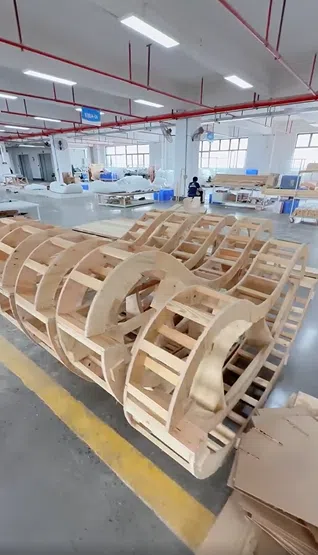
For its services, The Kurater charges a 10 per cent fee on the total order amount. That comes on top of a package fee of S$200 for clients who choose not to visit Foshan or S$1,000 (excluding airfare and accommodation) for those who fly there on a three-day, two-night trip to see shortlisted factories. These can be fully offset against the 10 per cent service fee.
Chua says response has been “pretty good for a startup”, with revenues growing at 20 to 30 per cent every month. Plans are already under way for an expansion. The Kurater opened a 2,000 square foot experience centre in Kallang Place on Thursday (Jan 29), so that customers can have a feel of furniture and material samples. He plans to collaborate with brands and personalities and will expand his Foshan team to between 80 and 100.
Chua’s only caveat is that customers have to plan ahead, because it takes 45 to 60 days for the furniture to arrive after orders are placed. “It’ll take time for us to educate Singaporeans that this is a new way to buy furniture.”
Not that it’s a deal-breaker.
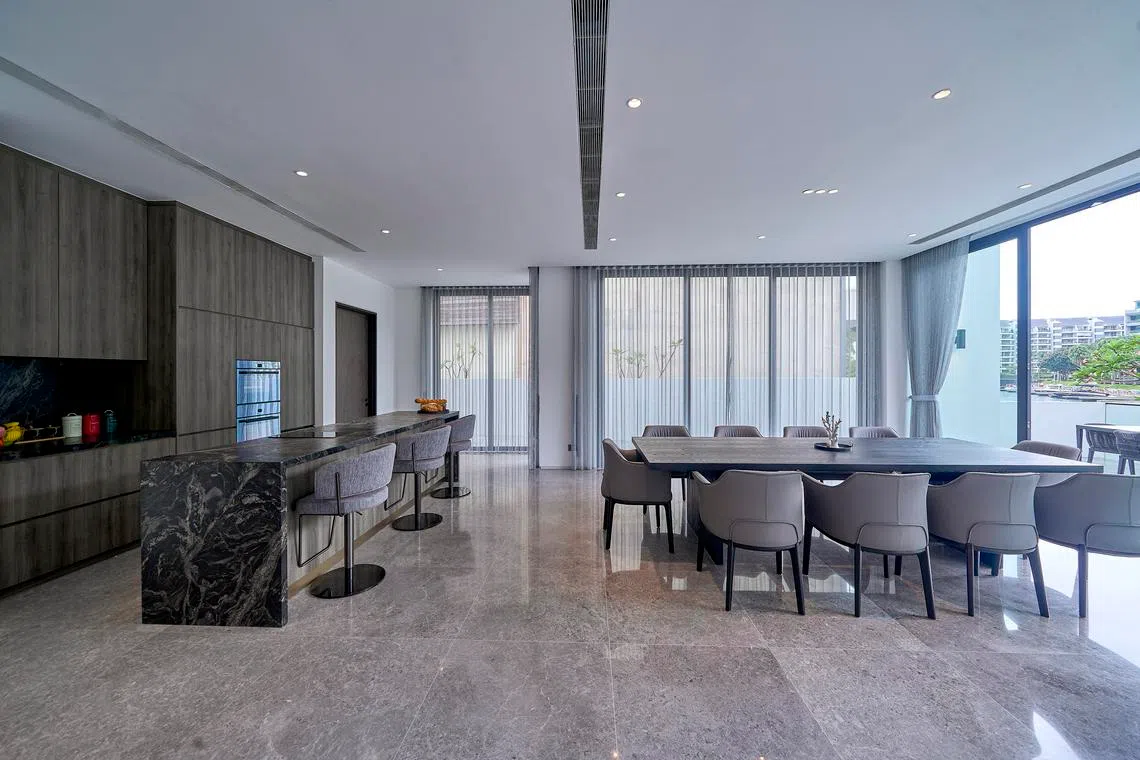
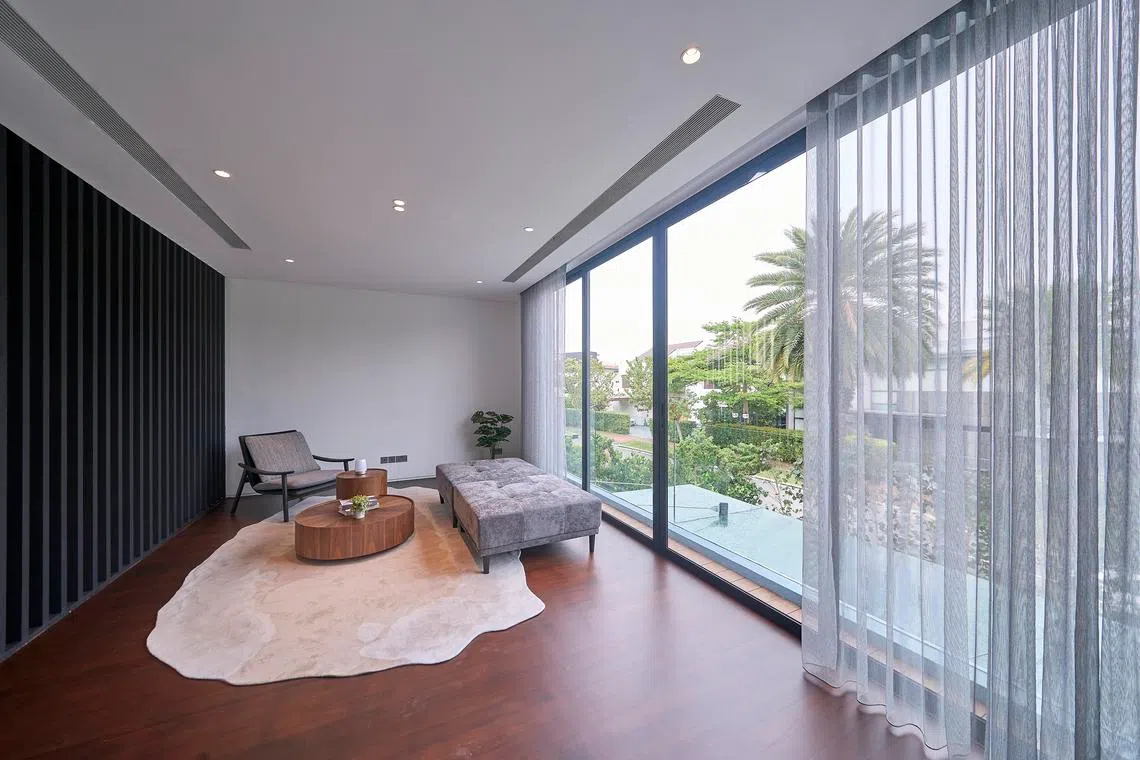
Tang, who has used The Kurater’s service to furnish a bungalow in Sentosa, is planning on working with Chua to offer luxury homebuyers a furniture shopping trip to Foshan as a value-added service. He reckons that, compared with high-end Italian furniture brands, products of a similar quality from Foshan could cost about 40 per cent less; and compared with local brands, some 10 to 20 per cent cheaper.
“Since my clientele leans towards the upper end, it’s not so much about cost savings but the wider design options available there.”

Meanwhile, Kristal Gu is the owner of Framier, a store that has been selling bed frames customised in Foshan over the last five-and-a-half years. She decided to leverage her connections with different factories and branch into customising other furniture types after getting “a lot of inquiries” for them.
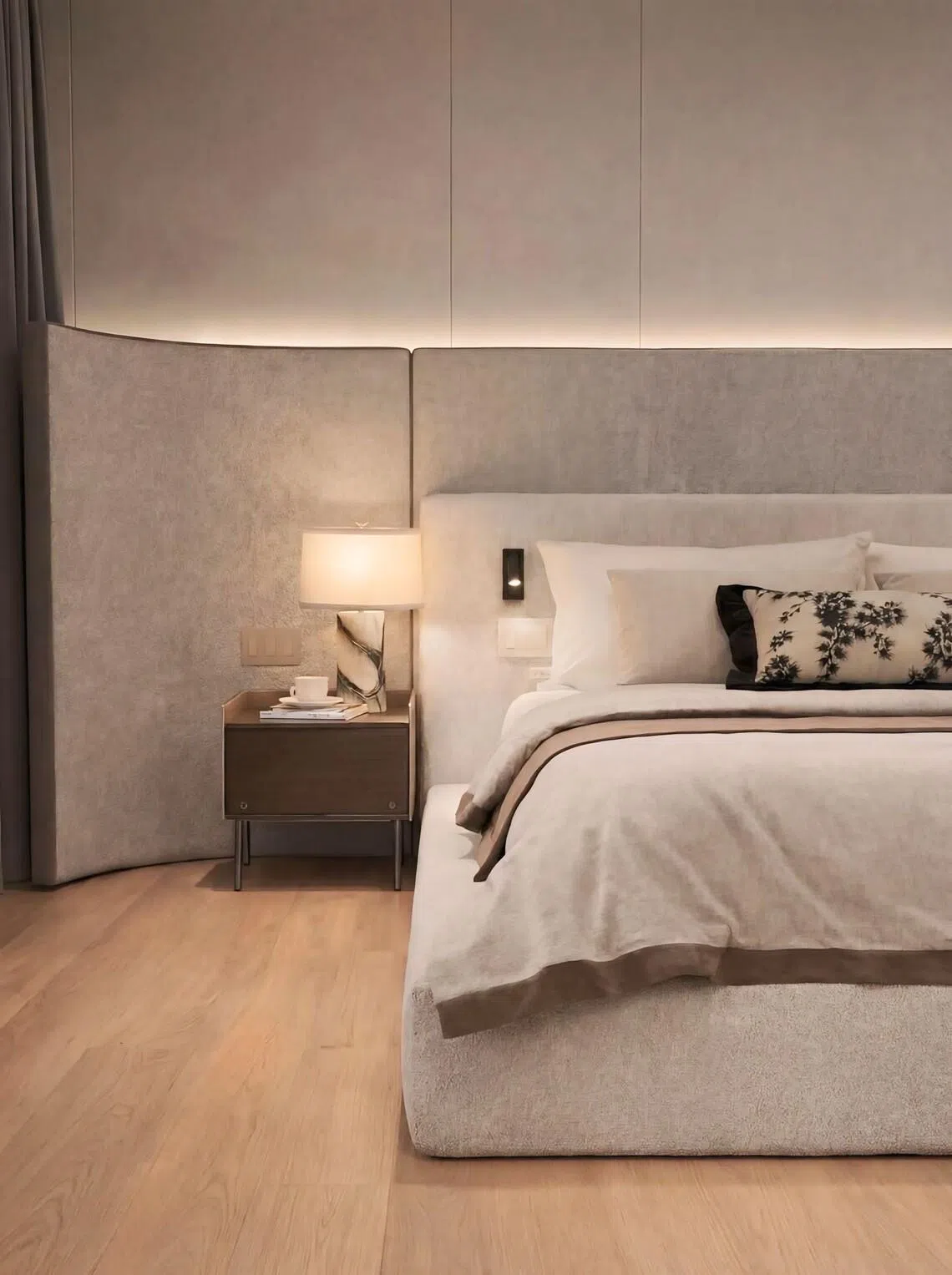
“Of course, it’s going to be more expensive than what you see online from Foshan, but if you’re going over there yourself and following an agent, the cost may end up being about the same, without the customisation,” she says, citing an example of a customer who paid between S$30,000 and S$40,000 for a sofa, dining set and outdoor furnishings. “That’s not a lot of items.”
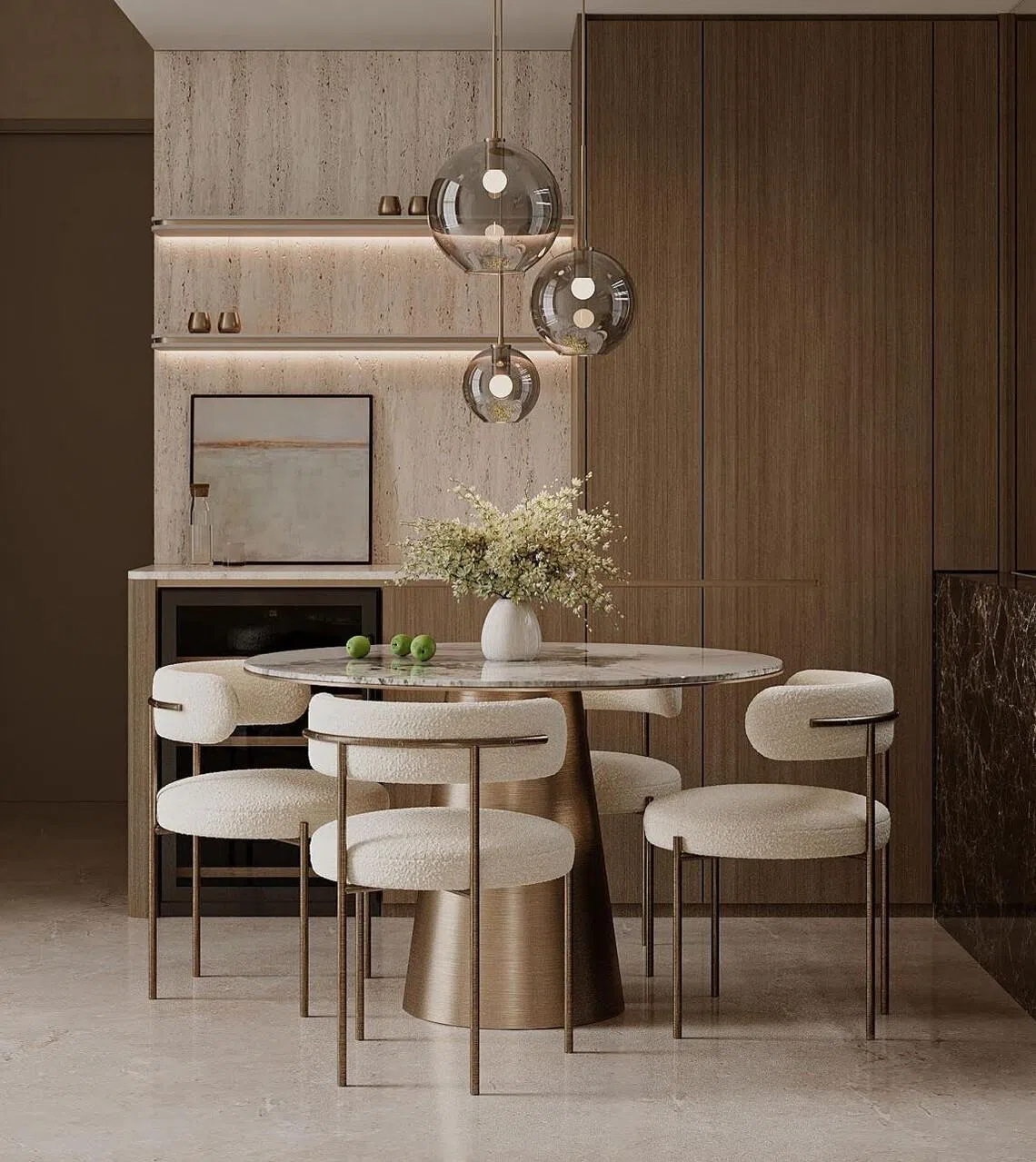
Gu is currently working with a couple of interior designers to come up with a service-based package with direct supplier pricing. Clients will enjoy the cost savings while Gu and the designers will charge a fee based on their services to plan, design and style a home.
“We’re looking at about $10,000 to $20,000 to furnish a three or four-bedroom condominium unit, including shipping, installation and our fees.”
Disruption to Singapore’s furniture market
As direct purchases from Foshan grow, the local furniture trade could face significant disruption. In fact, Gu is an example of a player who is pivoting towards customisation services.
“A furniture store in Singapore is costly to run due to the high rent, especially since we need more space to display bulky items,” she notes. “But if I can minimise my costs with a smaller footprint, then I’m better able to compete with China on pricing.”
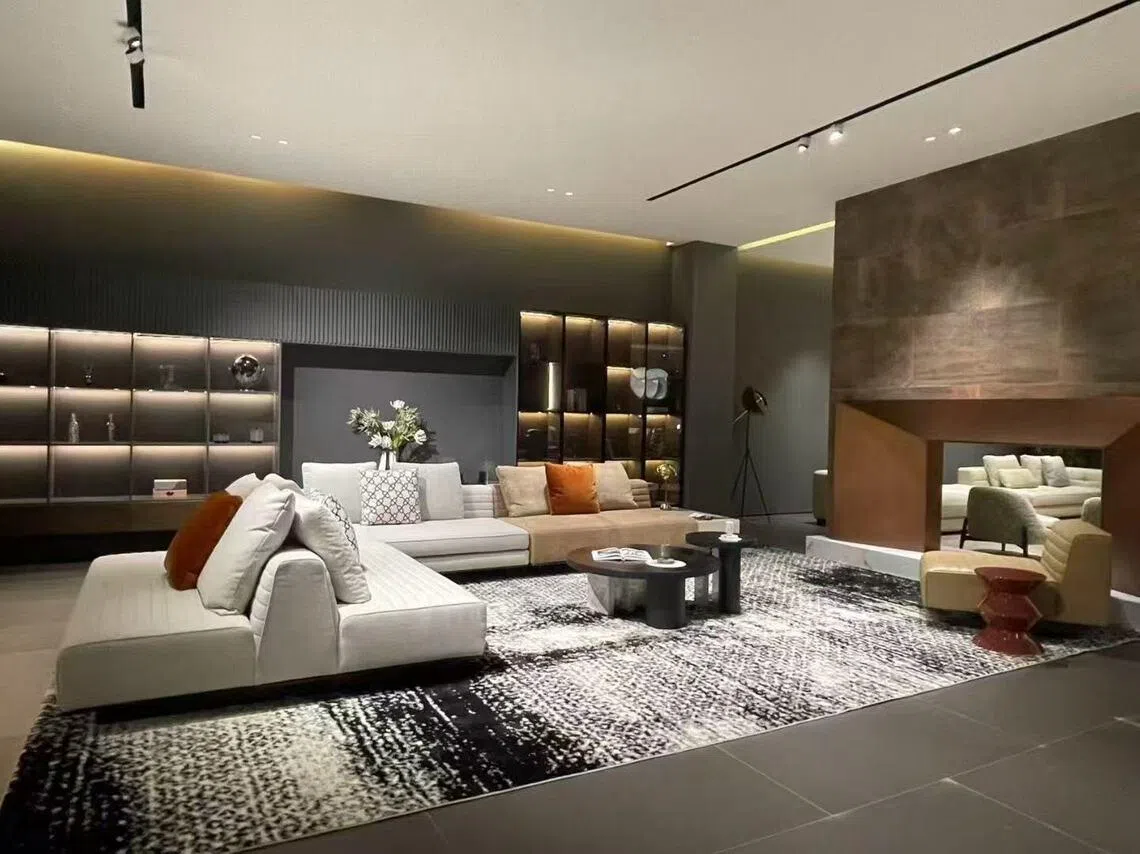
Joshua Koh, president of the Singapore Furniture Industries Council, says these developments highlight the need for players to continually adapt to evolving consumption patterns and production models, and leverage technology in areas such as design, customer engagement and supply-chain management.
However, he also cautions that overseas direct purchases can carry risks, particularly around upfront payments, recourse if issues arise, and uncertainty over whether materials and production processes meet expected safety and sustainability benchmarks. Resolving problems across borders can also be operationally challenging, particularly when products need to be returned.
“While social media has increased the visibility of factory-direct furniture sourcing overseas, local retailers in Singapore continue to play a critical role that goes beyond price,” he points out.
“They curate products for local needs, ensure compliance with safety and emissions standards, manage delivery and installation and remain accountable long after the sale. These values give consumers confidence and peace of mind.”
Decoding Asia newsletter: your guide to navigating Asia in a new global order. Sign up here to get Decoding Asia newsletter. Delivered to your inbox. Free.
Copyright SPH Media. All rights reserved.
TRENDING NOW

Once staunchly pro-China, Malaysian Chinese businesses are now distancing themselves from Beijing

Looking beyond looming CEO succession, should UOB potentially pursue a transformative merger?

Could stablecoins be the future of money?

Grab CEO’s wife Chloe Tong on life with Anthony Tan and finding her purpose

