Art looks at the mess we leave behind
Twenty artists examine the urge to clean, clear and impose order – and what inevitably escapes it

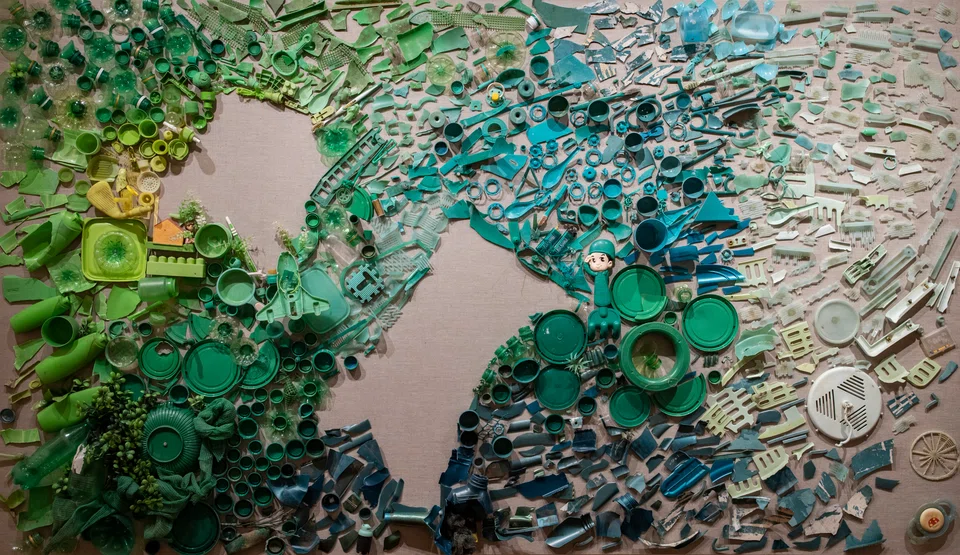
[SINGAPORE] From afar, Wang Ruobing’s Rainforests of the Sea: Sisters’ Island looks almost like an underwater idyll.
Blues and greens form something lush and reef-like, as though a fragment of Singapore’s southern waters had been lifted onto the gallery wall.
But, the materials give the game away: The “reef” is assembled from rubbish collected along the island’s coastlines – everyday debris transformed into an image of the very ecosystem it has polluted.

Elsewhere in the exhibition, Ezekiel Wong’s Flap Flap Flap Flap shows the Merlion somehow fallen from its pedestal and landed on a kitchen floor, next to a dirty cloth and slippers.
Singapore’s national mascot looks exhausted from performing for tourists all day; now it is simply another body requiring care and maintenance.
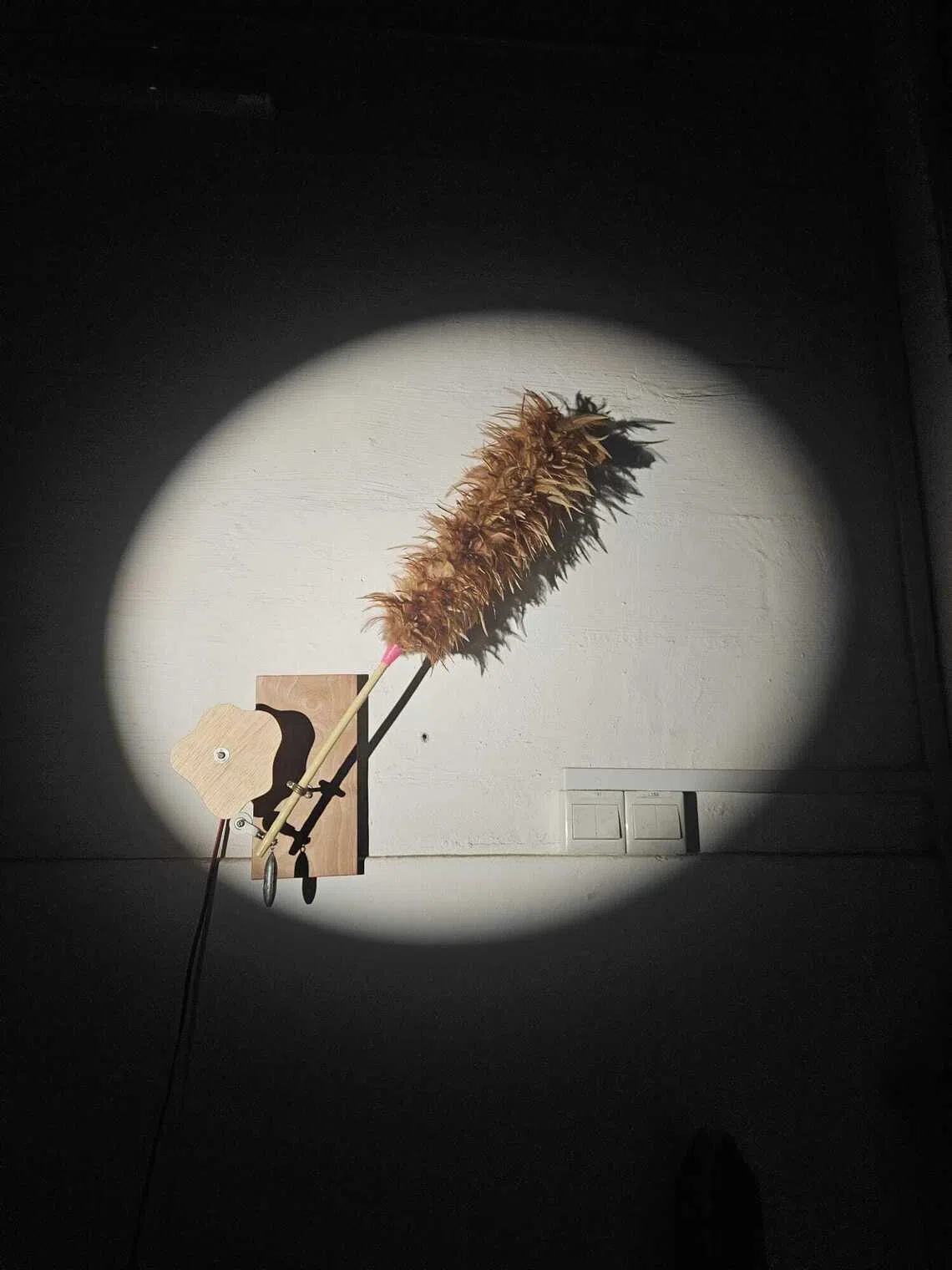
Then there are Yang Jie’s delightful kinetic sculptures, in which a motorised scrubber, soap and feather duster clean and polish a particular space endlessly, even when there is nothing left to clean.
These are among the witty and provocative works in Cleanse: Asia Pacific Now, a new exhibition at Prestige Gallery which brings together 20 artists from Singapore, Australia, China, Indonesia and Thailand, running from Aug 15 to Sep 25.
Opening during Singapore Gallery Month, the show examines how acts of cleaning, clearing and organising shape life in the Asia-Pacific.
Through works about hygiene, caregiving, urban renewal, public space and historical memory, it asks what societies choose to preserve, remove or render invisible.

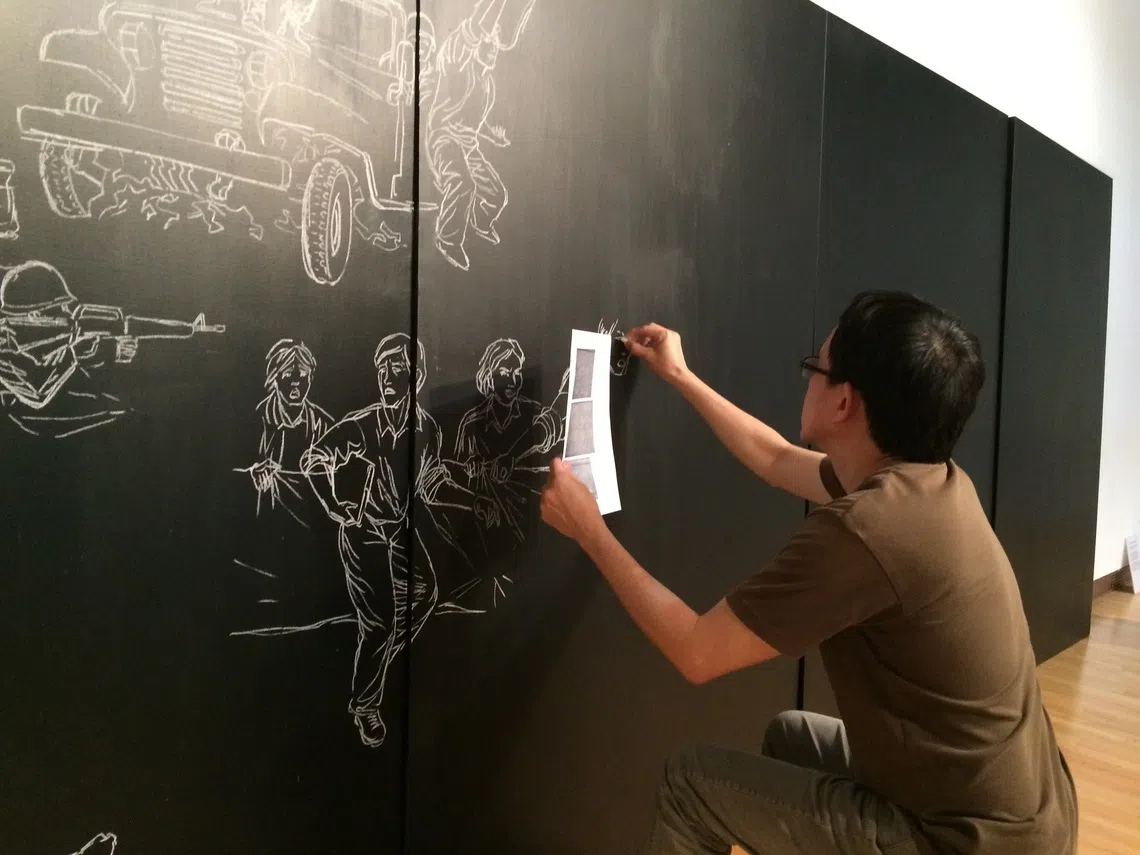
Thai artist Sutee Kunavichayanont, for instance, uses the classroom blackboard as a metaphor for history – it is repeatedly written on, wiped and rewritten, yet never entirely rid of its previous markings.
Chinese photographer Wang Guofeng pushes order towards spectacle, photographing North Korea’s Arirang Mass Games, where some 100,000 participants dissolve, from a distance, into a single immaculate image.
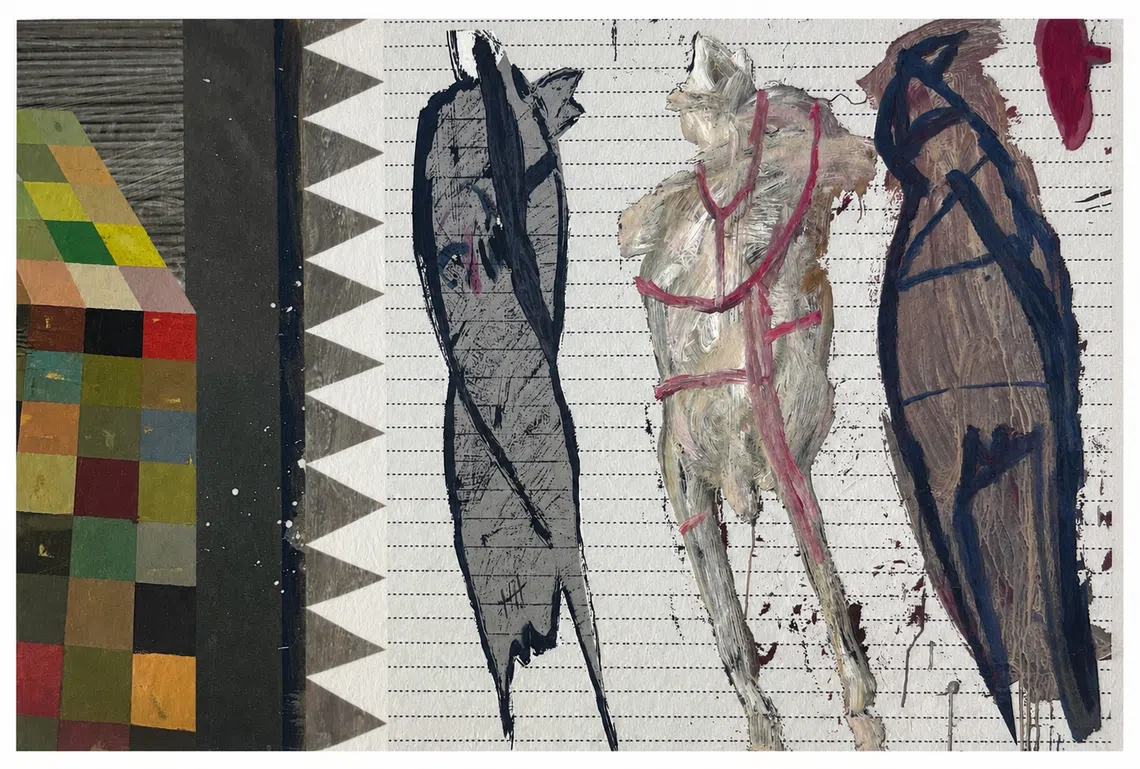
Indonesian artist Maharani Mancanagara considers what is lost when complicated histories are made coherent, through an installation rendered in charcoal on wood.
The other artists include Milenko and Delia Prvacki, Debbie Ding, Alecia Neo, Colin Villapa and Gardika Gigih.
The exhibition is part of artist-curator Desmond Mah’s Asia Pacific Now 2026 series. Curated by Adrian Tan, it draws on his own research-driven approach and is presented in collaboration with the gallery.
Tan says: “Cleansing is a productive lens, because many parts of the Asia-Pacific have undergone modernisation, urbanisation and social change at tremendous speed, and many of those acts of clearing are still within living memory.
“In Singapore, Thailand and Indonesia, for instance, there are histories of resettlement, urban renewal, slum clearance and the ordering of public space.”
He adds: “At the same time, nothing is ever entirely erased. It remains in one form or another, and that residue is what intrigues me – whether it exists in our memories, our psyche or discarded objects.
“These works provide anchor points for thinking about what happens when histories, spaces or identities are ordered and made clean – and about what stubbornly remains afterwards.”
Cleanse: Asia Pacific Now runs at Prestige Gallery, 39 Keppel Road, from Aug 15 to Sep 25.
Decoding Asia newsletter: your guide to navigating Asia in a new global order. Sign up here to get Decoding Asia newsletter. Delivered to your inbox. Free.
Copyright SPH Media. All rights reserved.