

Hiroshi Sugimoto brings five decades of art to Singapore
The famous photographer continues his exploration of time, illusion and emptiness

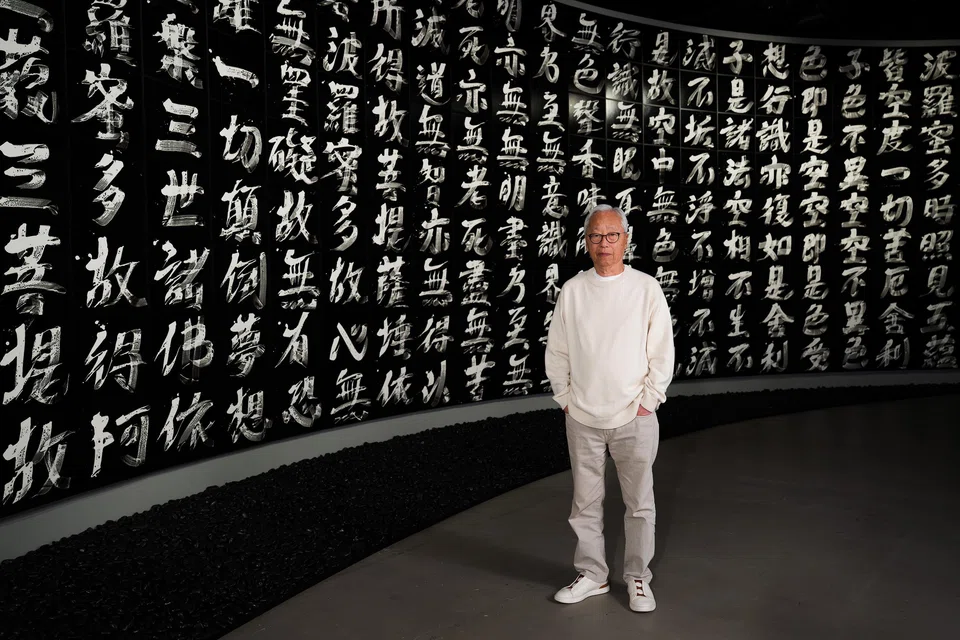
[SINGAPORE] At first glance, Hiroshi Sugimoto’s art appears to be made of almost nothing exceptional: empty sea and sky, a candle quietly burning out, a cinema screen gone white, a Buddha multiplied ad infinitum until it becomes a blur.
But the more time one spends with it, the more one realises that nothingness, in Sugimoto’s hands, is filled with meaning and consequence.
At Singapore Art Museum, Hiroshi Sugimoto: Form Is Emptiness gathers more than 60 works in 11 series, along with 14 fossil specimens from the artist’s own collection, into a show that feels less like a retrospective than a deliberate act of disappearance.
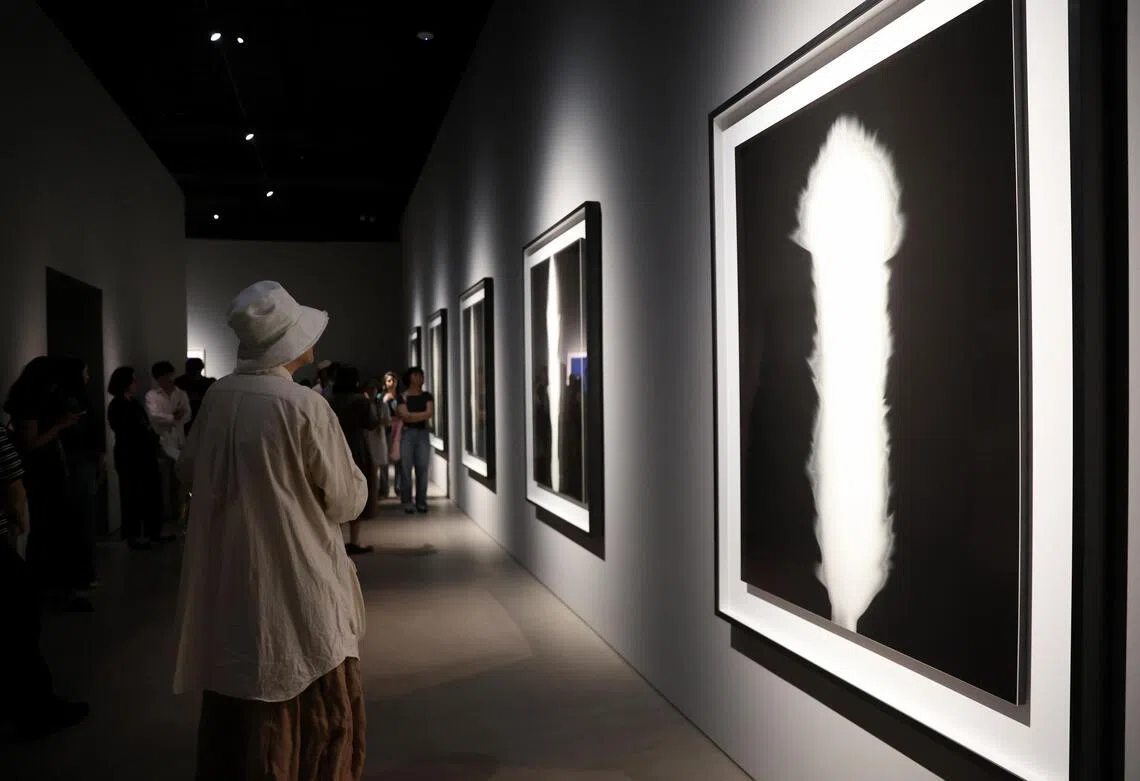
The title comes from the Buddhist Heart Sutra, and suggests that what appears solid or permanent is in fact unstable, contingent and shaped by perception. For the 78-year-old Japanese artist, this is not just a philosophical idea, but the basis of a lifelong practice – using images to examine time, reality and illusion.
In his best known Seascapes series, each image is a meeting of sea and sky so spare and elemental that it looks pre-human. Sugimoto began the series in 1980, photographing horizons around the world as if searching for an image that might hold eternity.
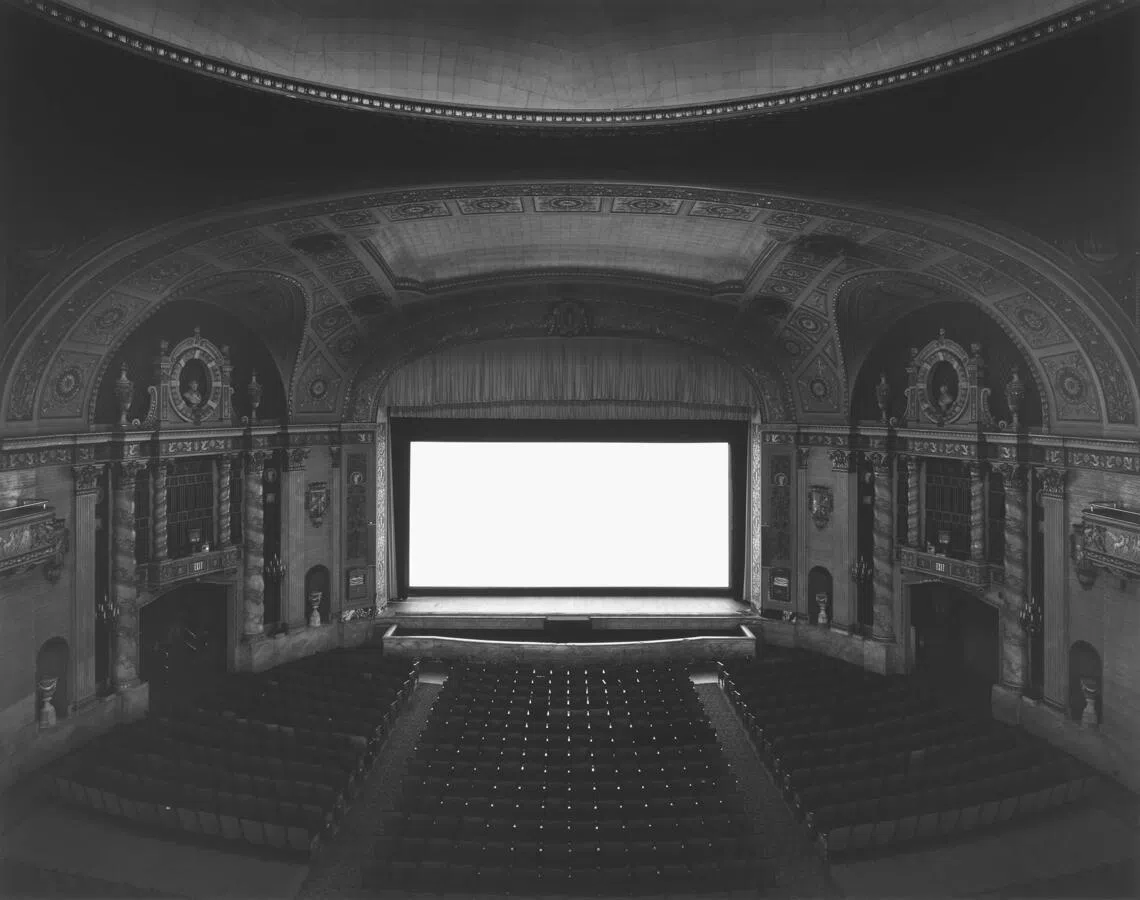
For his Theaters series, he photographed cinemas by leaving his camera shutter open for the entire duration of a film. What remains is not the movie itself but a glowing white rectangle, an entire narrative compressed into a single field of light.
Elsewhere, he plays with the unstable boundary between reality and illusion. In Dioramas, dramatic wildlife scenes turn out to be museum displays. And in Portraits, historical figures appear to sit for him, though they are wax figures from Madame Tussauds – reminding us how easily we are fooled by images.
For more than five decades, Sugimoto has helped expand what photography can do. When he began his career in the 1970s, the medium was still fighting for full recognition in the art world.
He became part of a wider shift that saw artists such as Cindy Sherman and Jeff Wall push photography into the centre of contemporary art. In his hands, photography became a way to examine reality, illusion, time and perception.

The exhibition runs until Oct 4 at Singapore Art Museum.
Decoding Asia newsletter: your guide to navigating Asia in a new global order. Sign up here to get Decoding Asia newsletter. Delivered to your inbox. Free.
Copyright SPH Media. All rights reserved.
TRENDING NOW

DBS, OCBC, UOB rout lops billions off STI as inflation, rate concerns spook investors

Grab CEO’s wife Chloe Tong on life with Anthony Tan and finding her purpose

OCBC sheds S$8 billion in value as shares close nearly 6% down; analysts cautious on banks

Deal between tycoon friends sparks scrutiny of Philippine power sector

