

Jacintha and Dick Lee revisit love – but remain guarded
The most revealing thing about their show, Lush Life, is how much it refuses to reveal

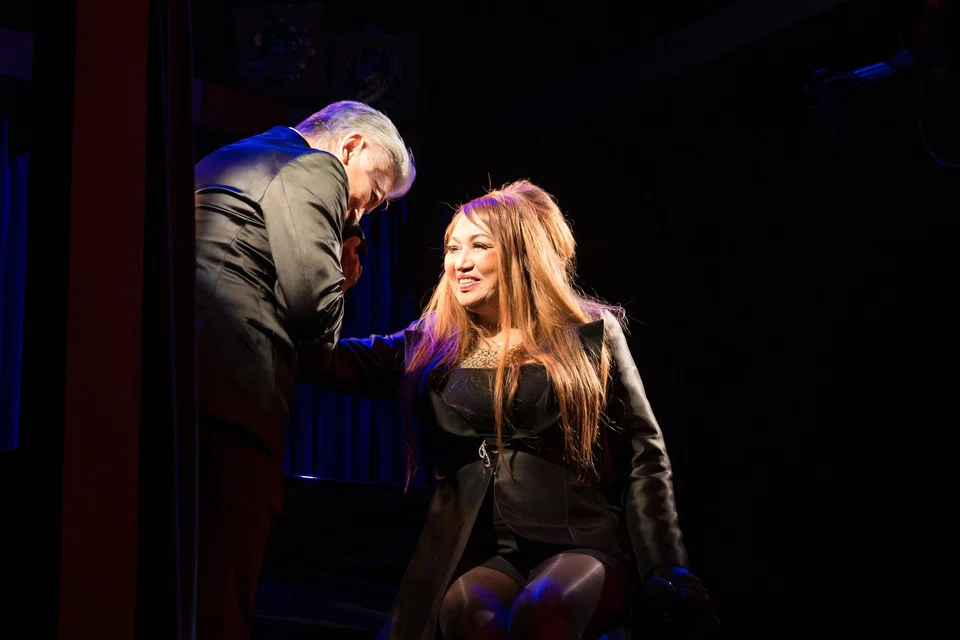
[SINGAPORE] Past the halfway mark of Lush Life, a biographical show about the life of Singapore singer Jacintha Abisheganaden, her ex-husband Dick Lee tells the audience why their marriage failed.
“We had never talked about being romantic,” he says. “I don’t know how to be romantic... If I had known she wanted me to be a romantic hero, I would not have gone through with the wedding.”
For a man who’s made a career out of writing love songs, it’s a puzzling admission. But it is also a rare moment of frankness in a show which, for the most part, avoids what needs to be talked about.
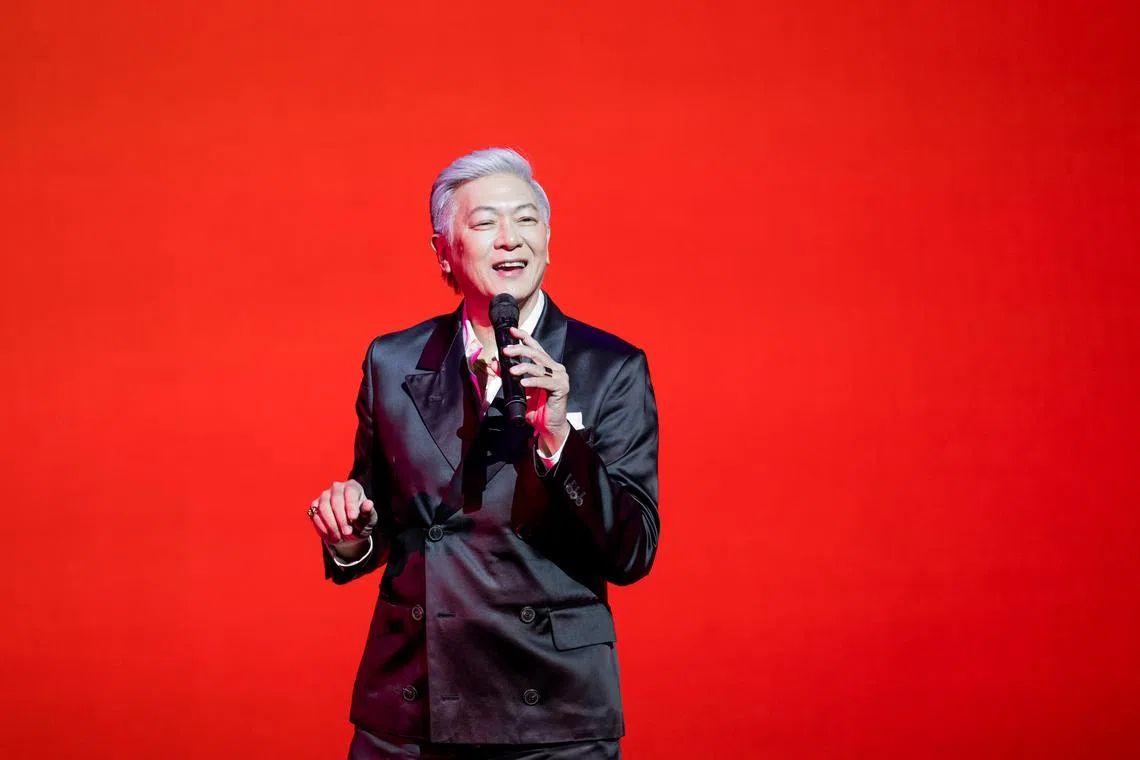
Was theirs a marriage of convenience? A bowing to the social conventions of their time? A friendship pushed beyond its natural limits? A celebrity performance that found its way to the altar? The production hints at these possibilities, but doesn’t commit to any of them.
It’s not that celebrities aren’t entitled to privacy. It’s just that the show itself is structured around Abisheganaden’s three marriages and divorces. So if it’s going to anchor itself on those marriages, it has to interrogate those marriages.
Instead, we get Abisheganaden and Lee narrating their wedding party as a farce: a broken air-conditioner in the bridal car, bumboats running out of fuel en route to the wedding site in Sentosa, 68 tables of guests being served suckling pig though the bride herself was vegetarian, and so on.
The stories are funny, but they feel like evasions – a way to talk about the marriage without talking about marriage.
So much promise
Lush Life arrives at the Singapore International Festival of Arts 2026 with a compelling premise: two iconic musical figures returning to the stage together to revisit the friendship, collaboration, marriage, divorce and music that have bound them for more than half a century.
The production is written and directed by Ong Keng Sen, one of Singapore’s most internationally acclaimed theatre-makers, who spent many hours interviewing the two. Supporting the cast is the charismatic Frances Lee – always a welcome presence – playing the younger version of Abisheganaden.

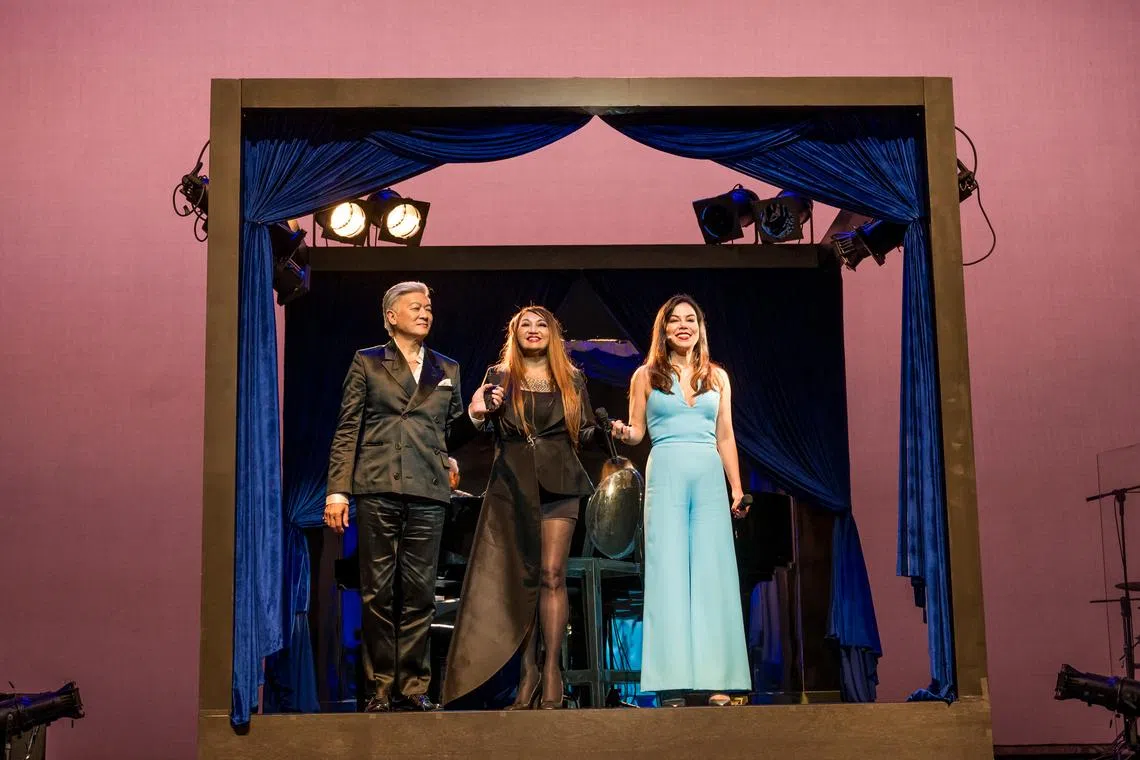
Abisheganaden herself has described Lush Life as a “biopic”. Yet the story presented here is curiously narrow – less a biopic of an artist than an account of a woman defined by the men she married.
Is her own story not rich enough to carry the evening? She was one of Singapore’s most beloved TV and theatre performers of the 1990s. She was signed on to Groove Note Records and her songs appeared in Hollywood movies. As the daughter of Cultural Medallion recipient Alex Abisheganaden, she carries a formidable musical inheritance – which she extended.
Why not spend more time there? Why not show the child of musical parents, the woman formed by stage and studio, the artist who moved seamlessly between TV and theatre, and pop and jazz?
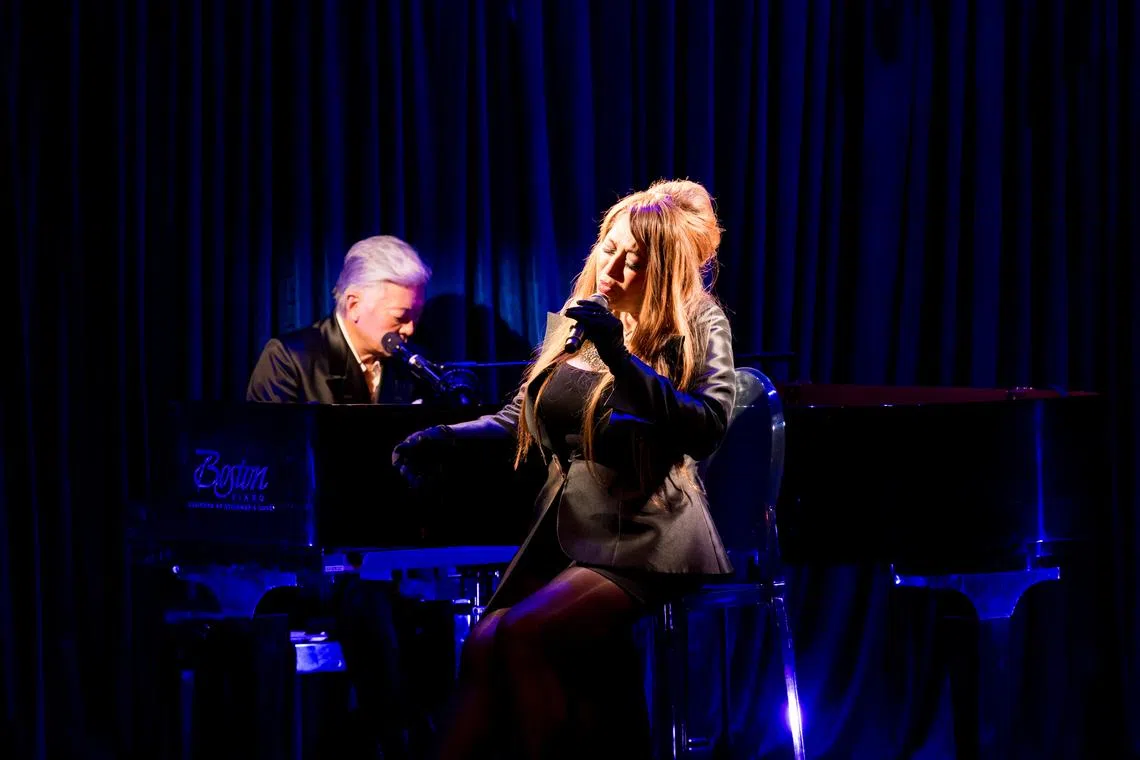
One can only speculate whose decision it was to anchor the narrative in men and marriage. Director Ong’s own impressive body of work – with his longstanding interest in excavating memory, identity and history – suggests he can deliver a far richer stage show than this.
As it stands, Lush Life leaves out the context of her childhood and artistic formation, moving almost directly into her first marriage in 1983 – before ending with her last divorce in 2008. Younger audiences might be forgiven for not fully understanding why Abisheganaden and Dick Lee occupy such an important place in Singapore’s cultural history.
Lush Life also concludes as abruptly as it begins – with a closing monologue that focuses on the violent behaviour of her unnamed third husband, whom she describes as someone fond of “breaking things” and possibly a gold-digger.
Thank you for the music
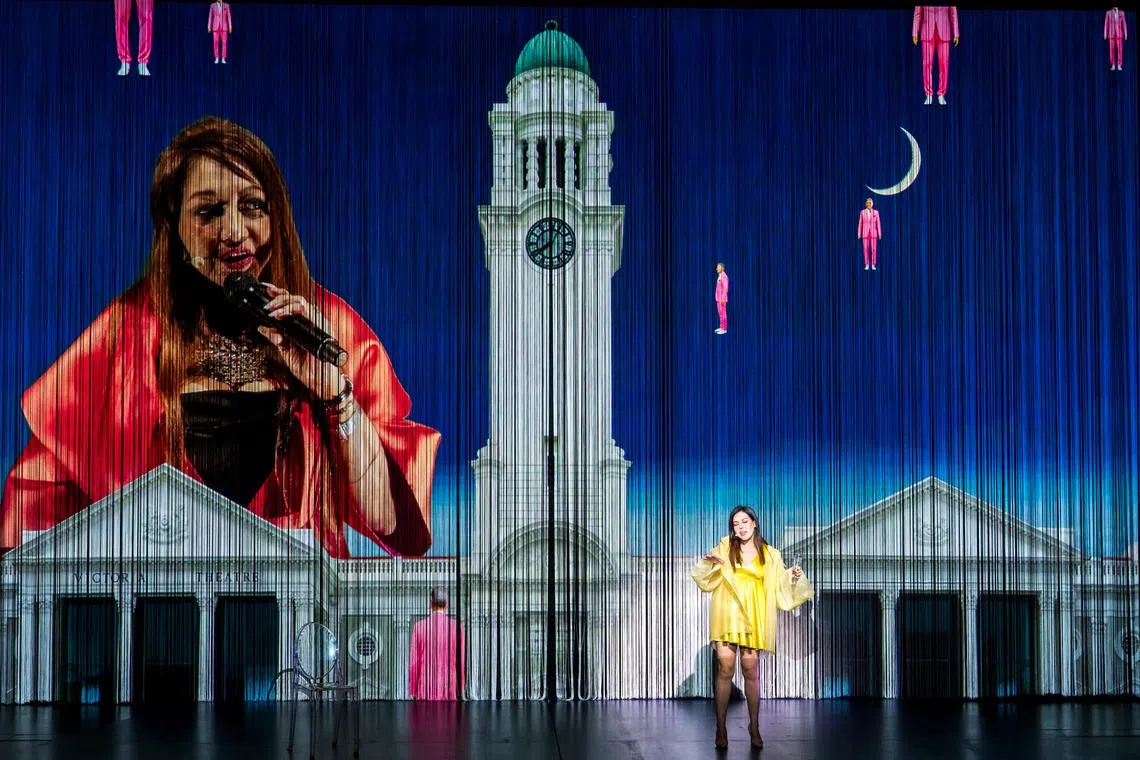
For his part, Ong surrounds the performers with the apparatus of memory and illusions: projections, live video, a stage-within-a stage, album art and art-historical references that appear to elevate this local pop history into something grander and more mythic.
At its best, the stage design gives the evening the sense of a life being reframed and scrutinised under gallery light. At its weakest, it feels as if the production is dressing up emotional thinness with historical art. The visual language suggests depth, but the confessions by the players do not descend with it.
The musical passages are ultimately the show’s saving grace. Twelve of the 15 songs performed are written and composed by Lee himself, mostly from his early years. And though some carry the imprint of popular hits of their day, they remain melodic, humorous and emotionally direct.
They also offer an early glimpse of the adept musical borrowing that would later define The Mad Chinaman, the breakthrough 1989 album that catapulted Lee’s career into the stratosphere.
In fact, when Lee sings songs that seem to glance at his own evasions – including the wink-wink-nudge-nudge Love Me The Way I Am – or when Abisheganaden revisits jazz classics such as Something Cool or Here’s To Life, the show finds the poignancy it otherwise struggles to sustain.
The songs say more about them than the spoken text does – and both Dick Lee and Abisheganaden are at their most moving and magnetic when they’re singing.
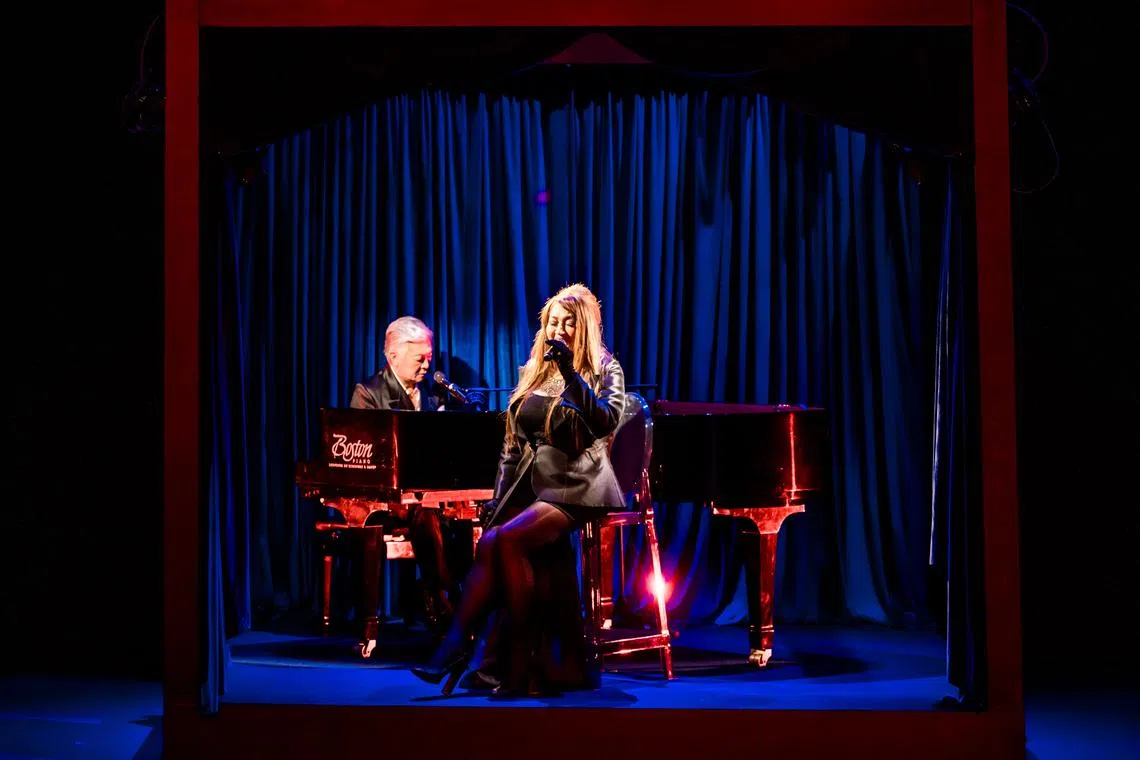
In the final stretch, as the show moves more fully into jazz, Abisheganaden cries as she sings songs of loss, wisdom and survival. It is here that one glimpses the richer production Lush Life might have been – not so much a story of husbands, quarrels, disappointments and domestic violence, but a portrait of an artist who has carried music through every stage of her life.
As the saying goes, life is short and art is long. The songs of Abisheganaden and Lee know how to speak directly to the heart, even if the show built around the songs does not.
Decoding Asia newsletter: your guide to navigating Asia in a new global order. Sign up here to get Decoding Asia newsletter. Delivered to your inbox. Free.
Copyright SPH Media. All rights reserved.
TRENDING NOW

Britain’s mansion tax shows the difficulty of targeting wealth

Once staunchly pro-China, Malaysian Chinese businesses are now distancing themselves from Beijing

The only common thing in S-E Asia is that we all eat rice: Cisco’s Asean president

Singapore data centre operator DayOne opts for US IPO at likely US$20 billion valuation

