Uketsu: The masked mystery writer dominating Singapore’s bestseller charts
His Strange book series is the city’s top-selling fiction phenomenon of 2025, and his new release is carrying the momentum

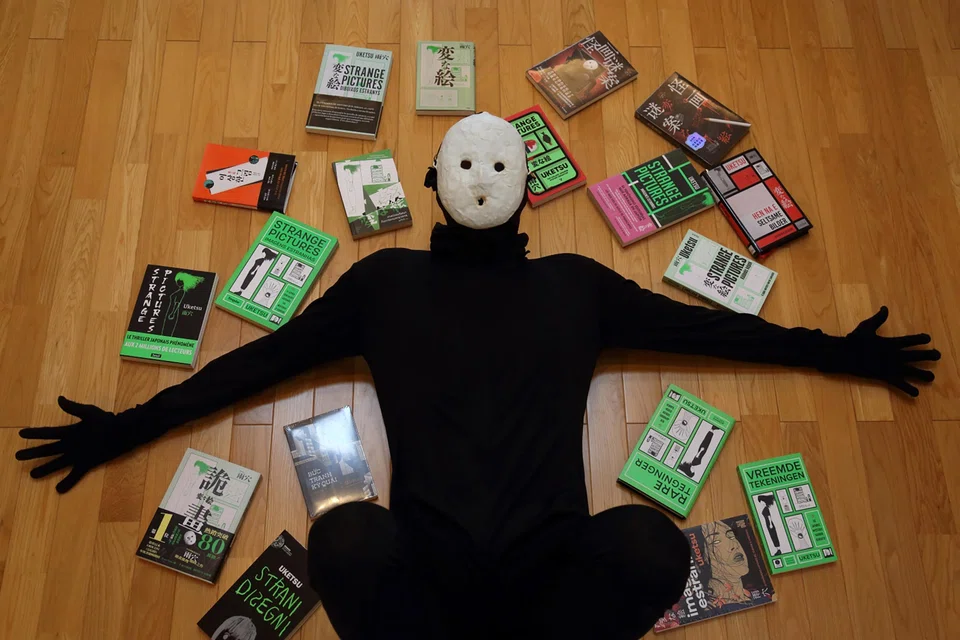
[SINGAPORE] Walk into Kinokuniya Singapore today and you’ll see an entire display table devoted to a single mystery writer: Uketsu.
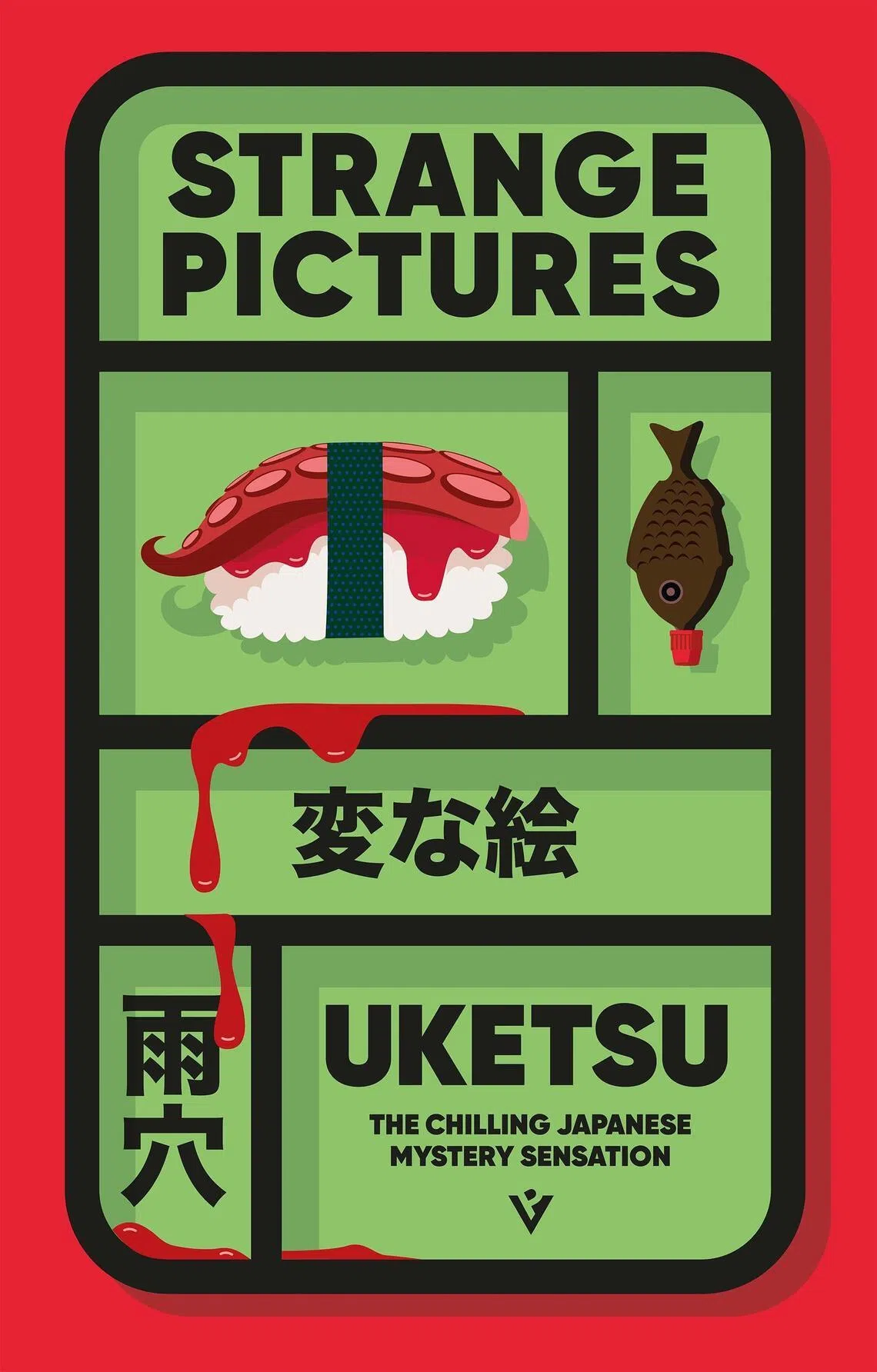
His three novels – Strange Pictures, Strange Houses and Strange Buildings – currently occupy the top three spots on the store’s fiction bestseller list, a rare sweep for a Japanese author whose works were only translated into English in 2025.
A year ago, most Singapore readers had never heard of him. Now, his books are being snapped up faster than stores can restock them.
According to a spokesperson from Pansing, which distributes the titles here: “The Strange series is Pansing’s top-selling fiction series in 2025. Meanwhile, sales for the new third title, Strange Buildings, have exceeded expectations in the short one week since it has been released in Singapore.”
The distributor declined to release exact figures, but the speed of turnover in stores suggests another breakout hit.
The surge, however, is not confined to Singapore. Uketsu’s books have been translated into multiple languages and sold more than 8.5 million copies worldwide, with particularly strong readership across Asia and Europe.
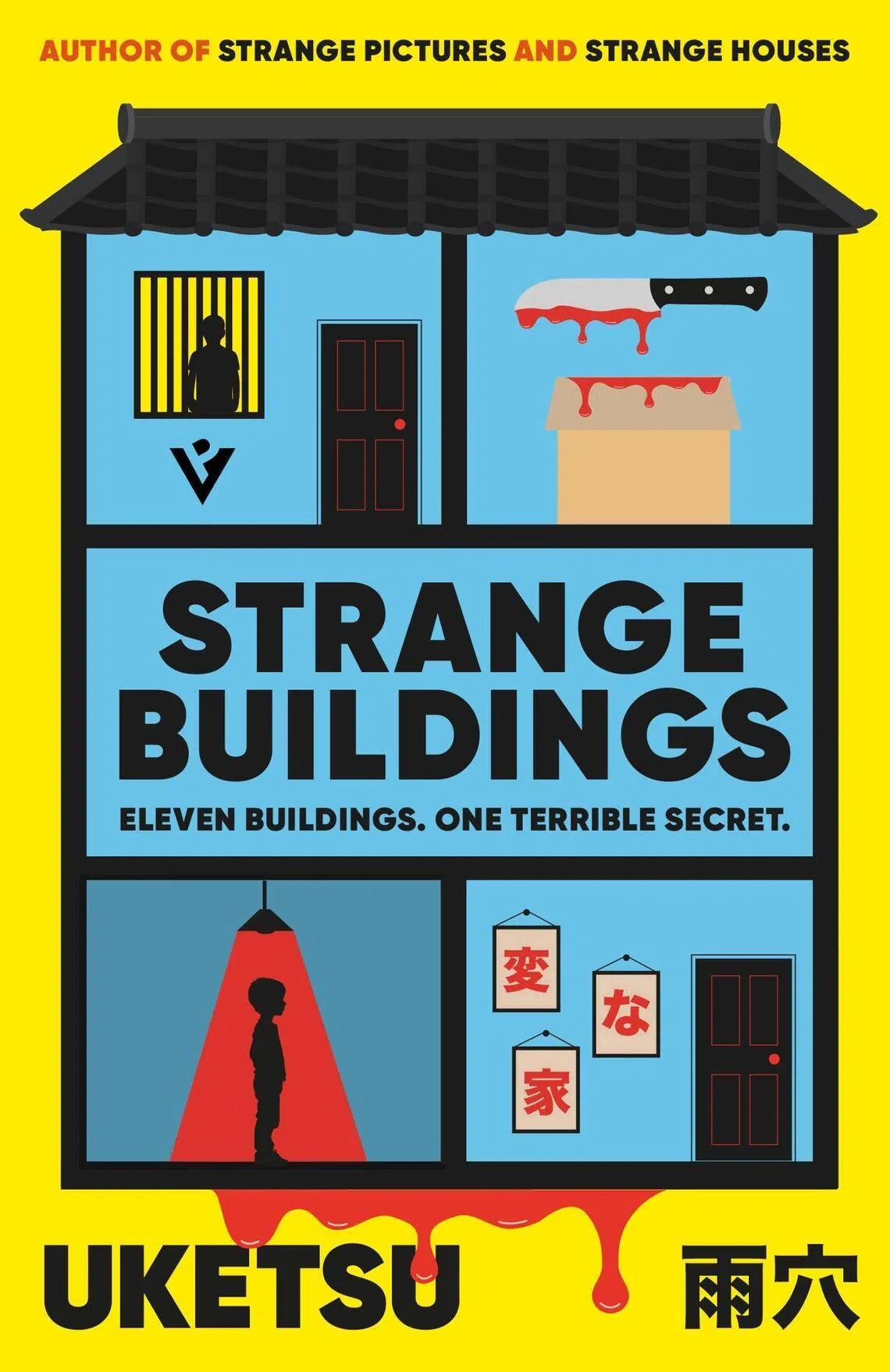
His fourth and latest title, Strange Maps, released in Japan in October 2025, reportedly sold more than 700,000 copies in its first month. An English translation is expected to arrive in Singapore in the second half of 2026.
On TikTok and YouTube, readers who rarely pick up novels credit him with rekindling their interest in physical books. Not bad for an author who has never shown his face – appearing instead as a masked figure in black.
Stories built like puzzles
Part of the appeal lies in how unconventional these novels feel. Uketsu’s stories are filled with diagrams, floor plans, drawings and visual fragments. The engine of his fiction is not lush prose or character interiority, but structure – how information is delivered, withheld and recombined.

The writing itself is deliberately neutral – almost like a newspaper report. Sentences are concise and functional, designed to carry clues rather than emotional flourish. For readers who find dense literary prose intimidating, this clarity is inviting.
Each chapter functions less like a scene and more like a packet of evidence. The pleasure comes not only from discovering what happens next, but also from testing what each detail might signify.
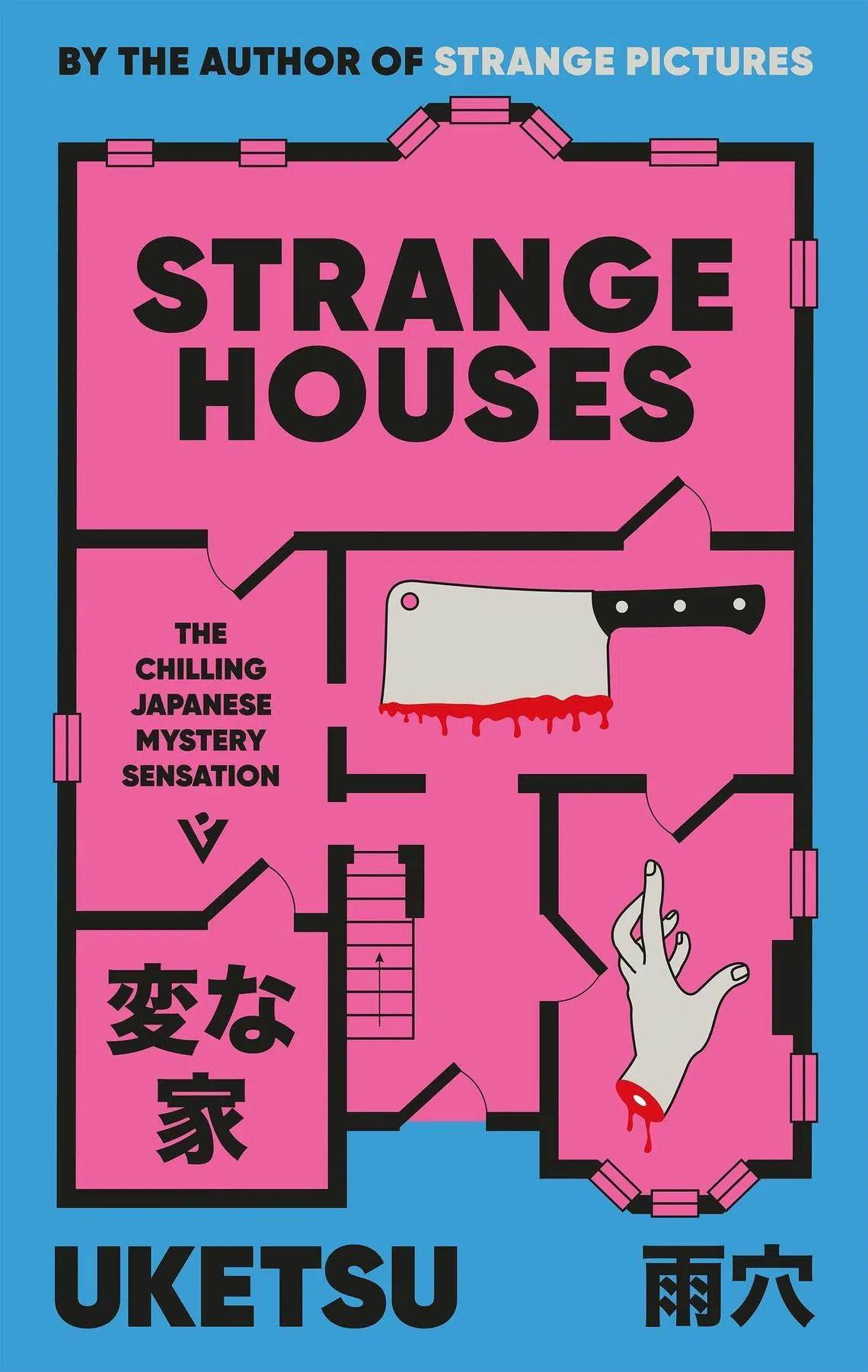
Often, the illustrations and floor plans become the narrative engine themselves. Readers learn to scrutinise every visual element – the placement of a window, the length of corridor, the angle of a cupboard – because meaning is frequently embedded spatially rather than verbally.
The plot structure is modular. Stories unfold in nested fragments – short segments that accumulate into a larger design. These story-within-story constructions mirror how many younger readers now process information – in bursts, across formats and with constant pattern recognition.
The result is fiction that feels interactive without being gimmicky.
While some have compared his work to the popular puzzle-based mystery series Murdle, the big difference is that Uketsu offers fully realised narrative pay-offs. The puzzles matter because the stories do.
Navigating the Strange world
For newcomers, his first book in English, Strange Pictures, remains the most accessible starting point. What begins as a series of seemingly innocent drawings gradually links to trauma, family secrets and murder – culminating in a final twist that forces readers to reorder everything they have just read.
The second novel in English, Strange Houses, is considered by some (including this journalist) to be largely disappointing and, yes, skippable. In fact, in Japan, this was his first publication and was later turned into a film – but it didn’t quite hog the bestseller lists until he released his second title, Strange Pictures.
Strange Houses, however, can serve as a good (though not necessary) bridge to his third title Strange Buildings – arguably his most fully realised book so far. It is more satisfying in the way its visual and narrative fragments interlock, and feels like the moment where Uketsu’s method and storytelling fully align.
But while the books are meticulously designed, the persona behind them is carefully absent. Uketsu appears publicly only in a mask and black clothing – an aesthetic he has said is partly inspired by the black-clad stagehands of kabuki theatre. His real name, age and background remain undisclosed.
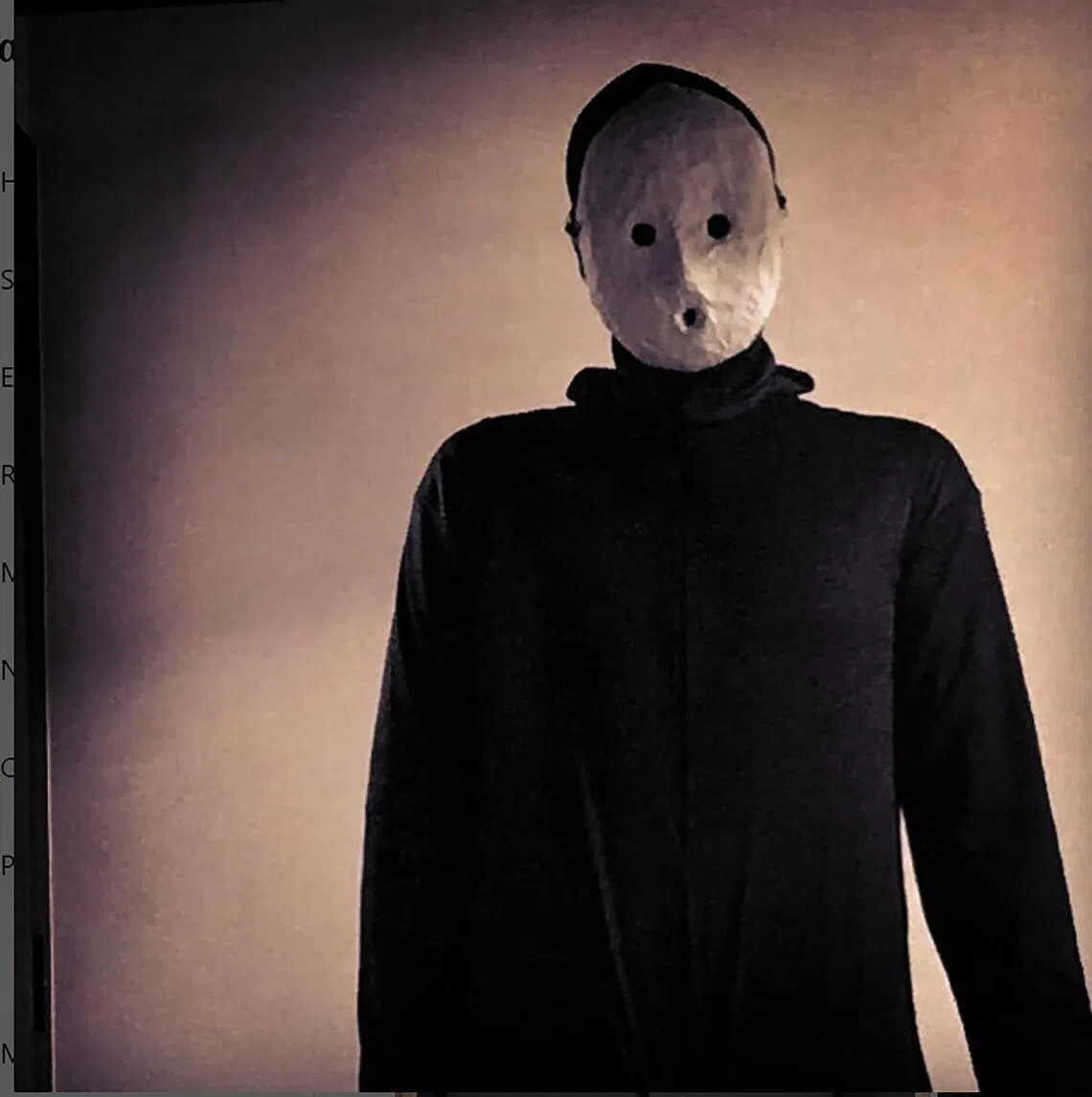
“Uketsu” itself is a pen name – and its translation is potentially too rude to print here. On his YouTube channel, which has more than 1.7 million subscribers, his voice is electronically altered into a different register, further obscuring his identity.
In an era defined by constant self-disclosure and author branding, this refusal to be seen feels almost radical. For younger readers used to oversharing on social media, his anonymity feel less as evasiveness than as focus.
The work, not the personality, should matter more – and here, it does.
In fact, while global book sales are currently dipping and BookTok sensations flare and fade, Uketsu’s steady rise suggests that readers will still show up if the form meets them where they already are, without flattening its intelligence or lowering its ambition.
Uketsu’s first three novels are available in Kinokuniya Singapore
Decoding Asia newsletter: your guide to navigating Asia in a new global order. Sign up here to get Decoding Asia newsletter. Delivered to your inbox. Free.
Copyright SPH Media. All rights reserved.