The best wine books of 2024
A tome on the totality of wine from a New York sommelier, a tale of six months in a French village and more books for the wine lovers in your life.
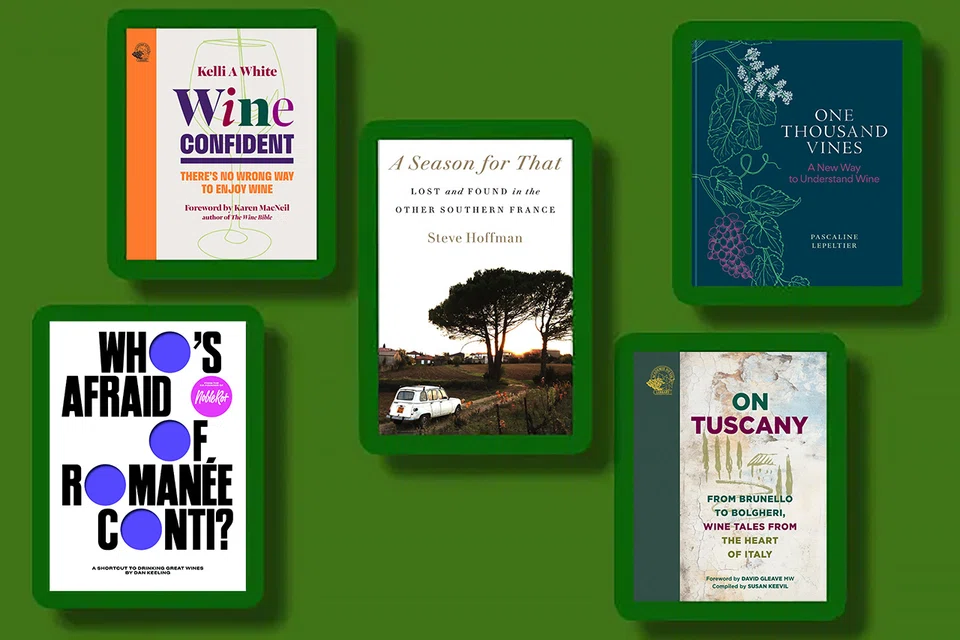
MANY good wine books were published this year, but these five stood out. There’s something for every wine aficionado, including a work of rare scholarship, wonderful storytelling, an excellent guide for beginners and two collections of essays.
One Thousand Vines: A New Way to Understand Wine, by Pascaline Lepeltier (Mitchell Beazley, US$55)
Wine is easy to drink but complicated to understand. Most modern books focus on one element – a region, history, wine science, tasting and so on. Few seek to explain it in its totality.
That’s what makes Pascaline Lepeltier’s new book so extraordinary. It examines every aspect of wine, starting with the domestication of the grape vine thousands of years ago through the nature of the vine, the geology, flora and fauna of vineyards, the production and serving of wine, how we taste it and how we talk about it. It’s a remarkable synthesis that incorporates biology, chemistry, history and philosophy.
Lepeltier, the beverage director at Chambers in New York and a world-class sommelier, also writes regularly about wine and, with Nathan Kendall, produces wines under the Chepika label in the Finger Lakes of New York. This certainly gives her a well-rounded background. But before she devoted herself to wine, Lepeltier was a philosophy graduate student in France, which helps to explain her passionate concern with wine’s elemental nature.
For her, no question about wine is too simple or basic. No assumption is left unexamined. Perceptions and beliefs are cross-checked through history as science builds and evolves. Yet wine cannot entirely be understood through science, and Lepeltier is careful to point out the limits of what is known and the areas in which research continues or would be most useful.
This book is not entirely about science and history. It’s also about beauty, the roles wine has played in different cultures and how we perceive aromas and flavours. Cumulatively, this work is an act of love as well as a work of scholarship. It’s a celebration of a beverage that singularly has inspired so much wonder and discussion over thousands of years.
It’s not for people who would simply like to know how to select a bottle or enjoy a glass. It’s rather for those who are already invested in wine and would like to dive deeply into the subject.
“One Thousand Vines” was originally published in French, and Lepeltier can’t help but offer a point of view dominated by her French heritage. But few cultures have contributed as much to modern wine as France, and French wine scholars have studied the subject for centuries. It’s a serious book, leavened by lovely illustrations by Loan Nguyen Thanh Lan.
It’s often said that the more we learn about wine the less we know. But wine lovers who read this book will deeply, richly profit.
SEE ALSO
A Season for That: Lost and Found in the Other Southern France, by Steve Hoffman (Crown Books, US$30)
Steve Hoffman, a successful tax preparer, his wife, Mary Jo, a nature blogger, and their two children leave their comfortable Minnesota home to live in the south of France. I know, it sounds like the setup for another in a long line of clueless foreigners discovering the quaint, amusing French and their colourful ways.
This book, surprisingly, is not that. The family, driven by Hoffman’s obsession with France, formed during his student days in Paris, ends up in the village of Autignac in Languedoc, which Hoffman characterises as the other side of the tracks from sunny Provence. It’s not at all what he expected, and his family grows impatient with his uncertainty over the purpose of the trip and his fearful inhibitions now that he’s among actual French villagers.
So begins the voyage of discovery, and yet it all seems fresh and new as the family overcomes Hoffman’s hesitancy and their own doubts to find their places in the community.
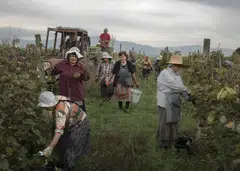
Hoffman takes on cooking chores and slowly befriends the village grocer and butcher. Eventually Hoffman, who knows little about wine, meets grape growers and winemakers and finds purpose in the manual labour of the harvest and the winemaking. This is not the wine world of glossy magazines and rom-coms. It’s the flesh-and-blood, workaday French wine culture in which the wine is priced locally but little known elsewhere.
With wit and warmth, Hoffman finds the eternal, cyclical nature of village life, in which new generations take over family businesses, new families are created by marriage and grudges can span decades. This is a beautifully written book, reflective, sometimes ruthlessly so, occasionally sad and often funny. I started reading skeptically and found I could not put it down. One can only hope for a sequel.
Who’s Afraid of Romanée-Conti? A Shortcut to Drinking Great Wines, by Dan Keeling (Quadrille, US$45)
Dan Keeling is one of Britain’s foremost figures in wine. He is an owner of three excellent restaurants and an import company. He is also a founder and the editor of Noble Rot, a must-read wine magazine that combines erudite essays and criticism with brash humour and pieces by celebrity wine-lovers like Keira Knightley and Mike Diamond of the Beastie Boys.
“Who’s Afraid of Romanée-Conti?” collects some of these articles. Rather than a conventional guide as suggested by the subtitle, the articles inspire more than teach. Keeling roams the wine producing world – well, Europe, at least – visiting some of the most interesting regions and winemakers, whether in humble Muscadet or at the titular Domaine de la Romanée-Conti, the Burgundy estate that is among the world’s most venerated wine producers.
Each essay is crammed with bits of wisdom and insight, self-deprecating humour and wonder. Interspersed are gorgeous photographs and recommendations of producers.
It’s the sort of book where you can roam, reading an essay here or there as the mood strikes. Like so much of the best wine literature, this book compels you to seek out the bottles he’s writing about to taste for yourself.
Wine Confident: There’s No Wrong Way to Enjoy Wine, by Kelli A White (Academie du Vin Library, US$35)
Each year another book arrives purporting to teach novice wine drinkers all they need to know to maximise their pleasure. Their approaches are often interchangeable. I often find them a yawn. But this book is different.
Kelli A. White is a longtime sommelier who is also a terrific writer, unpretentious yet wise and conversational, as if you’re sitting across a kitchen table with a couple of glasses, enjoying an afternoon. She manages the winning trick of being both authoritative and self-deprecating.
For White, what’s most important is developing a comfortable confidence in your own taste and preferences. She has no use for the pedantic rigidity that often characterises such guides or the dumbing down of what really is a complicated subject. Instead, she focuses on what’s essential to know as a beginner, leaving the more esoteric material for later.
She does not reinvent the wheel. Much of what she presents is conventional wisdom about tasting and drinking, serving and enjoying, production and history. But she is selective, retaining the important bits and dismissing the fussy nonsense with engaging wit and style. For those becoming interested in wine but unsure of how to proceed, this is a terrific book.
On Tuscany: From Brunello to Bolgheri, Wine Tales From the Heart of Italy, compiled by Susan Keevil (Academie du Vin Library, US$47.50)
Tuscany has always pulled at the hearts of the English-speaking world, a place where so many British people moved to or vacationed that one of its signature areas was nicknamed Chiantishire. “On Tuscany,” part of Academie du Vin’s admirable Anthology series, rounds up 38 essays on Tuscan wine by some of the most interesting English-speaking wine-and-food writers.
The selections include Neil Beckett on Gianfranco Soldera; the great and highly opinionated Brunello di Montalcino producer; Carla Capalbo’s thumbnail history of Chianti’s journey from rough, fizzy wine in fiascos to the superb reds of today; and David Gleave on Luigi Veronelli, the wine writer and food activist who stood proudly for the greatness of Italian wine and its cultural importance.
The overall narrative does not always form a straight line. Doing so would not do justice to the complexities of Italy and Tuscany. If Hugh Johnson in one essay praises the lasting influence of the French grapes cabernet sauvignon and merlot in Tuscany, why shouldn’t Jane Anson and Walter Speller in others celebrate a return to traditional Tuscan varieties and a reduced dependence on such French grapes.
The accumulated effect is thoughtful and intriguing, inspiring readers to open up a Chianti Classico or Brunello and take a trip to Tuscany via wineglasses. NYTIMES
Decoding Asia newsletter: your guide to navigating Asia in a new global order. Sign up here to get Decoding Asia newsletter. Delivered to your inbox. Free.
Share with us your feedback on BT's products and services