

This bonus season, don’t bet on a bargain Rolex
Luxury watch prices are stabilising. Whether that lasts depends on central bankers and timepiece enthusiasts
JUST as bonus season arrives, the best bargains on second-hand Rolexes may be coming to an end.
The Bloomberg Subdial Watch Index, which tracks the 50 most-traded Swiss watches by transaction value, was flat in December and January, though its Rolex Index has eked out a small gain since the end of November, after more than a year-and-a-half of steep declines.
This is following a somewhat seasonal pattern now – the market for used watches slumped in spring 2022, then improved by the end of the year and the beginning of 2023, only to fall back sharply again. This year’s stability, however, will depend on a few key things – from expectations of interest-rate cuts being met and inventories moderating to, importantly, the growing online culture around watch collecting.
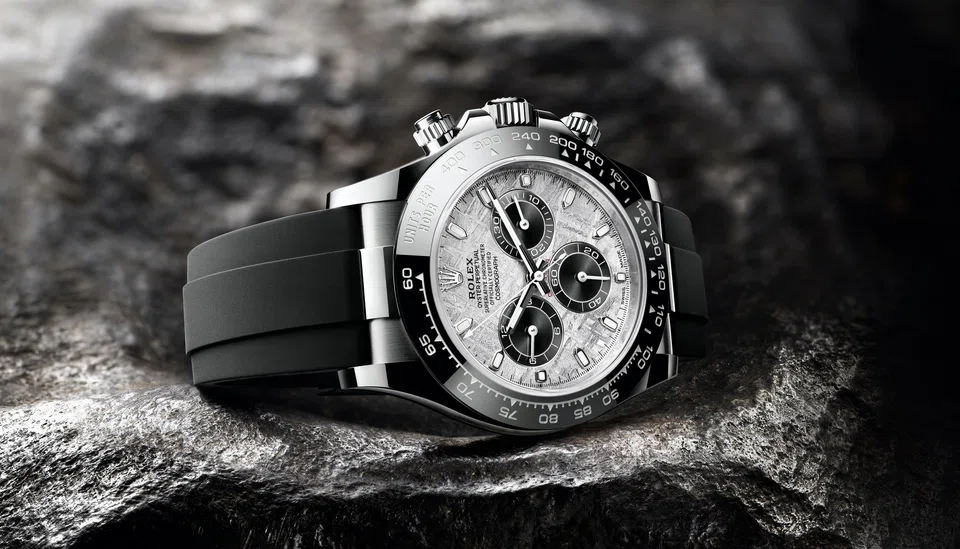
To recap: Demand for second-hand watches exploded during the pandemic, as men spent stimulus cheques, crypto gains and travel money on fancy timepieces – and then took to TikTok to talk about them. Experienced collectors and novices alike wanted to get their hands on the holy trinity of hype: the Rolex Daytona, Patek Philippe Nautilus and Audemars Piguet Royal Oak, sending them soaring in value.
Then in 2022, stock markets whipsawed, crypto slumped, and inflation and interest rates soared, forcing many speculators who had used leverage to amass large collections over the preceding five years to sell. Meanwhile, financial and geopolitical uncertainty, as well as Chinese lockdowns, all depressed the market.
A year later, just as some green shoots were emerging, the collapse of Silicon Valley Bank, job cuts across the tech industry and continued rate hikes kept buyers away again.
Cracks are now appearing in the market for new watches. While the very high end is holding up – both in the secondary market, where players such as A Collected Man operate, and in retail, where independent family-owned watchmaker H Moser & Cie enjoyed a more than 40 per cent uplift in sales last year – the mid-market is weakening.
Richemont is benefiting from a renaissance in Cartier watches. This is reflected in both retail sales and resilient second-hand values, which rose 1 per cent in the fourth quarter, according to research platform WatchCharts and Morgan Stanley. But sales of new models at Richemont’s specialist watchmakers division, which includes Panerai, A Lange & Sohne, Vacheron Constantin and Jaeger-LeCoultre, have slowed.
Although waiting lists for Rolexes are still growing at Watches of Switzerland Group, the retailer warned on profit last week after British consumers pulled back from mid-market products and unbranded jewellery. Meanwhile, Chinese buyers haven’t roared back as expected, keeping sales at home and in Europe in check.


For the primary market to stave off too much of a decline, and for the current calm in the secondary market to hold, interest-rate cuts must materialise. Cheap money likely played a significant role in fuelling demand for top timepieces. Lower rates would ease the pressure on leveraged collectors and encourage buyers to transfer their savings from high-interest accounts to their wrists. There can also be no nasty shocks in terms of job losses or a stock market rout.
Buyers need confidence, too, that further large stocks of models won’t make their way onto the secondary market. Here, there are some grounds for optimism. After inventory levels reached all-time highs in 2022, the supply of Rolexes to the secondary market was flat last year compared with the year earlier, while stocks of Patek Philippe were down 2 per cent and supply of Audemars Piguet was 10 per cent lower, according to WatchCharts and Morgan Stanley.
However, it’s worth noting that inventory for the big three brands remains historically elevated and is ageing, indicating that some dealers are still sitting on unrealised losses on older stock that could yet come onto the market. Even so, we are probably nearer the bottom of the secondary market than the top (although it did look like we were at this point a year ago). And after a turbulent 2023 in stock markets and little M&A activity, investment banking bonuses may be lower, creating a headwind in the short term.
But there is one factor that could keep both new and second-hand watches at the forefront of consumers’ minds: the culture around timepieces that has developed over the last five to 10 years.
While many women might long for a Hermes Kelly or Birkin bag, for many men, the luxury object of their desire is often a watch. And for most of them, it’s the obvious names – led by Rolex – that signal affluence and belonging to a discerning club.
Enthusiasm exploded across online platforms during the pandemic, as locked down consumers graduated from stockpiling sneakers to spending hours discussing Rolex models, such as the palm-leaf deal, dubbed the “Weed”, on Reddit. Watch lovers now connect via Instagram and TikTok, and consume specialist media such as Hodinkee, a New York City-based watch website.
Whereas collecting may have been a lonely hobby 20 years ago, it’s now a thriving community. Many enthusiasts have Instagram accounts dedicated solely to their timepieces. WatchTok is gaining ground, too, with the hashtag #expensivewatch garnering 11.2 million views on TikTok.
Smaller watches – think Timothee Chalamet and his 23 mm Cartier Panthere – are perhaps a sign of styles to come. Recently, interest has risen in the 1970s Polo models made by fellow Richemont brand Piaget. Quiet luxury is coming for watches, which may reflect changing tastes or the fact that thefts are on the rise. Metropolitan Police recently went undercover to catch “Rolex Ripper” gangs in London’s West End. Fear of falling prey could encourage buyers to choose less immediately identifiable models.
From spotting the next grail watch on tastemakers’ wrists to obsessing over the latest outlandish Rolex, watch culture underlines how timepieces can become an expensive habit. Once you have satisfied your craving with one hype model, another one comes along to lust after.
With the precarious state of luxury demand, manufacturers will be hoping that the cadre of new collectors don’t quit cold turkey any time soon.
Decoding Asia newsletter: your guide to navigating Asia in a new global order. Sign up here to get Decoding Asia newsletter. Delivered to your inbox. Free.
Share with us your feedback on BT's products and services
TRENDING NOW

Fed hike throws Singapore banks a margin lifeline; UOB likely to benefit more

He built the Vingroup empire. Now South-east Asia’s richest man is handing some key roles to his sons

From Haidilao to Oriental Kopi: How some of Asia’s favourite F&B players are faring in 2026

Floods compound Philippine growth woes from public-works scandal

