

Brad Pitt has a lesson for Formula 1’s green makeover
Stop pretending to be something else
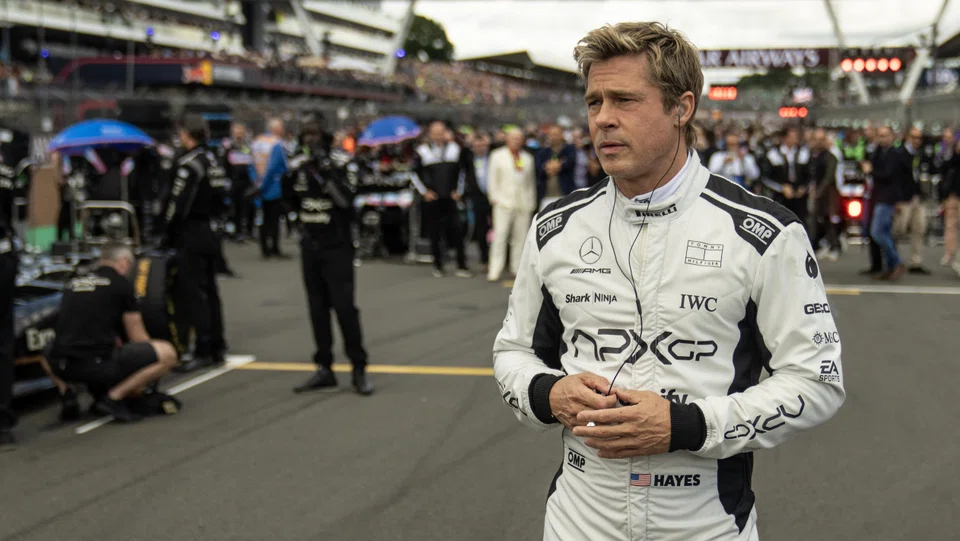
EVERY film star entering their seventh decade knows they’ve reached an age when they have to play to type. If only venerable sports franchises had the same self-awareness.
F1: The Movie, the Brad Pitt-Formula 1 crossover currently in cinemas, illustrates this contradiction perfectly.
Pitt used to appear as romantic leads and sword-and-sandals heroes, and in comedy turns and art-film roles. As he’s aged into his sixties, that range has been boiled down to its original essence, leaving him typecast as a pretty, and increasingly rugged, maverick. Audiences don’t seem to mind. F1: The Movie saw the biggest US opening for a Pitt vehicle since 2013’s World War Z.
F1, the sport, is taking a different approach. It wants to broaden its appeal – to younger people, women and particularly to Americans, who’ve long favoured the IndyCar and Nascar championships instead. That charm offensive has spawned the latest film, as well as a Netflix documentary series now in its seventh season. More absurdly, it’s led F1 into the claim that it’s going to reduce its carbon footprint to net zero by 2030.
The latest update came last week. The sport has cut emissions by 26 per cent since 2018, a press release proclaimed, mostly by using sustainable fuels for its cars and transport operations, changing the ways it moves staff around the world and using renewable energy to power its sites. An accompanying promotional video is full of images of solar panels, race fans on bicycles, and trucks and aircraft powered by zero-carbon fuel.
This earnest ambition is ridiculous, for a couple of reasons. Primarily, it’s so light on detail as to be next to meaningless. While F1 boasts about the CO2 it’s saving by using sustainable fuels in race cars, by far the biggest part of the carbon footprint for sporting events comes from all the fuel that’s burnt getting fans to the event – and that’s not counted.

Meanwhile, the sustainable aviation fuel that it’s using to cut its carbon budget isn’t necessarily going into the planes that fly the cars, crew and equipment to the 24 races held each year. Instead, it comes in the form of tradable certificates, stating that somewhere in the world the sustainable aviation fuel exists.
Sustainable aviation fuel currently costs three to five times more than traditional jet fuel, and needs to be cost-competitive if it’s to take a bite out of aviation’s carbon footprint. F1’s spending is far too small a share of the total to make much of a difference on that front.
You can justify all these decisions, to be sure, but the choice of metrics puts a thumb on the scales. Whether to count fan travel towards your own carbon footprint is a grey area in most greenhouse reporting standards. Major events like the Olympics and Fifa World Cup declare it, but you can still ignore it and remain within the letter of the regulations.

Similarly, there are so many loopholes and dubious assumptions around emission-reduction certificates that the market for carbon credits has been collapsing in recent years. Sustainable aviation fuel, however, is a frontier industry, where scrutiny tends to be less exacting.
Such skirting within the regulations is very much in keeping with the spirit of F1, where mastery of race strategy and the rule book can often be as decisive as mastery of the track. In F1: The Movie, it’s Pitt’s nerdy ability to deploy safety cars and red flags to his team’s advantage without getting disqualified, rather than his simplistic “drive-fast” dictum, that actually determines his success.
That just highlights the second problem with the sport’s net-zero drive. Because this is F1, for God’s sake! A sport built from the ground up on the roar of internal combustion engines, the stink of burning petrol and rubber, and the adrenalin produced when you round a corner at about 260 kilometres per hour. The chief sponsor is Saudi Arabian Oil, the world’s biggest crude oil producer.
A more sensible explanation for the current emissions-reduction drive is that the sport has long depended on car manufacturers using it as a test bed for their engine research and development, a pool of money that’s been dwindling as the industry focuses on electric vehicles (EVs).
The current focus on hybrid drivetrains and alternative fuels isn’t about F1’s own net-zero ambitions, under that theory, but a way of tempting back carmakers like Ford and Honda, which have been losing interest as the energy transition accelerates.
To the extent F1 will really make it to net zero, it will come from the decline of the sport itself. That doesn’t look like happening any time soon: The EVs in the rival Formula E, for all their superior acceleration and top speed, can’t yet match the average pace of a hydrocarbon-powered single seater.
In the meantime, an industry that accounts for roughly one two-thousandth of 1 per cent of the world’s fossil fuel emissions should just accept that the fate of climate change won’t be decided by whether Lewis Hamilton is using refined crude or used cooking oil to power his Ferrari.
Pitt isn’t going to remain relevant by giving himself a Timothee Chalamet makeover. F1, similarly, should quit pretending it’s part of the climate solution. It’s noisy, smelly, fast and dirty. That’s the whole point. BLOOMBERG
Decoding Asia newsletter: your guide to navigating Asia in a new global order. Sign up here to get Decoding Asia newsletter. Delivered to your inbox. Free.
Share with us your feedback on BT's products and services
TRENDING NOW

From AI financing to Indonesia outlook: 4 takeaways from Singapore banks’ Q3 results
VinFast, Mitsubishi weigh Philippine EV production as state incentives near

Analysts cut DBS target price on lower 2027 earnings, but see buying opportunity after share price slide

Could Japan trigger the next global financial crisis?

