

Tashkent’s striking Soviet architecture
Uzbekistan’s capital is reinterpreting the monuments of its turbulent communist past

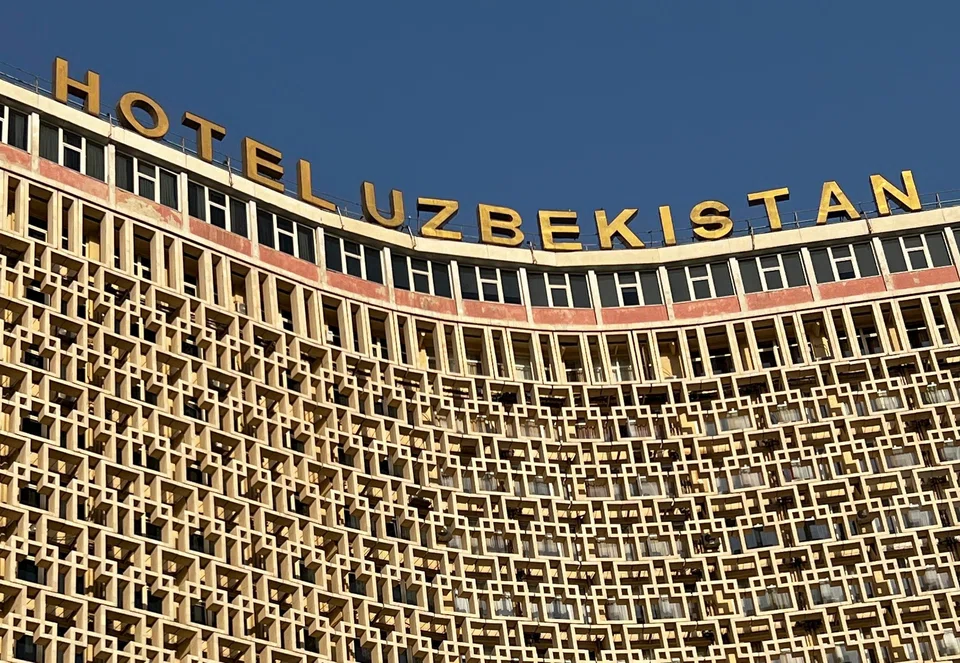
ARGUABLY, THE MOST FAMOUS HOTEL in Tashkent is Hotel Uzbekistan.
Not just because it bears the country’s name in enormous gold letters across its roof, but also because few buildings express the complicated identity of the Uzbek capital so vividly.
Completed in 1974, the 17-storey hotel rises within the city centre with a gently curving facade.
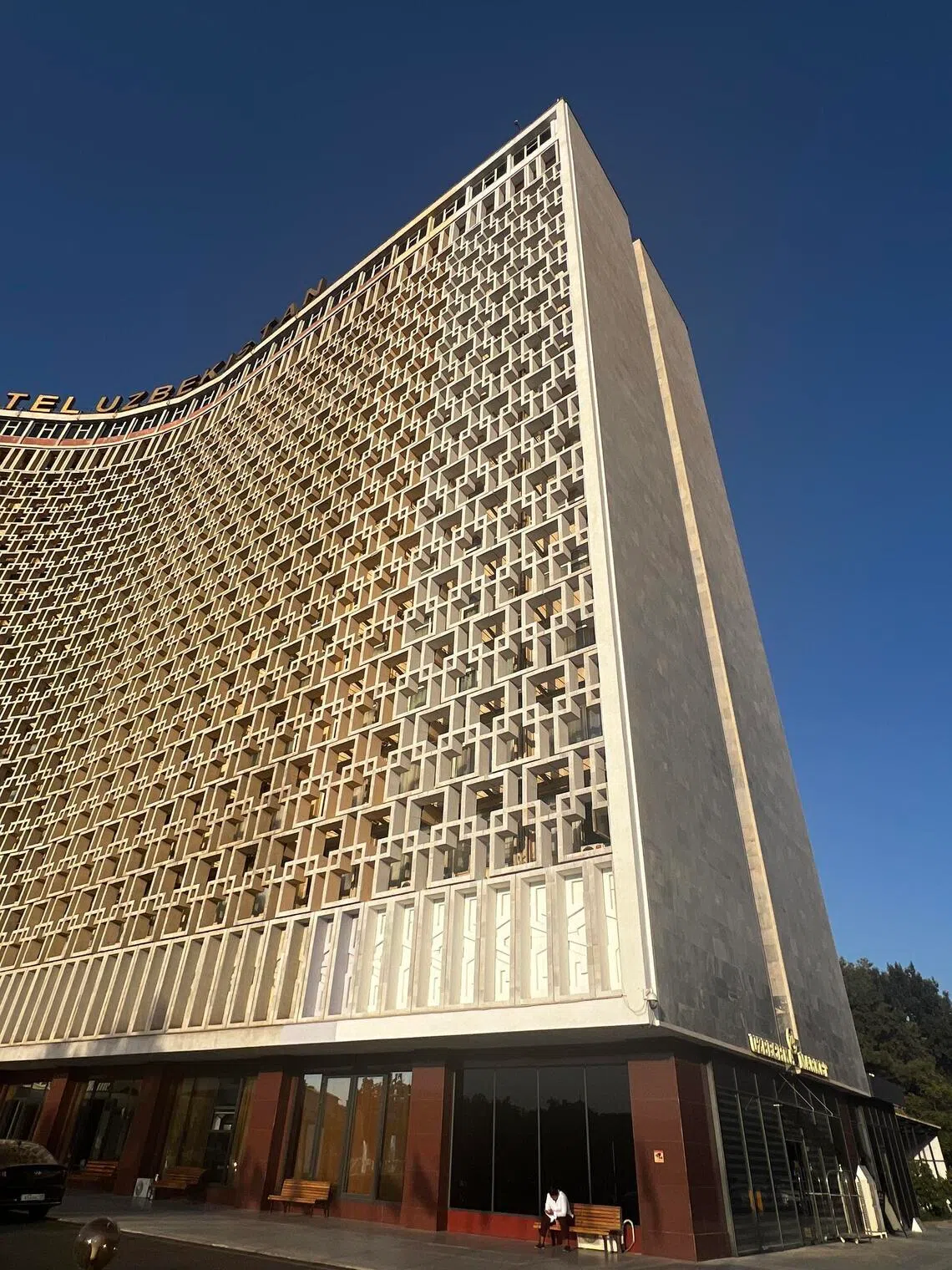
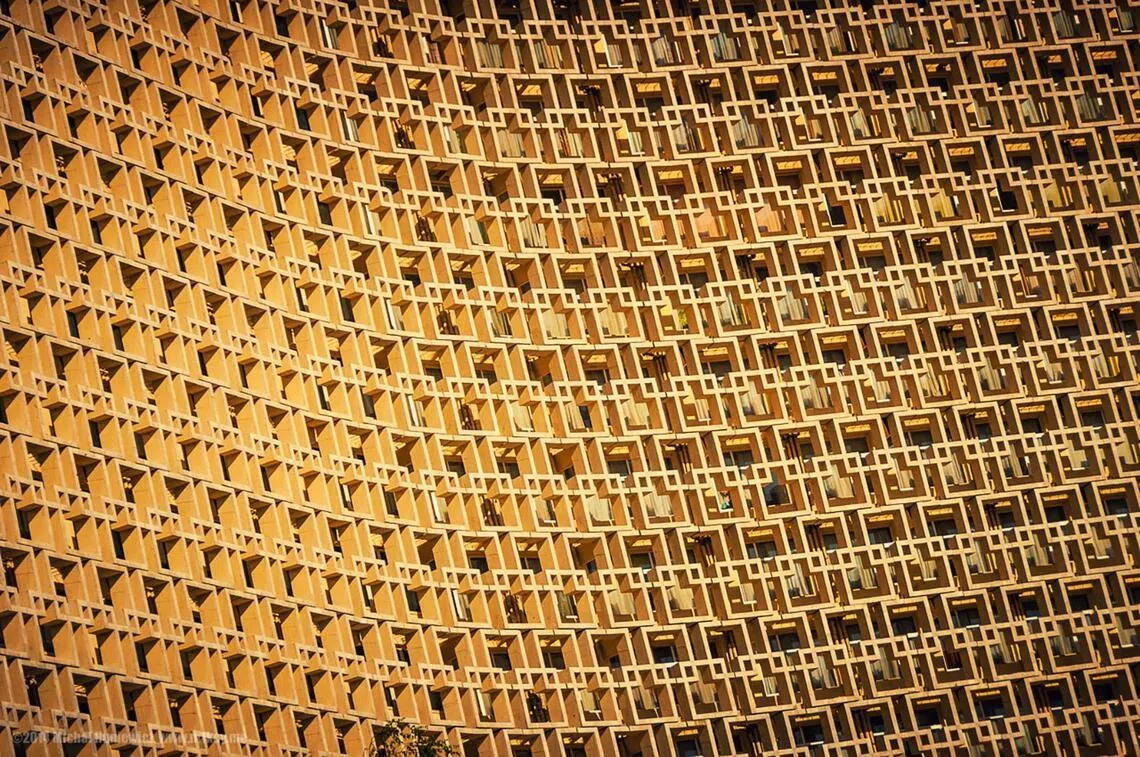
Its scale, repetition and commanding presence carry the hallmarks of Soviet modernism. Yet, its most memorable feature is its skin: an intricate concrete brise soleil (a sun-shading system) mounted on the facade, with a pattern that recalls traditional Uzbek latticework.
From afar, Hotel Uzbekistan has the stern rigidity of a socialist monument. But up close, it appears traditional and ornamental.
It belongs to two worlds at once: the Soviet modernism imposed from Moscow while Uzbekistan was part of the Soviet Union from 1924 to 1991, and the Central Asian culture that endured, adapted and found expression within it.
That tension runs through much of Tashkent, a city of 3.2 million people, the most populous metropolis in Central Asia.
Its Soviet-era buildings are neither replicas of Russian architecture nor politically neutral objects.
They emerged from a system that sought to modernise Uzbek society while reorganising its economy and culture. But they were also shaped by the local climate, crafts, symbols and habits.

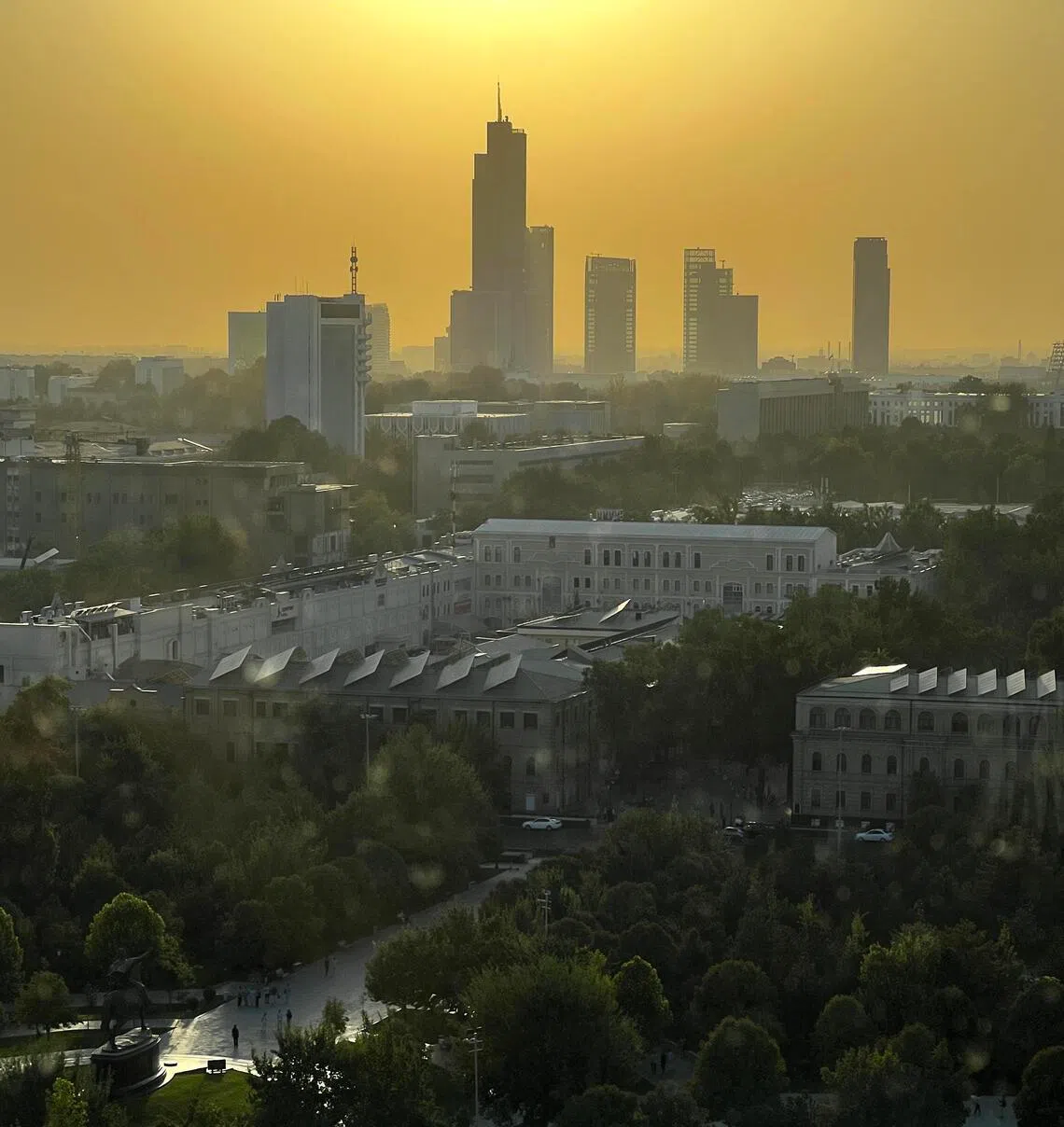
More than three decades after the Soviet Union dissolved, these buildings remain embedded in the city. They raise a difficult question: How does a country inherit monuments from a tumultuous period without glorifying the past or pretending it never happened?
A capital rebuilt
Tashkent became the capital of the Uzbek Soviet Socialist Republic in 1930, but its most dramatic transformation came after the earthquake of April 1966. Much of the city was damaged and hundreds of thousands of people were displaced.
Workers, engineers and architects arrived from all over the Soviet Union to help rebuild it.
The reconstruction was promoted as solidarity among the Soviet republics.
Moscow wanted Tashkent to become a model socialist city, with broad avenues, squares and cultural institutions. The new designs would convey order, progress and collective purpose.
Soviet planners wanted buildings that looked advanced and universal, but also rooted in Uzbekistan. Traditional forms were enlarged, abstracted and translated into concrete, glass, marble and prefabricated panels.
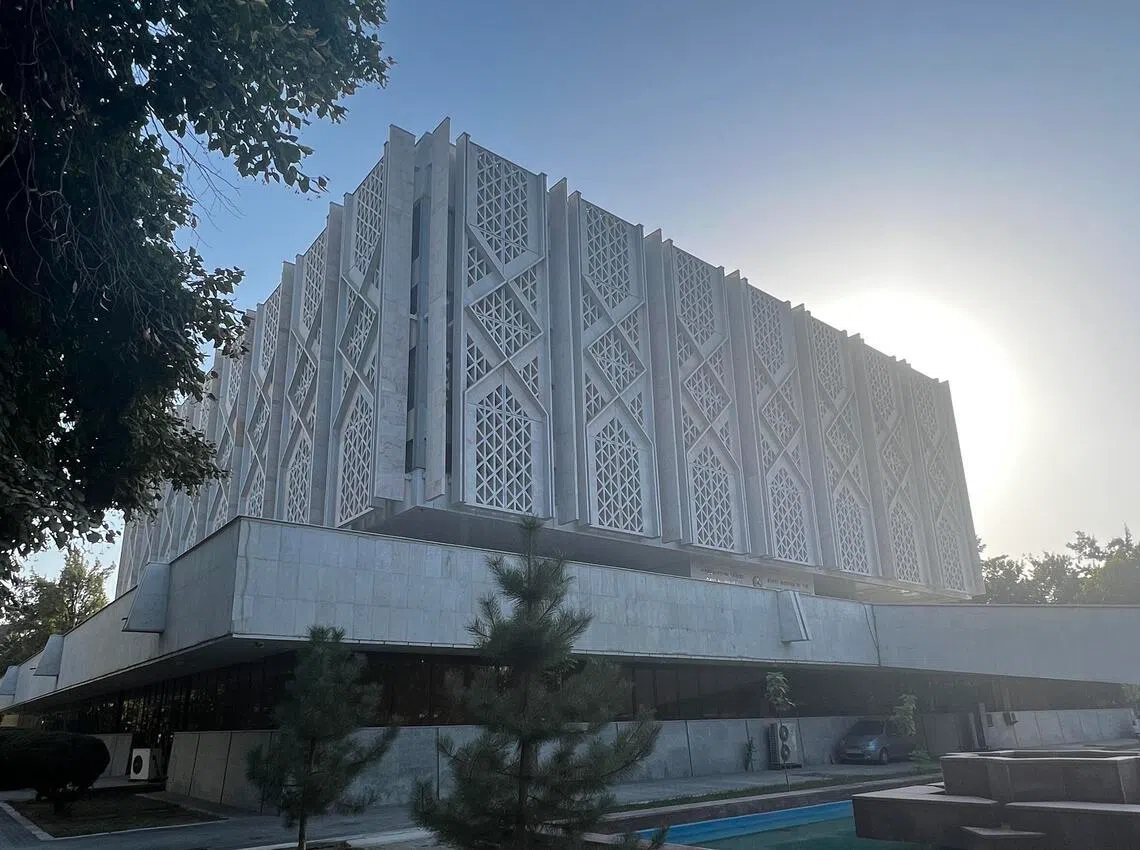
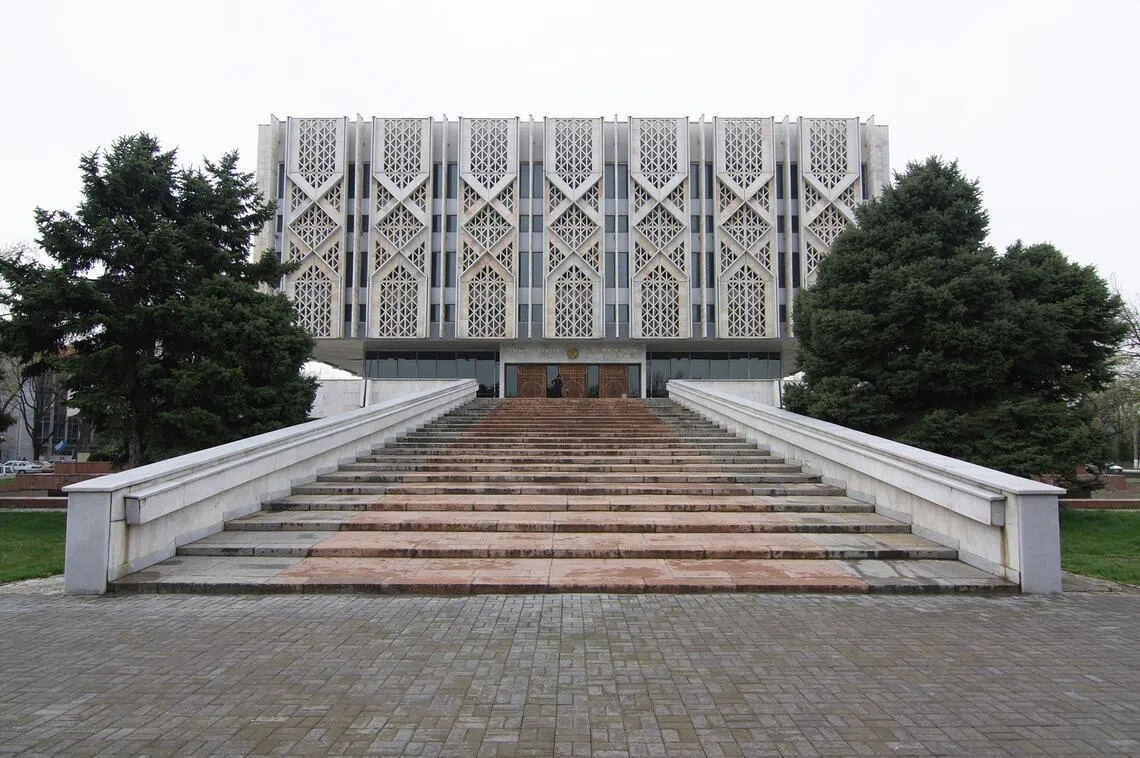
The State Museum of History of Uzbekistan is one of the clearest examples. Opened in 1970 as the Lenin Museum, it placed Soviet leader Vladimir Lenin at the centre of Uzbek historical consciousness.
The building takes the form of an elevated modernist cube hovering above a recessed glazed base.
Yet, that cube is wrapped in geometric screens inspired by the panjara, the carved latticework traditionally used across Central Asia for privacy, ventilation and shade.
Since Uzbekistan declared independence in August 1991, the building has ceased to pay tribute to Lenin. It now houses a far longer account of the country’s history, extending thousands of years before the Soviet Union existed.
But the structure still bears the monumental scale and ideological confidence of the era that created it.
Modernism made local
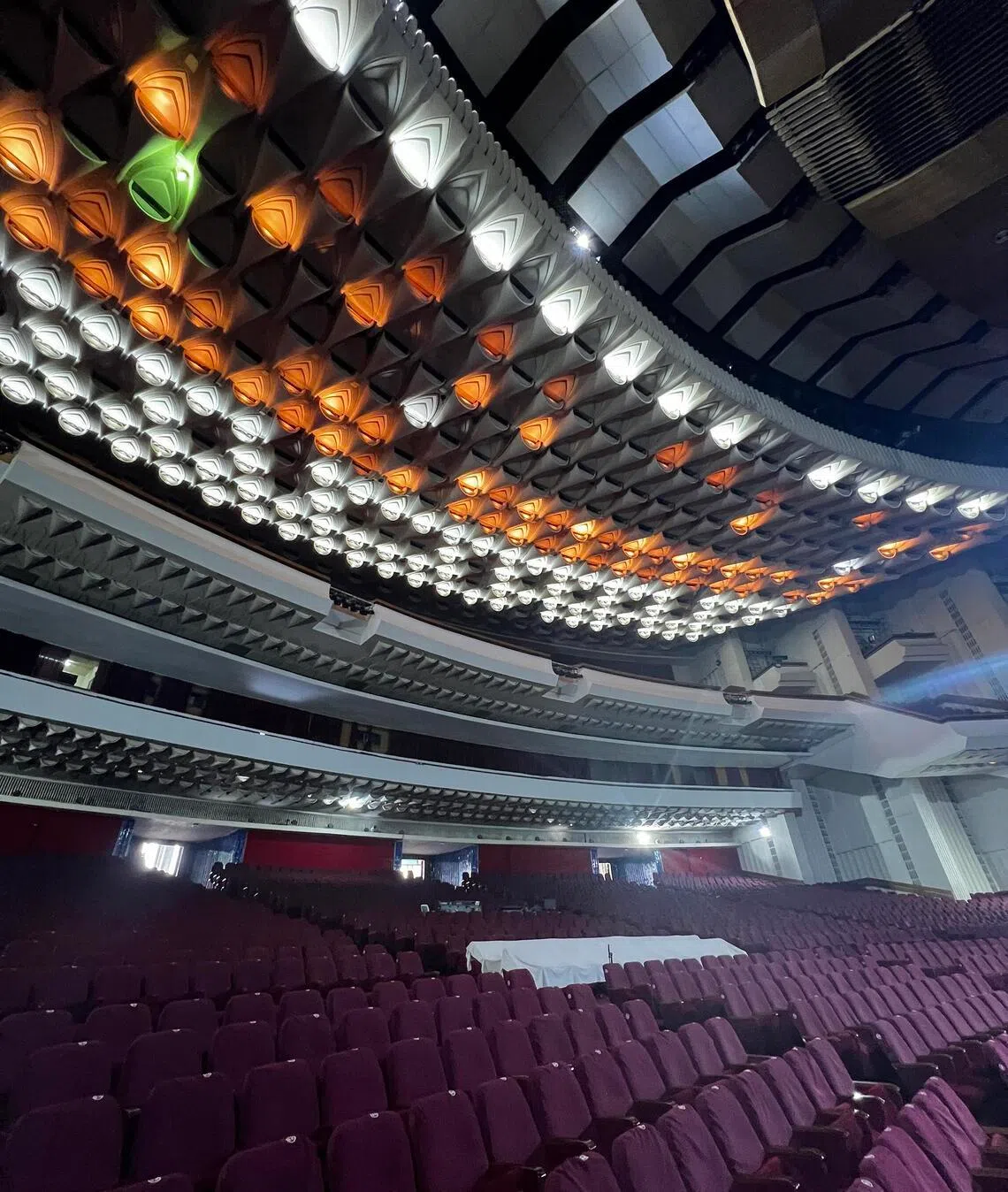
That fusion of Soviet monumentality and Uzbek ornamentation became more theatrical at the Palace of Peoples’ Friendship, completed in 1981.
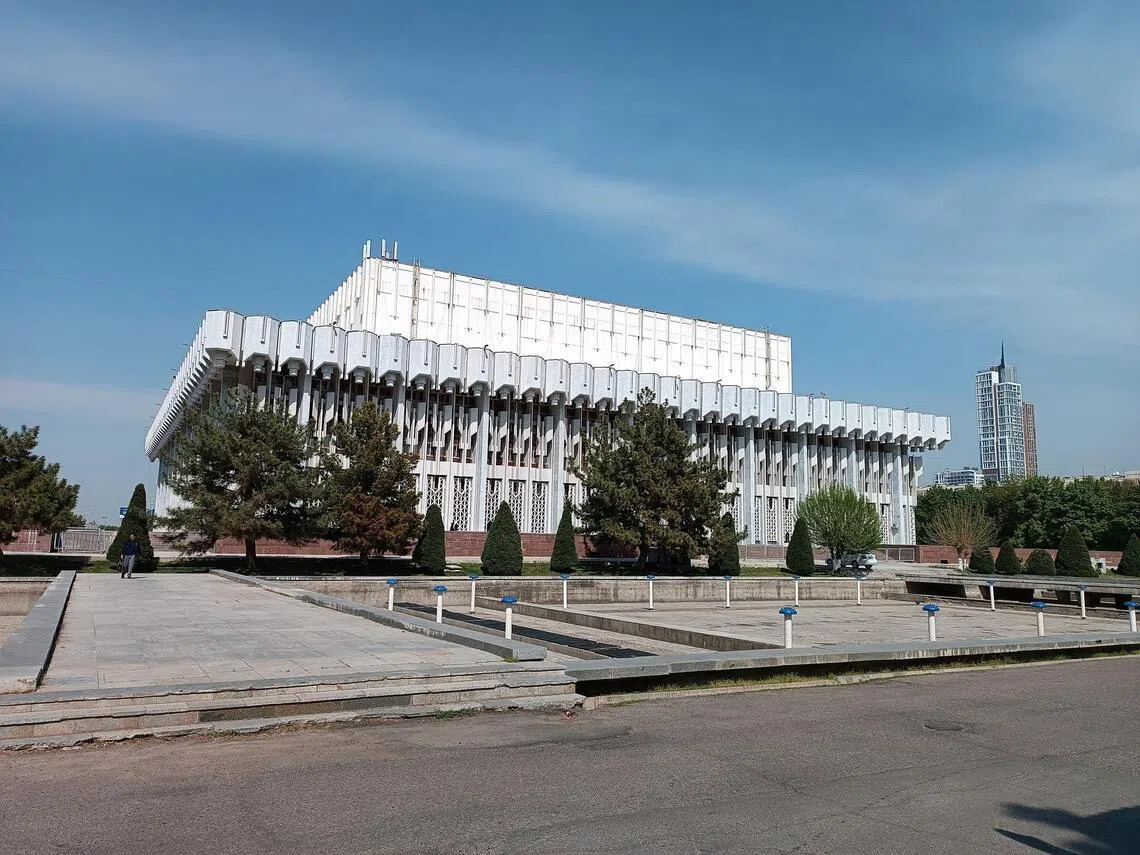
Positioned at the end of a vast square, it was designed as a concert hall, cinema and setting for political gatherings. Its near-square mass is raised on a podium and enclosed by a powerful outer screen.
The decorative language is Central Asian: Geometric latticework covers the exterior, while projecting forms suggest muqarnas, the stalactite-like ornament found in Islamic architecture.
Inside, marble, blue ceramics, gilded details and enormous chandeliers convey splendour. Cotton, the defining crop of Soviet Uzbekistan, appears in stylised motifs.
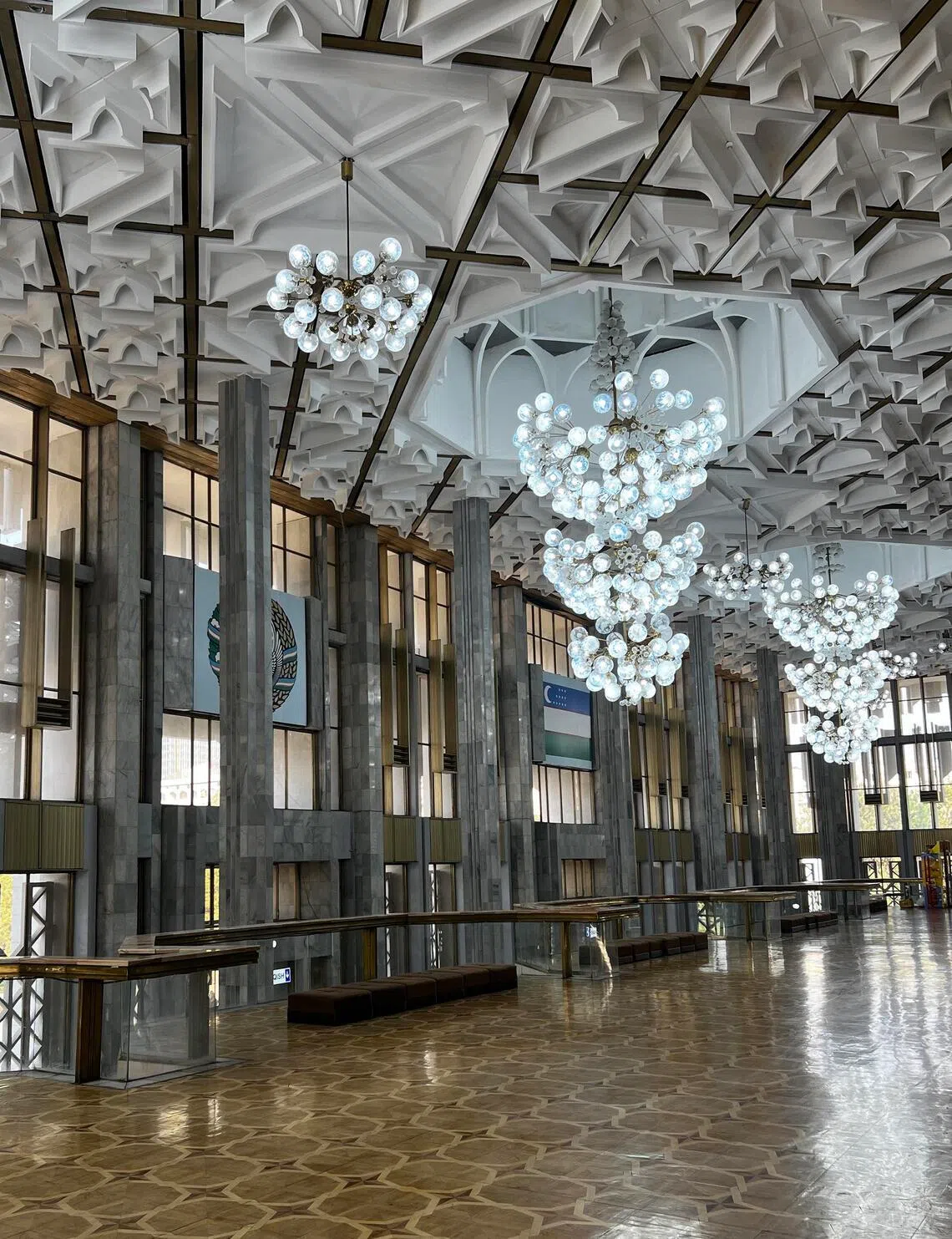
The building’s name pays tribute to the people who helped to rebuild Tashkent after the earthquake.
When Uzbekistan gained independence, it was named Istiklol Palace, using the Uzbek word for “independence”. But in 2018, the government reversed that decision and restored the name Palace of Peoples’ Friendship.
The two name changes show how complicated and contested historical memory can be.
At Chorsu Bazaar, the relationship between Soviet modernism and older Uzbek life is thankfully more organic. Commerce had taken place there for centuries before architects crowned it in the early 1980s with an immense reinforced-concrete dome.
Its engineering is modern, but its turquoise surface and silhouette evoke the cupolas (small domes on top of larger ones) of Central Asian mosques and madrasahs.
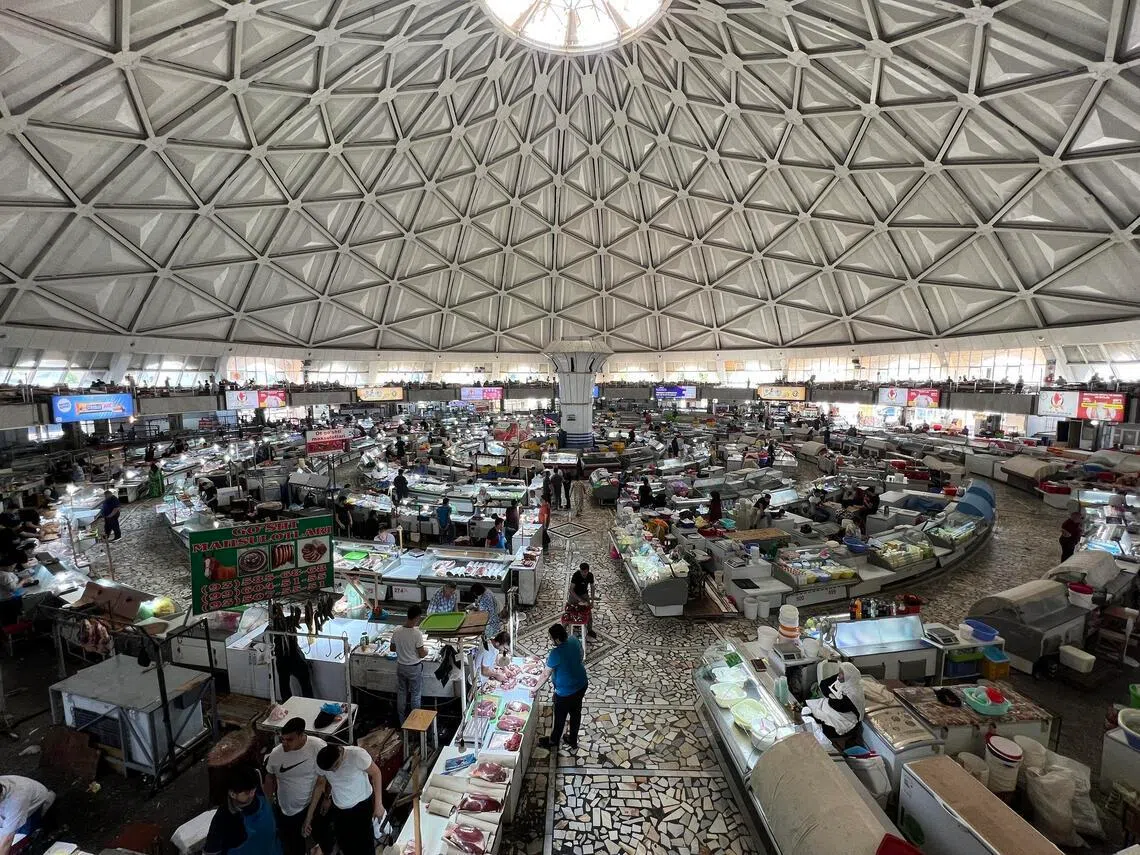
Beneath it, the culture of the bazaar continues as it has been for hundreds of years: traders hawking fruit, nuts, spices and meat as customers furiously bargain.
The Soviet state enclosed and reorganised the bazaar architecturally, but it did not change its ancient function.
Underground art galleries
The Tashkent Metro performs a similar cultural negotiation underground. Opened in 1977, it was the first metro system in Central Asia.
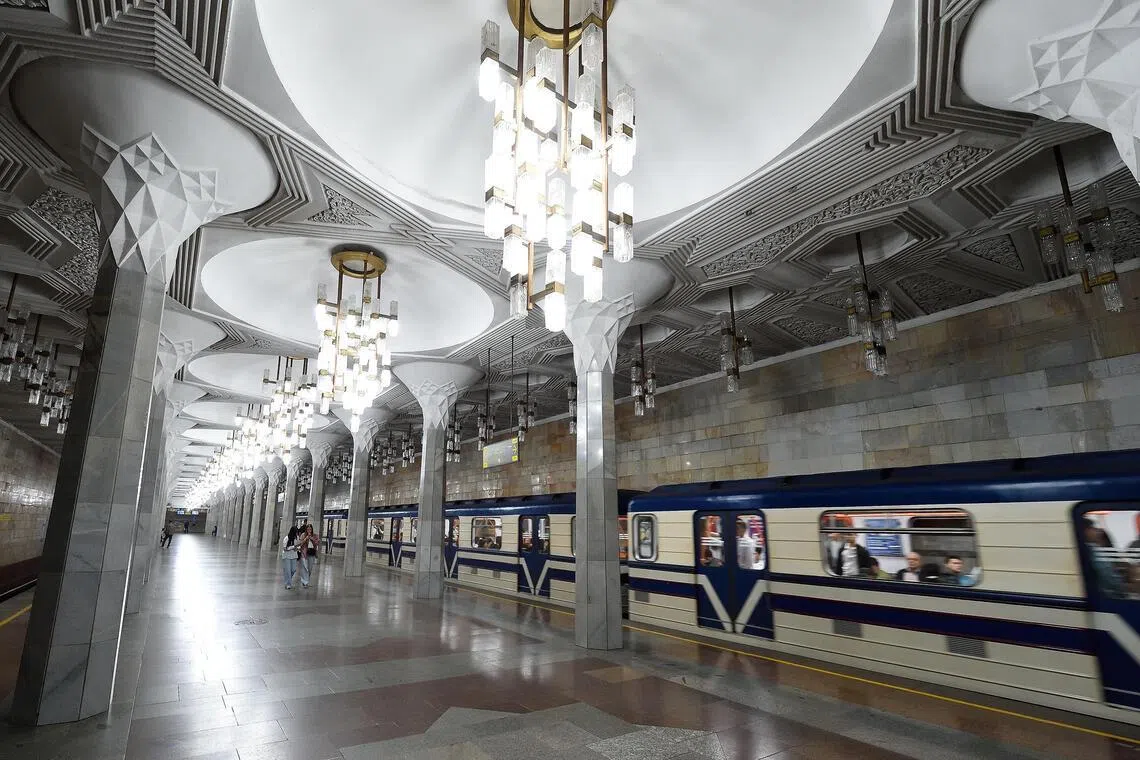
Like the Moscow Metro, it was conceived as more than transport. Its stations use beautiful marble, granite, glass, ceramics, mosaics and chandeliers to turn commuting into an encounter with public art.
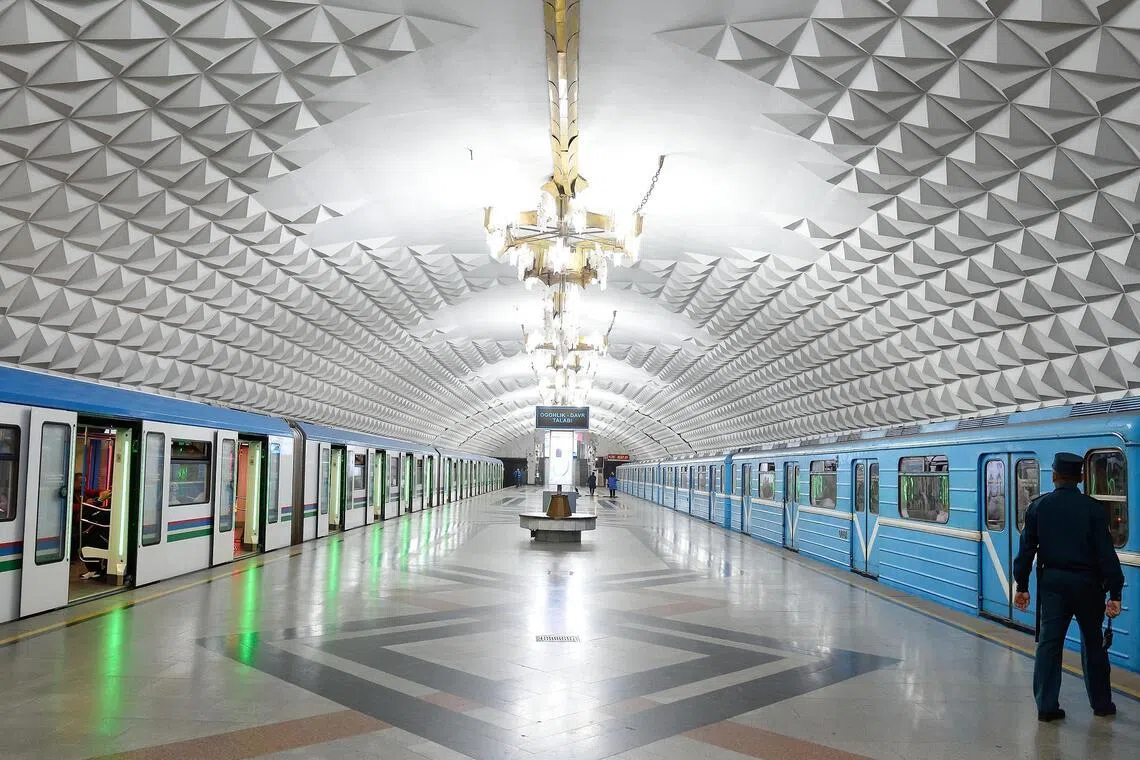
Travel writers routinely describe the Tashkent Metro as an underground art gallery – and, in this instance, the hype feels true. In fact, the stations don’t come across as replicas of Moscow at all.
The Alisher Navoiy station draws on the namesake poet’s literary legacy through domes, arches and decorative panels. The station Paxtakor, which means “cotton-grower”, is adorned with cotton imagery.
Perhaps only the futuristic Kosmonavtlar station reflects its Soviet influence, with blue surfaces, luminous columns and portraits associated with astronomy and the Soviet space programme.
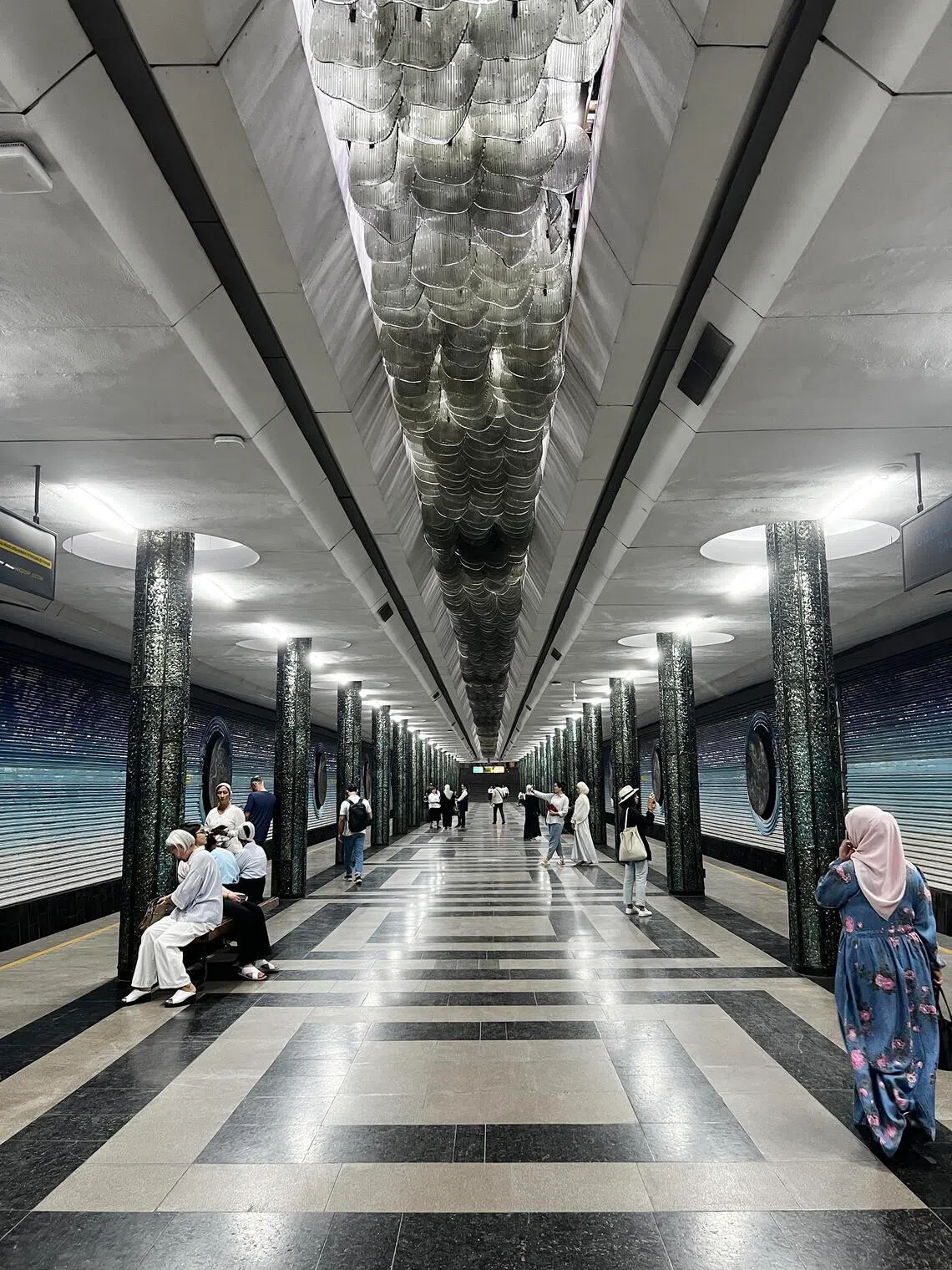
Uzbek literature, agriculture and decorative traditions were incorporated into a Soviet system of representation, making the metro both an instrument of Soviet propaganda and a vehicle for Uzbek cultural expression.
Elsewhere, the Alisher Navoiy Cinema Palace, also known as the Panoramic Cinema, expressed another Soviet ambition: to make Tashkent an international cultural capital.
Completed in 1964, its cylindrical auditorium and broad public setting gave cinema the importance of a civic institution. It became closely associated with the Tashkent International Film Festival, which brought film-makers from Asia, Africa and elsewhere in the developing world to the Uzbek capital.
The festival was partly Soviet diplomacy, presenting Tashkent as a meeting point for newly independent nations.
But the exchange was not merely political theatre. Uzbek audiences also encountered films, artists and ideas from beyond the Soviet bloc, expanding the city’s cultural imagination.
Living with Soviet legacy
How, then, do Uzbeks feel about these buildings today?
There is no single answer. For many who lived through the Soviet period, they carry memories of education, work, romance and family outings. The metro was where people travelled. Chorsu was where they shopped. The Cinema Palace was where they watched films.
When that other Soviet-era film institution, House of Cinema, was demolished in 2017, it provoked a public outcry.
Speaking to The Guardian newspaper, Gayane Umerova of the Uzbekistan Art and Culture Development Foundation shared that people had grown up with the cinema as somewhere to go on dates, meet friends and spend time together.
“It wasn’t just about the building,” she said.
In short, people do not necessarily recall buildings through the ideology that commissioned them.
At the same time, the Soviet period is also remembered as one that encompassed repression, cultural control and an extractive cotton economy – the environmental consequences of which remain visible in the Aral Sea disaster.
The Soviets wanted to transform Tashkent from an ethnically diverse, predominantly Muslim city into a socialist capital and propaganda showcase.
That sometimes came at a cost in the form of demolished neighbourhoods, disrupted ways of life, and the suppression or marginalisation of religious and cultural traditions.
However, the 2024 publication of the gorgeous Rizzoli coffee-table book Tashkent: A Modernist Capital in collaboration with the Uzbekistan Art and Culture Development Foundation – with an introduction by Umerova, no less – suggests an ongoing civic and institutional reassessment.
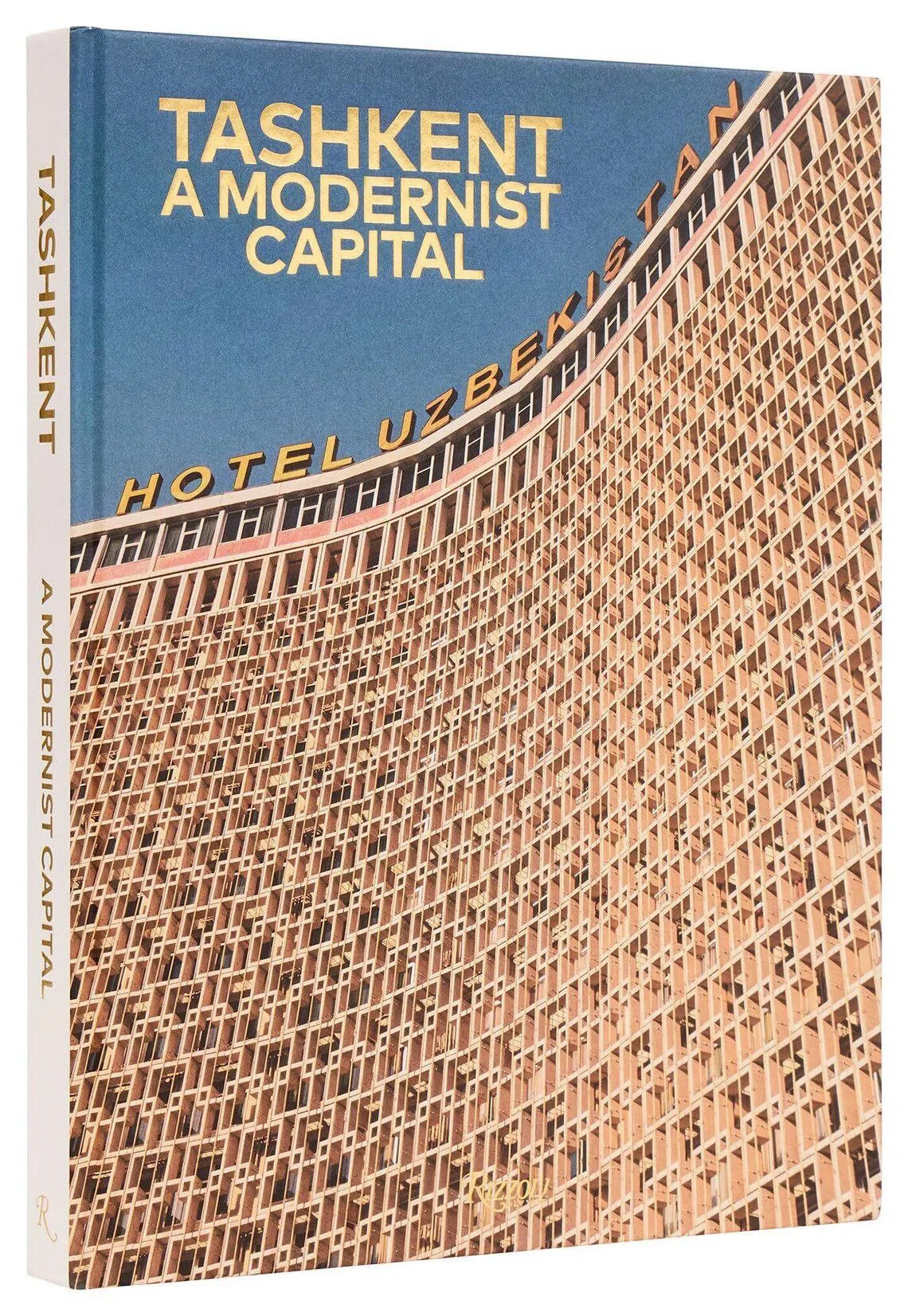
Buildings once understood primarily as Soviet objects are now being examined as products of collaboration, adaptation and local creativity.
Hotel Uzbekistan (featured on the cover of the book) remains the clearest emblem of that ambiguity. It was constructed to project the confidence and cosmopolitanism of Soviet Tashkent.
Yet, its immense patterned facade has since become one of the defining images of the independent capital.
The Soviet Union may have disappeared. But the buildings it left behind now fully belong to the city that is reclaiming them as its own.
Decoding Asia newsletter: your guide to navigating Asia in a new global order. Sign up here to get Decoding Asia newsletter. Delivered to your inbox. Free.
Copyright SPH Media. All rights reserved.
TRENDING NOW

Once staunchly pro-China, Malaysian Chinese businesses are now distancing themselves from Beijing

Looking beyond looming CEO succession, should UOB potentially pursue a transformative merger?

Could stablecoins be the future of money?

Grab CEO’s wife Chloe Tong on life with Anthony Tan and finding her purpose

