

Building creative capital
Whether to meet demand, or to broaden their scope, these industrial and interior designers are moving beyond their job descriptions to master more innovative pursuits.

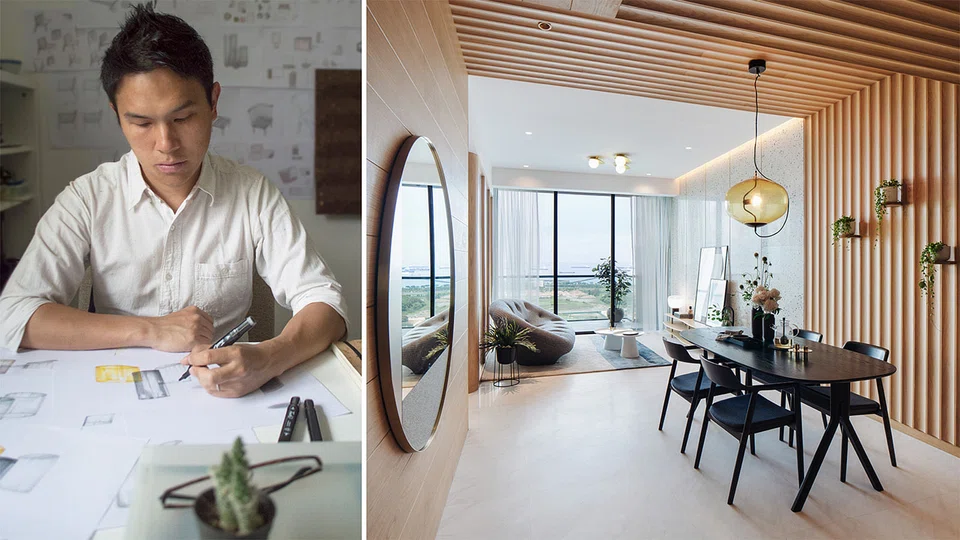
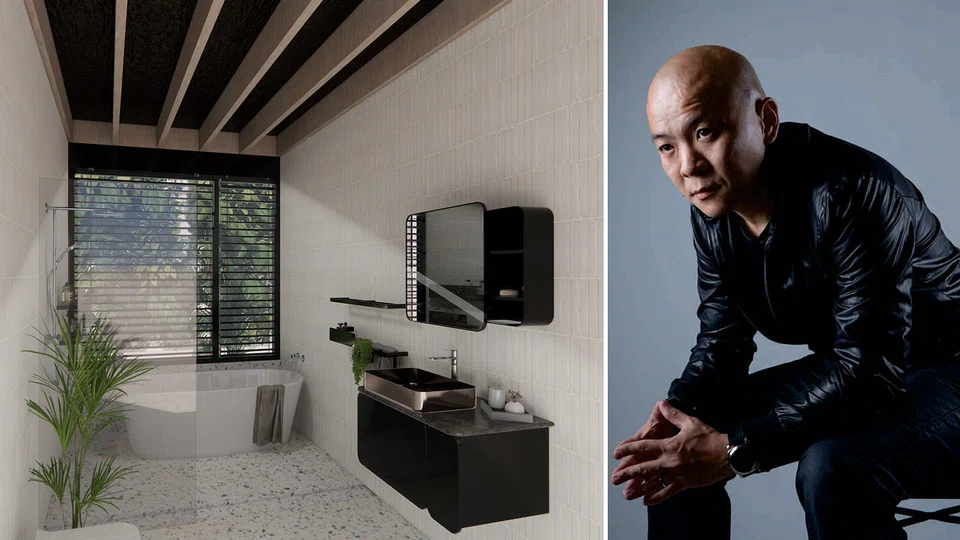
Gabriel Tan, 39 Founder, Gabriel Tan Studio and Studio Antimatter
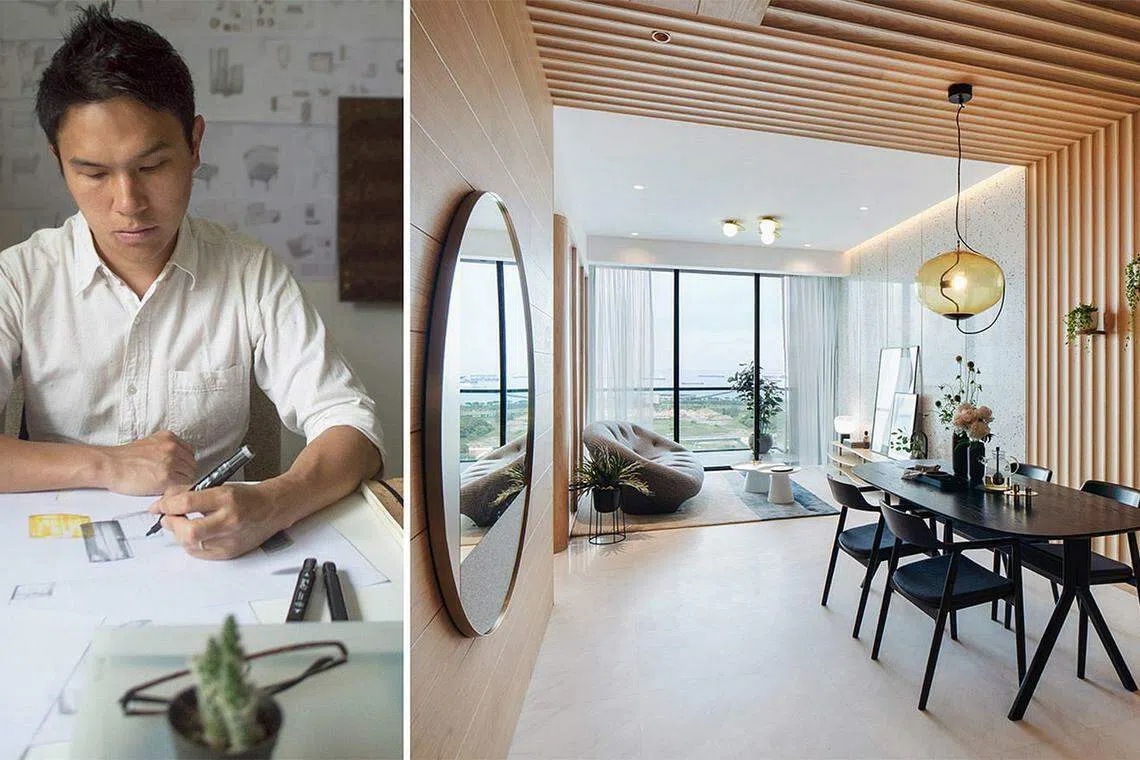
While still in National Service, Gabriel Tan became so fascinated with industrial and product design that he went on to pursue a degree in it.
Even before he graduated, he had co-founded Outofstock Design, a design collective with three other classmates. Their products, which included furniture and home accessories, garnered much international praise.
Little did Mr Tan realise that he also had a talent for designing spaces.
In 2016, he started his eponymous studio for product design and Studio Antimatter for interior design.
While interior designers are known to sometimes make furniture for their clients, Mr Tan sees it as logical to do it the other way around. "Space and objects are interconnected and so when designing a home, hotel or restaurant there is a need to consider both together. It was a natural progression for me to create spaces to house objects," he says.
Mr Tan still designs products for international brands such as Swedish brand Abstracta, The Conran Shop and Portuguese craft brand Origin, of which he is also the creative director.
"There's a sense of satisfaction and joy knowing that people in different countries are using products or furniture my studio has designed and that the user of the product and its designer are connected by this invisible thread," he says of his international reach.
His first interior design project was for the now defunct Hatched, a cafe at Evans Road, and he later designed other eateries such as Bella Pasta and Burger King.
On designing restaurants, Mr Tan says: "It involves thinking about the workflow of the kitchen and the service flow of the dining areas. There is also the user experience, storytelling, spatial, furniture and lighting design to consider."
He has also designed showflats, namely for Marina One Residences and DUO Residences. Developer M+S Pte Ltd was looking for a designer with no showflat design experience as they did not want the typical cookie-cutter look. "My furniture design experience and ability to create bespoke products for interiors convinced them to select us," he says.
He subsequently moved on to high-end residences. "It wasn't my intention to move into this market, but we received many requests after the showflats were opened. It gave us a lot more visibility to this segment of clients."
Now based in Portugal, so as to be closer to his European and American clients, Mr Tan is next moving into hospitality design. He is designing a hotel in Mozambique, which will involve not only the spaces but the furnishings. "Loose furniture has always been a major pain point of hotel projects, but that is where our strength lies," he says, adding that his industrial design background gives him the extra edge.
"It taught me the advantages of being the outsider, to be the fresh pair of eyes for new perspectives that industry incumbents would have perhaps overlooked," he says.
Celine Ng, 29 Founder, Fraction Design Studio
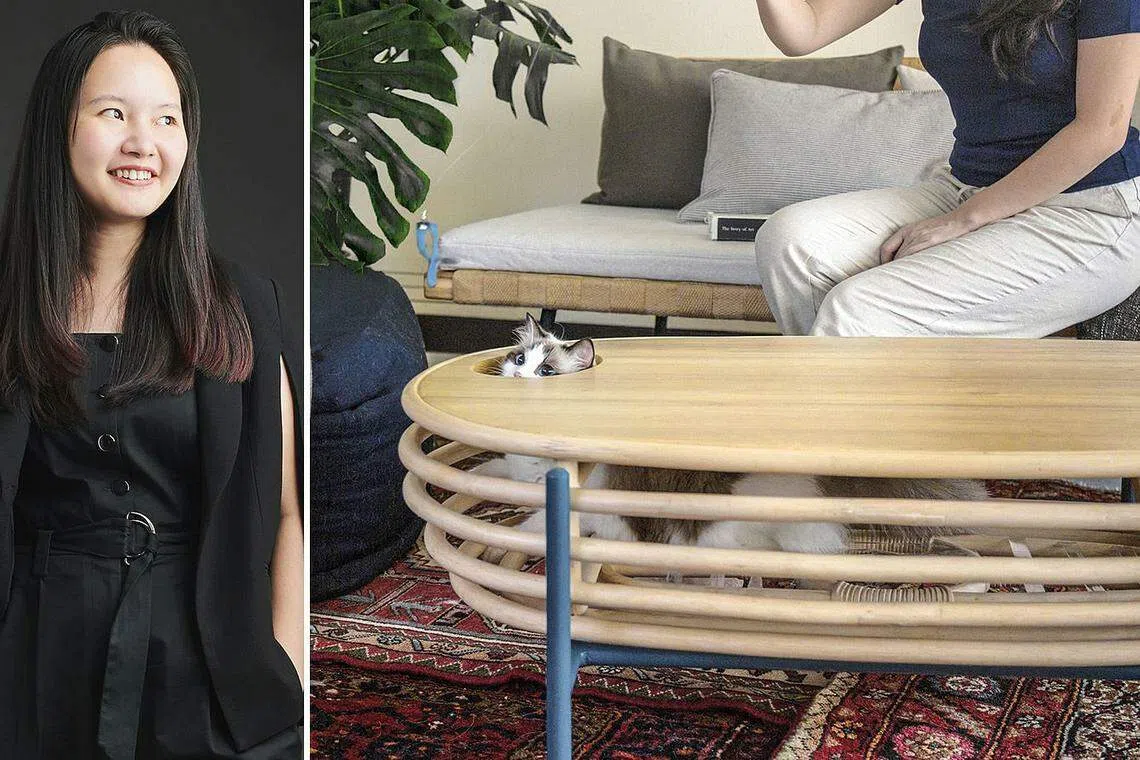
If you are a business owner looking for a way to capture market share, you might want to give designer Celine Ng a call.
Ms Ng, who pursued her studies in 3D Design, with a major in furniture design because she liked "pretty things", is the founder of Fraction Design Studio.
The interdisciplinary studio uses design to give companies an edge in business via four channels - branding, physical spaces, virtual spaces and product/furniture design.
She may have only five years experience in Fraction, but Ms Ng has her sights set beyond designing furniture.
Rather than just a focus on making furniture, she branched out into the other fields because "these services can set a solid ground for businesses to push into new markets or maintain a stronger hold on their current market share," she says.
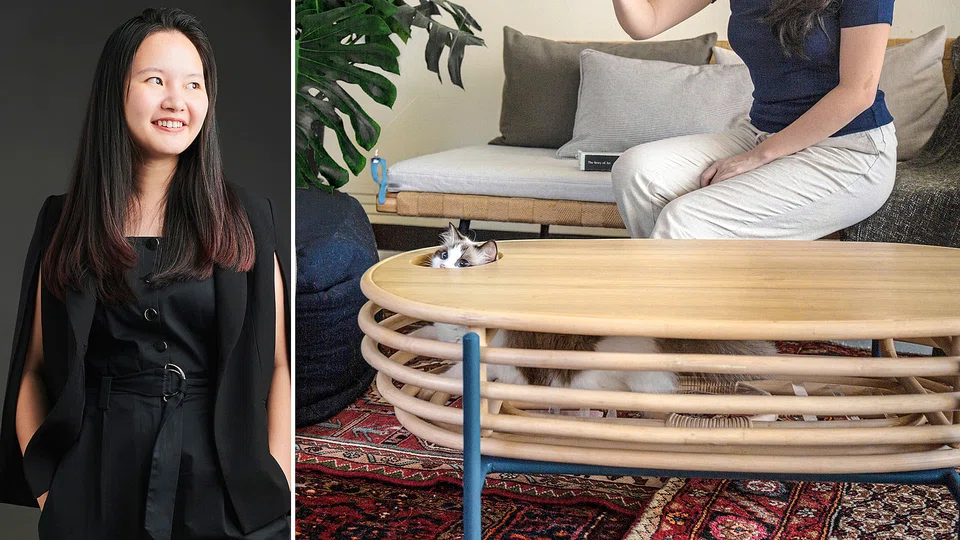
Her first piece of furniture, commissioned by a pet store brand, was a rattan coffee table with built-in play areas for cats. Next, she was approached by Xtra furniture store to design an exhibition booth for Singaplural, the landmark event of Singapore Design Week.
"With the Singaplural exhibition functioning as a stepping stone, I could communicate my value proposition more effectively and win more projects as a result," says Ms Ng.
New opportunities came knocking, such as the rebranding of hot-pot restaurant Fat Bird, where Ms Ng reimagined the logo, curated the colours, and redesigned the takeaway packaging.
"Strong visual messaging is vital in a marketplace as visually noisy as Singapore. Customers must understand how a brand or business is relevant to them before they engage the brand itself," she says.
More recently, the Singapore Furniture Industries Council (SFIC) approached Ms Ng to reimagine retail in a post-pandemic world.
SFIC chose to work with a firm which could bridge both physical and digital design and understood the nuances of selling furniture.
The result was The Furniture Centrum, a virtual furniture exhibition where users can see a variety of furniture brands and their offerings.
But rather than a website with a list of the brands, users step into a virtual mall and then further into 3D renderings of these furniture stores.
"We helped the brands attract high-quality leads amidst a global pandemic," says Ms Ng.
She adds that her background in furniture design gives her good grounding when designing in other fields.
"As furniture designers, we have to consider materials, sourcing, manufacturing, manpower, and the craftsmanship required. As much as we want to design cool stuff, we also need to understand that no commercial product exists in a vacuum. It must be compatible with the existing supply chain and distribution channels," says Ms Ng.
This thought process applies too, to other forms of design, such as logos and spaces.
Cherin Tan, 37 Principal and creative director of LAANK, co-founder of LAAT
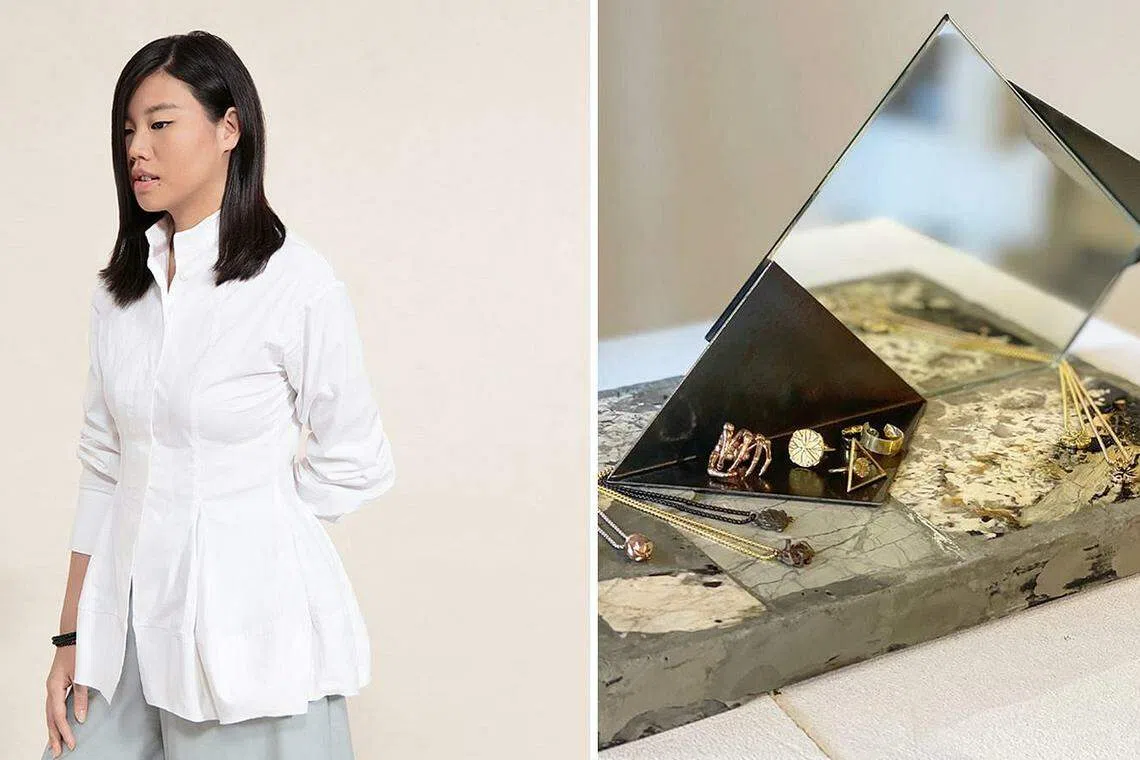
If you've ever renovated or rebuilt your home, you would have noticed the piles of broken tiles, chunks of concrete and other materials that would eventually end up in the dumpster.
But one man's junk is another man's treasure, especially for Cherin Tan, principal of LAANK interior architecture firm.
Alarmed by the amount of waste generated from renovation and reconstruction projects, Ms Tan, together with Alvin Tan, co-founder of art and design collective PHUNK, started an upcycled furniture and home accessories collection, LAAT.
"There's a high wastage of materials in my industry. I feel strongly that if we can't eliminate that wastage, the least we could do is to make something useful with it," says Ms Tan.
She adds: "Alvin has a strong background in fine arts being a creative artist, while I deal with building, construction and designing. We make a great pair in giving new life to these waste materials by creating pieces that are artistic, cultural and yet still functional."
LAAT's first collection, Klaus, which was launched in 2020, comprised items such as lamps, tables and benches, made from unwanted metal rods, tiles, glass panels and sanitary fittings.
The sold-out Klaus collection was snapped up by customers who are "art buyers, homeowners, business owners, and young creative individuals who appreciate the different slant we have to our pieces," says Ms Tan.
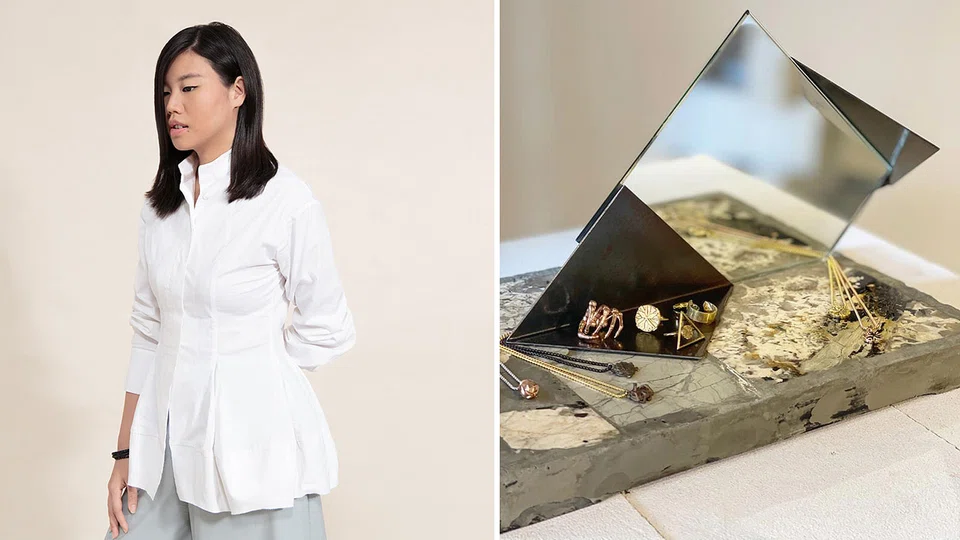
In April, LAAT launched its second collection, Monolith, which has jewellery trays, as well as standing and table mirrors. Monolith is made from construction wastage such as mirrors, steel, marble and concrete, and turned into abstract decorative pieces that have an illusion of precious stones.
"The aim is to find a new way to present broken and unwanted pieces as precious and valuable," says Ms Tan. "We refined them, keeping the materials pure and shaped them as sculptural artworks. In the current/near future, we believe that waste materials can be harvested just like how we've been harvesting natural materials."
Besides residential projects, Ms Tan also designed commercial spaces such as Rebel Rebel Wine Bar, and Epion Aesthetic Clinic.
She chose to study interior architecture because she has always been interested in all things creative. Ms Tan is no stranger to designing products, having done so for some interior projects.
"Quite often, I end up designing furniture like dining tables, service stations or sideboards that require a custom design to suit the functionality and the specifications of the space," she says.
Be it a space or an object, Ms Tan's approach to design is similar, starting with identifying whom she is designing for and why. "In terms of execution, a product may be a lot smaller than a space to design but the effort that goes in is not any less. There are still many discussions, mock ups, tweaks, trial and error testings, and touch ups to go through," she says.
She finds both fields rewarding and they allow her to grow as a designer. "When you take care of a space, it's natural to want to go into this super meticulous approach of creating every item, big or small, to communicate the whole experience and intent of the space," she says. "Each space has so many different touch-points. It could be signages, furniture, lighting, landscaping, or even plates or an art installation piece."
Adrian Chua, 48 Founder, Sevenvine
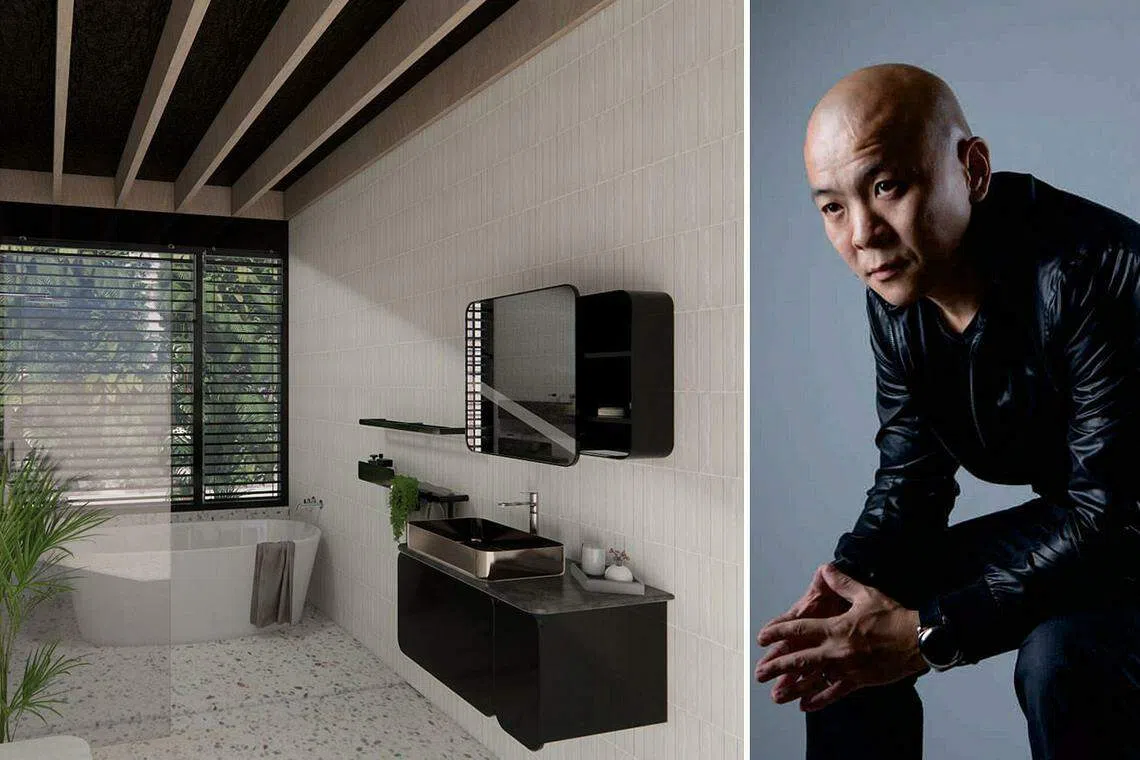
Designer Adrian Chua is no stranger to interior and furniture design. He started his career in the late 1990s at furniture company Nobel Design, helping to start up OM furniture store.
Since 2005, he has been running his interior design firm Sevenvine, which serves the mid- to high-end luxury market, designing both showflats and residences.
Along the way, he and a partner started Think Gallery, focusing on locally designed furniture such as made-to-order sofas. It was a good move then as it allowed Mr Chua to not only customise furniture for his clients, but also to retail them.
However, with the rise of e-commerce and the consolidation of various furniture offerings, Think Gallery's model was no longer relevant to the times, so it eventually closed.
These days, Mr Chua keeps busy with his Sevenvine clients, but he's once again putting on his furniture designer hat.
This time, he is collaborating with designer Celine Ng of Fraction Design Studio. The duo is designing two product ranges, Home Works by Office Planners and designer sanitary fittings for sanitaryware brand Hera. These will be launched later this year.
Home Works is a collection of furniture designed with flexibility and working from home in mind. The pieces can be used both indoors and outdoors, and some are designed to be low side tables, but are also versatile enough to be used as a work table for conducting Zoom meetings while seated on a sofa.
The sanitaryware collection is fully modular, from the towel rails to the shelving and wall-mounted mirrors with storage compartments.
Currently, homeowners rely on 3D images provided by their interior designers, but the quality of the end result is dependent on the contractor's skill. With these new collections, Mr Chua says customers can touch and feel the products but also have them customised if needed, an option that is not available for off-the-shelf items.
Mr Chua says: "Interior design at the luxury level is about pre-empting needs. With over a decade of experience , I have an idea of what some of the gaps are in the market. Housing size, the shape of a floor plan and what clients find acceptable or not are all areas to consider when designing a product for the housing market."
Chloe Ter, 41 Principal designer, Next Phase Design
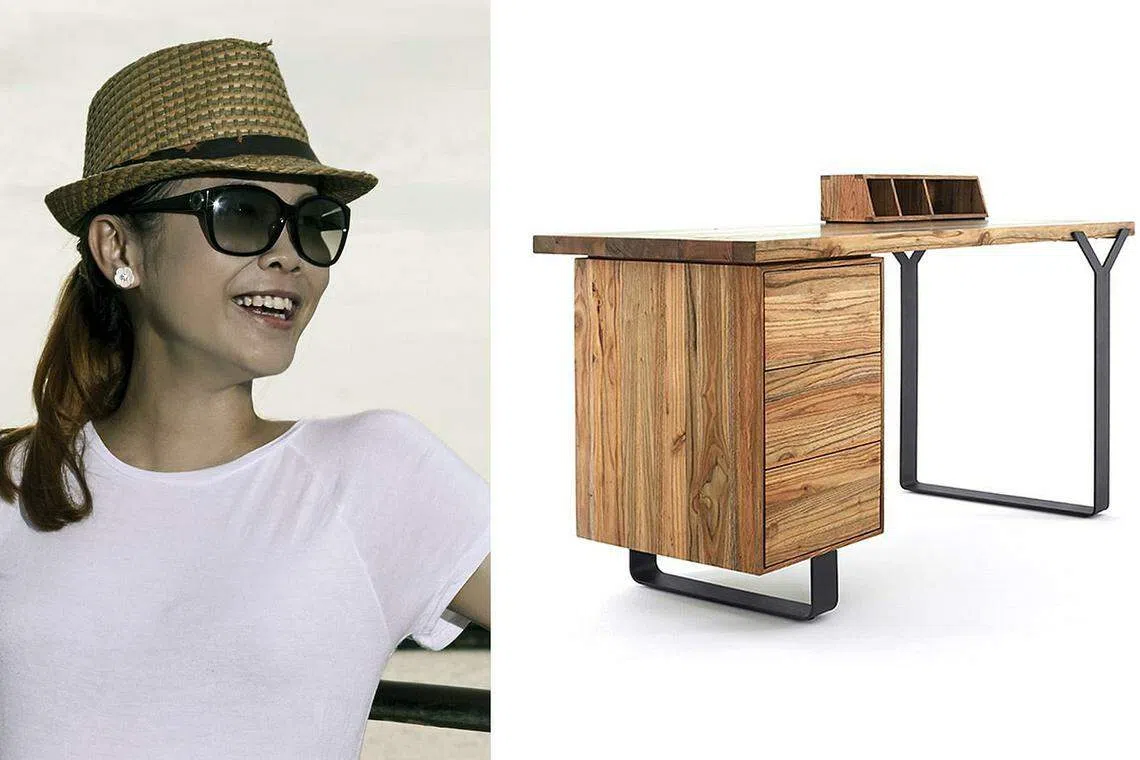
They say necessity is the mother of invention and this certainly applies to Chloe Ter, principal designer at Next Phase Design, which specialises in residential projects.
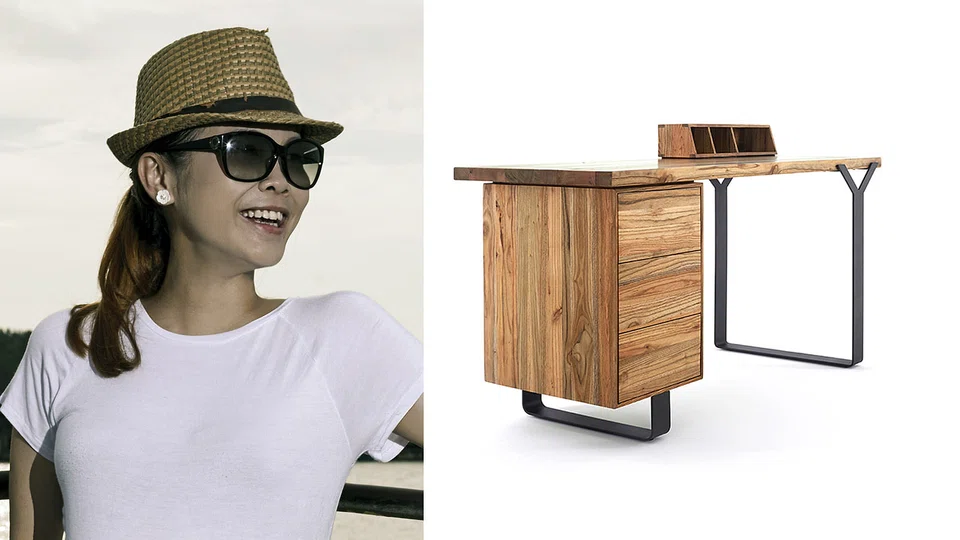
As part of her design services, Ms Ter, who has 19 years of experience, would at times end up designing bespoke furniture for her clients whenever she couldn't find the right pieces for their needs.
Tired of having to make endless fruitless trips to various furniture stores, she decided to start Next Phase Gallery. "Sourcing for the right furniture can be so time consuming and tiring for clients and our team," says Ms Ter. "So Next Phase Gallery was born to make things easier for both parties."
Next Phase Gallery caters to all rooms in a mix of both contemporary and classical styles. Ms Ter doesn't design all the pieces personally but partners with factories to design some pieces which are exclusive to Next Phase Gallery.
As an interior designer, she is able to "pay more attention to even small details which some furniture designers might neglect".
For example, she better understands space constraints and so is better able to design pieces that suit smaller homes.
It is a natural progression for an interior designer like herself to branch into furniture design, as she has great passion for designing for a related trade and also has strong support from furniture manufacturers.
She is unlikely to give up one for the other. "Both are equally satisfying - when clients are happy with their purchases and the design of their home," she says.
Decoding Asia newsletter: your guide to navigating Asia in a new global order. Sign up here to get Decoding Asia newsletter. Delivered to your inbox. Free.
Copyright SPH Media. All rights reserved.
TRENDING NOW

Government to bring forward raising of retirement age, give employers more financial support to create flexi-load jobs
Former minister Maliki Osman, Revolut chairman join Asia Gulf Holdings advisory board

Is Manila Asia’s new dining hot spot?
Simba at risk of losing operating licence over spectrum misuse

