

Busan film festival fuels Asia's booming movie market
It celebrates its 20th anniversary this year; 10-day event will open with world premiere of Indian drama Zubaan
Seoul
ASIA's most influential film festival kicks off on Thursday in the South Korean port city of Busan, celebrating its 20th anniversary at a time of growing regional clout in the global movie market.
"An increasing number of filmmakers from around the world are paying attention to the importance and potential of Asian cinema and the market here," said Kang Soo-yeon, co-director of the Busan International Film Festival (BIFF). "BIFF has always recognised the importance of Asian cinema and aimed to help introduce the region's rising talent," Ms Kang told AFP.
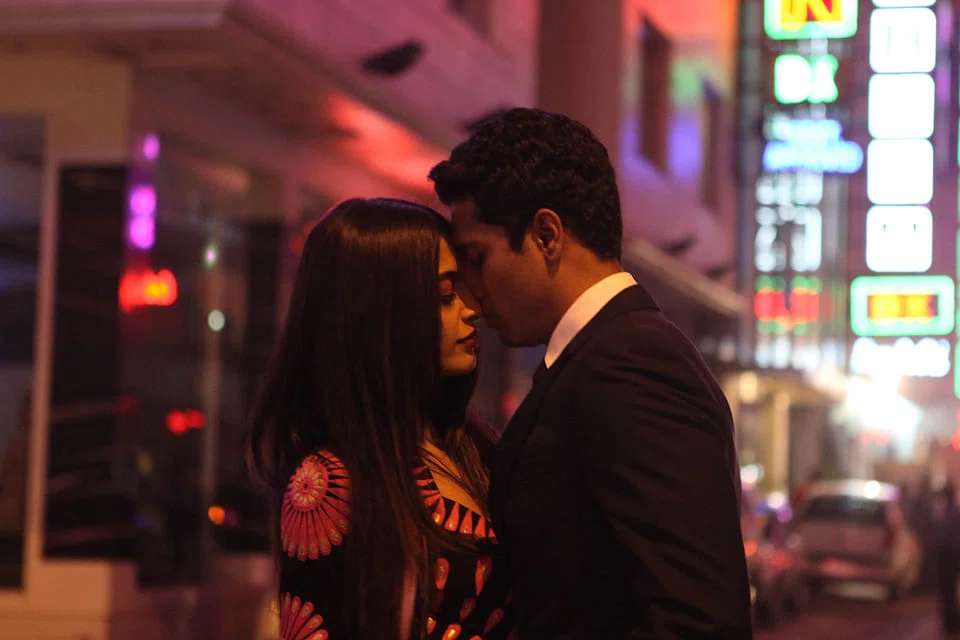
This year, the 10-day festival will open with the world premiere of Indian drama Zubaan by first-time director Mozez Singh. BIFF has never had a Bollywood production as its curtain raiser and Singh described the selection of his movie as a "wonderful turn of events". "All you really want is to make the best possible film that will reach out to as many people around the world as possible. Busan will give Zubaan this chance," he said. The coming-of-age feature follows the story of a young man who uses music to question his role in modern Indian society.
"BIFF has constantly broken new ground by empowering new and young filmmakers and it continues to do so," Singh said.
The festival's 20th edition will showcase 304 movies from 75 countries, including 94 world premiers.

Asian superstars such as Korea's Jun Ji-hyun and Lee Jung-jae, China's Tang Wei and Taiwan's Chang Chen will walk the red carpet alongside Hollywood A-listers such as Harvey Kietel and Tilda Swinton and Europe's Sophie Marceau and Nastassja Kinski.
The combined box office collect of Asia's biggest movie markets - China, Japan, India, South Korea, Taiwan and Indonesia - out-earned North America for the first time last year by US$10.5 billion to US$10.4 billion, according to the Motion Picture Association of America.
Much of that was down to stellar growth in China where box-office receipts surged 38 per cent from 2013 to US$4.8 billion.
Growth in the first eight months of this year is estimated to have been even higher at 49 per cent, and the Chinese market alone is expected to out-earn North America by 2018.
In the 20 years of its existence, BIFF has prided itself on identifying the filmmakers who have helped spur the industry's growth in the region and on championing the cause of independent Asian cinema.
Multi-award winning Korean directors Bong Joon-ho and Kim Ki-duk's early work was first introduced to the world at the festival, as was the work of China's box-office king Feng Xiaogang. Bong and Feng have gone on to direct Hollywood-funded productions - Bong with the sci-fi thriller Snowpiercer (2013) and Feng with the war drama Back to 1942 (2012).
BIFF's Window on Asian Cinema and Korean Cinema Today programmes are designed to give audiences a look at who might be coming next.
There are a combined 20 world premieres in those two sections alone, with much expected of the Korean-Chinese comedy thriller Bad Guys Always Die, directed by first timer Sun Hao and backed by China's Feng and Korean veteran Kang Je-gyu.
The 2015 Asian Filmmaker of the Year Award will be presented to Japan's Studio Ghibli, formed by animation master Hayao Miyazaki and responsible for the Oscar-winner Spirited Away (2001).
But it hasn't all been plain sailing for BIFF with controversies seemingly stalking organisers at every turn over the past 12 months.
Political pressure was brought to bear last year after they scheduled a controversial documentary looking at the Sewol ferry disaster in which more than 300 people died.
Busan's city mayor, who was also chairman of the BIFF organising committee, urged the festival's director, Lee Yong-kwan, to cancel the screening. In the end, the film was shown but Mr Lee said that he later came under pressure from the municipal authorities to resign.
Then earlier this year, the festival had its state funding slashed to 800 million won (S$956,000) from last year's 1.4 billion won.
Ms Kang, who now shares the festival director duties with Mr Lee, said that she hoped the focus would shift back to the films themselves.
"I think it is important that this year's festival can be appreciated by as many people as possible - without any misadventure - and then we can move on to planning the next 20 years," she said. AFP
Share with us your feedback on BT's products and services
TRENDING NOW
Motoring tycoon Peter Kwee is back in court: Here are his previous legal battles

Demand, tech capabilities position Apac and AI as Skyscanner’s next growth frontiers: CEO Bryan Batista
Beyond the greenback, Vietnam’s big borrowers turn to Asian-currency bonds

Nvidia’s outlook cut to stable by Moody’s on governance concerns

