China’s ski slopes pull big crowds as Japan tensions run high
Chinese social media has been filled with posts from skiers pivoting to domestic resorts
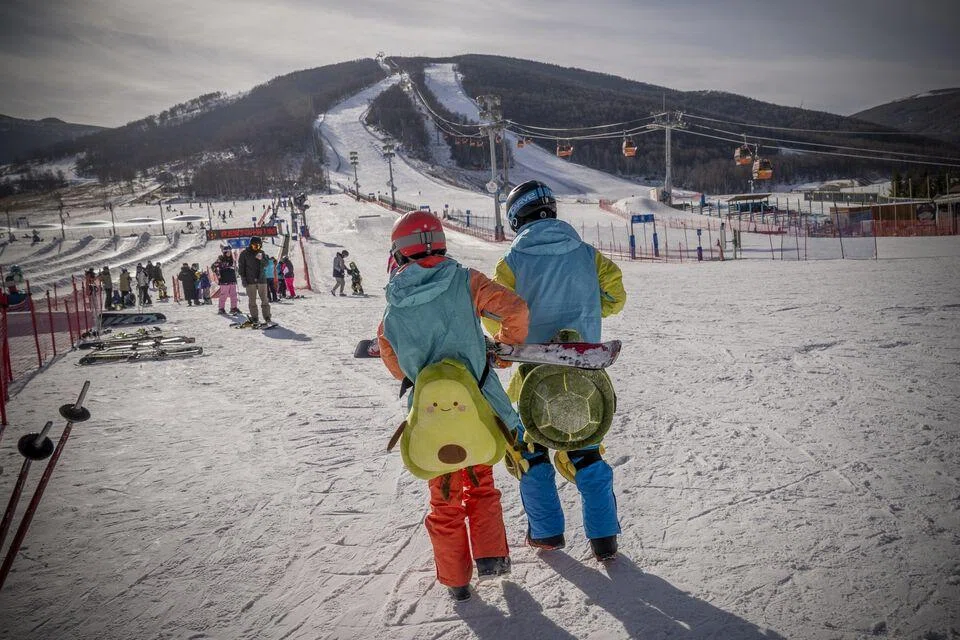
[BEIJING] Chen Yang and her family have, in recent years, flown from China’s Guangdong province to Japan for an annual ski trip to Hokkaido. This season, she cancelled their trip and will stay home instead, hitting northeast China’s slopes amid rising political tensions between the two countries.
“As an ordinary Chinese person, I can’t do much but can at least cancel my skiing trip to protest,” the 42-year-old said. “Hokkaido is uniquely beautiful, but for skiing itself, I can find alternatives in China.”
Chen is among thousands of Chinese travellers reconsidering Japan after remarks about Taiwan by Prime Minister Sanae Takaichi angered Beijing and prompted travel warnings to the country.
At the same time, the Winter Olympics in Italy have drawn fresh attention to skiing, giving China’s snowy northeast an opening to attract skiers who might otherwise head to destinations such as Hokkaido Prefecture.
Bookings from China to Hokkaido’s capital Sapporo are forecast to plunge 62 per cent in the first two months of 2026 from a year earlier, according to marketing and research firm China Trading Desk. Meanwhile, Beidahu, a top resort area in China’s Jilin province, saw hotel reservations jump as much as 70 per cent, the firm estimated.
Chinese social media has been filled with posts from skiers pivoting to domestic resorts. For some, the shift is not only political: skiing at home is cheaper and easier, without visa requirements or language barriers.
The boom could come with limits. China has built about 900 ski resorts and venues, including 66 indoor slopes, largely in the past decade, raising the risk of bringing its consumer price wars to the snow. It remains unclear how many first-time domestic skiers will become long-term enthusiasts, rather than return to Japan once tensions ease.
“China today is like Japan two or three decades ago to global tourists,” said Zhibin Lu, director of Summitski Tour, a ski travel platform whose services include linking foreigners to Chinese resorts. “To win a share of international skiers, China needs to improve its ‘software’ – like better food hygiene, enacting on-slope smoking regulations, and making them feel welcome.”
The surge has already strained some resorts. Chinese ski centres recorded 118 million visits in the three months to January 2026. That included 1.3 million overseas visitors, up 89 per cent from a year earlier. Social media posts show crowded beginner slopes and long lines.




“The ski resort is so crowded it is like dumplings being dropped into a pot, you do not even want to ski and couldn’t if you tried,” one user named Crystal wrote on China’s Instagram-like Xiaohongshu platform after a trip to a top Jilin resort.
Natural snowfall also remains a major gap. Japan is famous for its deep powder, commonly known among skiers as “Japow”, while most Chinese resorts rely heavily on artificial snow, a difference that is difficult to replicate for experienced skiers.
“In the long run, truly dedicated skiers will demand more,” said Jiang Shenli, founder of Xueyanshe, a platform that connects tens of thousands of customers with skiing-related services. “They usually start close to home, then move on to northeast China, and eventually to Japan, Europe and North America.”
Repeat business
Three decades ago, China had just nine ski venues and about 10,000 skiers. Growth accelerated after President Xi Jinping pledged in 2014 to involve 300 million people in winter sports, and again following the 2022 Beijing Winter Olympics.
Authorities have sought to transform the northeast rust belt into an “ice-and-snow” economic hub. The city of Harbin hosted the Asian Winter Games last year. Changchun, in Jilin province, will host the 2027 Winter World University Games.
A one-week ski trip to Hokkaido can easily cost 10,000 yuan per person once flights, hotels and meals are included. By contrast, a domestic ski holiday can be done for just a few thousand yuan. Coaching fees in Japan can run about 6,000 yuan a day, about double what they’d cost in China, according to Zhang Xiaoning, a Jilin-based instructor who also skis abroad.
Some Chinese ski resorts are currently promoting weeklong ski packages on Xiaohongshu aimed at beginners that include everything, plus coaching and a photographer who will film people learning how to ski, for less than 5,000 yuan (S$915) a week.
Equipped with cable car systems, gondolas and luxury hotels, the region’s offerings range from beginner slopes to black diamonds. Most are typically within an hour’s drive of a station connected to China’s vast rail network.
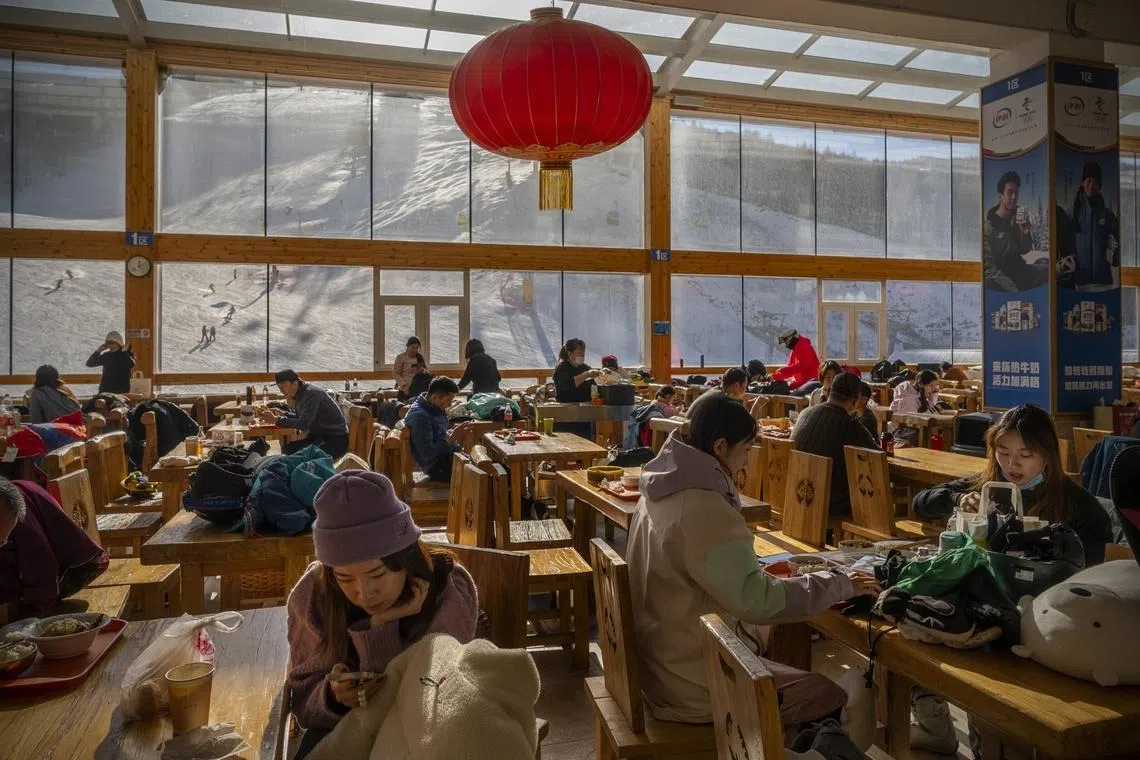
Skiers in China’s northeastern resort cafeterias feast on offerings like regional speciality iron pot stew, a hearty communal dish meant to combat the freezing cold that’s filled with everything from goose meat to pickled cabbage. Some of China’s biggest bubble tea chains, from Chagee to No Yeye No Tea, have also opened on the slopes and are drawing crowds of influencers.
Still, whether China’s resorts can turn this moment into lasting loyalty may ultimately depend on avid skiers such as Chen Yang, who have the desire – and the financial ability – to return again and again. For now, she’s not sure she will stick with domestic skiing in future seasons: She finds the shopping in Japan is better, and the temperatures in Hokkaido milder than in frigid northeast China.
“I cannot say for sure what I will do next year,” she said. “What I know is I am sure there will be more young Chinese people skiing, and the majority of them will ski at home. Japan, after all, is not cheap.” BLOOMBERG
Decoding Asia newsletter: your guide to navigating Asia in a new global order. Sign up here to get Decoding Asia newsletter. Delivered to your inbox. Free.
Share with us your feedback on BT's products and services