Craft beer makers strain on both sides of US-Canada trade clash
A worst-case scenario for brewers would be the weaponisation of key ingredient barley
COLLECTIVE Arts, a beer maker in Ontario, Canada, advises its customers to “drink creatively”, offering a West Coast India pale ale called “Ransack the Universe” and a porter labelled “Stranger than Fiction”. The US-Canada trade war is forcing the craft brewer to think outside the box, too.
Chief executive officer Matt Johnston says tariffs and alcohol boycotts have compelled it to reconsider how to serve the US market, which accounts for nearly 20 per cent of its business.
One option is to move some production to the US. Another includes “shifting our investment and energy into where we have the strongest foundation – our Canadian home market and other export markets that make sense for us”, he says.
“The goal is a business that’s resilient to trade policy or any single market,” he adds.
Craft breweries in the two countries are adapting to a reality few envisioned since US president Jimmy Carter signed a law in 1978 legalising home brewing and Canadian brewpubs started to emerge a few years later: trade barriers dividing the North American market.
Beer shipments across the world’s longest land border, long in decline, have all but dried up since some Canadian provinces stopped stocking American beer, wine and spirits in stores, and US President Donald Trump retaliated by banning imports of many alcoholic beverages from Canada on Sep 29.

The ban was just the latest in a series of hurdles that have left the nearly US$30 billion American and Canadian craft beer industries struggling to cope with higher costs and shifting demand.
Many small Canadian and US beer companies don’t see the national distinctions in Trump’s zero-sum view of trade, where one country’s export gains come at the importer’s expense. Microbrewers on both sides of the border have long taken a more collaborative approach.
“There’s a sense among brewers that a rising tide raises all boats,” says Bart Watson, president and CEO of the Brewers Association, a Colorado-based group that represents some 9,500 independent American beer makers.



Because the craft industry’s slice of the overall beer market is a mere 13 per cent, “if you can increase the share, then the pie is growing for everyone”, he says.
That kindred-over-competitive spirit is fraying in the trade dispute that flared up this year between Trump and Canadian Prime Minister Mark Carney.
Both leaders have signalled optimism that a deal will be reached soon, and Canadian officials sound even more confident that leverage is shifting to their corner after Trump’s party lost control of the House and Senate in a US midterm election focused on tariffs and other strains on consumers.
Carney said last week the US is “asking less” and “offering more” in recent trade talks.
A truce can’t come soon enough for beer makers who’ve had their interconnected supply chains effectively severed.
“Brewers previously very much thought about our system as a North American system,” Watson says, “and that is not the case at the moment.”
“Collateral damage”
The brouhaha raises some obvious questions, among them: Why should products like micro beers be targeted in a trade fight that’s centred largely on the nations’ economic security and reshoring major industries such as steel?
Christine Comeau, executive director of the Canadian Craft Brewers Association, says small operators are inherently rooted in local communities. Beer is expensive to transport long distances. It’s hard for small manufacturers to redirect their sales to faraway markets where regulations abound.
In a trade war, the mom-and-pop operations become “collateral damage”, she says.
“If cross-border connections disappear, both countries risk losing more than access to each other’s beer,” she adds. “They also lose opportunities for brewery tourism, business partnerships, knowledge-sharing and the relationships that have helped build a vibrant North American craft brewing sector.”
Maintaining those ties is important because beer trade across the US-Canada border has been steaedily declining for almost two decades, UN Comtrade data shows, as the larger brewers consolidated to form giants such as Anheuser-Busch InBev and Molson Coors Beverage Co.
Mexico is by far the biggest source of US beer imports, accounting for about 85 per cent of the total. Canada ranks sixth, behind European heavyweights Belgium, the Netherlands, Ireland and Germany.
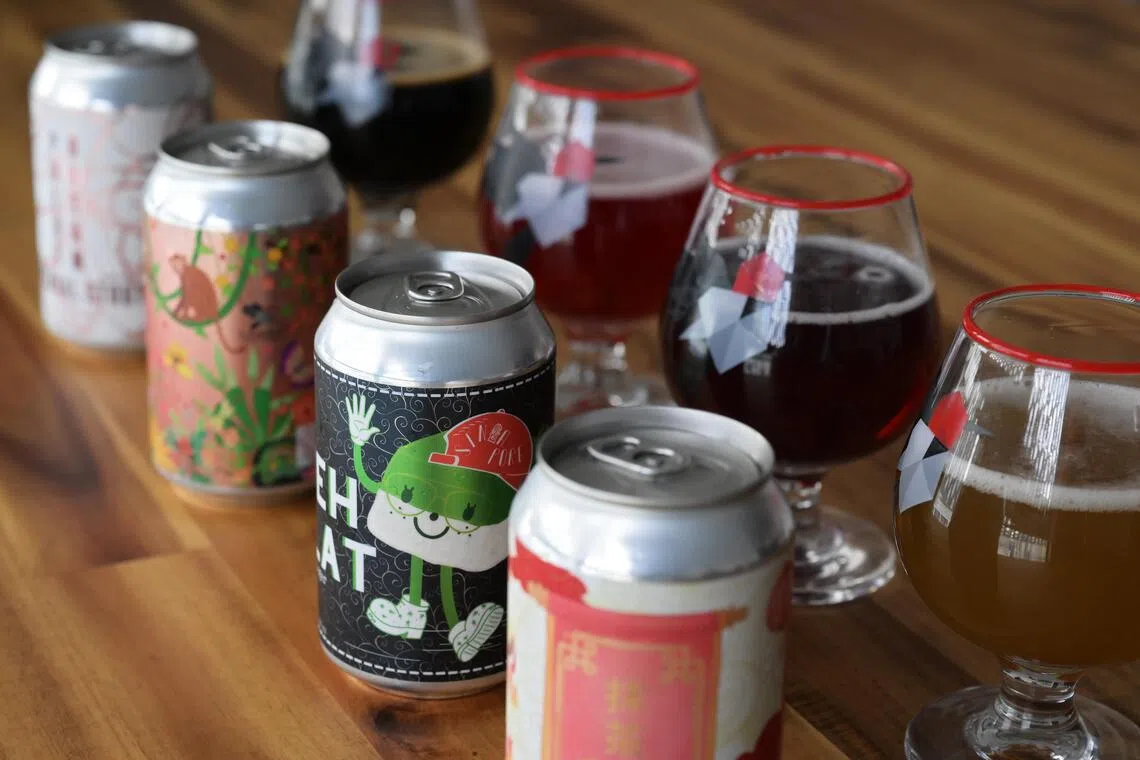
Though the Canada import ban stings, a more persistent punch to US brewers is the elevated cost of aluminium used to make cans because most of the raw metal comes from Canadian mills.
The Brewers Association calculates that Trump’s 50 per cent tariffs on aluminium imports could cost consumers as much as US$0.082 more per can, depending on pricing decisions at the brewer, wholesaler and retailer levels.
Some independent brewers may absorb such cost increases in their profit margins, Watson notes.
“However, it is unlikely that our small-business members can absorb these costs forever,” he says, adding that nearly 1,000 small brewers have closed in the past two years, with price pressure a primary reason for failures.
For Canada’s craft brewers, the rift is also an opportunity to push government to take steps to make them more resilient and competitive, by modernising the federal tax framework and removing barriers to trade between provinces, Comeau says.
“Trade diversification matters, but so does strengthening the domestic business environment,” she says.
World Beer Cup
Watson says the beer boycotts throw into question Canada’s future participation in events such as the Brewers Association’s annual World Beer Cup. The competition in April drew more than 1,600 contestants from 50 countries, with the US, Japan, Canada, China and Brazil the top five most-entered nations.
Should the spat between Washington and Ottawa escalate, a worst-case scenario for craft brewers would be the weaponisation of barley, a key ingredient used to make malt that’s grown across both nations and illustrates their co-dependence.
The US was the third-largest market for Canadian barley exports in 2024 and the largest buyer of malt exports, according to the Saskatchewan Barley Development Commission.
“If that were to be disrupted, it would be... catastrophic for small brewers in terms of price increases and availability,” Watson says.
For Johnston at Collective Arts, the industry faces plenty of challenges beyond the trade dispute. His company is changing its product mix to satisfy consumer tastes for non-alcoholic beer, wellness beverages, energy drinks and water aimed at hydration-conscious buyers.
“We’re also diversifying, not just by geography but by category,” he says. BLOOMBERG
Decoding Asia newsletter: your guide to navigating Asia in a new global order. Sign up here to get Decoding Asia newsletter. Delivered to your inbox. Free.
Share with us your feedback on BT's products and services