

Dell InnovateFest 2026 explores AI, tech solutions for persons with disabilities to live independently
Hackathon’s projects tackle communication problems, unhealthy food habits
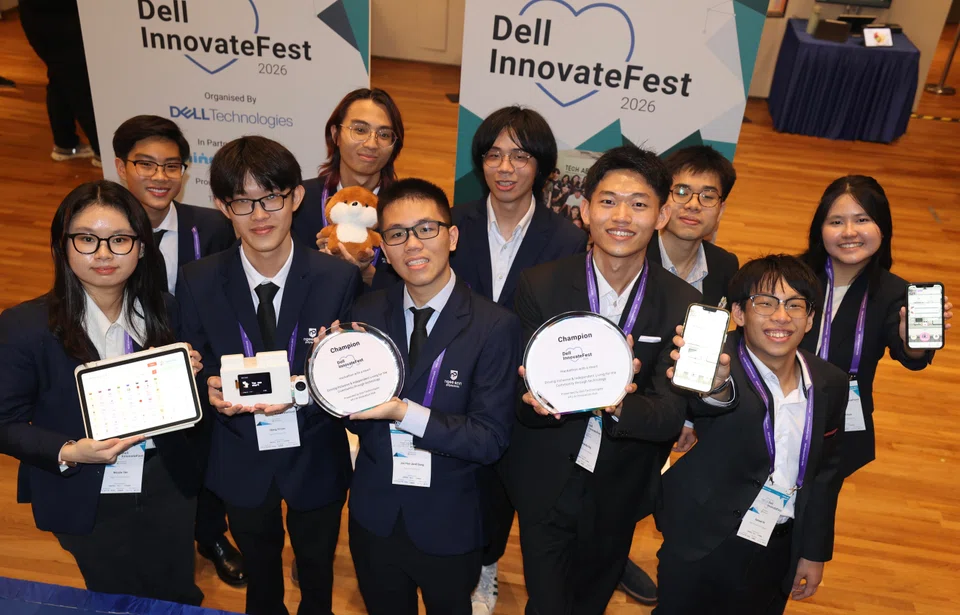
[SINGAPORE] Non-verbal persons with disabilities (PWDs) regularly encounter communication problems and, often, people they interact with do not know how to respond to breakdowns during these exchanges.
A team of six Ngee Ann Polytechnic students came up with InSync, an artificial intelligence facilitator that helps to repair such breakdowns in real time and increase conversational transparency.
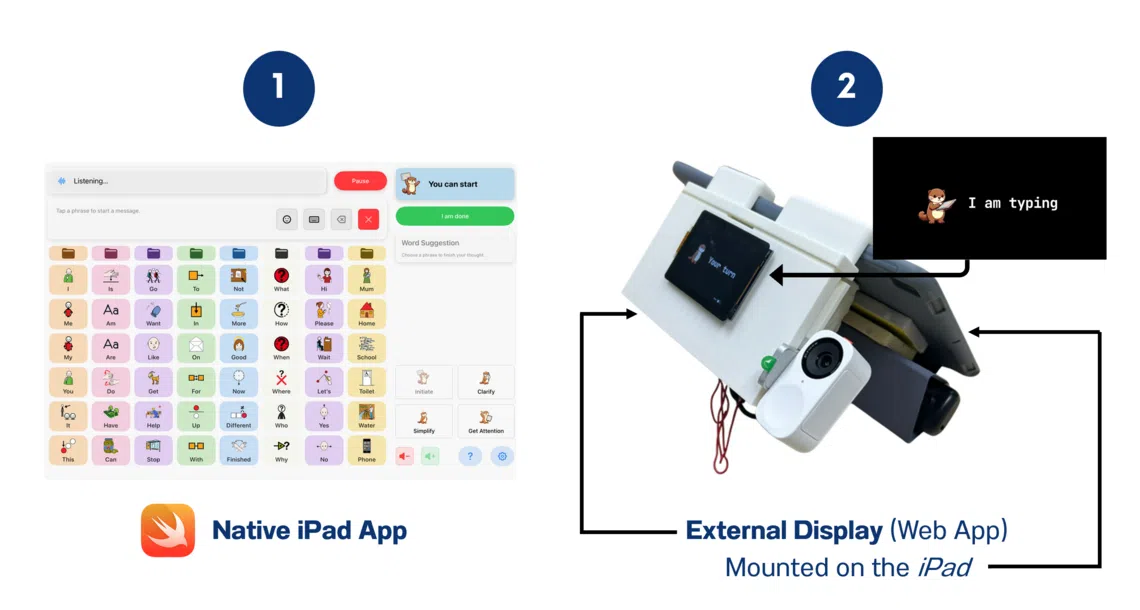
InSync comprises an app with an augmentative and alternative communication grid and AI tools such as live transcription, as well as an external display that faces the user’s communication partner and provides cues to them. For example, it prompts them to speak or wait for the user to speak.
Sean Chua, who was part of InSync’s team, said: “We chose to target children and teenagers, aged 10 to 18 years old, because they are at a very instrumental stage of their development.”
The team’s research found that those in this age group want to express themselves, “but don’t want to sound like a generic iOS voice”, he added, referring to the operating system used in Apple’s products.
As a result, the team incorporated personalisation features into InSync, where users can customise their voices, as well as pick their accent, tone and more.
“The Capture My Voice feature allows them to enunciate their vowels, where we take their vocal recording, extract their speaker identity – what makes their voice unique – and stitch that onto a generative AI voice,” said Chua.
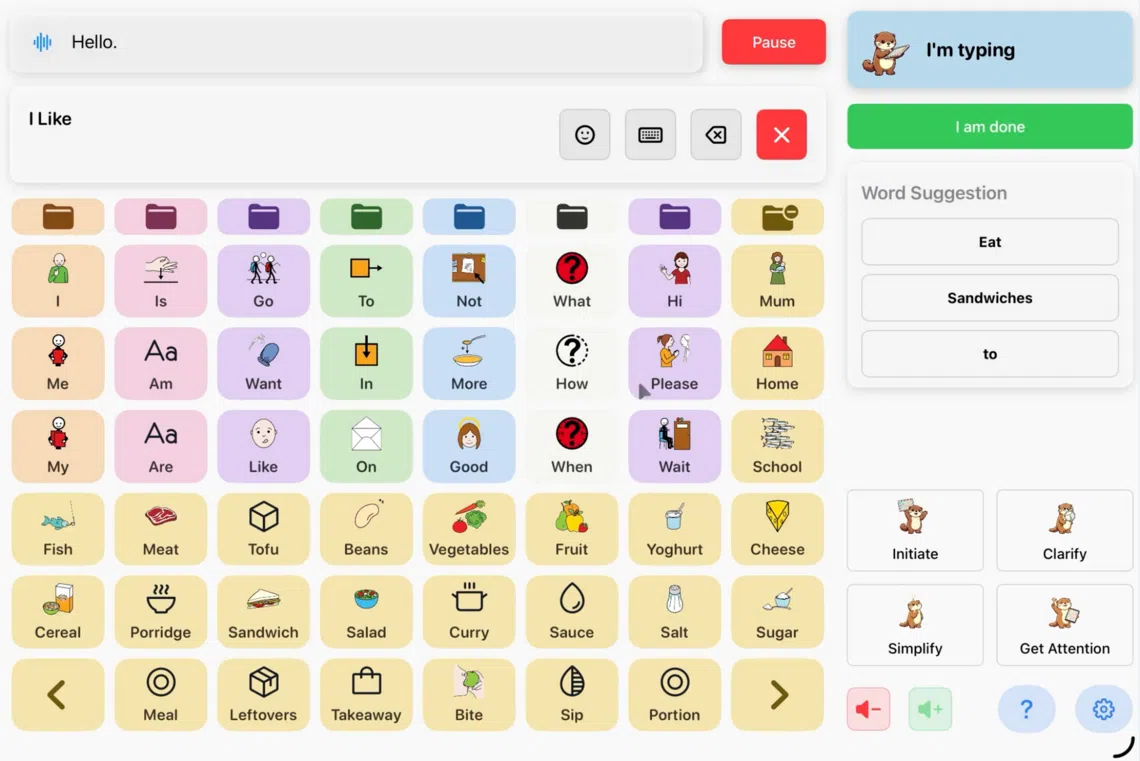
Users can also pre-input their preferences into the app. For example, if a user is ordering food at a hawker centre, it will already have their go-to order in its word bank. InSync can auto-suggest words based on audio and video context to increase the user’s typing speed.
Over time, InSync can adapt to the user’s language habits, personality and preferences to suggest more accurate responses.
Chua and his team were the winners of the polytechnic category of this year’s Dell InnovateFest, an annual hackathon organised by Dell Technologies.
Dell InnovateFest 2026 – the fourth edition of this event – focused on using tech and AI to come up with solutions to help PWDs and persons with intellectual disabilities (PWIDs) live independently.
Encouraging healthy food habits
A team of five students from the National University of Singapore, the winners of the university category, developed PotPal, a virtual kitchen companion that helps PWIDs develop healthy eating habits.
When visiting PWIDs living independently in Lengkok Bahru, Samuel Oh and his team noticed that the PWIDs generally know what healthy eating looks like, but stick to foods they enjoy – which are usually unhealthy. They struggled to see the long-term health impact of their diets.
PotPal provides actionable and personalised diet recommendations and gives users immediate feedback on their diets, through a virtual pet.
“By taking care of a virtual pet, we are giving the user ownership of their own health,” Oh added.
“When they use the app to take a photo of their meal, the pet responds immediately because they are feeding the pet.”
If the meal is unhealthy, the pet will look queasy; but if the meal is healthy, the pet will appear happy. The app will also suggest tips, such as eating more vegetables, to make the meal healthier.
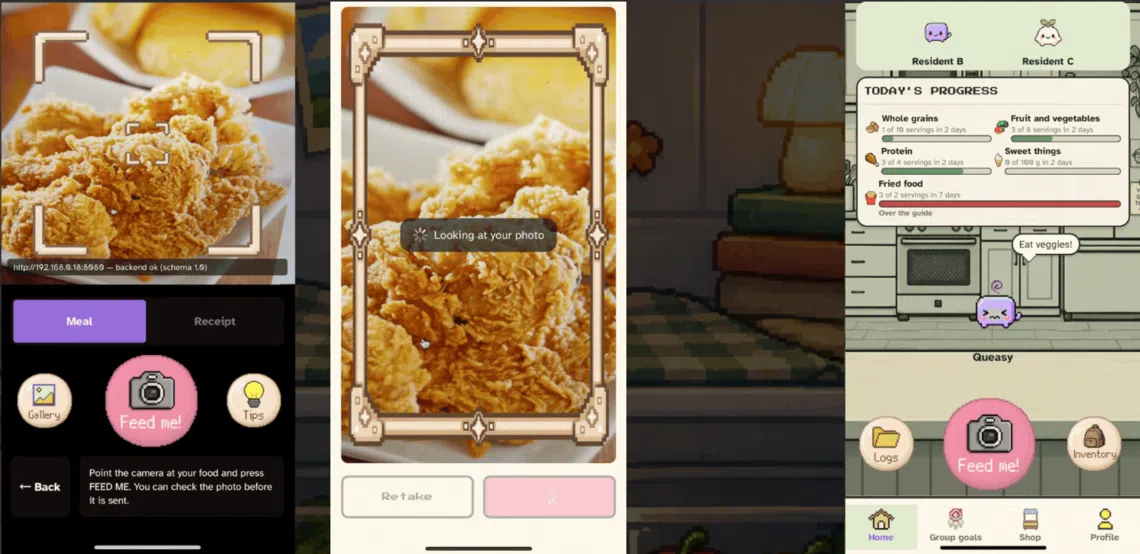
Over time, PotPal’s AI features will pick up on the user’s preferences, allowing it to generate more personalised recommendations.
Working with social service agencies
In total, 52 students participated in the finals of Dell InnovateFest 2026, which took place on Friday (Sep 18). Dell partnered with social service agencies Minds and SPD for it.
Minds has been Dell’s partner for this initiative since its inception in 2023. Kelvin Koh, CEO of Minds, said Dell InnovateFest has always been about engaging tech-savvy youth and exposing them to wider societal challenges.
Ng Nam Guan, senior director, Asia-Pacific and Japan AI Innovation Hub at Dell, added: “This year, we took the partnership one step further to allow the students to do site visits… This allows students to experience the problems they are solving with the beneficiaries they are working with, and at the same time drive empathy.”
Similarly, SPD worked with the students to connect them to industry mentors, such as speech therapists, that could advise them on their projects.
Both Minds and SPD introduced the students to PWDs and PWIDs, who tested the solutions and provided feedback.
Ron Loh, assistant CEO (services) at SPD, said: “We took the design-thinking approach, where the focus is on user-centricity… What was important for the students to understand were the needs of the clients, and for them to have empathy as well.”
He added that assistive technology is a “key enabler” for PWDs, particularly those who live independently. Customisation for local context is becoming more important, as a lot of assistive tech is developed overseas.
Decoding Asia newsletter: your guide to navigating Asia in a new global order. Sign up here to get Decoding Asia newsletter. Delivered to your inbox. Free.
Copyright SPH Media. All rights reserved.
TRENDING NOW

Malaysian king buys stake in Singapore-listed mining firm expanding into rare earths

Family offices ‘kept captive’ by relationship managers turn to independent advisers, direct deals

Once staunchly pro-China, Malaysian Chinese businesses are now distancing themselves from Beijing

Could stablecoins be the future of money?

