

Dragons, sex and the Bible: What drove the book business in 2025
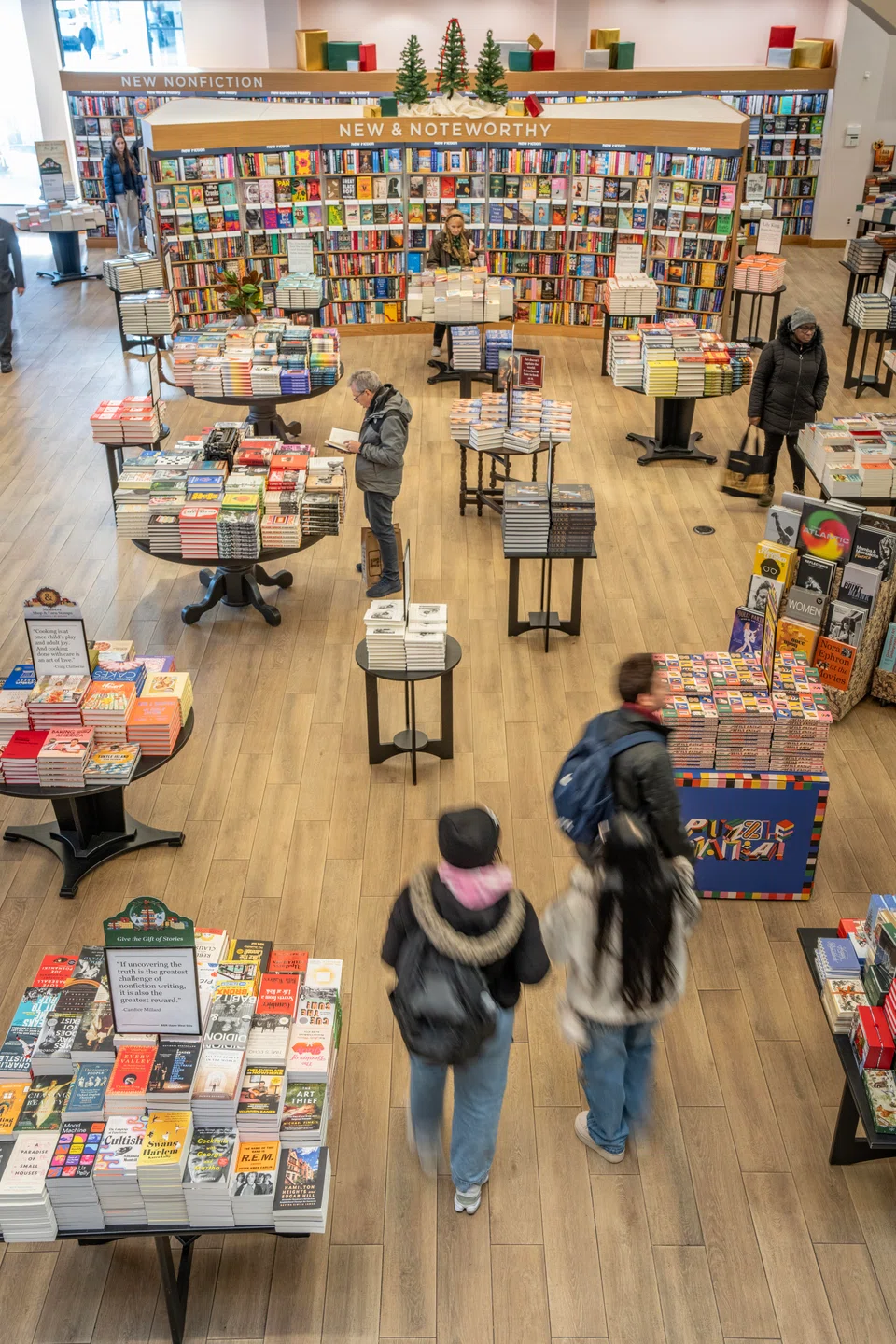
THE year brought more blockbuster books about sex and magic along with bestsellers nobody saw coming. Yet while sales are solid and bookstores are generally flourishing, the book business still faces a dizzying set of challenges.
Rising costs ate into profits. Nonprofit presses lost federal funding.
Artificial intelligence disrupted online search results and flooded Amazon with poorly written copycat books and slapdash genre fiction, making it harder for books written by humans to stand out from the slop.
Major retailers ordered fewer books than they used to, and there weren’t as many companies distributing books to stores. Book bans threatened to limit collections in schools and libraries.
“The industry itself is in transformation, which is always very challenging,” said Dominique Raccah, the publisher of Sourcebooks.
Still, people are reading – or at least buying books. Print sales are mostly stable, totalling around 707 million units in 2025 through mid-December, according to the most recent figures available from industry tracker Circana BookScan.
That’s only 3 million less than the pandemic peak in 2021, and 57 million copies more than in 2019.
But what are people reading, and why? Here’s what you need to know.
Do people still read novels?
Yes! Readers bought about 184 million print adult fiction books in 2025. That’s roughly as many as they bought in 2024 and 66 million more than in 2019, the last year before the pandemic gave book sales a jolt.

Some of the year’s biggest books were genre novels. Freida McFadden’s thrillers sold more than 5.5 million print copies, while Rebecca Yarros’ bestselling romantasy series about dragon riders continued to soar.
But some newcomers and smaller novels did well too.
Virginia Evans’ debut novel, The Correspondent, sold more than 500,000 copies this past year, “defying all the metrics”, as Crown fiction publisher Amy Einhorn, who acquired the novel, put it.
Michael Reynolds, executive publisher of Europa Editions, said his publishing house had a strong year in part because of Mona’s Eyes, by Thomas Schlesser, which is on track to be one of Barnes & Noble’s bestselling books of the year.
“Some of the literary imprints at the corporate houses are feeling a little reticent with certain categories, moving away from more literary titles or translations,” Reynolds said. “It feels that maybe the independent publishers are somehow benefiting from that.”
What about nonfiction?
Nonfiction had a more difficult year. Among the top 10 bestselling print nonfiction titles, only one came out in 2025 – Kamala Harris’ campaign memoir, 107 Days.
That stands in stark contrast to the wave of political blockbusters that swept bestseller lists after the 2016 election.
The other nine nonfiction bestsellers were backlist titles, meaning they were published in previous years. Mel Robbins’ self-help blockbuster The Let Them Theory, which came out in 2024, led the pack. It vastly outpaced other self-help titles, selling more than 2.7 million print copies.
“She’s essentially carrying the entire self-help category right now,” said Brenna Connor, an industry analyst with Circana BookScan.
For the moment, popular backlist titles have kept print sales for adult nonfiction down just around 2 per cent from the previous year. But the decline in sales of new nonfiction might reflect a changing information ecosystem. Some nonfiction readers may be switching to audiobooks over print. And people looking for information can now easily turn to chatbots, YouTube, podcasts and other free online sources.
What else is struggling?
Young adult (YA) fiction sales have fallen sharply, especially if you exclude sales of books by Suzanne Collins, whose bestseller Sunrise on the Reaping, a Hunger Games prequel, sold around 2 million print copies.
Setting Collins’ sales aside, YA fiction sales were down 12 per cent in 2025 compared with 2024, according to BookScan.
One reason, industry observers suggest, is that teens who haven’t abandoned reading are moving on from YA.
Publishers have tried to lure them back with a hazy hybrid category they have labelled “new adult” – generally fiction of the sort that has become big on BookTok, featuring young characters and adult themes.
But Kristin Bartelme, a senior vice-president of marketing at the book distributor ReaderLink, which stocks big-box stores and pharmacy chains, said the influence of BookTok is starting to wane.
“There have definitely been books here and there,” she said, “but not to the level of Colleen Hoover or Rebecca Yarros”.
What else is selling?
Romance sales are still rising, though the genre isn’t growing at the meteoric rate of recent years. According to BookScan, romance sales rose around 5 per cent this past year over 2024, due largely to blockbuster sales of Yarros’ Onyx Storm.
Another growth area is Bible sales, which are up over the past few years – a likely sign of some Americans’ growing interest in faith and spirituality – and jumped about 12 per cent over the prior year.
And increased interest from a new generation of comics readers helped boost sales at comic book stores by 27 per cent through the first eight months of the year, according to a report from the comics industry publication ICv2.
How are print books doing?
One prediction that appears overblown is the idea that readers would fully adopt digital book formats, causing sales of print books to plummet the way sales of physical newspapers have.
But people seem to like reading paper books, which make up roughly three-quarters of book sales, according to the Association of American Publishers.
At the same time, sales of e-books have shrunk, even after all but replacing the mass-market paperback during the 2010s.
Since 2016, e-books dropped from 17 to 11 per cent of trade publishing revenue, according to data from the association that looked at the first 10 months of each year.
But revenue from e-books in 2025 was about the same as it was the year before.
Audiobooks also performed about the same during the first 10 months of 2025 as they did in the same period in 2024.
Over the last decade, though, audiobook revenue has essentially quadrupled.
Audiobook sales tend to excite publishers because they typically don’t just replace print sales. Alongside readers who wouldn’t pick up a book at all if they couldn’t listen to it while commuting or doing the dishes, audiobooks also appeal to habitual readers, who often buy the same book in print and audio.
What about bookstores?
Physical bookstores were also once assumed to be marching inexorably toward extinction. Reports of their death were greatly exaggerated.
In 2025, 422 newly opened stores joined the American Booksellers Association – nearly 100 more than joined the year before. Barnes & Noble added 55 stores around the country, and Books-A-Million added 18. (By comparison, Books-A-Million opened seven new stores in 2024.)
Genre-specific bookshops are also thriving.
New stores popped up across the country, including Spicy Librarian, a romance bookstore in Denver, and The Twisted Spine, a horror bookstore in Brooklyn, New York.
“It’s exciting to see so many people shopping in alignment with their values, and I see that reflected in the tremendous support communities have given indie bookstores this past year,” said Allison Hill, CEO of the American Booksellers Association.
“In some ways, I think that’s a response to the turmoil of 2025 in this country and reflects a backlash against billionaires and algorithms.” she added.
“Indie bookstores are proving to be an antidote for the time we’re living in.” NYTIMES
Decoding Asia newsletter: your guide to navigating Asia in a new global order. Sign up here to get Decoding Asia newsletter. Delivered to your inbox. Free.
Share with us your feedback on BT's products and services
TRENDING NOW

Once staunchly pro-China, Malaysian Chinese businesses are now distancing themselves from Beijing

Looking beyond looming CEO succession, should UOB potentially pursue a transformative merger?

Could stablecoins be the future of money?

Grab CEO’s wife Chloe Tong on life with Anthony Tan and finding her purpose

