

Echoes of a world war in wines from the early 1940s
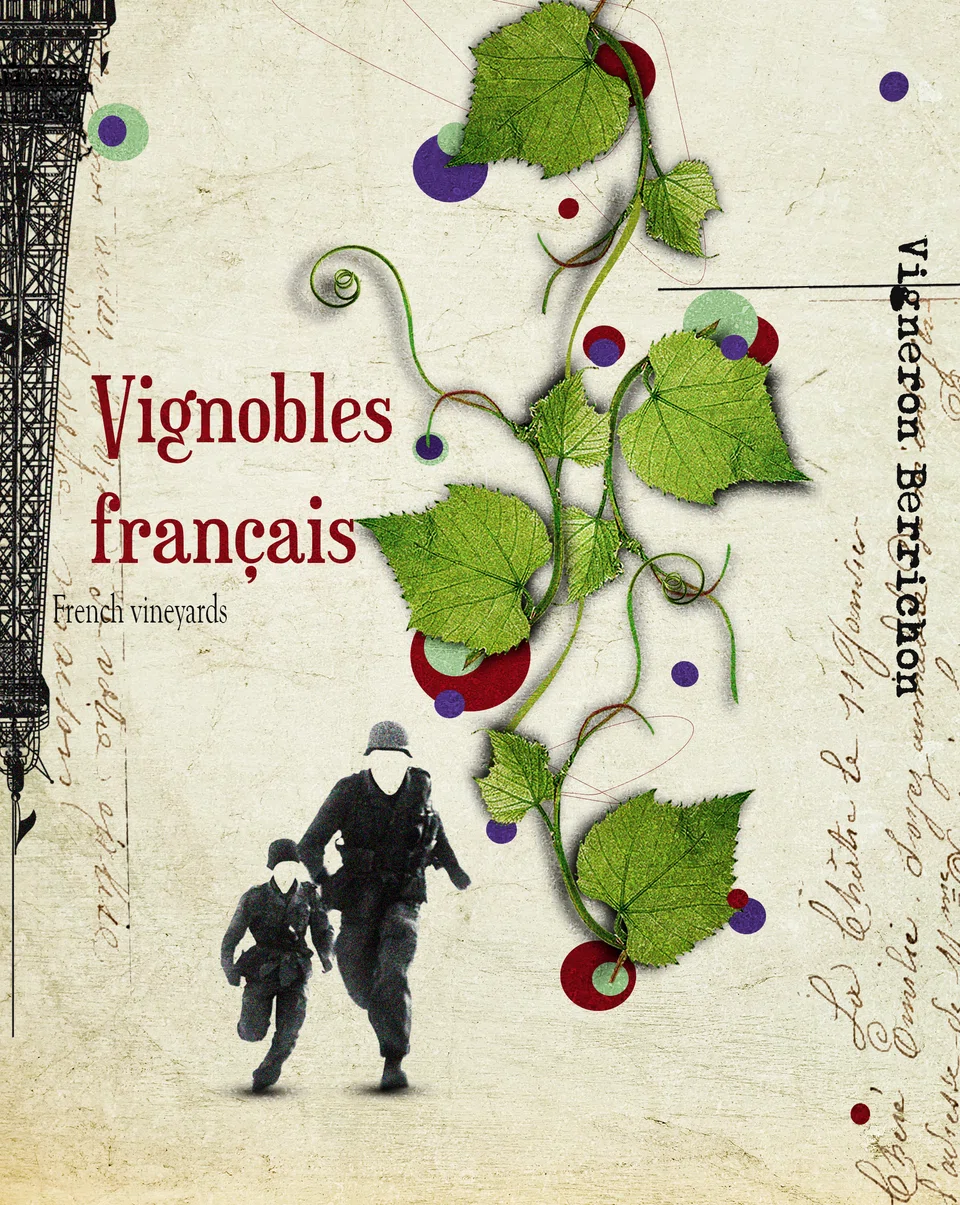
THE opportunity to drink really old wines is a rare joy, not solely because of what’s in the glass.
Crucial to the experience is history. What was happening in the world the year the wine was produced? Some might argue that the wine itself is all that matters, but history and the imagination are what gives wine meaning, adding to it a beautiful, important, often joyous and sometimes poignant dimension.
That’s why many people commemorate the birth of a child with wines of the same vintage or search for a wine made the year of their wedding. Aged wines have the power to bring to life events that took place long ago. They tangibly express the passage of time.
Bottles like those have great personal meaning. But when the vintages coincide with profound historical events, the significance of the year and the wine are amplified, as are the emotions that go with it.
For that reason, when I recently received an invitation to a small dinner arranged for the purpose of drinking wines produced during World War II, I leapt at the opportunity.
Partly it was the rare chance to taste wines roughly 80 years old. In Europe’s vineyards, growers and producers laboured under wartime conditions. French vignerons also endured the brutal, terrifying conditions of Nazi occupation, all against the backdrop of the deportation of Jews and others and the horrors of the Holocaust.
Their perseverance is testimony to their courage and ingenuity as well as to the cultural importance of wine in France, where it was regarded as something of a national emblem worth protecting with one’s life.
It’s difficult all this time later to imagine the years beginning in September 1939, right around harvest time, when Germany invaded Poland, and France and Britain declared war on Germany.
Over the next few years, from Champagne in the north to Burgundy in the east and Bordeaux in the south-west, the Germans looted cellars of precious older bottles while requisitioning much of the current and future production for their own troops and population.
In turn, French winemakers went to great lengths to hide their best bottles from the Germans and to sabotage the wine bound for Germany. The stories of these vignerons, both harrowing and heroic, are recounted in fascinating detail in the superb book Wine and War by Don and Petie Kladstrup.
Difficulties did not stop at danger and duress. Basic materials for farming and winemaking were exceedingly difficult to come by. Copper sulphate, a crucial component in preventing mould and mildew in vineyards, was reserved for the German war effort. Glass for bottles was scarce.
At one point, later in the war, large producers were even ordered to distil half their production for use by the Germans as solvents and fuel.
The centrepiece of the tasting, which was held in Darien, Connecticut, was French wines, including three 1942 Bordeaux – from Cheval Blanc; Lynch-Bages; and Climens, a Barsac, the sweet sibling of Sauternes – and two from ’43, Gruaud-Larose and Petrus, all superb producers.
There was a Burgundy, a ’42 Nuits-St-Georges from L’Heritier-Guyot, which today is better known as a distillery but apparently at one time was a negociant, and a 1945 Huet Le Mont Moelleux Perlant, a sweet wine that was intended to be sparkling as well.
From outside France, we had a 1943 Giacomo Conterno Monfortino Barolo, which would have been harvested under German occupation after the collapse of Fascist Italy earlier that year, and two bottles from Spain, a 1941 Vega Sicilia Unico and a 1943 Rioja Reserva from Marques de Riscal. We also had a 1941 cabernet sauvignon from California, harvested a few months before Pearl Harbour.
While several of these were from producers that are among the greatest in the world, I will confess that I was particularly looking forward to the Petrus, a Pomerol that today is among the most coveted and expensive wines in the world. Pomerol and Petrus were little known back then, however, except among a small circle who recognised the quality of the producer and the region despite their lack of renown.
It was the Petrus that had been the impetus for the dinner. In early 2020, Philippe Newlin, a wine industry veteran who is director of Bordeaux and fine wine at Wine.com, an online retailer, was browsing Internet auction sites looking for older bottles he could serve to the wine classes he teaches at Columbia Business School and the Yale School of Management.
He was surprised to see a bottle of 1943 Petrus available for under US$3,000, not at all cheap but far less than current vintages, which sell for around US$5,000 a bottle. He rounded up a couple of collector friends to join him in buying the bottle.
With the bottle in hand, they wondered whether they could build a World War II-era dinner around it. They spoke with a few other collectors and the dinner, after two pandemic years, began to take shape. In the end, it would include Newlin, five wine-lovers who, as Newlin put it, collect wine to drink, not flip for profit, one other guest and me.
Opening 80-year-old bottles is fraught with anxiety. Corks crumble over time, and, if you were not the original buyer, you have no idea how the wines had been stored. Almost all these wines were intended for aging over long periods, maybe 30 or 40 years. But 80 years? It is too long to assume any bottle is still good, even if they were stored carefully and had been from the best vintages. From 1939 through 1944, only ’43 was considered better than mediocre.
Before the dinner, I guessed that maybe half of them might be drinkable, the others fascinating relics. But I was wrong.
Every single bottle was not only sound, but good at the very least. It seemed miraculous to all of us.
We began with the two sweet whites, which Newlin felt would go well with the opening course: sea scallop carpaccio, prepared by chef Jeff Raider. The ’42 Climens, the great Barsac producer, was stunning. It was dark amber but kaleidoscopically complex, with flavours of apricot, orange, spices and, over time, caramelised sugar. It wasn’t overtly sweet, but it was refreshing. With aging, the sugar had dissipated, though the acidity remained – “just like people”, Newlin observed.
Next came the Huet from 1945, a vintage that began in wartime and ended after the Germans surrendered. Gaston Huet, the proprietor, whose story is recounted in Wine and War, had returned after five years in a German prisoner-of-war camp. He was in a gravely weakened condition but was able to make the ’45, a great vintage in France.
It was a tranquil wine, without the fireworks of the Climens, but with time it gained complexity, tasting a bit like candied orange zest but with an unexpectedly savoury aspect. Although the wine was intended to be lightly sparkling, no trace of effervescence remained.
Then, with risotto and wild mushrooms, the parade of reds began.
The California cabernet apparently came from a vineyard in San Benito county. The wine was made but then sold before bottling to Sebastiani Vineyards, which stored it in redwood casks until 1947. When it was finally bottled, August Sebastiani, then the proprietor, named it Casa de Sonoma after his own residence and sold it under the El Gavilan label. It was primarily herbal, with little fruit left, and eventually took on a beefy, bouillon flavour.
The ’42 Nuits-St-George was pretty, with aromas and flavours of dried flowers, somewhat simple in contrast to the wines to come.
Next was the ’43 Riscal Rioja, dark and pure, fresh, balanced and seemingly young with a smoky, herbal quality. I wondered if cabernet sauvignon had been part of a blend with tempranillo, as was sometimes the case with older Riscals.
The ’43 Monfortino Barolo was wonderful, surprisingly pale, like a dark rosé, but, with time in the glass, it began to smell like dried roses and iron, beautifully balanced with lingering, high-toned flavours. The ’41 Vega Sicilia, a defining Ribera del Duero wine, was rich and full, with deep, delicious flavours of chocolate, espresso and smoke.
It had been a wonderful beginning. Now, between the risotto and the next course, filet mignon, began the small procession of red Bordeaux. Each bottle was a curious blue-green colour, apparently the result of wartime restrictions on glassmaking that prohibited the use of certain elements that would have provided the more typical colour of dark green.
First came the ’42 Lynch-Bages, an excellent Pauillac producer, pleasant and drinkable but lacking shape or definition. On its own, its survival might have seemed miraculous, but in the company of the other bottles it paled. Next was the ’42 Cheval Blanc, a St.-Emilion from one of the great producers of Bordeaux. It was rich, full and lively, with savoury flavors of oregano and cumin.
Then the ’43 Gruaud-Larose, a St-Julien, with peppery, gentle flavours and a hint of the pencilly graphite that is often found in wines of the Medoc. And finally, the Petrus in its pale blue bottle. It was rich, deep and fresh, with flavours that seemed on the precipice of evolving from chocolate to tobacco, a beautiful wine.
I was grateful to have consumed these wines, to have understood that these in some cases were not simply beautiful beverages but acts of defiance, small ways of asserting one’s humanity in the most dehumanising of circumstances, messages still echoing far away and decades later. NYTIMES
Decoding Asia newsletter: your guide to navigating Asia in a new global order. Sign up here to get Decoding Asia newsletter. Delivered to your inbox. Free.
Share with us your feedback on BT's products and services
TRENDING NOW
Prima to move out of historic Keppel Road flour mill building in 2028

Temasek-related Azalea, SeaTown, Seviora Capital to merge in 2027

Family offices see more tailored products, leverage ‘collective firepower’ for direct deal access

Singapore room rates soar, but hotels seeing mixed demand from F1 race and events

