

The enthusiastic football announcer who cried ‘Goooooooooooal’
Now at his 10th World Cup, Andres Cantor is a celebrity known for his buoyant and limber voice

[NEW YORK] Moments before munching on a salad at an upscale Italian restaurant in Los Angeles, Andres Cantor was stopped by a worker for a brief conversation in Spanish. After dinner, another worker asked for a photograph together.
“This happens all the time,” Cantor told a reporter in English.
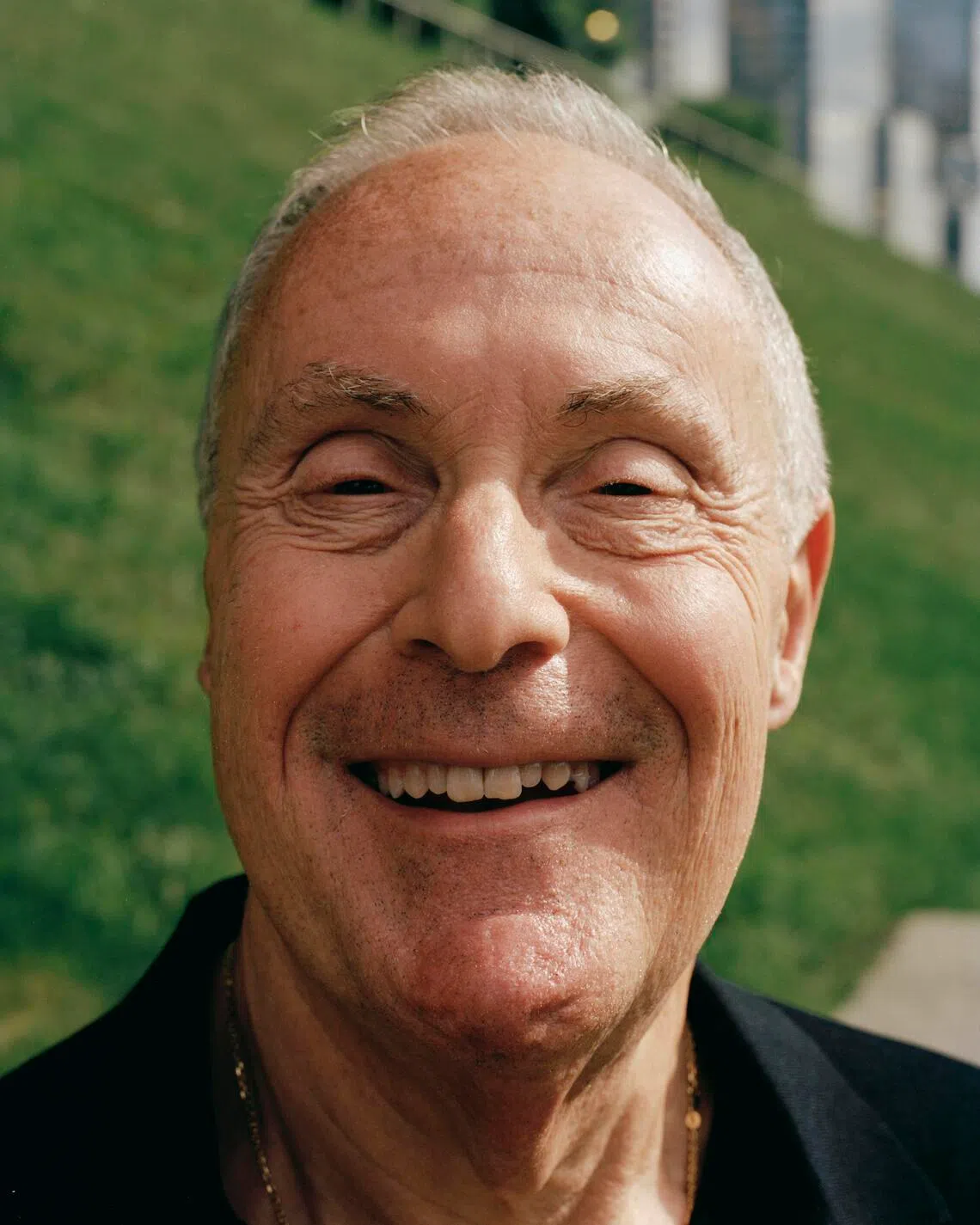
Cantor is a celebrity who’s currently starring in his 10th men’s World Cup. But his great physical skill is not the precision dribbling of Lionel Messi or the acceleration of Kylian Mbappe. It is his buoyant and limber voice.
As a play-by-play announcer for Spanish network Telemundo, Cantor must capture the explosive moment whenever a player finds the back of the net. And he does not treat the word “goal” as a typical one-syllable word. He enthusiastically elongates it, stretching the word for upward of 10 seconds, while curling his lips and cupping his hand near his ear.
For three decades of World Cup broadcasts, from booths in Brazil, Russia, Qatar and more, the 63-year-old has filled the airwaves with his trademark cry of “GOOOOOOOOOOOAL!”
His notable call has made Cantor a cultural sensation. He has voiced a cartoon version of himself in The Simpsons, appeared with the television hosts David Letterman and Regis Philbin and filmed commercials for Geico and Coors Light.
“It’s pure commentary master class – taking the emotions from the field and transmitting them to a global audience, a skill that he has perfected over the years,” said Fifa president Gianni Infantino in a statement.
Cantor, who was born in Argentina before moving to the US as a teenager, said that he valued acting as a bridge between English- and Spanish-speaking audiences. He also hopes his calls help get the attention of people who watch football only during the World Cup, which takes place every four years.
“If I can retain 10 per cent of those casual fans and convert them,” he noted, “I think that is my calling.”
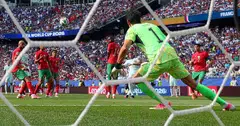

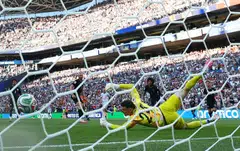

Ahead of each World Cup, Cantor hires a voice coach to prepare him and his vocal cords for the strenuous stretch of games, possibly 20 or more in about a month.
In May, he completed a virtual lesson in which he blew water through a straw for one exercise and pressed his fingers to his cheeks in another. The coach has sent him an audio recording to follow as a warm-up on the road.
He sometimes jokes with his coach that their lessons will be moot in the heat of the moment.
“‘Do you really think that I’m going to remember what you’re telling me to do when Argentina is like a second away from winning the World Cup?’” said Cantor.
That exact scenario happened in 2022. When Argentina defeated France in a penalty shootout in the World Cup final, Cantor began crying and embracing his broadcast partner, his voice cracking as he screamed, “Argentina, campeón del mundo!” (“Argentina, champion of the world!”).
Journalists are traditionally expected to remain unbiased, but Cantor said that pride and relief for his home country took over. He felt he had called a balanced game and also showed enthusiasm during the French goals. His boss agreed.
“If you do it in a way where you’re showing your emotions with class, which I think is what he did, there’s no issue,” said Joaquín Duro, the executive vice-president for sports at Telemundo. “He was able to finish the plays, give you the information and then just burst into tears of happiness.”
Carli Lloyd, a two-time World Cup champion with the US women’s national team, said that she appreciated that Cantor demonstrated the same energy for women’s games, including his call after she scored a long-distance goal in the 2015 World Cup final.
“Everything that he leaves out there within that game is truly what makes him special,” Lloyd added.
This year, the World Cup is being hosted by three countries for the first time, with games being held in 16 cities across the US, Canada and Mexico.
About six hours before the US opened its tournament with a resounding 4-1 win over Paraguay, Cantor leaned over a railing and looked at the empty field outside Los Angeles. He playfully threw boxing jabs with one of his colleagues, and then found a quiet moment to eat lunch before the stadium filled with fans.
“World Cups are usually gruesome,” Cantor said. “Rest is key.”
Cantor had been awake since around 5 am to complete a live shot with the Today show near his hotel. An early flight to Houston awaited him the next day so he could call a game between Germany and Curacao. Two days after that game, Cantor found himself in Kansas City to announce the Argentina-Algeria match.
When Messi scored for the third time in a game where he became the leading scorer in World Cup history, Cantor sustained a “goal” call for nearly 12 continuous seconds.
Although his father was a physician and his mother was a psychologist, Cantor wanted to become a journalist, involved in big events. They were shocked when he walked into their bedroom before his freshman year at the University of Southern California and declared his aspirations.
“‘But you will starve yourself,’” Cantor recalled his father telling him.
Cantor worked as a print journalist for an Argentine publishing company before becoming an anchor for the Spanish-speaking network Univision, where he called the 1990 World Cup in Italy. But he broke through in 1994, the previous time the US hosted the men’s World Cup, with the help of his enthusiastic calls.
Two years after he called the 1998 World Cup in France for Univision, Cantor moved to Telemundo. The network, now owned by NBCUniversal, did not secure the Spanish-language media rights for the World Cup until 2011, but Cantor called tournament games for the radio station Futbol de Primera.
Cantor’s son, Nico, is now also in broadcasting, as a commentator for Futbol de Primera and CBS Sports. When they are occasionally assigned the same game, they try to take a picture together at the stadium.
Nico Cantor said that at a dinner at his parents’ home in Miami, he jokingly called his father’s handwriting illegible when he saw his notes sprawled on the table. But he added that they also helped him fully understand his father’s high level of preparation for the World Cup.
“It’s part of our identity as a family,” Nico Cantor explained. “I couldn’t imagine our lives without it.” NYTIMES
Decoding Asia newsletter: your guide to navigating Asia in a new global order. Sign up here to get Decoding Asia newsletter. Delivered to your inbox. Free.
Share with us your feedback on BT's products and services
TRENDING NOW

Stocks to watch: CapitaLand Ascott Trust, Keppel Infrastructure Trust, iFast, ESR Reit, First Sponsor
Indonesia says gas export cuts to Singapore remain within contract terms

If Europe goes to war, the fallout will be felt in East Asia

Government to bring forward raising of retirement age, give employers more financial support to create flexi-load jobs

