Akasa delivers satisfying Indian food in CBD by ex-Sansara chef
Akhilesh Pathak strikes out on his own with well-priced northern Indian favourites
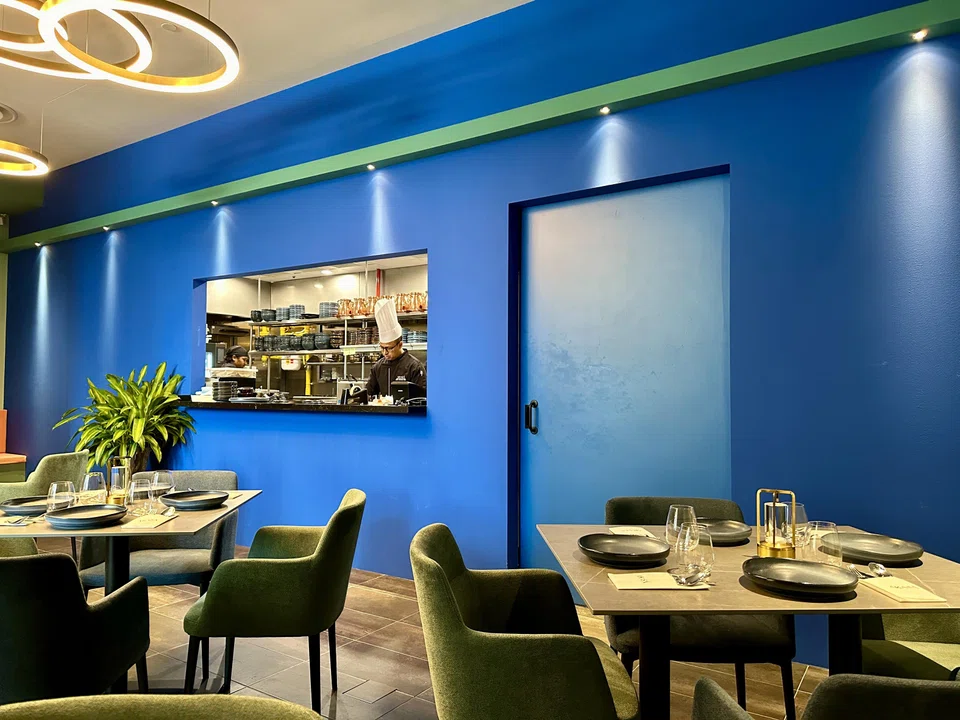
NEW RESTAURANT
Akasa Singapore 79 Robinson Road Capitasky Singapore 068897 Tel: 8012 1181 Open Mon to Sat: 11.30 am to 10 pm
DO RESTAURANTS get accepted into witness protection programmes?
We wonder this when we step into the new Akasa, which a little bird told us is really the old Sansara, but under a different name and with thankfully more cheerful decor.
Some of the dishes seem to have assumed different identities, but with similar job descriptions as their previous place of work. Malai soya chaap kebab, for one, has changed its first name to Multani, but not its ingredients – soy, cream cheese and cashew ingredients. It’s also a buck cheaper.
There was an appetizer we rather liked at Sansara – kumbh ki galouti, or mushroom patties on little prata discs. But we didn’t recognise its new name at Akasa – Akasa e galouti – also with the same ingredients and S$8 cheaper. We didn’t order it, so it may have undergone a physical transformation in case there are kebab assassins out there for hire.
We decide not to be discreet and ask straight out: “Did your chef come from Sansara?” And yes he did.
Akhilesh Pathak was originally tasked with setting up the river-facing Sansara at Millennium Copthorne, presenting his version of Awadhi cuisine, characterised by its more muted spices, slow-cooked curries and dum-style biryanis. The food then didn’t so much as hit a high but endeared itself to us with the no-fail combo of fluffy naans, rich gravies to dunk them in, and delicate biryanis. And there was the option of exploring less familiar aspects of northern Indian cooking.
Sansara still remains where it is, but Pathak has struck out on his own with his modest debut in the Central Business District (CBD). Unfortunately, his ground-floor eatery at Capitasky doesn’t have a riverfront, and it competes for business with the lunch line at build-your-own-bowl Omnivore, and stragglers hitting the 7-Eleven next door.

But his prices are lower, the space is cosy with its bright blue colour scheme and simple furnishings, and there’s a bar in front to catch the after-work drinking crowd. Pathak is also joined by his manager David whom we recognise from before, and he helps to set the unobtrusive yet welcoming ambience.
Of course, the menu isn’t a complete replica from before, with some additions and minuses. Again, there’s no wow, just satisfying, well-priced hearty cooking that hits the spot.
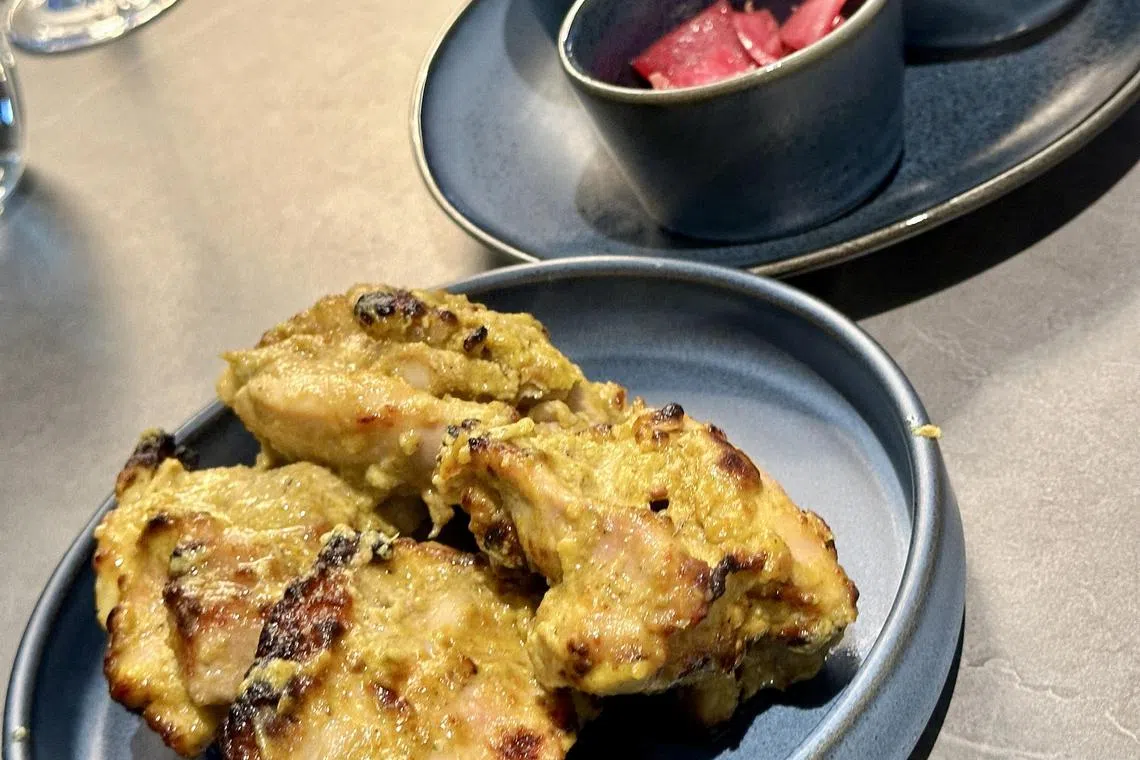
The first impression is a good one – a tall copper pot arrives with smoking hot, tandoor-singed murgh bardari kebab (S$24) inside, which the server carefully pulls out in a way not unlike how zookeepers gingerly handle dangerous creatures.
We get four large, juicy pieces of chicken thigh, thoroughly marinated in spiced yoghurt so the light tang still comes through without interfering with the spice marinade, and it’s all the better with the charred bits from a good spell of fire-licking. There’s a trio of garnishes on the side – chutney, pickles and mint sauce – for dipping.
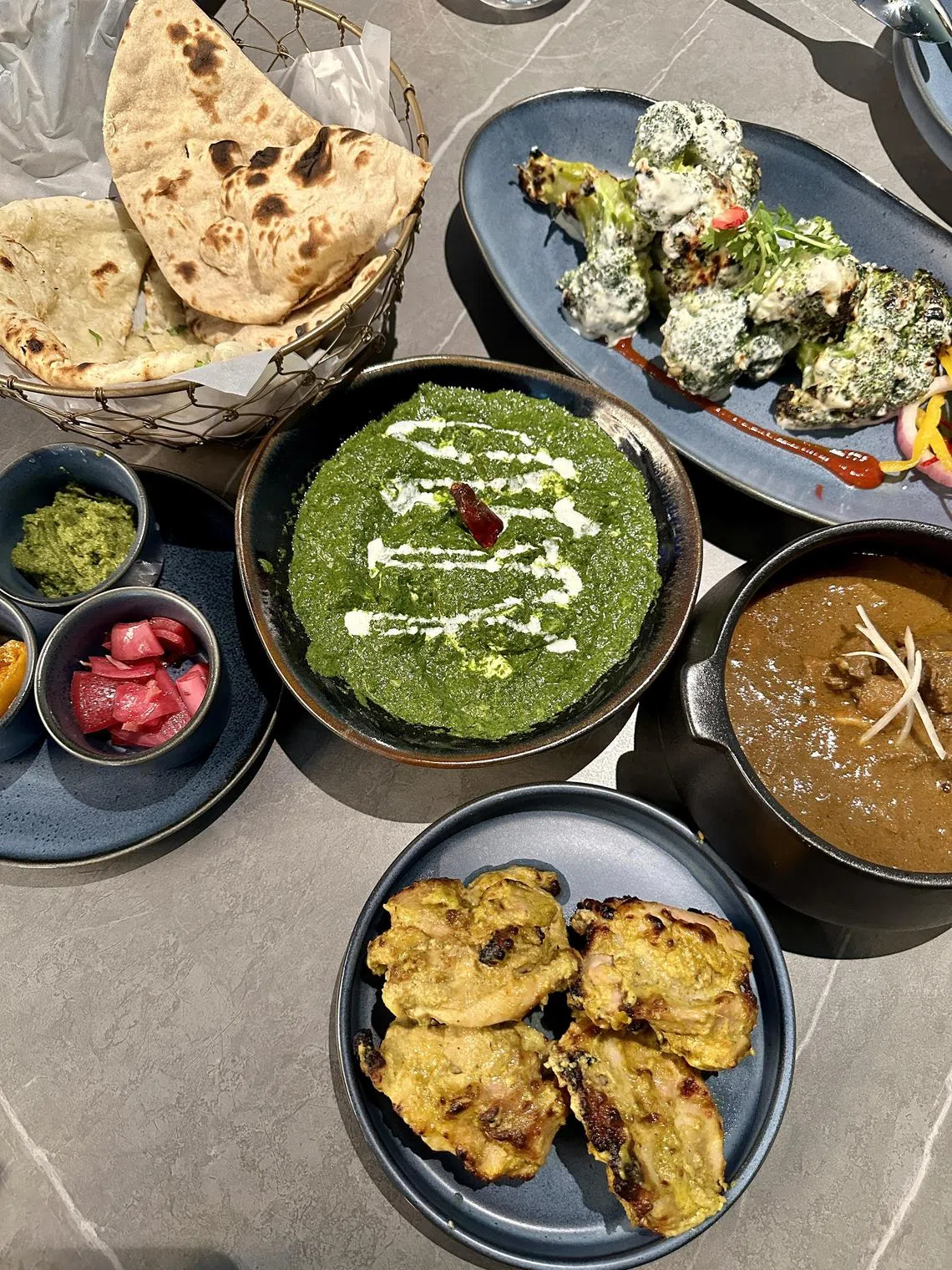
If you’re behind on your vegetable quota, there is a pilla mirch broccoli kebab (S$18) which sounds more exotic than it looks. Large sections of broccoli are still crunchy after being tandoor-roasted and slathered with a creamy cheese sauce with hints of spice and goat cheese-like ripeness.
The house special Akasa-e-zaika mass (S$32), aka dum-style mutton curry to us plebeians, could do with a little more time to develop a meatier, maybe even gamier depth. It tastes like it’s on the cusp of something better – but when we dig in it feels unassertive and almost sanitised, perhaps, like it was made from a goat quite particular about personal hygiene.
To go with the naan – not as fluffy as we remember but still fine – we add on their version of palak paneer, with a fancier name of balai saagwala (S$20). Organic vegetables are cooked down into a savoury blend stuffed with cubes of cottage cheese. Palak paneer by any other name still tastes the same. But it’s a classic that never goes wrong.
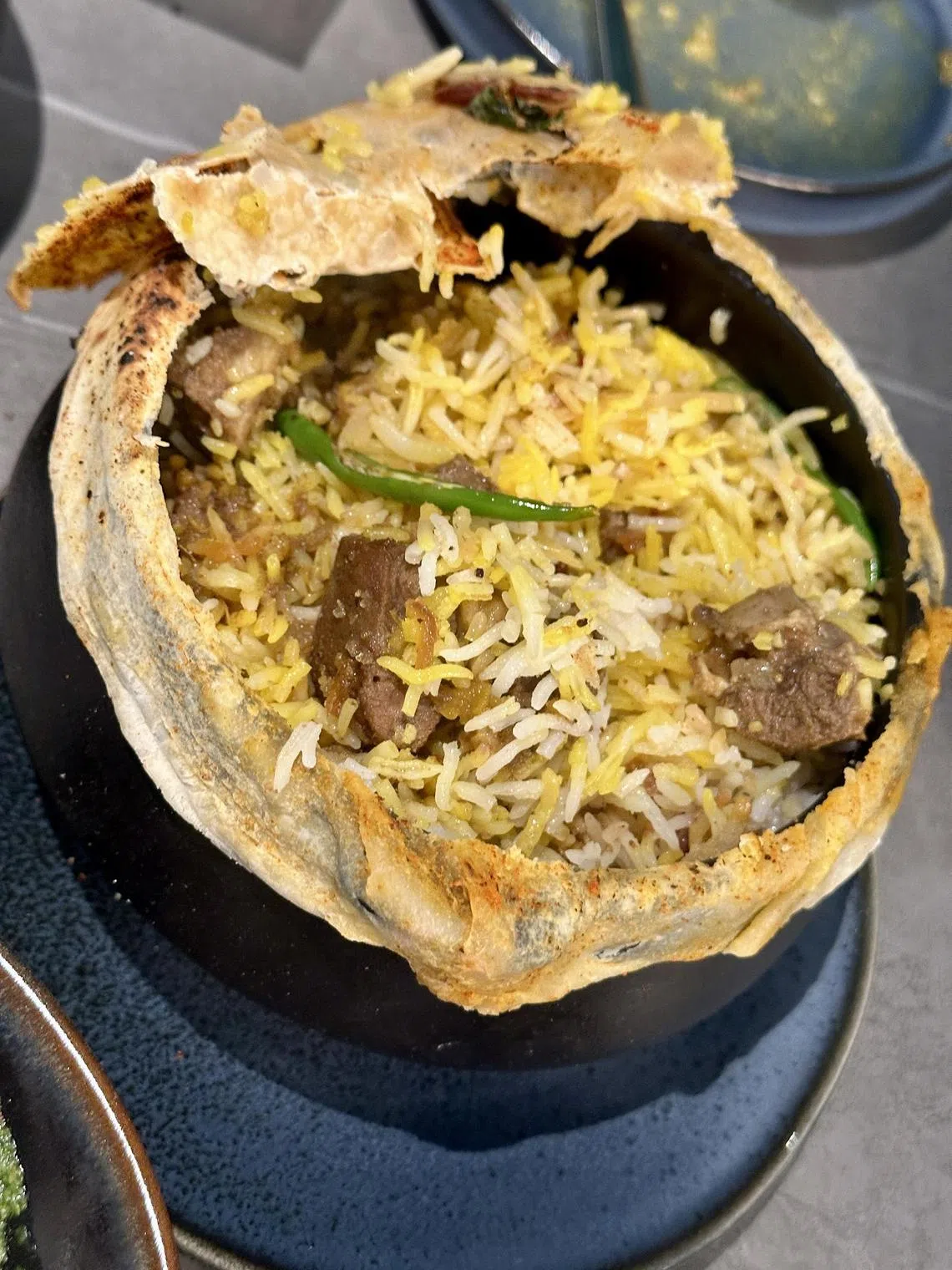
We get closer to the meaty oomph we want from the dum mutton biryani (S$32) served pot-pie style which David snips open for a good whiff of spices and meat escaping with the gusto of a pie holding its breath for a long time. Dig deep and mix for fluffy rice, lumps of mutton with some fat for more character, and green chillies for kick.
For dessert, Parthak gifts us a single gulab jamun each with the sugar level dialed down, so it’s a lovely little ball of syrup-soaked cake. Otherwise, lesooni malai kheer (S$13) is a garlic-infused rice pudding with no taste of garlic, but still an acquired taste of perfumey spices in a nutty, pistachio creamy texture.
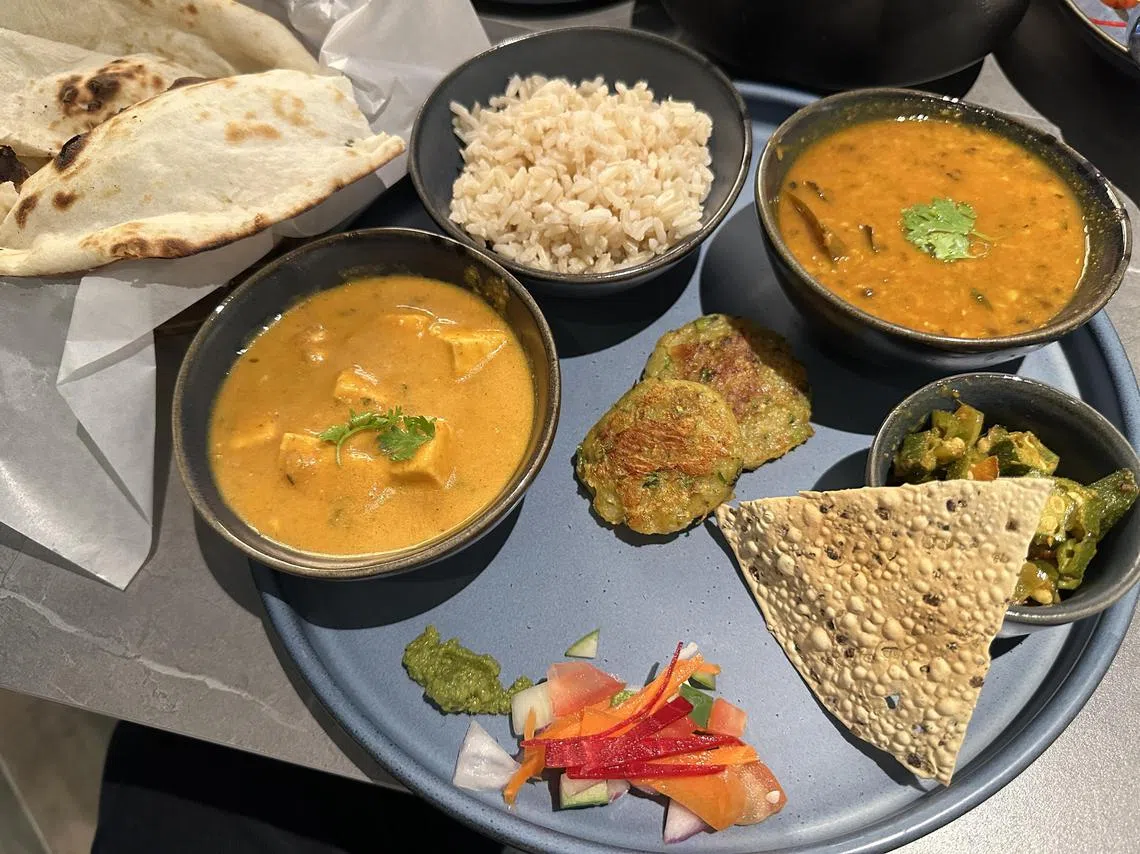
Add some very satisfying, good-value lunch sets and Akasa is a dependable standby when you can’t stomach another Buddha bowl for your midday meal. Witness protection or no, we reckon Akasa will soon grow an identity of its own.
Rating: 6.5
Decoding Asia newsletter: your guide to navigating Asia in a new global order. Sign up here to get Decoding Asia newsletter. Delivered to your inbox. Free.
Copyright SPH Media. All rights reserved.