

Anh Sung-jae on Culinary Class Wars, fame and staying real
The acclaimed chef-judge of the wildly popular cooking show looks back at his dizzying rise to the top
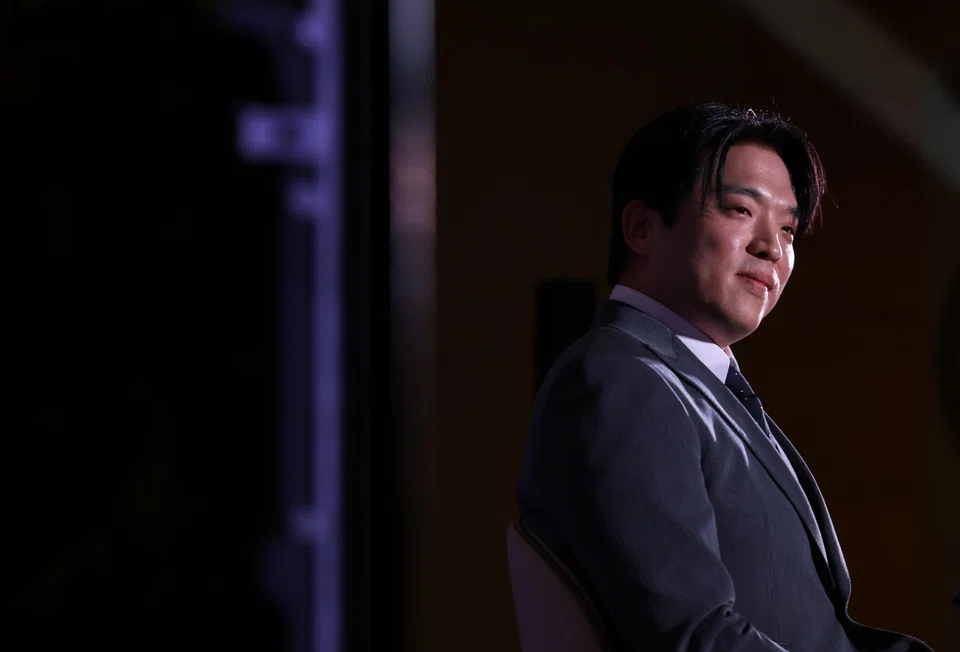
[SINGAPORE] Anh Sung-jae remembers when it really hit him that Culinary Class Wars was going to be a major hit.
“I was actually in Singapore when the first episode came out,” says the famously poker-faced judge, who makes even seasoned chefs quake in their kitchen clogs as they await his verdict on the popular Netflix show.
“I was doing a pop-up at the Paddock Club for (Formula 1) in 2024, and many people kept wanting to take photos with me. I didn’t know why, because not many people know three-Michelin-starred (restaurant) chefs,” he recalls.
“And then I found out that the show had aired, and it was No 1 in Singapore on Netflix. I called the producers and said: ‘Oh, this is surprising – so many people are interested.’”
And yes, Singaporeans are a common fixture in his celebrated restaurant Mosu in Seoul. “There’s one table almost every day,” he says with a laugh.
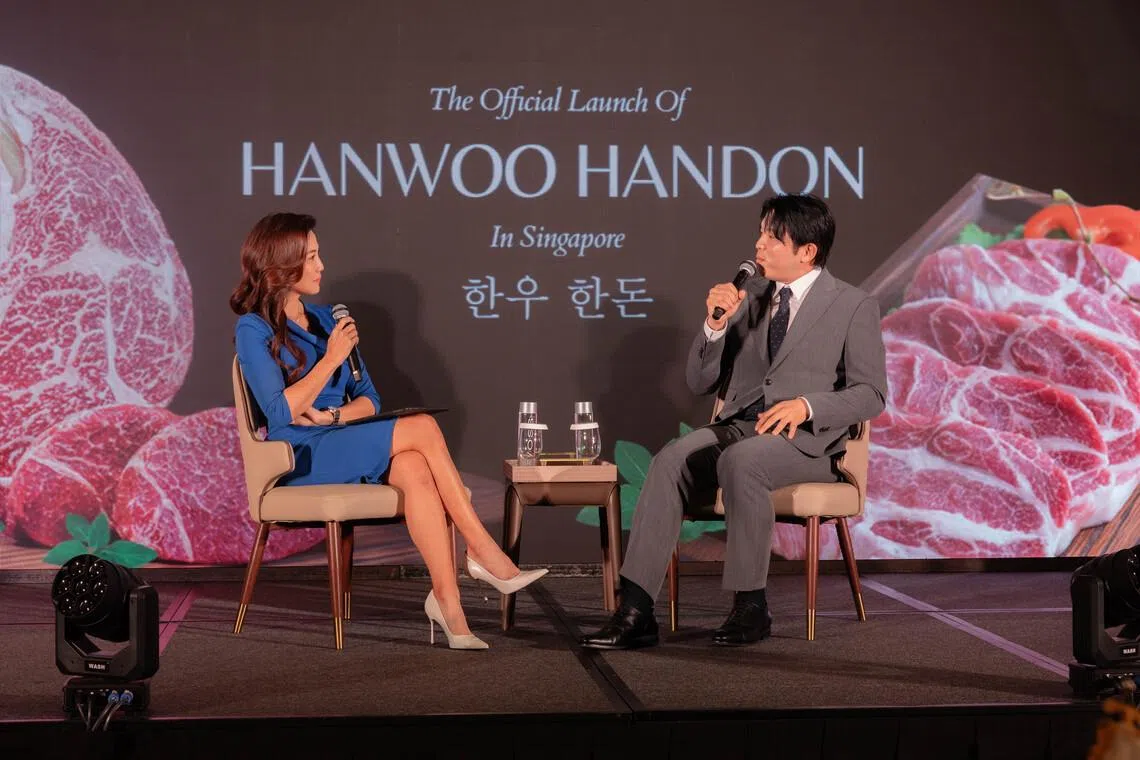
Despite Season 2 of the show being firmly in the can and Season 3 in the bag, Anh admits he’s still not used to being in front of the camera.
“Every time I go on stage, and I’m miked up, I still feel nervous,” he tells BTLifestyle in an exclusive interview. He was in town last week for just one night, as the star attraction of a South Korean government-sponsored trade launch of Korean beef and pork at Marina Bay Sands.
The cheers he got from a crowd comprising industry players and media seemed more suited to a celebrity fan meeting than a trade convention. While he doesn’t embrace the limelight and seems ill at ease with all the attention, he knows it’s part and parcel of his newfound fame.
Not that he doesn’t enjoy it.
SEE ALSO
“I do,” he says candidly. “It would be a lie if I said I didn’t care about it. I imagined it when I was young – what does it feel like to be famous and... noticed everywhere?
“But I knew in my head that I was never going to be that person.” He was wrong.
Global phenomenon
Still, he doesn’t see himself as an overnight success. After all, it was his hard work building up his experience and knowledge as a chef-restaurateur that qualified him to be a judge on a show he never thought would become such a phenomenon.
What made it even more rewarding was when the success of Culinary Class Wars put South Korean dining on the world map, lifting the restaurant industry out of the dire straits it was in at the time.
“It was amazing,” says Anh. “No other marketing tool, Michelin or Best 50 (had as big an impact as) this TV show. So I’m just grateful that I was part of that.”
Nothing in his life could have determined the direction he eventually took to get to where he is now.
“It’s just in my character to want to do more. I try to engage with people, staff or guests. Not to show how wonderful I am, but more like, how can I do better things and make this community better?”
Anh Sung-jae
His parents immigrated to the US when he was a child, and he remembers growing up lonely as the only Korean kid in school. In fact, he even learnt Spanish before English because of the large Latino population in his San Diego neighbourhood in California.
He didn’t enjoy studying and never thought about the future. He was preoccupied with just getting through life. As an immigrant, “I had that (period) where I was like, ‘Ok, what do I have to do to survive here?’”
Instead of going to college, he joined the military.
“There was a saying then that you either go to jail or join the army,” he jokes.
But it was an eye-opening experience. “My view of America was (limited to) San Diego, but in the army, I discovered the East and West Coasts, I started travelling and meeting people – and wow, the world is much bigger than I thought.”
He volunteered for a (non-combat) stint in Iraq, “so I could have war stories to tell my children the way my grandfather did”. He hero-worshipped the elder Anh, who was a colonel in the navy and was “always reading and wore nice clothes”.
He believes that spending time with his grandfather, listening to stories about him being captured by the Japanese, and growing up in the US instead of South Korea shaped his character.
Serious, pragmatic and self-disciplined, he has a reputation of running a kitchen with military-like precision. It’s a no-nonsense aura that he brings to the show, which also intimidates the contestants.
“I’m not there to entertain or make people laugh – I’m there to judge a dish,” he says of any tension he might inadvertently create. “So it’s only natural that they’re nervous.”
The next level
But what the camera doesn’t catch is that Anh spends a lot of time behind the scenes talking to the chefs and trying to understand their food.
He knows many of the contestants personally “because the culinary community is very small”, and has even patronised many of the Black Spoon chefs’ restaurants as a customer.
So it’s also tough for him to put friendships aside and judge objectively. “But it has to be fair,” he stresses.
It’s been a dizzying rise from his impulsive decision to join a cooking school (he wanted to be a mechanic, but was intrigued by the sight of students in chef whites) to becoming the most famous chef in South Korea. But Anh is not resting on his laurels.
“Because once I’m satisfied, I would get complacent and I don’t want to be in that state. If I were to think, ‘oh, I’m so successful’, it would be downhill from there.”
He adds: “It’s just in my character to want to do more. I try to engage with people, staff or guests. Not to show how wonderful I am, but more like, how can I do better things and make this community better?”
Otherwise, life continues as it always has despite the fame. “I try not to abuse it. I try not to think about it and just live my regular life.
“I don’t neglect the things I care for so much, like cooking, the people I work with, the whole environment. I kind of act like nothing really happened.”
At least until the next season begins and he gets back on stage – maybe still a little nervous, but knowing full well that the show revolves not around him, but the cooking talents that have the power to take Korean cuisine to the next level.
Decoding Asia newsletter: your guide to navigating Asia in a new global order. Sign up here to get Decoding Asia newsletter. Delivered to your inbox. Free.
Copyright SPH Media. All rights reserved.

