

Ex-Kamoshita chef serves up simple grill & oden style food at Hearth on Craig Road
Koki Miyoshi strikes out on his own to present another traditional style of Japanese cooking: irori
NEW RESTAURANT
Hearth 41 Craig Road Singapore 089679 Tel: 9233-6330 (WhatsApp only) Open for dinner Wed to Mon: 6 pm to 11 pm. Closed on Tues.
A JAPANESE chef is skilled at making oden but opens a grill-centric izakaya instead. Does he not believe in the maxim of “cook what you know”, or did he sign a no-oden agreement with his previous employer? But no matter. The heart of Hearth may lie in its fireside cooking, but Japan’s answer to yong tau foo still lurks somewhere in its menu.
Chef-owner Koki Miyoshi hails from Kamoshita on Neil Road, which is already synonymous with oden in Singapore. So why open something similar just a stone’s throw away on Craig Road? Ergo, Miyoshi shifts from one traditional cooking style to another – this one being irori, or the ancient Japanese method of cooking in a sunken hearth – hence the restaurant’s name.
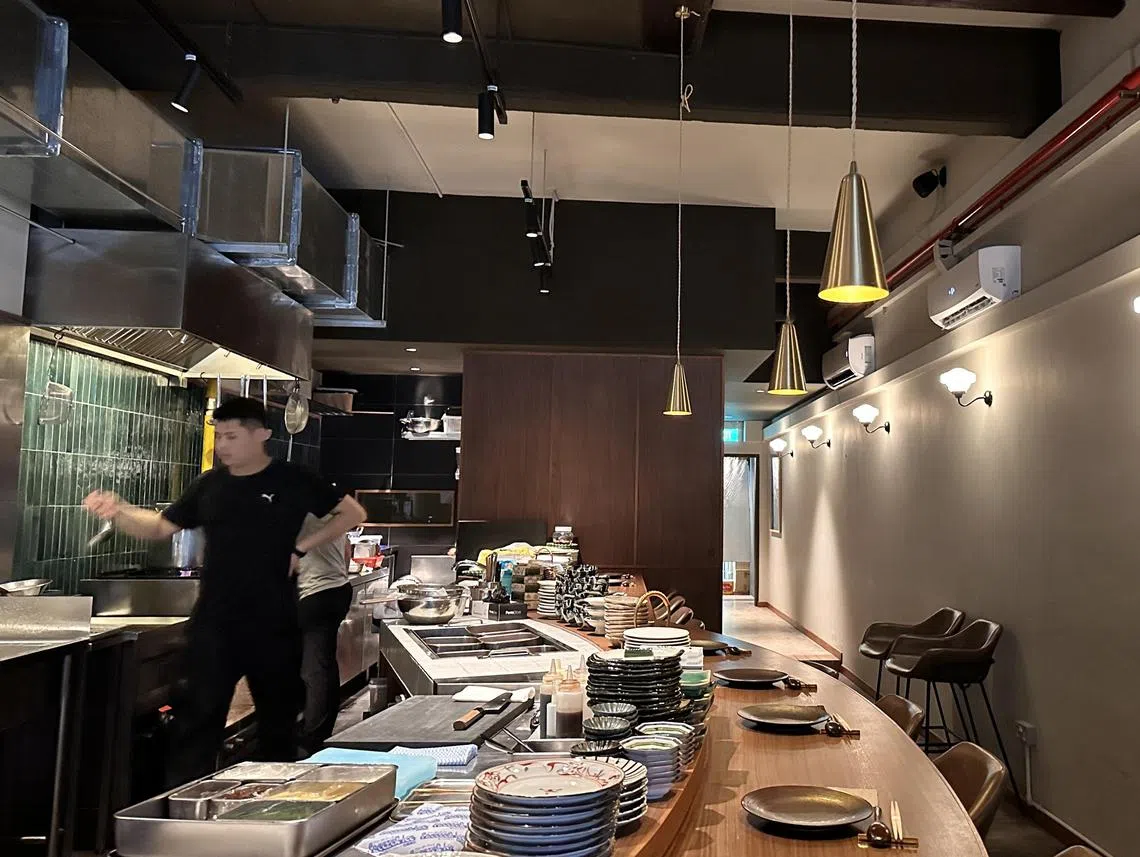
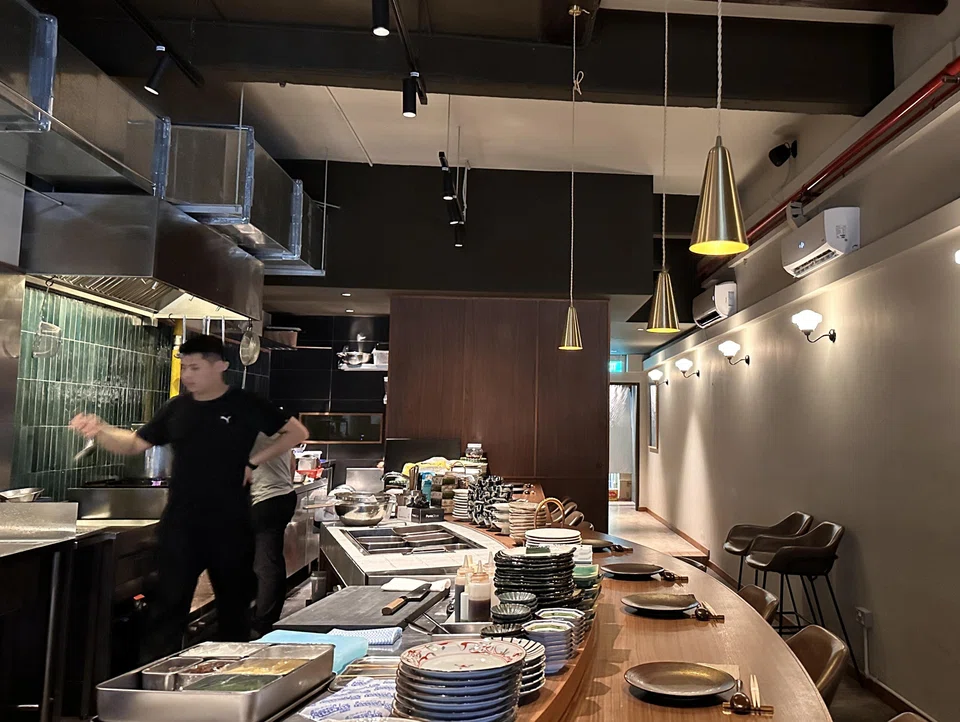
But don’t expect a tranquil, Kyoto-style scene of an old-fashioned iron kettle suspended above a neat stone pit of smouldering embers at Hearth. Instead, think makeshift brick barbecue pit with a high stack of burning charcoal trapped in a metal cage, almost lost among the other conventional kitchen equipment crammed into this dim but cosy counter eatery.
The food is simple, the drink is plentiful and the vibe is warm at Hearth. There’s plenty of choice on the menu that ranges from cold to warm starters, irori-grilled items and finally, on the last page, a small selection of oden that tries not to call attention to itself.
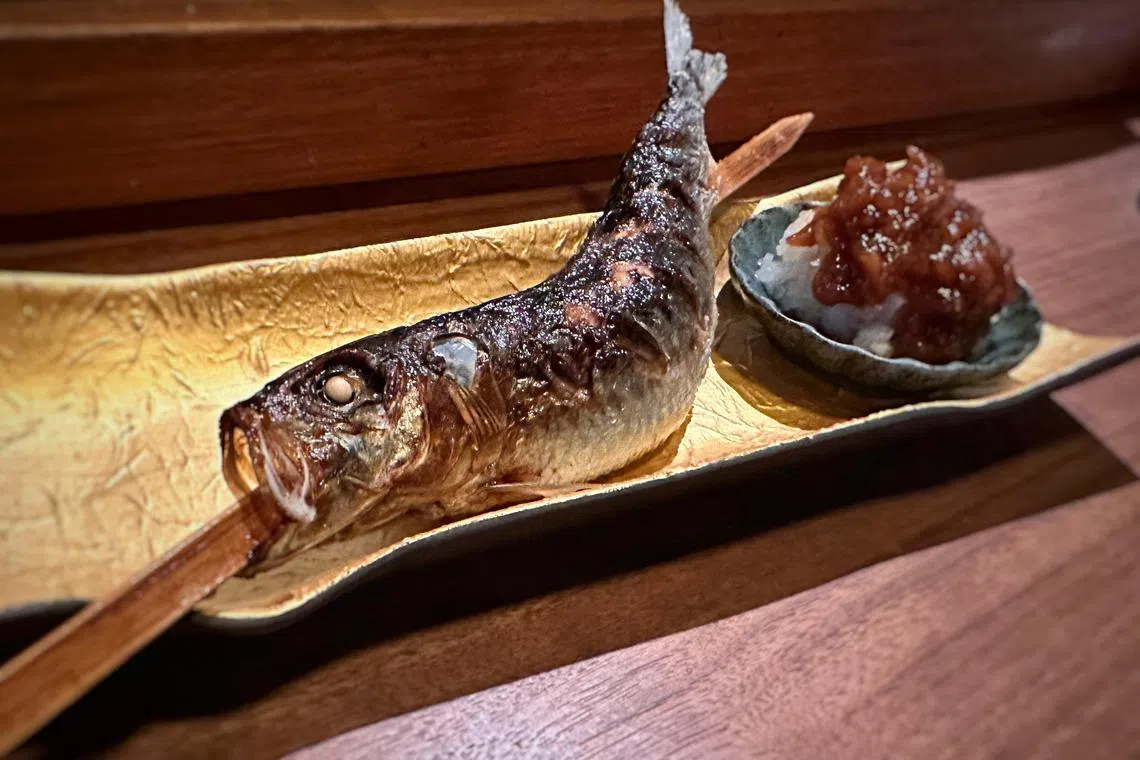
There isn’t even a lot of actual cooking involved as everything is mostly pre-prepped and just needs assembling or nudging into position. Even the ingredients know what to do as we watch meat, fish and vegetables making themselves comfortable around the fire and slow-roasting themselves. Sometimes they overdo it and come out dry like a fillet of Spanish mackerel (S$29), but other times they’re like the fat whole sardine (S$22) that stays succulent under its charred skin.
Meanwhile, oden ingredients just bob around all day like heat-proof carp, kissing the surface of their chicken dashi pond while they wait for the order to jump out and be served.
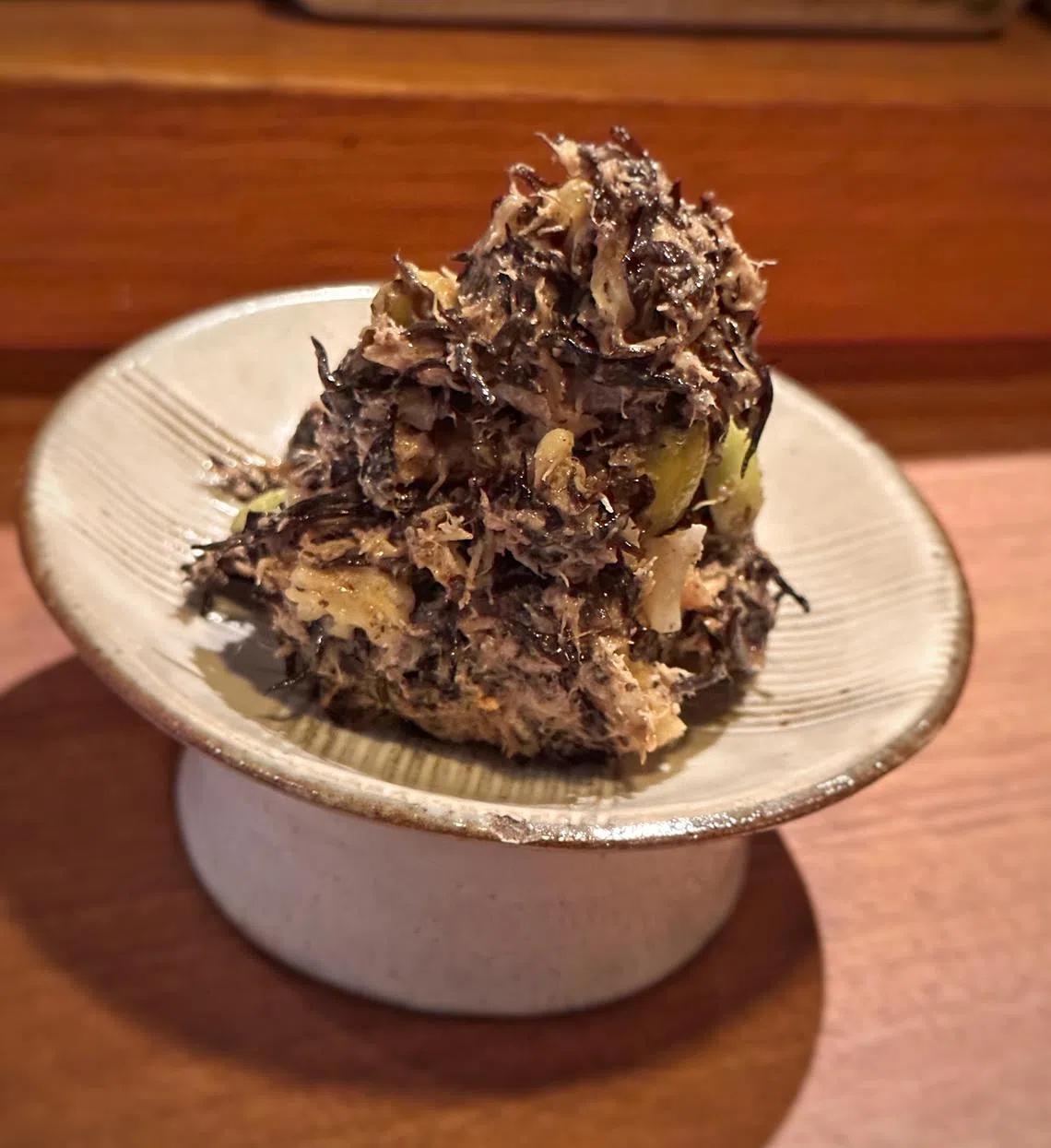
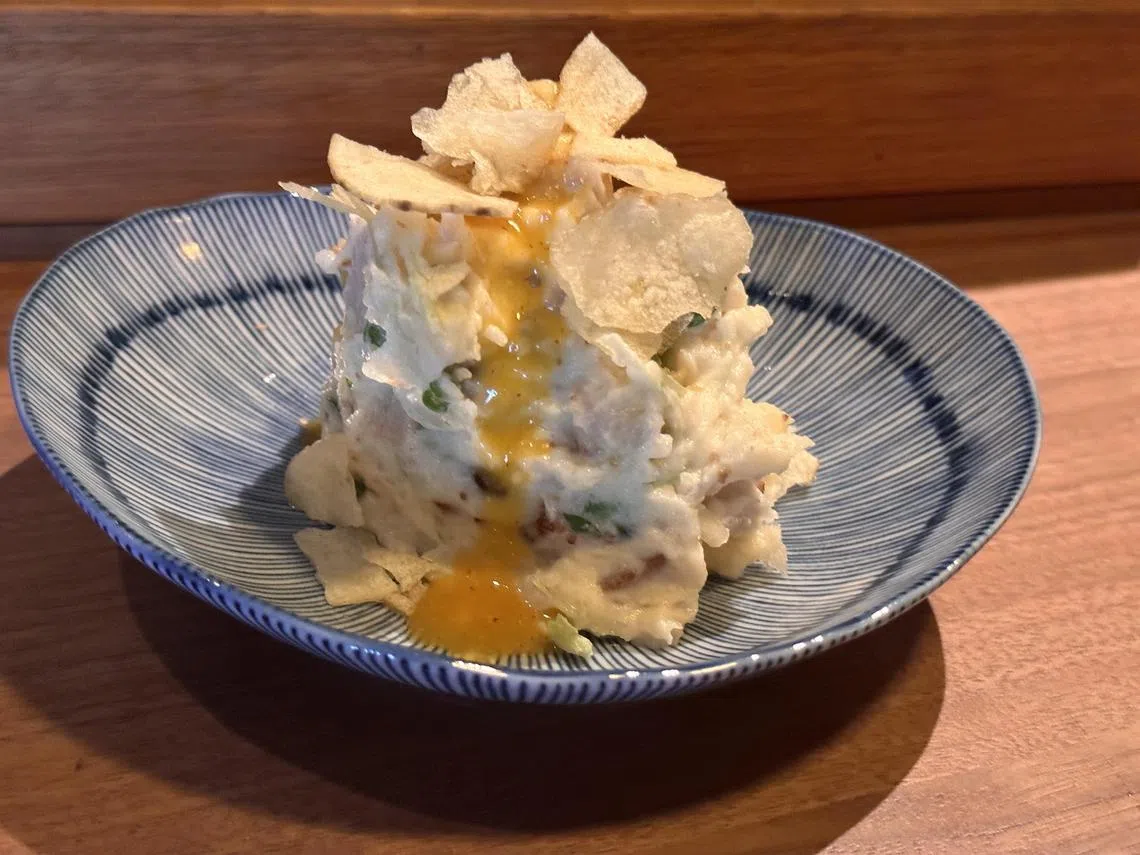
As the grilled dishes take some time to cook, take your pick of cool and warm salads to nibble on with regular or “slightly better” whisky highballs. A mackerel and hijiki salad (S$12) is a mountain of shredded fish not unlike tuna salad in a sweetish mayonnaise dressing that’s streaked with black seaweed strips, edamame and corn niblets. The warm smoked pork and ginger potato salad (S$15) holds more interest as you get a triple treat of smoky pork chunks hidden in creamy potato salad with the added crunch of potato chips on top.

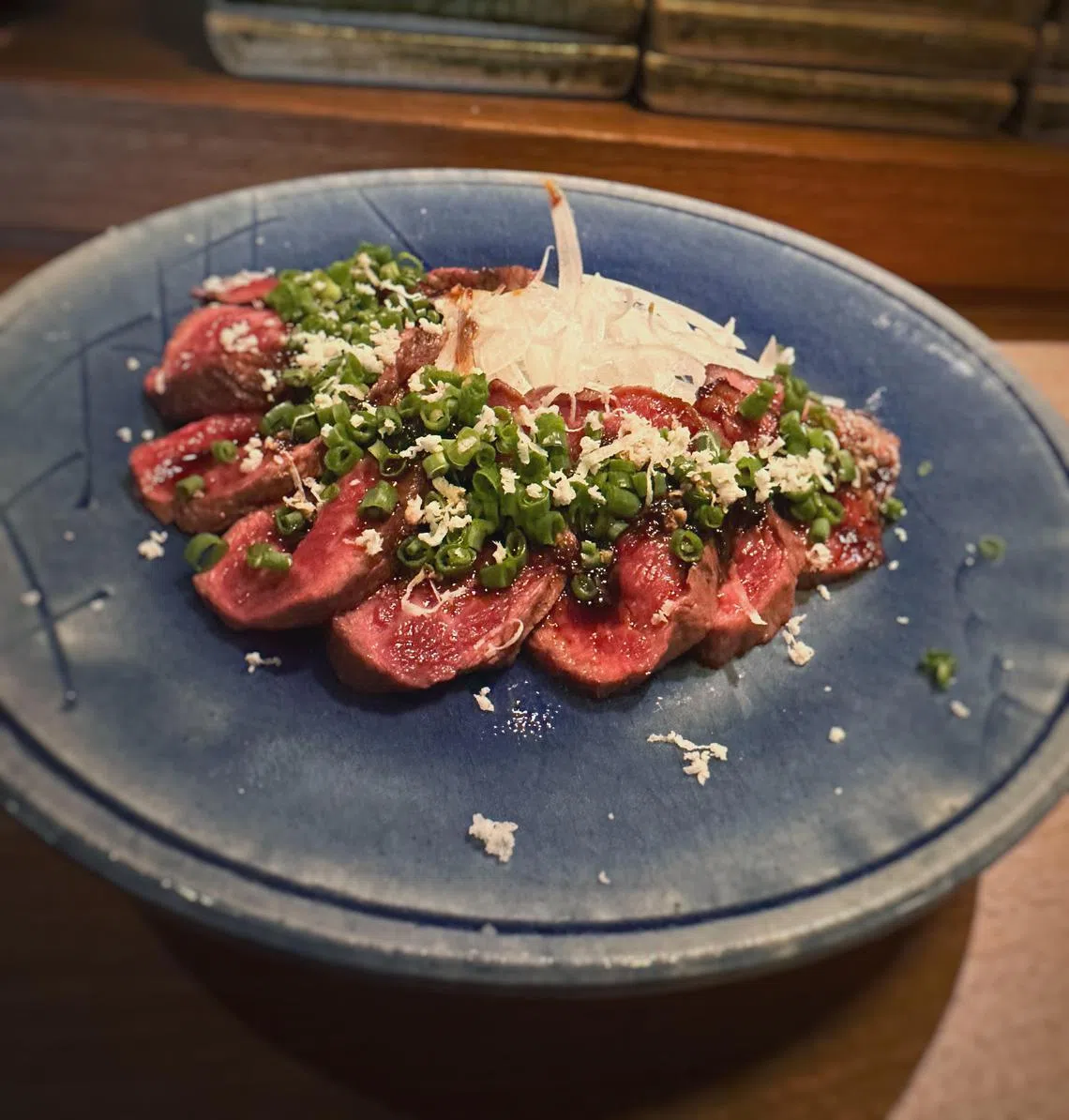
By that time, your wagyu tataki (S$28) is ready, since it’s still very rare from just a quick roll over the fire until just seared and sliced into crimson discs fanned out on a plate with plenty of raw sliced onions. Don’t dismiss them as mere decoration because the raw edge of the onions is much needed to distract from the amount of chewing you need to break down the rubbery beef. Still, with the aged sake steak sauce, that chewing does reap some reward.
From the grill, the sardine comes off as the winner – the flesh sweet and oozing juices, and even its bitter innards become savoury and umami-rich with a dab of mashed umeboshi plum and grated daikon. There’s also koji-marinated pork shoulder (S$25) that isn’t bad, just a little crinkled around the edges.
A stir-fry of shrimp, chicken cartilage and konnyaku (S$16) is the only stove-cooked dish, and it’s an odd Middle Eastern-Asian culture clash as the sweetness of mirin doesn’t speak the same language as cumin and coriander seed.
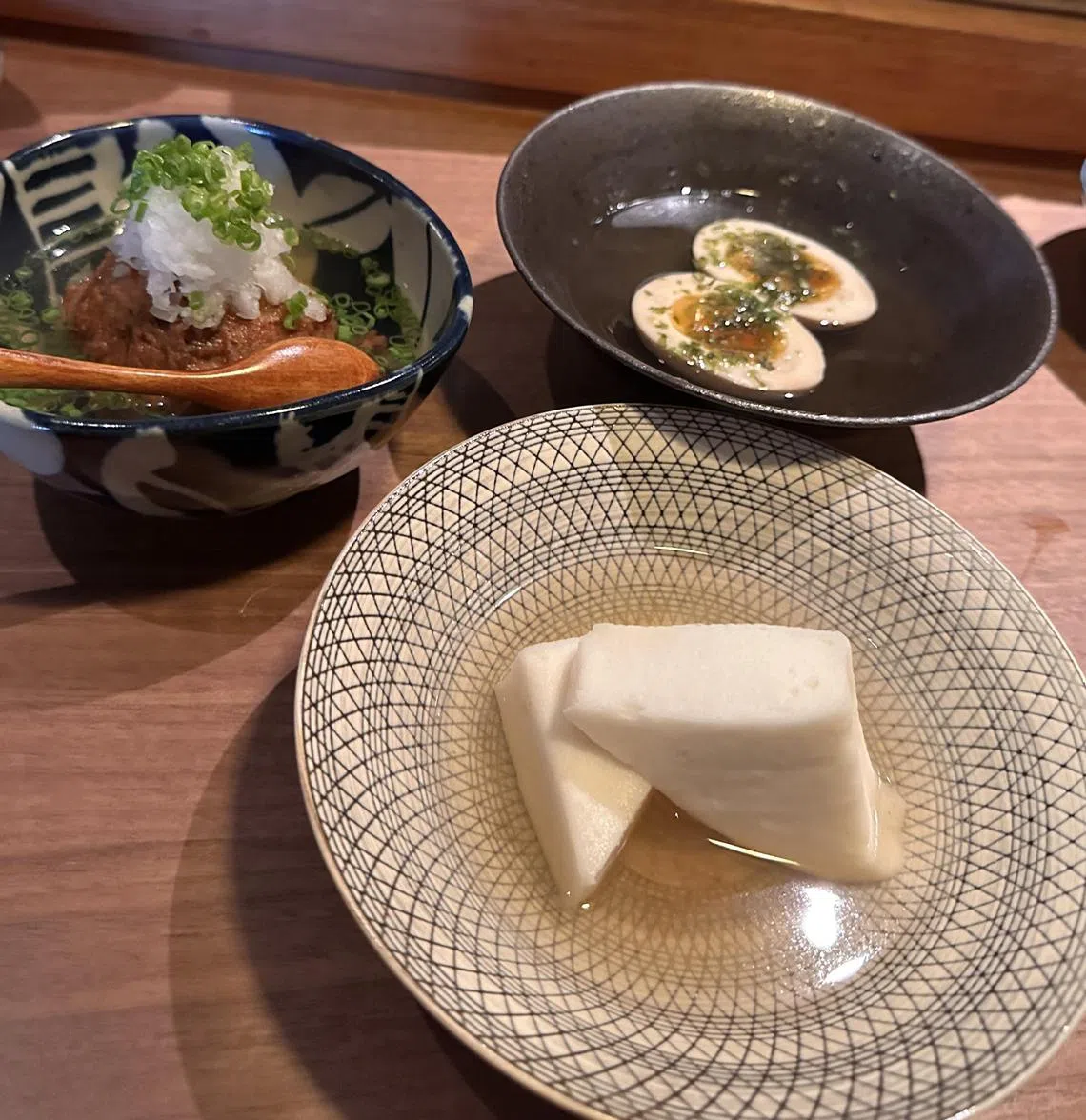
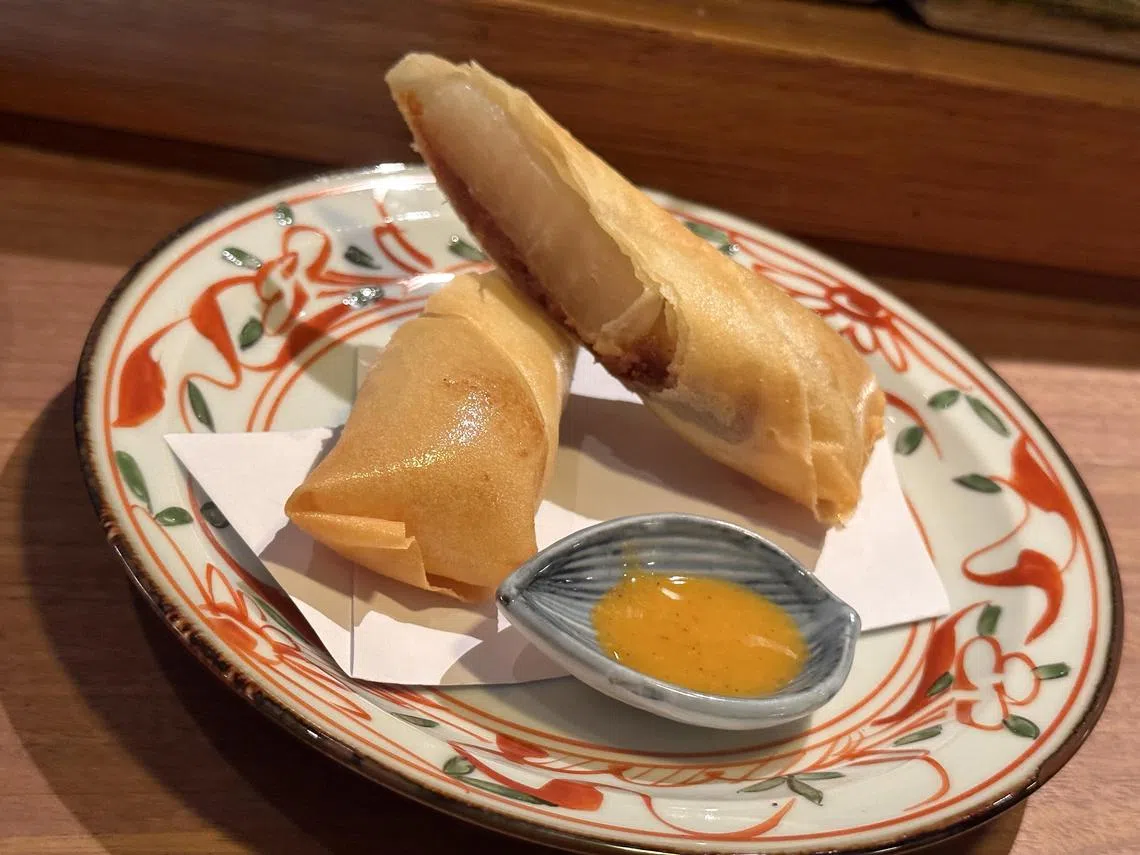
If anything, it’s the oden that holds up the strongest. Fluffy fish cake (S$6) comes in a clear broth spiked with the bitter edge of sansho powder (yuzu kosho would have a less jarring effect); while a jammy yolked egg (S$3) in clear, unembellished broth seals the deal. There’s also a good deep-fried spring roll (S$12) stuffed with tender daikon, but we’d much prefer it without the distracting chicken miso slathered within.
There’s only one dessert – honey pudding (S$10) that’s just creme caramel by any other name, and it’s a welcome sweet ending. But you could also pick the surprisingly good aged mirin raisin butter sandwich (S$20) which is usually served as a starter. Water crackers are toasted on the grill and sandwiched with a thin slab of sweet raisin buttercream that’s toasty, fruity and sweet.
Even if the food at Hearth doesn’t shine, it feeds you well with good-enough sustenance and unpretentious, sincere hospitality. And most of all, its heart is in the right place.
Rating: 6
Decoding Asia newsletter: your guide to navigating Asia in a new global order. Sign up here to get Decoding Asia newsletter. Delivered to your inbox. Free.
Copyright SPH Media. All rights reserved.
TRENDING NOW

He built the Vingroup empire. Now South-east Asia’s richest man is handing some key roles to his sons

Quarter of Singtel special discounted shares sold ahead of CPF Board transfer

Why Tan Aik Keong of digital solutions specialist Agmo wants to make himself less indispensable

Asia needs new energy security architecture

