Heritage food and high drama at The Peranakan Club
The unapologetically theatrical restaurant in Orchard Towers serves Nonya staples in psychedelic surroundings
NEW RESTAURANT
The Peranakan Club Singapore #02-01 Orchard Towers 1 Claymore Drive Singapore 229594 Tel: 8988-0201 Open daily: 11 am to 10 pm
[SINGAPORE] Standing outside The Peranakan Club – shunted into an obscure corner of Orchard Towers like a crazy relative you’ve been hiding from public view – we can’t decide if we should go in or make a run for it.
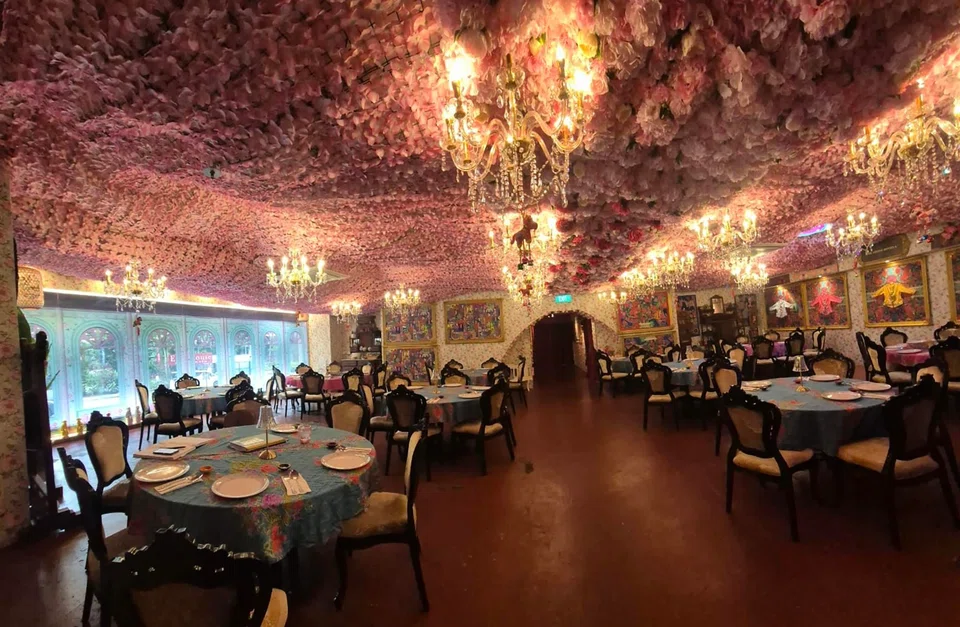
The foyer glows an ominous blood red. One more step and we could be sucked into another dimension – a purgatory with chandeliers, a realm where lost souls joget in fields of plastic peonies while sarong kebayas float past in search of a minimalist to frighten. This is no restaurant. It’s The Rocky Horror Bibik Show.
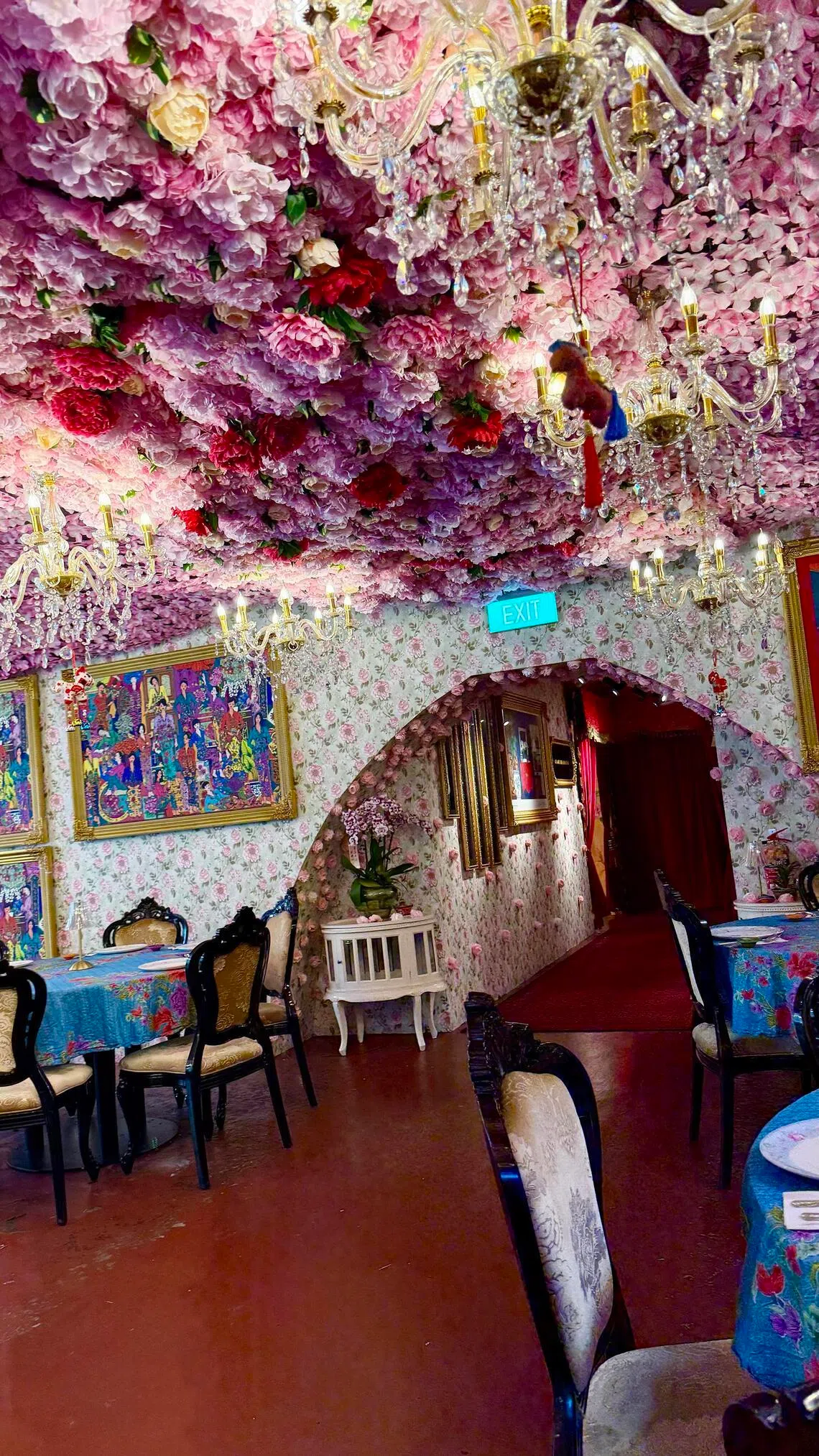
But if you’ve already bought a ticket, grab your sunglasses – there’s 5,000 square feet of this nirvana for the colour-blind to navigate.
The Peranakan Club is a haven for anyone whose family members show increasing hostility towards their mounting collection of enamel chamber pots. This is where you escape with the like-minded for a full-blown overdose of Nonya kitsch – leave restraint at home, and wayang to the hilt.
It may lack the gravitas of the Peranakan Museum, but once you get over the carpet of plastic flora hanging over your head, there’s some joy in this deliberately in-your-face tribute to a much-loved culture.
Open all day, every day, there are six “chambers” to be entertained in. The main dining room – decorated with a rogue’s gallery of framed kebayas on the wall – serves mainstays such as kueh pie tee and ayam buah keluak.
A bar serves kueh salat and bak kwa-inspired cocktails to the living and the not-so. A private room can be booked for tok panjangs (long table feasts). There’s also a tea room and gallery shop for everything that isn’t already on display.
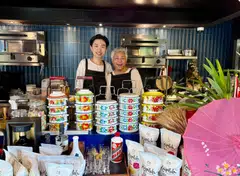

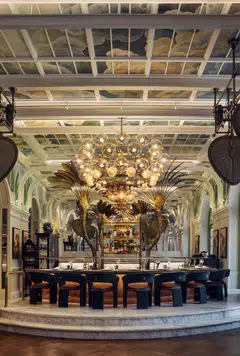
The place grows on you after a while, especially with its easy-going, open-house vibe. You casually wander in at any time and you’re greeted by whoever happens to be around without any fanfare. Batik-clad and genial, they feel more like community members helping out than professional servers.
As for the food – maybe think twice about inviting a true-blue Bibik or Baba here. Not if you don’t want to hear the many ways in which Peranakan restaurant chefs can’t cook the way their beloved mama can.
Everything tastes as it should, but in a generic, mass-appeal way without the depth or nuances of a home-cooked meal.
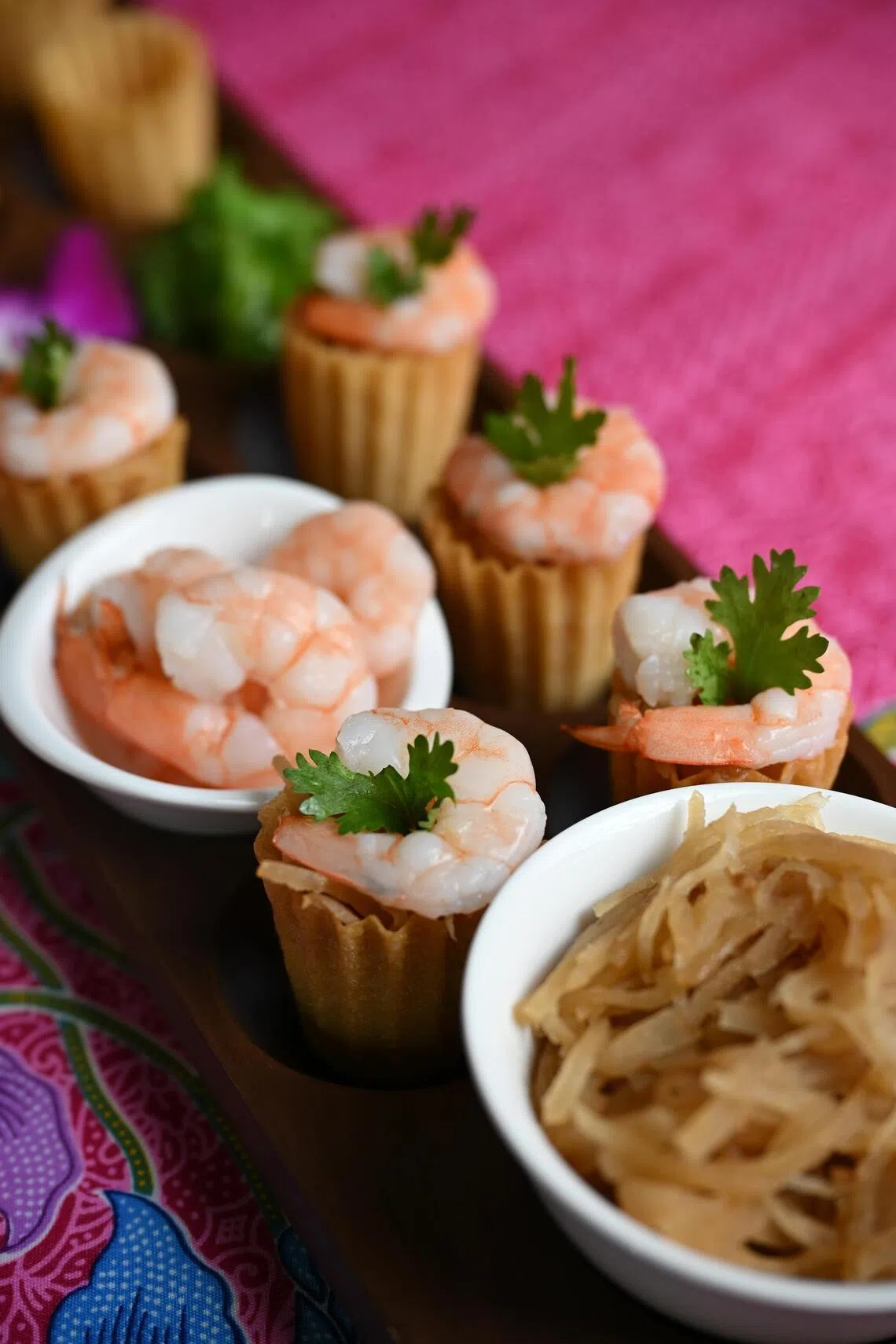
As long as you’re not a purist, there are enough crowd-pleasers to pick from. Like DIY kueh pie tee (S$22 for prawn), comprising eight extra-crunchy shells with exactly enough braised bangkwang filling – not a strand more or less – and a bowl of whole prawns for topping.
It’s a big mouthful, but perfect for mindless munching. Ration the filling, or you’ll have nothing but prawn and cup for the last bite.
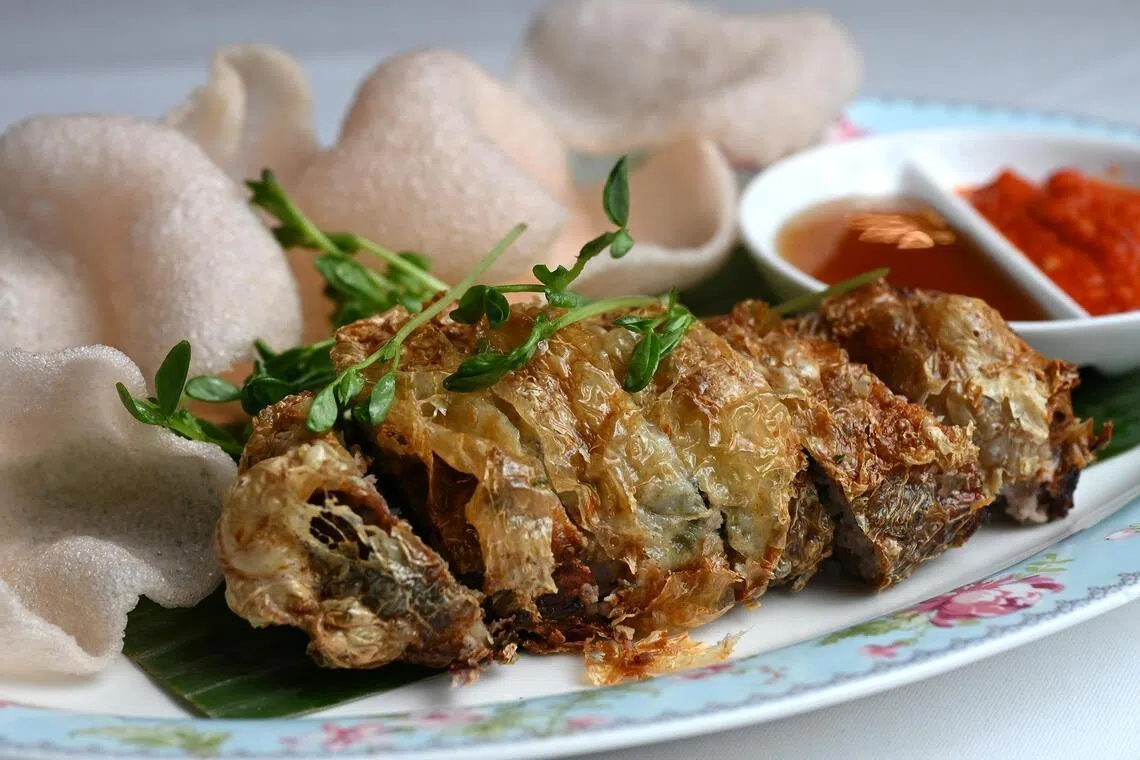
Ngoh hiang (S$18) has barely a hint of five-spice, but the bolster of minced pork, prawns and liver encased in deep-fried beancurd skin still meets its Nonya criteria.
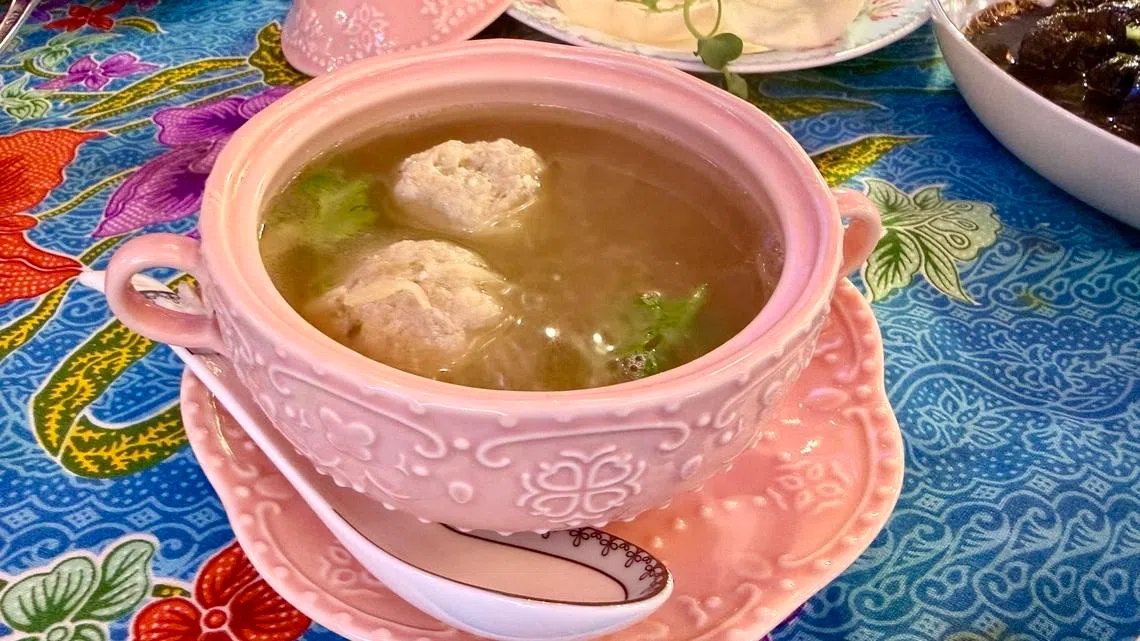
Bakwan kepiting (S$17) is too shy to unleash its full crabby depth, so you get a muted, prawny broth with a pair of bouncy pork-crab balls that thankfully taste fresh, not fridge-y.
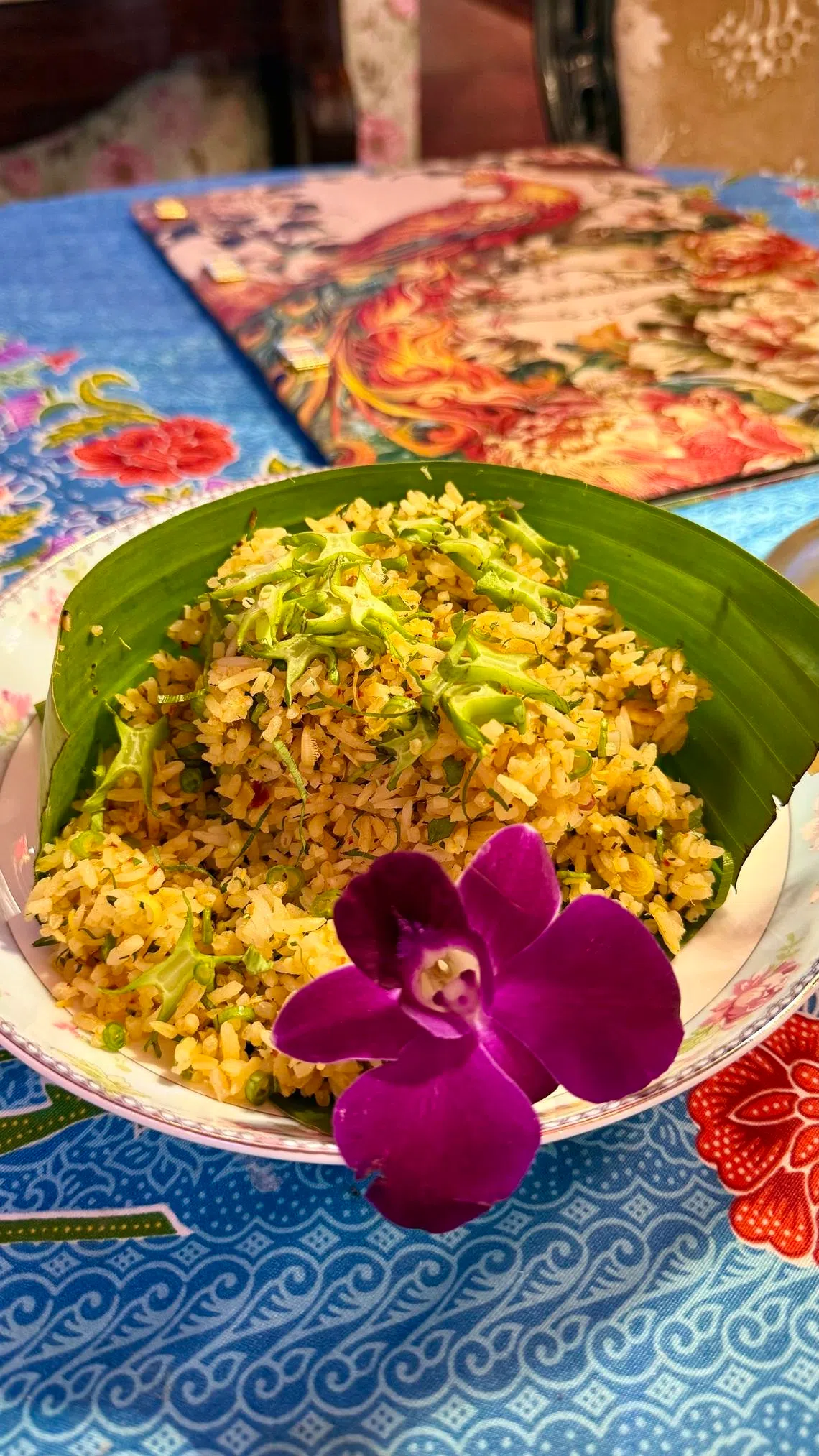
The kitchen doesn’t shy away from competitive shredding, so we get a very commendable nasi ulam dulu kala (S$24) – a medley of cold rice tossed with finely julienned fresh herbs and wing beans.
It’s best on its own, but you can also buck convention and have it with rich and rustic ayam buah keluak (S$25) and taucheo-enhanced chap chye (S$16).
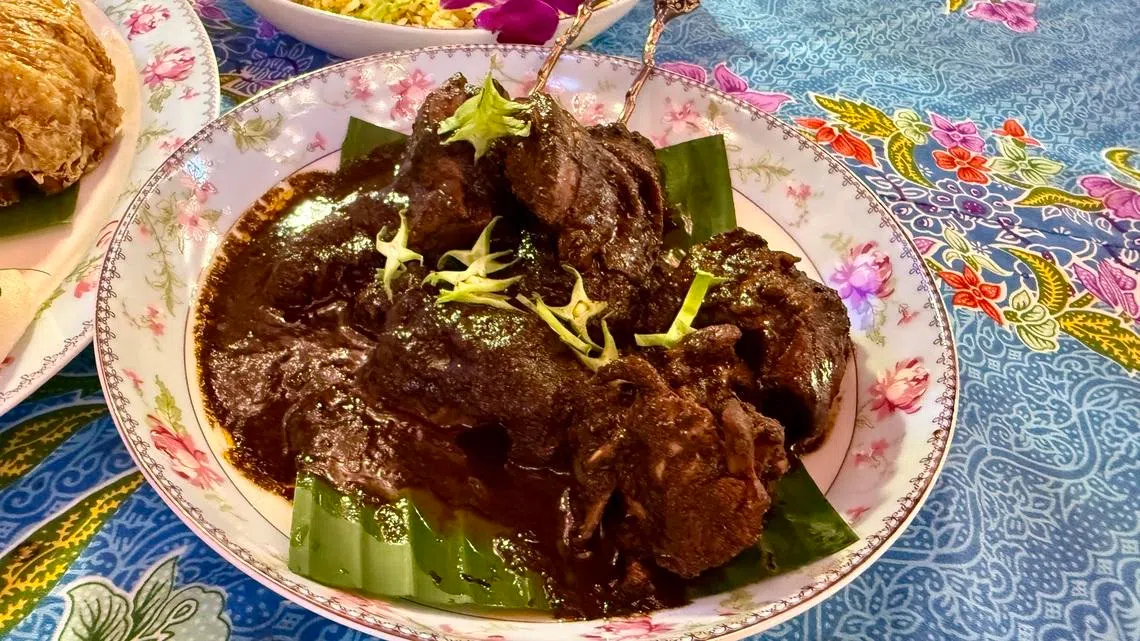
The chicken stays moist and not stringy even after stewing in its thick, black gravy. The buah keluak is served separately in its shell – a little spoon embedded to ease out the earthy, rich flesh within.
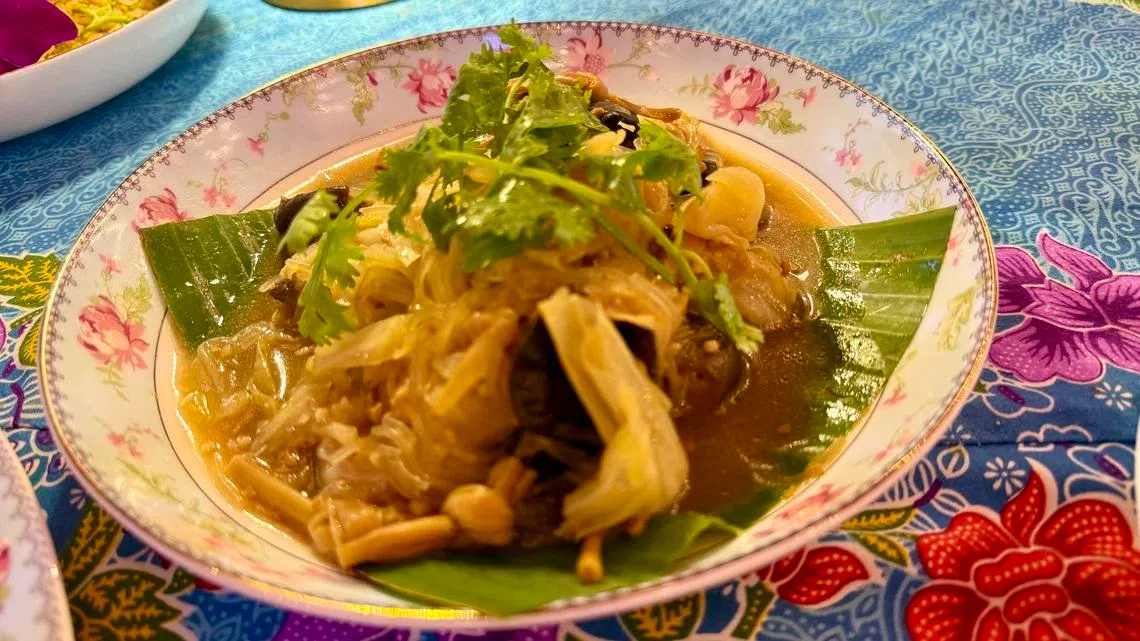
The chap chye is an easy-going stew of cabbage, mushrooms, lily bulbs and glass noodles simmered in a prawn-based broth.
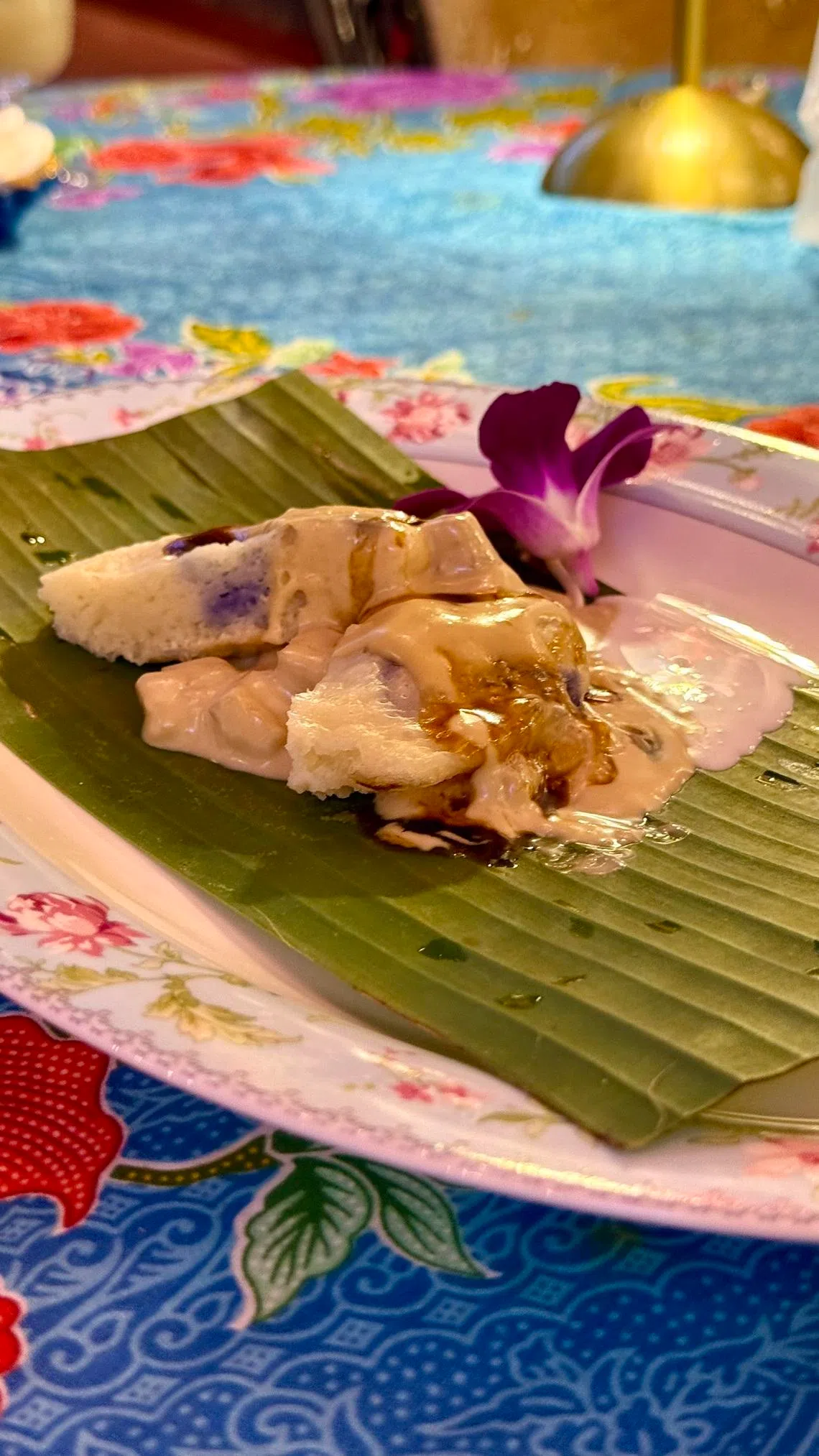
Desserts continue down the nostalgia front with apom bok kwa pisang (S$8), the yeasty fermented rice pancakes greedily soaking up a coconut cream-enriched banana sauce for our benefit.
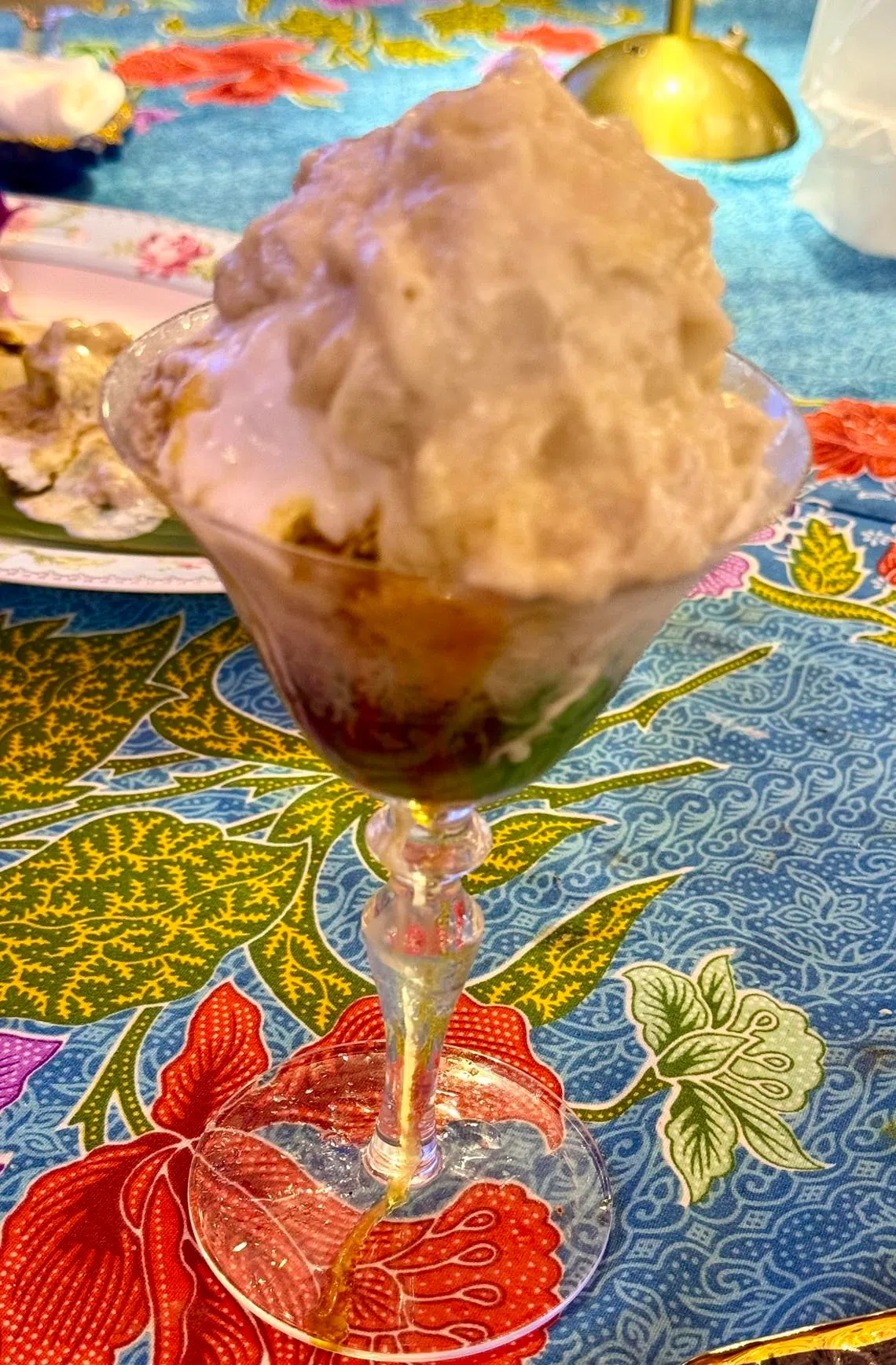
Chendol melaka (S$8.50) needs more gula melaka and chewier “worms”, although the durian pengat (add S$3.50) tries to help.
The Peranakan Club doesn’t just showcase Nonya culture – it smothers you in it, rolls you around, and coats you with an extra layer of pandan-laced affection.
Like the larger-than-life matriarch who overfeeds you during Chinese New Year, you feel overwhelmed but still warm and fuzzy inside. We’re still freaked out by the peony ceilings, but its inimitable Nonya hospitality might just lure us back.
Rating: 6.5
Decoding Asia newsletter: your guide to navigating Asia in a new global order. Sign up here to get Decoding Asia newsletter. Delivered to your inbox. Free.
Copyright SPH Media. All rights reserved.