

Jia He Grand serves dressed-up Cantonese fare at friendly prices
The new Chinese restaurant offers respectable cooking just outside the city centre
NEW RESTAURANT
Jia He Grand #01-01 One Farrer Hotel 1 Farrer Park Station Road Singapore 217562 Tel: 6538-9688/6538-2788 Open daily for lunch and dinner: 11 am to 2:30 pm; 6 pm to 10 pm.
MEDICAL conditions and dim sum may sound like an odd combination, but it makes perfect sense at Jia He Grand - where you can seek specialist care and Peking duck in the same vicinity.
The new Chinese restaurant sits in the lobby of One Farrer Hotel, which is joined at the hip with Farrer Park Hospital. So you share the same car park as ambulances headed to the A&E, and the fancy cars of doctors and those visiting them. Which doesn’t leave a lot of space for those suffering no particular health issues except maybe new-restaurant syndrome.
Jia He Grand is the dressed-up sister of Jia He, which opened about three years ago in an adjoining annexe. Both have connections to the original owners of Peach Garden, before it went the way of the corporate buyout. Jia He Grand has an independent feel about it - it’s not very big and it does seem to have already built up a base of regulars, going by the chummy chatter going on between some of them and the suit-wearing senior staffers.
The level of service depends on how much they want to suck up to you - in our case, not much. But the knowledgeable, no-nonsense lady who eventually takes care of us suits us fine. Especially when she lets us mix and match dim sum and appetisers for more variety.

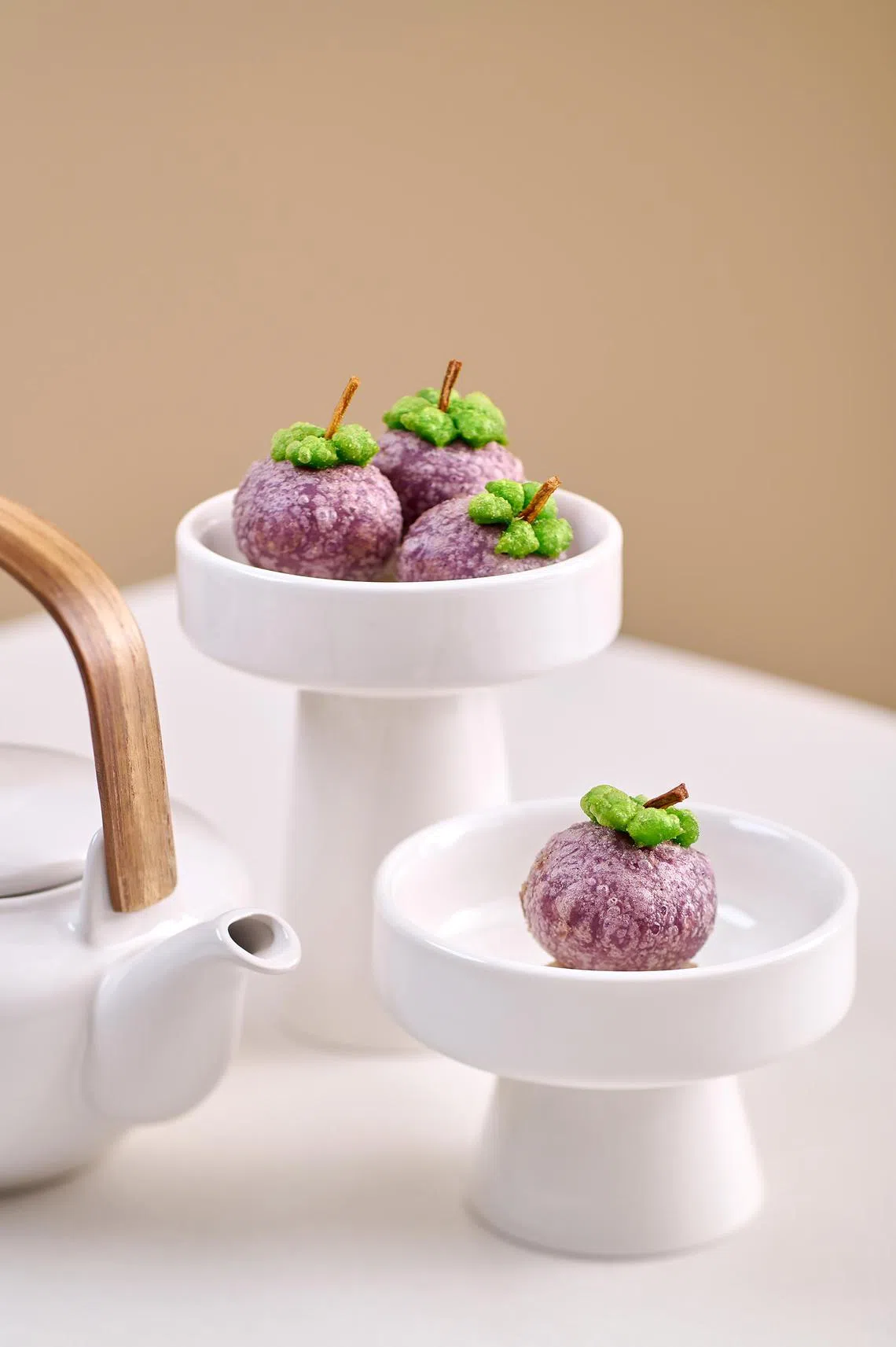
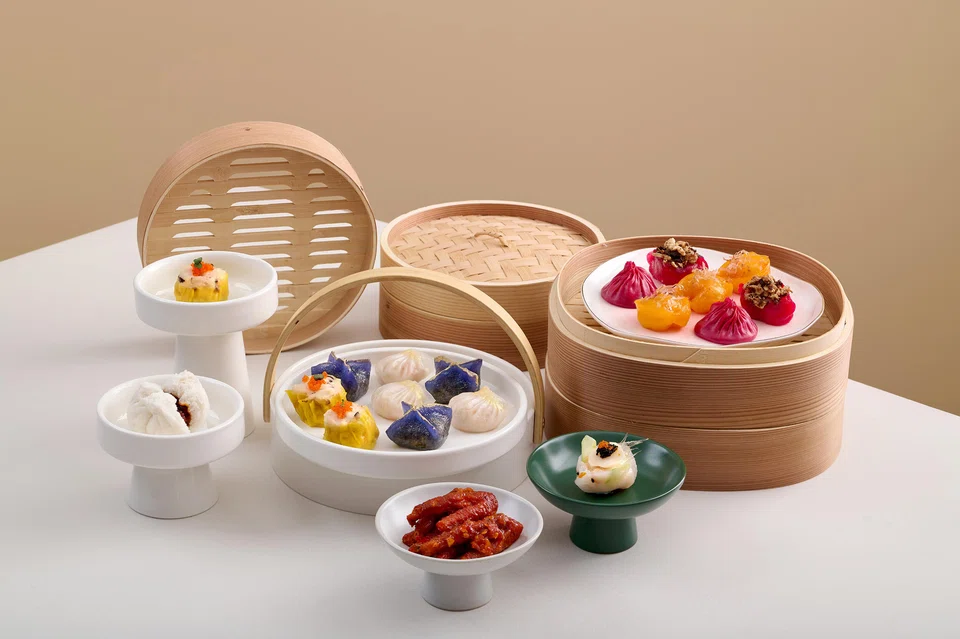
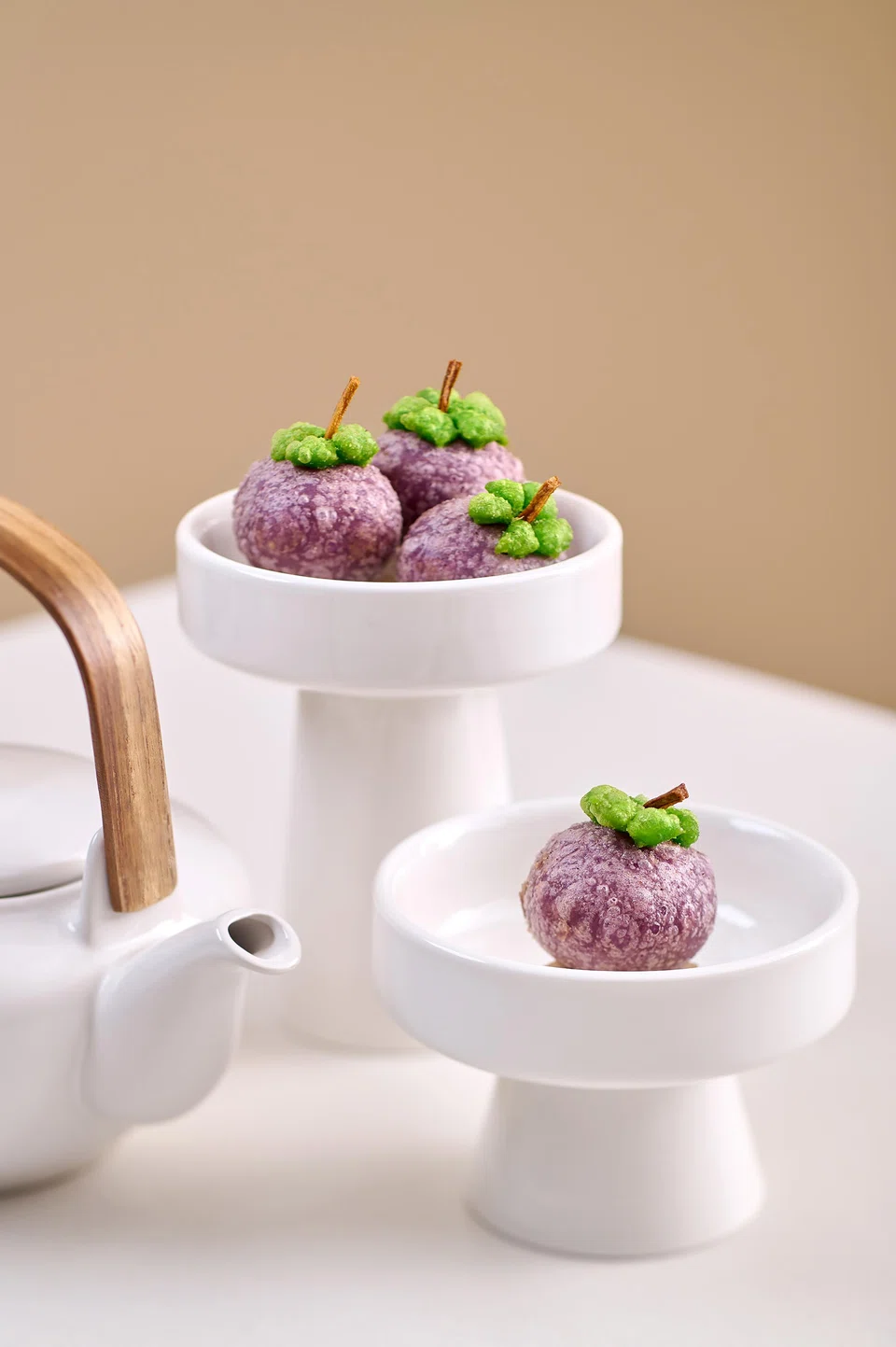
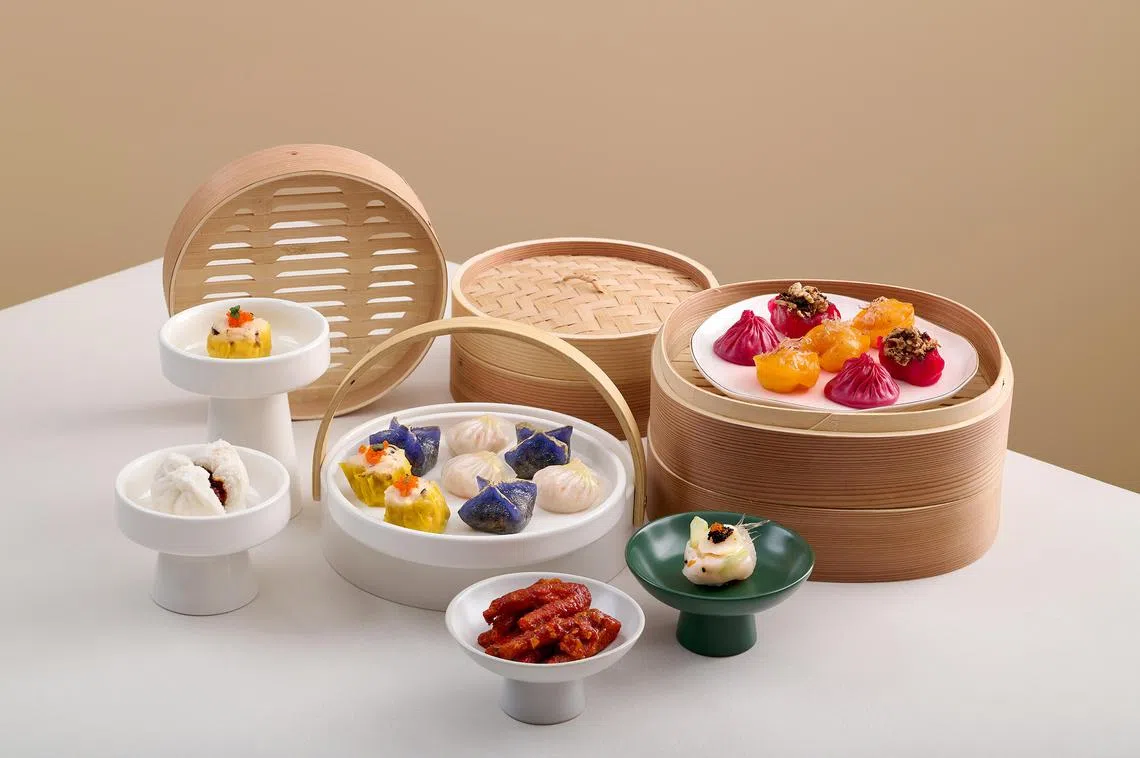
We kick off with a dim sum quartet (about S$8 a person) of siew mai, har kau, xiao long pau, and a mangosteen-shaped glutinous rice dumpling stuffed with pork. The har kau has a fancy name of ‘fresh shrimp and asparagus dumpling’. In a nod to the Year of the Rabbit, the dumpling has eyes and asparagus slivers for ears. Depending on how you look at it, it also resembles an overfed goldfish. Nonetheless it’s suitably plump and juicy, and better than the loosely packed siew mai with its chunky pork filling that almost falls apart at first bite. The winner would be the mangosteen dumpling, even if it’s flabbier than its photo and not as crisp-edged as we’d like. But the chewy resilience of the skin and savoury minced pork filling pack a satisfying bite.
Meanwhile, the deep red-hued xiao long pau holds a burst of bak kut teh broth for a nice change of pace, even if it’s a somewhat unnecessary detour.
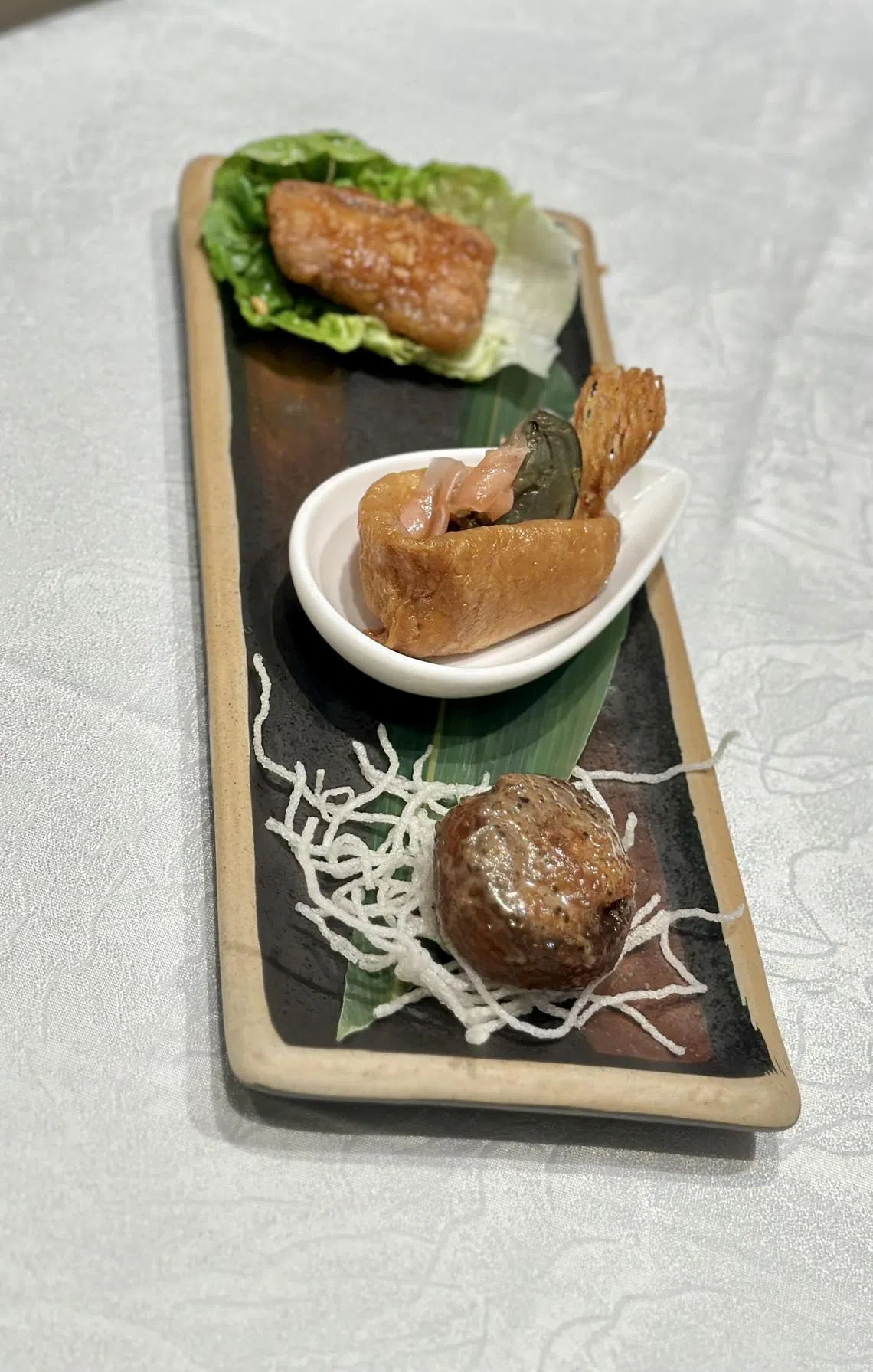
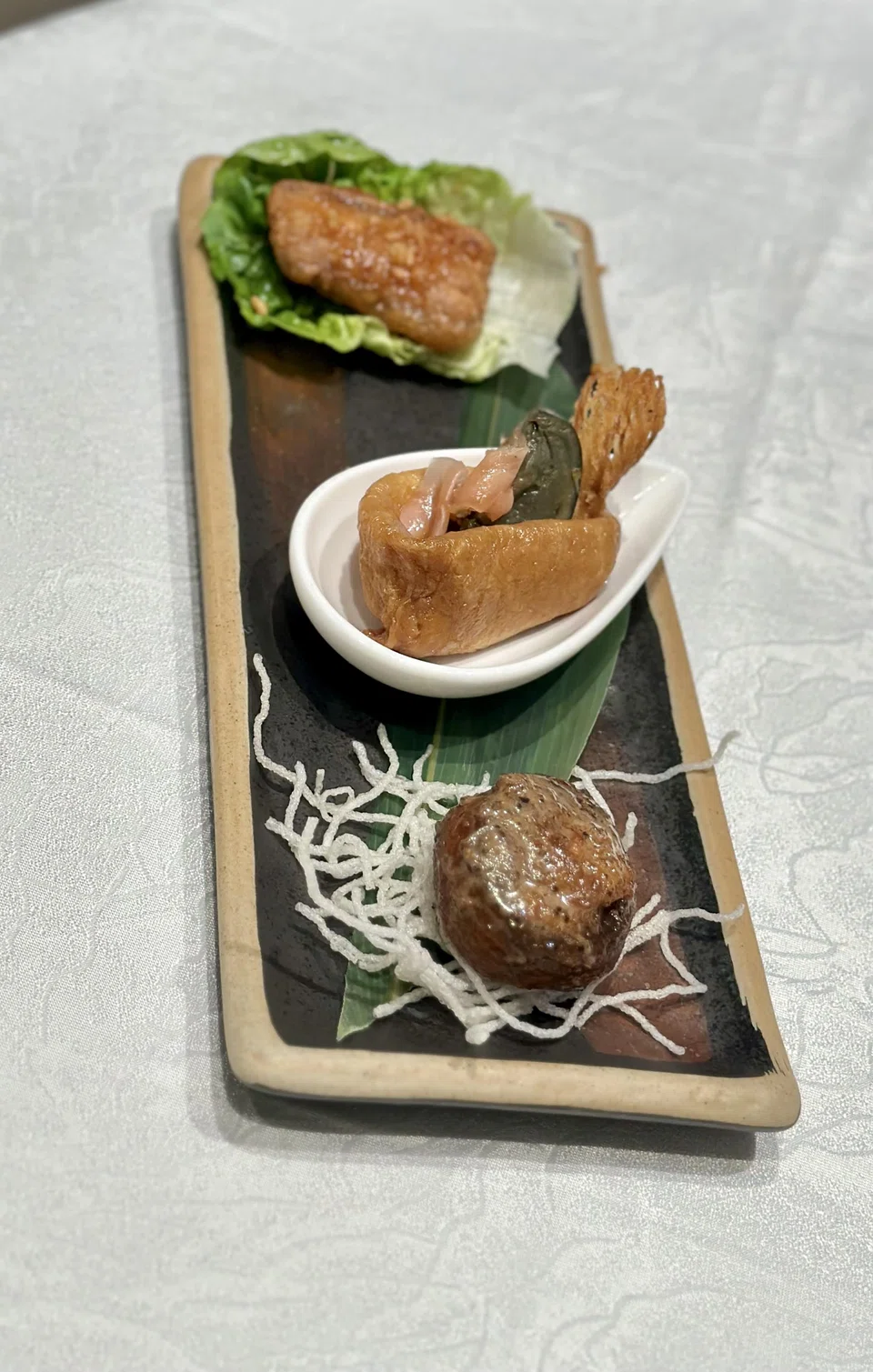
Next up is a combination of three different appetisers (about S$10 a person). Usually, deep fried pork belly pieces are served below a merry-go-round of hanging lettuce leaves (S$18 a la carte). But we get just one piece of seasoned and crispy battered fatty pork on a single leaf. And it’s enough - a power-packed mouthful of savoury, crunchy-salty meat and refreshing crisp lettuce. Plus the added zing of a Thai sweet sour dressing.
The chefs occasionally veer from the familiar, with interesting results. Sautéed mushrooms (S$16 a la carte) covered in a cloak of truffle-infused cream sauce could be a French bistro escapee, but manages to blend in with less cream and soya sauce-based seasoning. But a Japanese inari sushi pocket stuffed with century egg and ginger (S$14) and doused in vinaigrette is off the mark, like it was created by someone in the kitchen caught watching Japan Hour when he should have been developing new recipes.
Service is pretty slow even though the restaurant is barely a quarter full when we’re there for lunch. But some double-boiled soup soothes the soul, especially the robust and slightly peppery chicken and pig’s maw soup, usually served family style with shark’s fin for S$178 but easily split into a single portion for S$16.80 without the shark’s fin. And you don’t need the luxe addition because the broth is the star - intense, lip-smacking gelatinous goodness spiked with Sarawak pepper, and tender bites of slow-cooked maw. The daily soup of the day is a steal at S$8.80 - just a simple, hearty double-boiled chicken broth and old cucumber, but they don’t cut corners with it.
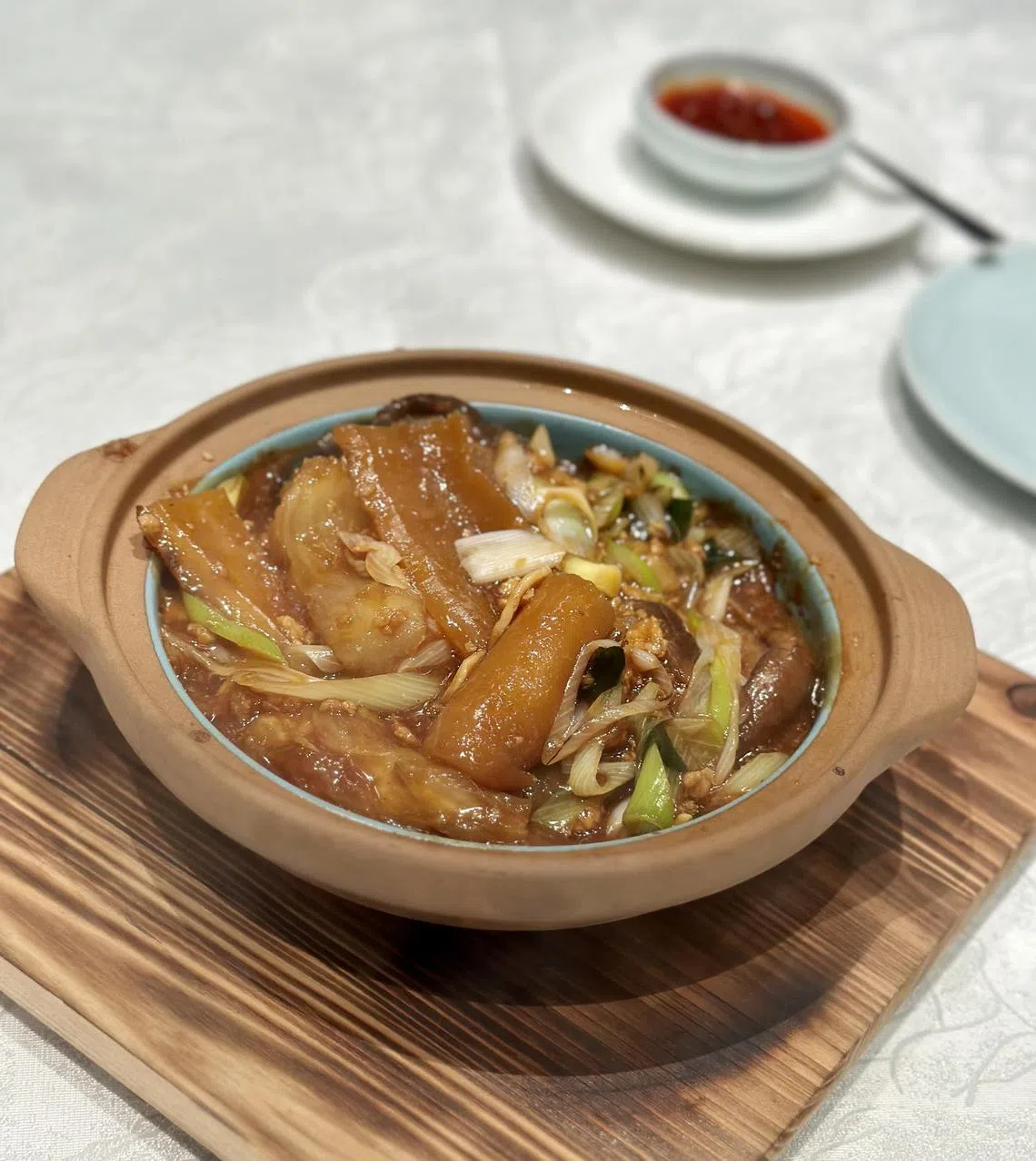
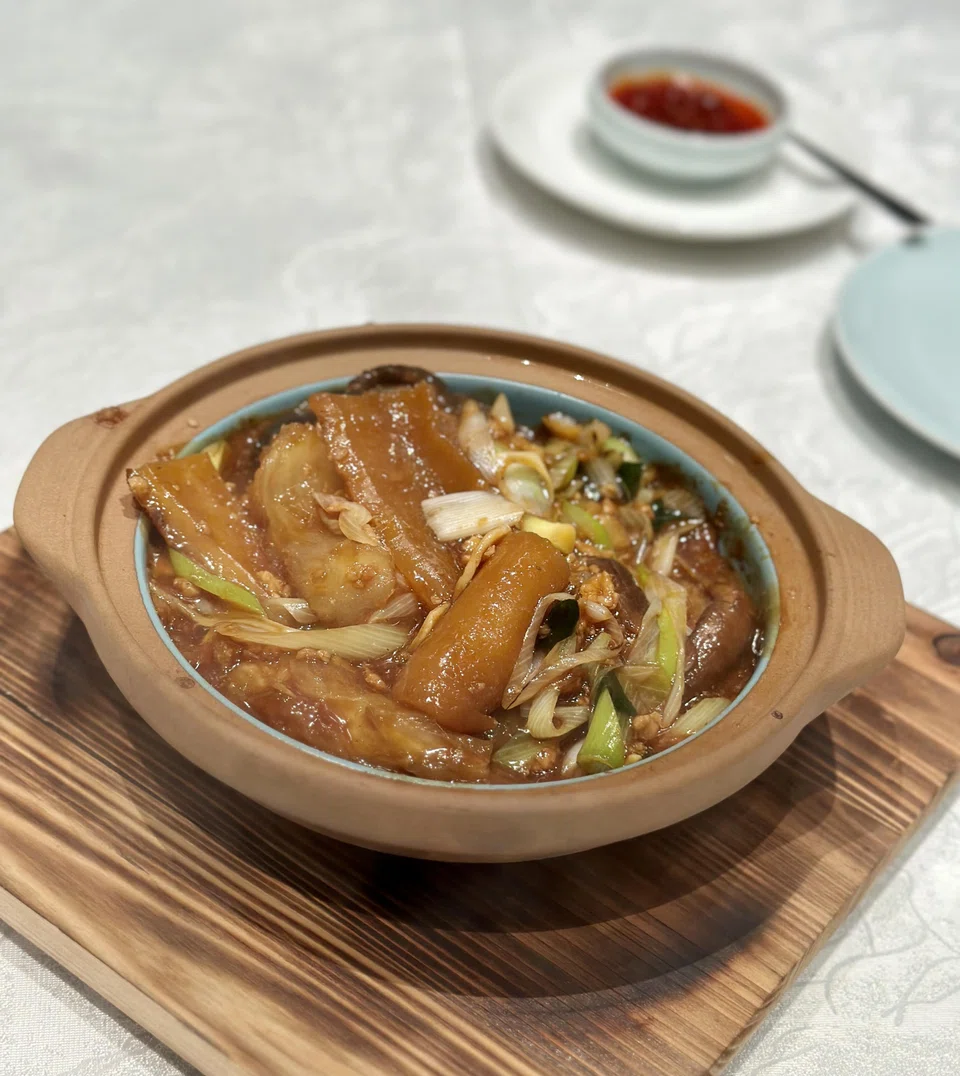
For a little more heft there’s the home-style pig tendon and sea cucumber (S$38) stewed in a clay pot with shiitake mushrooms. A slight alkalinity mars the tendon but the sea cucumber holds up well in the simple brown sauce designed to be the best friend of rice.
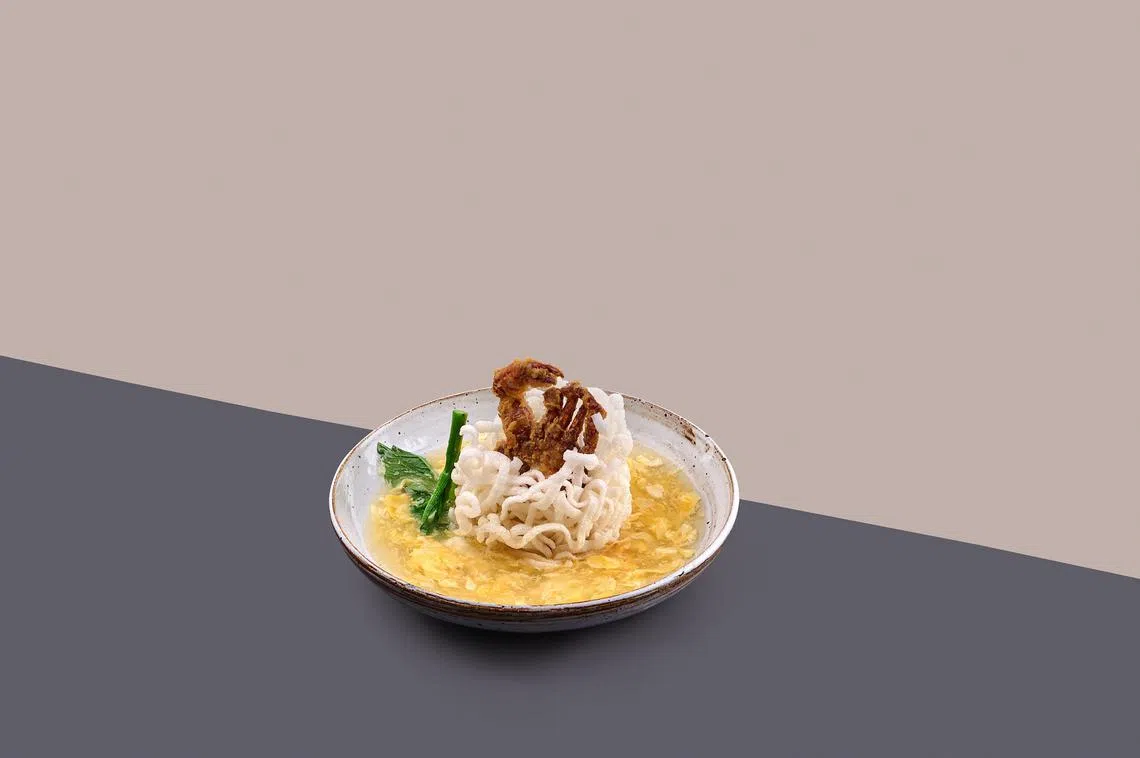
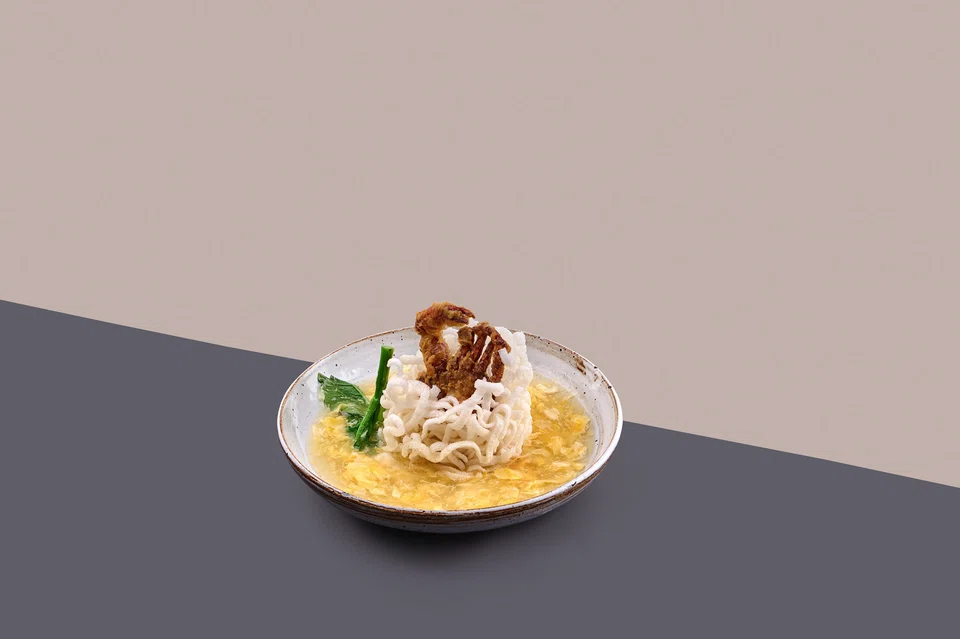
The original Jia He served crispy hor fun draped with a thickened gravy, and this is taken to the next level at its Grand premises. There’s a fancier presentation of wispy rice noodles coiled in a nest with a fried soft shell crab sticking out of the middle, while hot, eggy gravy is poured over the lot. You get both crisp and soft textures in the same mouthful. The briny crunch and creaminess of the crab gives it a lift, and is more interesting than the simple seafood version.
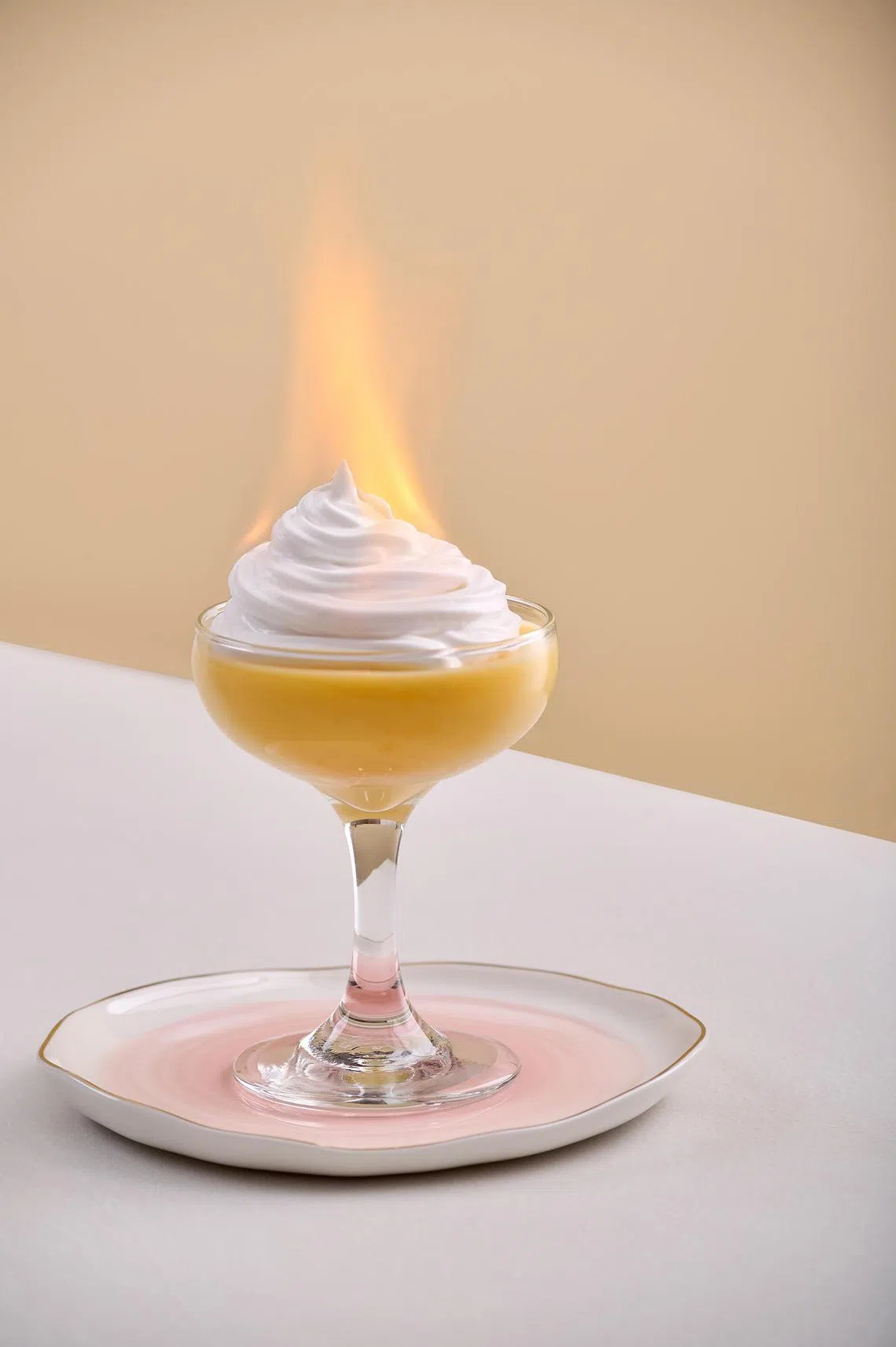
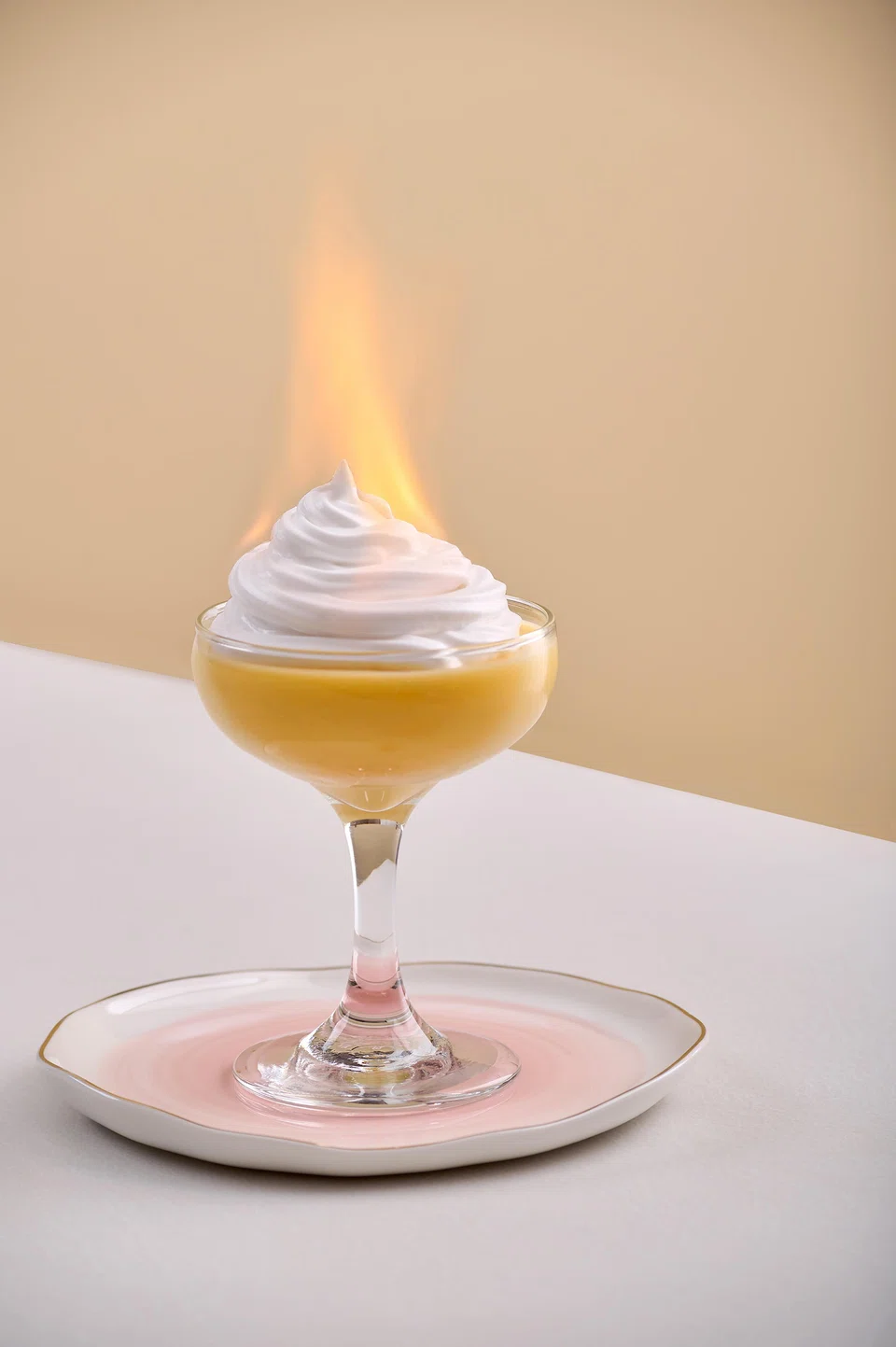
Mango pudding flambé (S$8) works better as an idea than in execution. A bit of brandy is set alight and then poured over the yoghurt topping atop said pudding, which is more firm jelly than pudding. It’s all show but no go. You’re better off with fuss-free glutinous rice balls stuffed with peanuts (S$6.60) that aren’t bad at all.
We can see how Jia He Grand would be a boon to those in the Little India vicinity looking for proper Chinese food without having to go all the way to town. For everyone else, it’s still worth a foray because for price and quality, your wallet will be healthier after a visit.
Rating: 6.5
Decoding Asia newsletter: your guide to navigating Asia in a new global order. Sign up here to get Decoding Asia newsletter. Delivered to your inbox. Free.
Copyright SPH Media. All rights reserved.






