

Is orange wine really orange?
What started as a movement in the 1990s is now a permanent fixture in today’s wine scene.
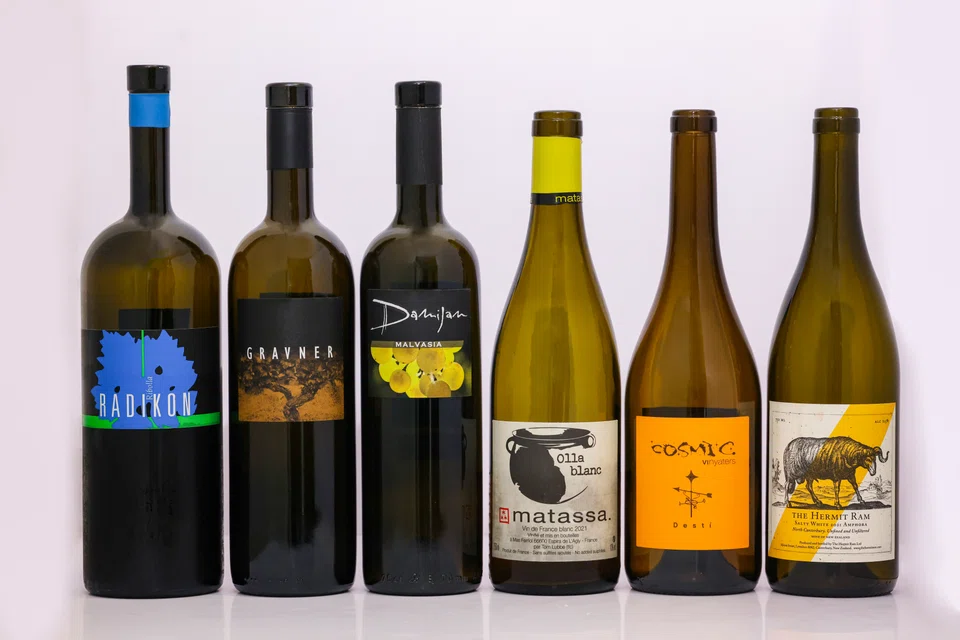
ORANGE wine is basically wine made from white grapes using red winemaking techniques. Also referred to as skin contact wines, the winemaking process involves leaving the juice and grapes to macerate with their skins on, which creates an orange hue and hence the name. Wines made this way may display aromas and flavours that are oxidative in style (nutty, savoury and umami on the nose and the palate).
What is interesting about orange wine is that the winemaking technique isn’t new, but dates back to ancient times. Originating in the area that is now the country of Georgia, old “white” wines were made in this way before vintners decided to separate juice from skins and ferment without skins. In fact, the first signs of winemaking of this style can be traced back to a village in Georgia over 8,000 years ago.
If the names Radikon (Stanko Radikon) and Gravner (Josko Gravner) come up in conversation, know that these two winemakers are synonymous with orange wines. Gravner and Radikon are the two producers from the region of Friuli-Venezia Giulia in Italy who have pushed the skin macerated wine/orange winemaking style to the forefront of winemaking in modern times.
They released their first orange Ribolla Gialla wine in 1997. What started as a movement in the 1990s is now a permanent fixture in today’s wine scene.
The depth and structure of orange wines due to the tannins make them very versatile when it comes to food pairing. Furthermore, different white grape varietals such as the Pinot Grigio, Ribolla Gialla and the ancient Rkatsiteli are used for orange winemaking. This provides some variation from the more commonly found grape varietals.
Broadly speaking, most of these wines have minimal intervention and do not have sulphur added, so, if you are among the unfortunate ones who develop a headache due to the sulphur in some wines, this is all the more reason to give these wines a try. Though not always the case, orange wines may be natural and free of additives if they are produced in biodynamic vineyards.
Orange wine, skin contact wine, amber wine or skin macerated white wines, these are all terms referring to the same category of wines. Whatever you may call them, open a bottle or two to explore and enjoy. Be patient with them. Don’t compare them to any other wines you have tasted. More often than not, they open up nicely after an hour or two. In some cases, even after a night in the refrigerator!
I have grouped together what I think would be classics in the first wine flight, whilst the second wine flight features a more modern style of orange wines.
Wine Flight 1:
2015 Damijan Podversic, Malvasia, Venezia Giulia IGT, Friuli-Venezia Giulia, Italy
Damijan Podversic is one of the stalwarts of the orange wine movement. Based in the region of Friuli-Venezia Giulia in Italy (as are Radikon and Gravner), Damijan produces a series of wines which includes the classic Ribolla. This bottle – of the lesser known Malvasia grape – was showing very well. Displaying a beautiful cognac colour; aromas of chestnut, marmalade, baked spice and apricot were evident. The palate was delicious – displaying tertiary flavours with great acidity balance, depth and length. It paired extremely well with aged Comte cheese and drank even better the next day.
SEE ALSO
2017 Radikon, Ribolla Gialla IGT, Friuli-Venezia Giulia, Italy
Stanko Radikon is credited as being one of the fathers of the modern orange wine movement. He died in 2016 and the winery is today under the guidance of his son Sasa. You will recognise a Radikon due to the bottle’s unique narrow neck. Another unique feature is that Radikon produces wines in two sizes, 500ml or 1,000ml. This is uncommon with winemakers, so don’t be alarmed if the bottle you ordered is not the common bottle size.
Made purely from the Ribolla Gialla grape which is grown on the Slovenian border of Italy, this wine was bright copper in colour. Aromas of orange zest, smoke and black tea greet you on the nose. Lovely mineral notes, rich spices and nutty flavours grip your mid-palate. Well balanced with silky tannins, this was fresh yet had a rich and intense finish. Its acidity and complexity paired well with Thai food.
2014 Gravner, Ribolla, Venezia Giulia IGT, Friuli-Venezia Giulia, Italy
Together with Stanko Radikon, Josko Gravner is also seen as a legend in the world of orange wines. Josko has, over the past 20 years, pioneered the new way of making orange wines. He produces his wines using the Qvevri and plans to ferment his future wines in clay vessels buried outdoors. A neighbour of Radikon, Gravner’s wines were my first introduction to the world of Orange wines.
Bright copper in colour, there were restrained aromas of dried citrus fruit, dried flowers, nuts and spice. On the palate, there were flavours of dried prune and Christmas spice. The mid palate was complex with a long finish. Regretfully, this bottle was very closed and even after two days did not quite open up. As a friend said, “a broody bottle”. Cellar to be rewarded.
Wine Flight 2:
2019 Cosmic Vinyaters, Desti, Catalunya, Spain
With a name like Cosmic and a history that tells of the winery using sacred geometry, one is prepared for a new style of winemaking. Made from 100 per cent Muscat de Alexandria and macerated for three weeks, this biodynamic and organic Spanish wine from Catalunya displayed lovely aromas of sun-dried apricot and golden sultanas. On the palate, there was a light grip with lovely balance and acidity. A serious wine that deserves to be savoured.
2021 The Hermit Ram, Salty White, Amphora, North Canterbury, New Zealand
As stated on their label, The Hermit Ram’s wines are made using the natural amphora. One of the newer styles of orange wines, this is unfined and unfiltered. Run by Theo Coles, The Hermit Ram is from the Waipara region in North Canterbury and is made 100 per cent from Sauvignon Blanc. The Hermit Ram Salty White is partly aged in stainless steel and partly amphora.
Aromas of green asparagus, jasmine, stone fruit, saline, nuts and unripe melon greet you on the nose. The palate opened up very nicely and displayed flavours of white peach and apple tart. Good balance and mouthfeel. This bottle paired perfectly with dark chocolate.
2021 Domaine Matassa, Olla Blanc, Roussillon, France
If you are looking for an orange coloured orange wine, this is it. Delicate, beautiful floral notes with apricot aromas, this was juicy and easy to drink – perfect for our weather. This drank very well and held out throughout a meal which ranged from a delicious tomato salad to dry-aged barramundi ceviche to the classic Magret of duck. A very versatile sip.
From the South of France, Matassa is run by Tom Lubbe and his wife. The wine comes from a single vineyard (Coume de l’Olla) of clay and limestone. Aged in concrete, the blend is Macabeu, Muscat a Petit Grains and Muscat d’Alexandria. A refreshing, easy sip.
Decoding Asia newsletter: your guide to navigating Asia in a new global order. Sign up here to get Decoding Asia newsletter. Delivered to your inbox. Free.
Share with us your feedback on BT's products and services
TRENDING NOW

Why US$100 oil, 5% US yields affect Singdollar, ringgit differently vs other Asean currencies

He built the Vingroup empire. Now South-east Asia’s richest man is handing some key roles to his sons

Asia needs new energy security architecture

CDL to launch 570-unit Jurong project Lucerne Grand with prices from S$1.5 million

